

When You’re Ready…


I am fascinated by Tim May's crypto-anarchy.

Unlike the communities
traditionally associated with the word "anarchy", in a crypto-anarchy the
government is not temporarily destroyed but permanently forbidden and
permanently unnecessary.

It's a community where the threat of violence is
impotent because violence is impossible, and violence is impossible because its participants cannot be linked to their true names or physical locations.

Until now it's not clear, even theoretically, how such a community could operate.

A community is defined by the cooperation of its participants, and efficient cooperation requires a medium of exchange (money) and a way to enforce contracts.

Traditionally these services have been provided by the government or government sponsored institutions and only to legal entities.

In this article I describe a protocol by which these services can be provided to and by untraceable entities.

I will actually describe two protocols. The first one is impractical,because it makes heavy use of a synchronous and unjammable anonymous
broadcast channel. However it will motivate the second, more practical protocol.

In both cases I will assume the existence of an untraceable network, where senders and receivers are identified only by digital
pseudonyms (i.e. public keys) and every messages is signed by its sender
and encrypted to its receiver.

In the first protocol, every participant maintains a (seperate) database of how much money belongs to each pseudonym. These accounts collectively define the ownership of money, and how these accounts are updated is the subject of this protocol.

1. The creation of money. Anyone can create money by broadcasting the
solution to a previously unsolved computational problem. The only
conditions are that it must be easy to determine how much computing effort
it took to solve the problem and the solution must otherwise have no
value, either practical or intellectual. The number of monetary units
created is equal to the cost of the computing effort in terms of a
standard basket of commodities. For example if a problem takes 100 hours
to solve on the computer that solves it most economically, and it takes 3
standard baskets to purchase 100 hours of computing time on that computer
on the open market, then upon the broadcast of the solution to that
problem everyone credits the broadcaster's account by 3 units.

2. The transfer of money. If Alice (owner of pseudonym K_A) wishes to
transfer X units of money to Bob (owner of pseudonym K_B), she broadcasts
the message "I give X units of money to K_B" signed by K_A.

Upon the broadcast of this message, everyone debits K_A's account by X units and
credits K_B's account by X units, unless this would create a negative
balance in K_A's account in which case the message is ignored.

3. The effecting of contracts. A valid contract must include a maximum
reparation in case of default for each participant party to it. It should
also include a party who will perform arbitration should there be a
dispute. All parties to a contract including the arbitrator must broadcast
their signatures of it before it becomes effective. Upon the broadcast of
the contract and all signatures, every participant debits the account of
each party by the amount of his maximum reparation and credits a special
account identified by a secure hash of the contract by the sum the maximum
reparations. The contract becomes effective if the debits succeed for
every party without producing a negative balance, otherwise the contract
is ignored and the accounts are rolled back. A sample contract might look
like this:

K_A agrees to send K_B the solution to problem P before 0:0:0 1/1/2000.
K_B agrees to pay K_A 100 MU (monetary units) before 0:0:0 1/1/2000. K_C
agrees to perform arbitration in case of dispute. K_A agrees to pay a
maximum of 1000 MU in case of default. K_B agrees to pay a maximum of 200
MU in case of default. K_C agrees to pay a maximum of 500 MU in case of
default.

4. The conclusion of contracts. If a contract concludes without dispute,
each party broadcasts a signed message "The contract with SHA-1 hash H
concludes without reparations." or possibly "The contract with SHA-1 hash
H concludes with the following reparations: ..." Upon the broadcast of all
signatures, every participant credits the account of each party by the
amount of his maximum reparation, removes the contract account, then
credits or debits the account of each party according to the reparation
schedule if there is one.

5. The enforcement of contracts. If the parties to a contract cannot agree
on an appropriate conclusion even with the help of the arbitrator, each
party broadcasts a suggested reparation/fine schedule and any arguments or
evidence in his favor. Each participant makes a determination as to the
actual reparations and/or fines, and modifies his accounts accordingly.

In the second protocol, the accounts of who has how much money are kept by
a subset of the participants (called servers from now on) instead of
everyone. These servers are linked by a Usenet-style broadcast channel.

The format of transaction messages broadcasted on this channel remain the
same as in the first protocol, but the affected participants of each
transaction should verify that the message has been received and
successfully processed by a randomly selected subset of the servers.

Since the servers must be trusted to a degree, some mechanism is needed to
keep them honest. Each server is required to deposit a certain amount of
money in a special account to be used as potential fines or rewards for
proof of misconduct. Also, each server must periodically publish and
commit to its current money creation and money ownership databases. Each
participant should verify that his own account balances are correct and
that the sum of the account balances is not greater than the total amount
of money created. This prevents the servers, even in total collusion, from
permanently and costlessly expanding the money supply. New servers can
also use the published databases to synchronize with existing servers.

The protocol proposed in this article allows untraceable pseudonymous
entities to cooperate with each other more efficiently, by providing them
with a medium of exchange and a method of enforcing contracts. The
protocol can probably be made more efficient and secure, but I hope this
is a step toward making crypto-anarchy a practical as well as theoretical
possibility.

-------

Appendix A: alternative b-money creation

One of the more problematic parts in the b-money protocol is money
creation. This part of the protocol requires that all of the account
keepers decide and agree on the cost of particular computations.
Unfortunately because computing technology tends to advance rapidly and
not always publicly, this information may be unavailable, inaccurate, or
outdated, all of which would cause serious problems for the protocol.

So I propose an alternative money creation subprotocol, in which account
keepers (everyone in the first protocol, or the servers in the second
protocol) instead decide and agree on the amount of b-money to be created
each period, with the cost of creating that money determined by an
auction. Each money creation period is divided up into four phases, as
follows:

1. Planning. The account keepers compute and negotiate with each other to
determine an optimal increase in the money supply for the next period.

Whether or not the account keepers can reach a consensus, they each
broadcast their money creation quota and any macroeconomic calculations
done to support the figures.

2. Bidding. Anyone who wants to create b-money broadcasts a bid in the
form of <x, y> where x is the amount of b-money he wants to create, and y
is an unsolved problem from a predetermined problem class. Each problem in
this class should have a nominal cost (in MIPS-years say) which is
publicly agreed on.

3. Computation. After seeing the bids, the ones who placed bids in the
bidding phase may now solve the problems in their bids and broadcast the
solutions.

4. Money creation. Each account keeper accepts the highest bids (among
those who actually broadcasted solutions) in terms of nominal cost per
unit of b-money created and credits the bidders' accounts accordingly
http://www.weidai.com/bmoney.txt
Shared with 💚 by Free Spirit
✌ & 💚

Open Source JavaScript Client-Side Bitcoin Wallet Generator
A Bitcoin wallet is as simple as a single pairing of a Bitcoin address with its corresponding Bitcoin private key. Such a wallet has been generated for you in your web browser and is displayed above.
To safeguard this wallet you must print or otherwise record the Bitcoin address and private key. It is important to make a backup copy of the private key and store it in a safe location. This site does not have knowledge of your private key. If you are familiar with PGP you can download this all-in-one HTML page and check that you have an authentic version from the author of this site by matching the SHA256 hash of this HTML with the SHA256 hash available in the signed version history document linked on the footer of this site. If you leave/refresh the site or press the “Generate New Address” button then a new private key will be generated and the previously displayed private key will not be retrievable. Your Bitcoin private key should be kept a secret. Whomever you share the private key with has access to spend all the bitcoins associated with that address. If you print your wallet then store it in a zip lock bag to keep it safe from water. Treat a paper wallet like cash.
Add funds to this wallet by instructing others to send bitcoins to your Bitcoin address.
Check your balance by going to blockchain.info or blockexplorer.com and entering your Bitcoin address.
Spend your bitcoins by going to blockchain.info and sweep the full balance of your private key into your account at their website. You can also spend your funds by downloading one of the popular bitcoin p2p clients and importing your private key to the p2p client wallet. Keep in mind when you import your single key to a bitcoin p2p client and spend funds your key will be bundled with other private keys in the p2p client wallet. When you perform a transaction your change will be sent to another bitcoin address within the p2p client wallet. You must then backup the p2p client wallet and keep it safe as your remaining bitcoins will be stored there. Satoshi advised that one should never delete a wallet.
Source:
✌ & 💚

FutureBit Apollo BTC is the world’s first vertically integrated platform bringing the full power of Bitcoin and it’s mining infrastructure in a small, quiet, easy to use desktop device designed for everyday people.
We have iterated and learned much from our first Apollo product. We realized early on that we focused too much on the mining aspect, and not enough on the software, applications, and services that run Bitcoin. Too many of these services have moved to online centralized websites, and many users have given up on running the core software that powers Bitcoin.
This must change, as Bitcoin will not continue to be the free, un-censorable, decentralized system it is today if only a few control the mining that powers it, and the nodes that control it.
At the heart of the new Apollo BTC product is a revamped SBC (Single Board Computer), that is as powerful as any consumer grade desktop system and can run almost any Bitcoin Application natively on the device 24/7. Take it out of the Box, plug it in, power it on, and you are already running a full Bitcoin node without needing to do anything.
Install a wallet of your choice, use any hardware wallet, run BTCPayServer, run a block explorer, run a Lightning Node. All of this is possible with our six core ARM based CPU with 4GB of RAM, and a 500GB NVMe drive that can easily store a FULL non pruned Bitcoin Node. It can power through a Full Node Sync in under 48 hours, which is a record for a device of its class! This is almost an order of magnitude faster than any Raspberry Pi 4 based Node.
On top of this we have taken our 6 years of experience building ASIC mining devices, and engineered the only American Made TeraHash range Bitcoin mining device that can be silent on your desk, mine Bitcoin in the background 24/7, and only use the power of one light bulb to do it.
We did this with our optimized PCB design that has carefully placed all 44 hash cores underneath our custom cold-forged aluminum induction heatsink, which draws up to 200 Watts of heat away from the device with our new nearly silent 25mm fan. This results in the Apollo BTC in Turbo Mode being just as quiet as the Apollo LTC in Eco Mode!
Like our previous products, we are super proud that we can continue manufacturing the Apollo BTC in the USA, and are now the only USA based company that delivers Bitcoin ASIC products with a supply chain whole owned in the western hemisphere (no more reliance on Chinese based ASICS, and their willingness to only sell to large farms and the highest bidder).
OPTIONS
Full Apollo Package: This is our Full Package option that comes with everything you need in the box. The Apollo BTC Unit with our latest controller built in, and our 200W Power supply with power cable.
Full Apollo Package NO Power Supply: We are also offering the Full Package with no power supply for people that want the plug-n-play experience but have spare 12v ATX power supply.
Standard: This option is ONLY the Apollo ASIC Miner, with no controller or power supply. Our new hashboard has a micro USB port, and can be used as a USB device. The Full Apollo Node can control multiple standard units through its USB ports. We wanted to give our customers an option to expand their hash power in a cost effective way. If you already have a Raspberry Pi, or Linux/Windows Desktop Computer and a power supply with two PCIE power ports you can also control our Standard unit in this way with our stand alone miner software (please note this setup will be for more advanced users, and the software will be command line based on launch).
Standard + Power Supply: Same as our Standard unit above, but comes with our 200W Power supply. This is a plug and play solution if you already have a Full Apollo Package. Take it out of the box, plug in the power supply, plug in the micro USB cable to the back of your Full Apollo BTC and it will automatically recognize the second hashboard and start mining!
Requirements:
*all power ratings posted are the miners 12v power consumption. Due to the wide range of third party 120-240v power supplies that can be used, your power draw will be slightly more depending on how efficient your PSU is.
Source :
All-In-One Desktop Bitcoin System (4x6x4in) that mines Bitcoin and any SHA256 based crypto (Bitcoin Cash etc).
As I am the owner of two devices, I took the liberty to share this great invention with all of you !
Hope jstefanop won’t mind 🙂
Made with ❤ in Brooklin
Supported with 💚 by Free Spirit
✌ & 💚

To calculate mining profitability, you should follow these steps, no matter which calculator you are using:
🔸️Be sure you know your GPU models and the Hash rates.
🔸️Be sure you know the algorithm of the coin.
🔸️Choose the exchange you plan to use for selling coins. This is necessary if you want more precise results.
🔸️Be sure you know your electricity cost.
You can find a list of calculators online that are used by miners, here:
https://bithouseco.home.blog/2021/09/12/mining-calculators/
🔹️ Be sure to keep track of what’s happening in the cryptocurrency world, if you aren’t doing so already. If a coin has problems, it will definitely affect the price and mining profitability, and may even prevent you from selling mined coins.


Before we can even start mining, we should use one of the many profitability calculators online, that should give us beforehand a better understanding if the GPU, FPGA, ASIC we choose to mine with, will be profitable or not!
🔸️ WhatToMine

🔸️ Rubin Mining Calculator

🔸️ CoinWarz

🔸️ CryptoCompare

🔸️ Minerstat

🔸️ Crypto-Coinz


” It isn’t obvious that the world had to work this way.
But somehow the universe smiles on encryption.”
Julian Assange
Nobody yet knows for sure if the universe’s smile is genuine or not.
It is possible that our assumption of mathematical asymmetries is wrong and we find that P actually equals NP, or we find surprisingly quick solutions to specific problems which we currently assume to be hard.
If that should be the case, cryptography as we know it will cease to exist, and the implications would most likely change the world beyond recognition.
“Vires in Numeris”
=
“Strength in Numbers”
epii
Vires in numeris is not only a catchy motto used by bitcoiners.
The realization that there is an unfathomable strength to be found in numbers is a profound one.
Understanding this, and the inversion of existing power balances which it enables changed my view of the world and the future which lies ahead of us.
One direct result of this is the fact that you don’t have to ask anyone for permission to participate in Bitcoin.
There is no page to sign up, no company in charge, no government agency to send application forms to.
Simply generate a large number and you are pretty much good to go.
The central authority of account creation is mathematics.
And God only knows who is in charge of that.
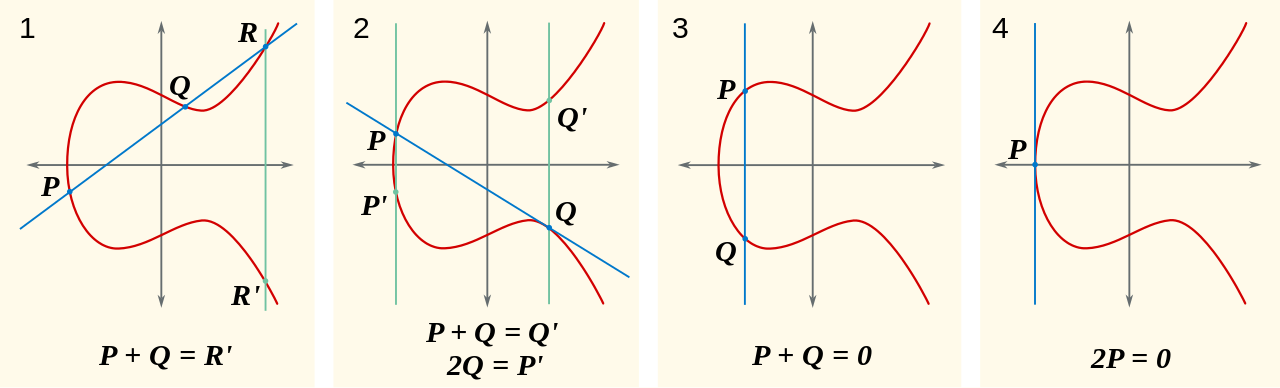
Bitcoin is built upon our best understanding of reality.
While there are still many open problems in physics, computer science, and mathematics, we are pretty sure about some things.
That there is an asymmetry between finding solutions and validating the correctness of these solutions is one such thing.
That computation needs energy is another one.
In other words: finding a needle in a haystack is harder than checking if the pointy thing in your hand is indeed a needle or not.
And finding the needle takes work.
The vastness of Bitcoin’s address space is truly mind-boggling.
The number of private keys even more so. It is fascinating how much of our modern world boils down to the improbability of finding a needle in an unfathomably large haystack.
I am now more aware of this fact than ever.
Bitcoin taught me that there is strength in numbers.


 BitHouse