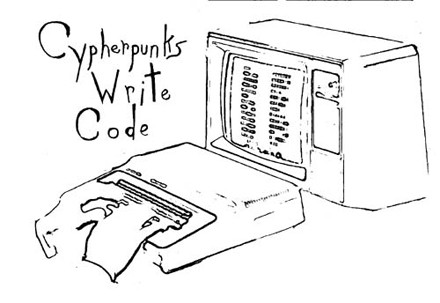
Power to the PeopleNot by Force but by Free WillThe Choice is always YoursArise…Choose Wisely…People do not understand the Monetary SystemPrivacy is not Secrecy.VeritasBitcoin cannot be ShutDownPower of the long tailCypherPunks Write Codebitcoin Genesis Block
In a first, Bitcoin developers have done something amazing amid the criticism over the lightning network and issues associated with it. A team of developers has made an international payment using the radio … Continue reading International payment using the radio waves→
My inspiration for this page was given to me by my new aquired friend, a fellow Truth Seeker – Joris and to whom I dedicate this page… Wish you… as well as to … Continue reading Discipline Quotes→
In a first, Bitcoin developers have done something amazing amid the criticism over the lightning network and issues associated with it. A team of developers has made an international payment using the radio … Continue reading International payment using the radio waves→
My inspiration for this page was given to me by my new aquired friend, a fellow Truth Seeker – Joris and to whom I dedicate this page… Wish you… as well as to … Continue reading Discipline Quotes→
Bitcoin white paper turns 15 and the Legacy of Satoshi Nakamoto lives on. “I’ve been working on a new electronic cash system that’s fully peer-to-peer, with no trusted third party,” Satoshi Oct. 31, … Continue reading Bitcoin White Paper turn 15→
Decentralized exchange (DEX) aggregators, also known as liquidity aggregators, compile the exchange rates of numerous DEX platforms and show you a list of platforms offering the best value for your crypto trades.
Moreover, you can access a deeper pool of liquidity by trading on multiple DEXs using a single trading dashboard. Think of them as the search engines of the DeFi landscape, scouring DEXs for the best deals so that you can swap your crypto assets with the lowest fees.
Although it is a DEX in its own right, 1Inch’s main USP is its position as a top DEX aggregator across multiple blockchains. The network supports trades across major ecosystems like Ethereum and Binance and smaller networks like Polygon, Arbitrum, and Optimism.
As an aggregator, 1Inch gives you access to over 120 liquidity sources, with 68 on Ethereum, 39 on Binance, and 24 on Polygon. With daily trading volumes averaging close to $300 million from 300,000+ active users, it is one of the most active DEX aggregators in 2021.
The native token of the 1Inch DEX is also called 1INCH. It functions as both a utility token and a governance token for the protocol. 1INCH is a multi-chain token available on the Ethereum and Binance Smart Chain.
1Inch is one of the best DEX aggregators for crypto rookies, with detailed documentation and a well-developed Help Center filled with starter guides, FAQs, and more.
Slingshot grew out of DEX.AG, a DEX aggregator platform created in late 2018 as part of a hackathon event. At its launch, it supported seven major DEX, including Uniswap, Kyber, and DDEX.
After million-dollar funding rounds, DEX.AG was rebranded as Slingshot in November 2020. Slingshot works on Ethereum-based protocols – Polygon (formerly MATIC) and Arbitrum One. Across the two, you get access to over 326 exchanges/liquidity sources.
Slingshot is a very popular choice among experienced cryptocurrency traders due to its relative simplicity and advanced functionality. The average daily volumes touching over half a billion dollars is a testament to the platform’s popularity.
However, due to a threadbare interface and lack of easily accessible website FAQs, guides, and documentation, Slingshot is not a very beginner-friendly DEX platform.
Totle is a DEX aggregator that also dips into synthetic asset providers, allowing traders to engage with tokenized assets of many shapes and sizes. Unfortunately, the platform seems to be dormant, with no updates since mid-2021 and a lack of stats on any major crypto platform.
ParaSwap is a versatile DEX aggregator supporting Ethereum, Binance, Polygon, and Avalanche blockchains. In addition, it has a native token for liquidity and governance purposes called the PSP.
While it is one of the more feature-packed and beginner-friendly DEX aggregators, ParaSwap is still in the growth phase. In 2021, the platform reported 1.4 million total users over time, with daily transaction volumes peaking around $150 million.
ParaSwap allows you access to swap and payment options across 75 DEX platforms, focusing on better market rates and cheaper gas fees. In addition, decentralized applications (dApps) can also integrate with ParaSwap to better streamline token swaps.
Like 1Inch and Slingshot, Matcha is both a DEX aggregator and a decentralized exchange in itself. Powered by 0x Labs, the platform focuses on transparency, lower fees, smart order routing, and easier access.
Thanks to a recent partnership with MoonPay, Matcha can now accept payments in fiat currencies, a first for DEX platforms. This could be very useful for newcomers – you can directly purchase cryptos using regular currency on Matcha and start trading immediately.
Matcha provides access to over 50 liquidity sources and DEX platforms across three blockchain systems – Ethereum, Binance, and Polygon. Despite being one of the younger platforms on this list (launched in 2020), Matcha boasts over 2.5k daily traders. Its daily volumes are close to $150 million.
Uniswap is a DEX platform based on the Automated Marker Maker (AMM) model. After its launch in November 2018, the DEX has seen a meteoric rise among crypto circles. As of Q4 2021, it routinely tops the charts of DEX platforms with the largest daily volumes with $5.5 billion.
The platform is currently in its third iteration – Uniswap V3. Based on the Ethereum Blockchain, Uniswap gives you access to over 50 liquidity pools, with 285 cryptocurrencies across more than 350 markets. The USDC-ETH pair alone accounts for over $1.8 billion worth of trades each day.
While not a DEX aggregator per se, Uniswap is still a great option to consider due to its sheer size and reach. Most of the other aggregators on this list have Uniswap as a major partner and source of trading options.
PancakeSwap launched in 2020 to work like Uniswap, but on the Binance Smart Chain instead of Ethereum. Like Uniswap, PancakeSwap is a DEX platform with an AMM operating model, with an additional focus on yield farming based on the native CAKE token.
Regardless of the sweet and syrupy “cake” theme, PancakeSwap is a major force on the DeFi scene, thanks to the sheer size of the Binance blockchain. It easily slots into the top three most active DEX platforms, with daily volumes exceeding $2.6 billion.
The platform is user-friendly, with detailed community guides, troubleshooting articles, and customer support. In addition, you can trade in over 30 major cryptos backed by an equal number of high-quality liquidity pools.
Is based directly on Uniswap, with a fork in the original code created by its anonymous developer who goes by the pseudonym Chef Nomi.
Right from the outset, SushiSwap has courted controversy. To generate liquidity, its founder encouraged users to deposit in Uniswap tokens, leeching away almost $810 million from Uniswap in a “vampire attack.”
Chef Nomi then proceeded to withdraw his liquidity from the project, generating a massive controversy. Ultimately, he backtracked and returned all funds, relinquishing his control over the project to a new team.
Since these early missteps, SushiSwap has maintained healthy growth rates in the crowded arena of Ethereum-based DEX/AMM platforms. It currently ranks in the top ten list, with daily volumes of close to $800 million across 400+ markets.
dYdX is a major DEX platform with a heavy focus on reducing the inflated gas prices on Ethereum. It is one of the few platforms to offer gasless deposits to new users who deposit above a certain threshold. The platform has plans to make this a permanent feature.
dYdX is also working closely with StarkWare to deploy a Layer 2 scalability engine designed to reduce gas costs and trading fees further. Using Ethereum Smart Contracts, dYdX enables traders to invest in the crypto-equivalent of futures trading and other derivatives.
Due to its unique position on the Ethereum ecosystem, dYdX has managed to gain ground on other more popular DEX platforms like Uniswap. As a result, at the end of 2021, dYdX is ranked second on the list of the most active DEX platforms, with daily volumes of $5.4 billion.
Instead of Ethereum or Binance, the Raydium platform operates on the highly promising Solana blockchain. As a result, the Ethereum-competitor has a vibrant developer ecosystem, and its cryptocurrency has grown at least 16,000% since January 2021.
The increased interest in the Solana blockchain has also helped Raydium, an AMM platform based on the Serum DEX.
The platform gives access to over 430 trading pairs, with Solana-USDT being the most popular.
The native token, also called Raydium, is the foundation of all future apps and projects on the Solana and Serum ecosystems.
The project’s primary focus is to function as the engine of DeFi on Solana. However, with current daily volumes already reaching $300 million, Raydium shows a lot of promise for future growth.
Launched in 2020 as a less expensive, more efficient alternative to Ethereum, Avalanche blockchain focuses on decentralized apps.
Its AVAX token has hit all-time high demands in late 2021, thanks to positive media coverage and high-profile partnerships with entities like Deloitte.
This surge has also propelled TraderJoe, the major DEX platform based around Avalanche blockchain, to the top of the DEX pile in recent times. Its pole position in the blockchain ecosystem has helped drive TraderJoe’s daily trades close to $1 billion.
You can trade major cryptos, stake and gain the native JOE token as rewards, lend other cryptos and farm yields on the TraderJoe platform. With low fees and over 170 markets, TraderJoe is a top target for anyone interested in the Avalanche ecosystem.
Top Pick: Uniswap
The Top pick is Uniswap, for its deep liquidity pools, its user-friendliness, and its commitment to continuous innovation.
As the various DeFi ecosystems continue to grow and expand, the importance of DEX aggregators and AMM platforms will increase further.
These platforms serve a vital purpose, finding liquidity and facilitating transactional activity across multiple blockchains.
To say that the future of DeFi, and by extension, the future of finance as we know it, hinges on DEX aggregators would not be an overstatement.
In a first, Bitcoin developers have done something amazing amid the criticism over the lightning network and issues associated with it. A team of developers has made an international payment using the radio … Continue reading International payment using the radio waves→
My inspiration for this page was given to me by my new aquired friend, a fellow Truth Seeker – Joris and to whom I dedicate this page… Wish you… as well as to … Continue reading Discipline Quotes→
Bitcoin white paper turns 15 and the Legacy of Satoshi Nakamoto lives on. “I’ve been working on a new electronic cash system that’s fully peer-to-peer, with no trusted third party,” Satoshi Oct. 31, … Continue reading Bitcoin White Paper turn 15→
In a first, Bitcoin developers have done something amazing amid the criticism over the lightning network and issues associated with it. A team of developers has made an international payment using the radio … Continue reading International payment using the radio waves→
My inspiration for this page was given to me by my new aquired friend, a fellow Truth Seeker – Joris and to whom I dedicate this page… Wish you… as well as to … Continue reading Discipline Quotes→
Bitcoin white paper turns 15 and the Legacy of Satoshi Nakamoto lives on. “I’ve been working on a new electronic cash system that’s fully peer-to-peer, with no trusted third party,” Satoshi Oct. 31, … Continue reading Bitcoin White Paper turn 15→
In a first, Bitcoin developers have done something amazing amid the criticism over the lightning network and issues associated with it. A team of developers has made an international payment using the radio … Continue reading International payment using the radio waves→
My inspiration for this page was given to me by my new aquired friend, a fellow Truth Seeker – Joris and to whom I dedicate this page… Wish you… as well as to … Continue reading Discipline Quotes→
Bitcoin white paper turns 15 and the Legacy of Satoshi Nakamoto lives on. “I’ve been working on a new electronic cash system that’s fully peer-to-peer, with no trusted third party,” Satoshi Oct. 31, … Continue reading Bitcoin White Paper turn 15→
On November 14th, block height 709,632, Bitcoin’s Taproot upgrade was activated. The update brings with it improvements to the flexibility, security, and efficiency of bitcoin transactions. And as Bitcoin’s first protocol upgrade in over four years, it’s a major milestone in the development of the network.
Below, we outline the Taproot upgrade, what it changes, and how it will impact the bitcoin network going forward.
Three interconnected upgrades, deployed simultaneously
The Taproot upgrade is actually an umbrella term referring to three interconnected Bitcoin Improvement Proposals (BIPs) set to activate simultaneously:
BIP 340, or Schnorr. This proposal introduces Schnorr signatures, a digital signature scheme that is faster, more secure, and less data-intensive than the cryptographic method currently in use (Elliptic Curve Digital Signature Algorithm, or ECDSA).
BIP 341, or Taproot. This proposal defines Pay-to-Taproot (P2TR), a new way to send bitcoin that enhances privacy and flexibility for users. It also implements Merklized Alternative Script Trees (MAST), which compress complex Bitcoin transactions into a single hash. This reduces transaction fees, minimizes memory usage, and improves Bitcoin’s scalability.
BIP 342, or Tapscript. This proposal defines Tapscript, an update to Bitcoin’s original scripting language that enables P2TR transactions, leverages Schnorr signatures’ improved efficiency, and allows for more flexible upgrades going forward.
Taproot adoption timeline
On June 12th, 2021, these upgrade proposals reached a 90% consensus among miners, thus locking in their November activation as a soft fork to Bitcoin’s protocol. As a soft fork, the Taproot upgrade is backwards compatible with older versions of bitcoin and does not create a separate, parallel blockchain, as was the case with Bitcoin and Bitcoin Cash.
Adoption of taproot is expected to grow slowly over a period of years, just as it did with SegWit, the last major Bitcoin upgrade. Two years after SegWit’s activation, roughly 50 percent of transactions used it; today, four years after, that proportion is 80 percent. The main reason for this slow rate of adoption is that cryptocurrency wallets and service providers choose to opt-in on their own schedule.
Taproot’s impact
The Taproot upgrade will improve Bitcoin in a number of ways, such as:
Lower fees: Since the data size of complex transactions will be reduced, transaction fees will decline proportionally.
Improved lightning network efficiency: Taproot will make transactions on the Lightning Network cheaper, more flexible and more private.
Enhanced smart contract functionality: With Taproot, Bitcoin will be able to host smart contracts with any number of signatories while retaining the data size of a single-signature transaction. This lays the technical foundation for DeFi on the Bitcoin network.
In other words, the Taproot upgrade is a massive improvement to the Bitcoin protocol.
Lightning network improvements and expanded smart contract capabilities will improve bitcoin’s utility; meanwhile, lower transaction fees and increased network speed will improve its scalability.
For this reason, we’re thrilled to welcome BIP 340, 341, and 342 at block height 709,632 and beyond.
In a first, Bitcoin developers have done something amazing amid the criticism over the lightning network and issues associated with it. A team of developers has made an international payment using the radio … Continue reading International payment using the radio waves→
My inspiration for this page was given to me by my new aquired friend, a fellow Truth Seeker – Joris and to whom I dedicate this page… Wish you… as well as to … Continue reading Discipline Quotes→
Bitcoin white paper turns 15 and the Legacy of Satoshi Nakamoto lives on. “I’ve been working on a new electronic cash system that’s fully peer-to-peer, with no trusted third party,” Satoshi Oct. 31, … Continue reading Bitcoin White Paper turn 15→
How can I calculate how many hashes I generate per second?
I have a function which generates hashes from a string:
string GenerateHash(string plainText);
I generate as many hashes as possible with 4 threads.
How do I calculate how many hashes (or megahashes) I generate per second?
Your problem breaks down nicely into 3 separate tasks
Sharing a single count variable across threads
Benchmarking thread completion time
Calculating hashes per/second
Sharing a single count variable across threads
public static class GlobalCounter
{ public static int Value { get;
private set;
} public static void Increment()
{ Value =GetNextValue(Value);
 } private static int GetNextValue(int curValue) { returnInterlocked.Increment(ref curValue);
} public static void Reset() { Value = 0; } }
Before you spin off the threads call GlobalCounter.Reset and then in each thread (after each successful hash) you would call GlobalCounter.Increment – using Interlocked.X performs atomic operations of Value in a thread-safe manner, it’s also much faster than lock.
Parallel.ForEach will block until all threads have finished
Calculating hashes per second
... sw.Stop(); var hashesPerSecond = GlobalCounter.Value / sw.Elapsed.Seconds;
Did you find this article helpful?
If so, please consider a donation to help the evolution and development of more helpful articles in the future, and show your support for alternative articles.
In a first, Bitcoin developers have done something amazing amid the criticism over the lightning network and issues associated with it. A team of developers has made an international payment using the radio waves on the … Continue reading International payment using the radio waves→
My inspiration for this page was given to me by my new aquired friend, a fellow Truth Seeker – Joris and to whom I dedicate this page… Wish you… as well as to all my readers, … Continue reading Discipline Quotes→
Bitcoin white paper turns 15 and the Legacy of Satoshi Nakamoto lives on. “I’ve been working on a new electronic cash system that’s fully peer-to-peer, with no trusted third party,” Satoshi Oct. 31, 2008. The white … Continue reading Bitcoin White Paper turn 15→
Timothy May on the cover of the second issue of Wired magazine with 2 fellow cypherpunks
Sadly, this past week we lost an icon that helped to spur the cypherpunk movement. Timothy May, who wrote The Crypto Anarchist Manifesto in 1988, lauched a movement that is still very prominent today.
For the uninitiated, a Crypto-Anarchist focuses on subverting the current laws and using new technologies to the benefit of the common man.
In the original manifesto, May says crypto-anarchy focuses on “encryption, digital money, anonymous networks, digital pseudonyms, zero-knowledge, reputations, information markets, black markets, collapse of governments”.
The manifesto was written just before the first crypto wars began during the early 1990’s.
The governments of the world fiercely opposed the general public using cryptographic encryption protocols.
The idea that a normal citizen could completely hide what they say in an electronic message was their biggest concern.
The governments cited national security as a concern (We’ve heard this excuse used many times before).
RSA Security, a leading computer securty company founded by world-renowned cryptologists, created this poster against a hardware chip that used a US-government supplied encryption standard
The legislation of the anti-encryption laws would also affect payment processing technology. There was a large push back from tech companies that would have to deal with these issues first-hand.
The crypto wars of the 1990’s ended with the concession from the government that encryption was readily available around the world.
The public had won their first bout against the government surveillance state. Alongside the public, you had the cypherpunks and large tech companies that were all fighting a common threat.
There was not much of an issue in terms of encryption for quite a few more years.
Every few years afterward, the idea of backdoors into encryption schemes were brought up but nothing ever came about these new ideations.
The Crypto Wars Redux
The expansion of computational power and development of more efficient processing equipment closed the gap as to who can gain access to encryption software.
The widespread availabilty of software/hardware that can perform these cryptographic calculations involved in encryption and the ease of use has made it possible for the layman to encrypt their own personal messages, video calls,emails, and notes.
Encrypting an email with someone who has never imported a key to their keyring, or generated their own PGP public/private key pair is a thing of the past.
Many of the services that exist today offer these solutions out of the box. The process has become much easier for all parties involved.
Anyone that is now using this technology benefits from this on a privacy and security level.
With all parties benefitting, the leviathan rears its head once more. Australia has passed an anti-encryption bill that will force large tech companies to allow the Australian government to obtain hardware access(citing national security as a major reason).
Outrage has spilled out of the larger tech companies. The end-to-end zero knowledge messaging/calling app, Signal, has taken a stand against this bill.
This sounds very similar to the issues Tim May was battling with during the early days of the First Crypto War.
The cypherpunks came out on top and I’m sure this legislation will face a similar fate.
May’s Impact on the World
The imprint that Timothy May left on the world is profound. The mass adoption of encryption as well as cryptocurrencies shows just how far ahead of the times he was.
May urged the importance of privacy.
He insisted on the use of encryption to keep your communications private.
Currently on a majority of mobile phones there are applications that provide encrypted communications. Whatsapp uses the Signal protocol which was developed by cypherpunk Moxie Marlinspike.
The rise of cryptocurrencies is an ideal that May was very hopeful for.
May did come out against the anti-privacy issues of bitcoin.
There are projects that offer solutions for this privacy debate.
Much of the developer-base of these certain cryptocurrencies have their foundation based in the cypherpunk tradition.
The Cryptocurrencies that aim for a privacy by default mechanism are monero and the soon to launch GRIN which uses the Mimblewimble Protocol (To see an extremely entertaining introduction to the GRIN project via talk-to-text chat for privacy preservation, listen to the creator of Grin).
Zcash is moving in the direction of private by default and the superior cryptography of the ZK range proofs will help to create a very private cryptocurrency.
Cody WIlson and Amir Taaki who worked on projects focused on the crypto-anarchic tradition including Dark Wallet and Defense Distributed
The impact Tim May made on the world by helping to create a social movement shows the importance and strength of his ideals.
He has impacted a generation of people that are growing up in the digital age.
He influenced builders in the 21st century.
You have people creating new currencies, exposing government surveillance on a national scale, circumventing the broken bueracratic system by creating their own markets, anonymous internet protocols, as well as making encryption applicable to the common man (You can find a list of prominent cypherpunks here and also here).
There isn’t enough that can be said about the applications in which he believed could positively affect us.
May was cognizant of the encroaching all-seeing eye of the state but I believe we are in much better shape now than we’ve ever been.
There may be negative news about what we currently face as individuals, from the unprecedented surveillance of the Snowden leaks to the aforementioned Australian anti-encryption bill, but looking at the grand scheme of our daily lives, these tools and their functions have helped to create a much better day than May could have imagined in 1988.
He was a proponent for the industriousness of human nature to outpace the slow moving regulation that would try to bog down any progress.
You can listen here to what he thought people/creators should do when they develop ground breaking technology.
Arise, you have nothing to lose but your barbed wire fences!
Happy New Year!May the coming year be full of grand adventures , peace, prosperity and opportunities.Dream big and make the most of … Continue reading Happy New Year !!!!→
In a first, Bitcoin developers have done something amazing amid the criticism over the lightning network and issues associated with it. A team of developers has made an international payment using the radio … Continue reading International payment using the radio waves→
My inspiration for this page was given to me by my new aquired friend, a fellow Truth Seeker – Joris and to whom I dedicate this page… Wish you… as well as to … Continue reading Discipline Quotes→
Bitcoin white paper turns 15 and the Legacy of Satoshi Nakamoto lives on. “I’ve been working on a new electronic cash system that’s fully peer-to-peer, with no trusted third party,” Satoshi Oct. 31, … Continue reading Bitcoin White Paper turn 15→
In a first, Bitcoin developers have done something amazing amid the criticism over the lightning network and issues associated with it. A team of developers has made an international payment using the radio … Continue reading International payment using the radio waves→
My inspiration for this page was given to me by my new aquired friend, a fellow Truth Seeker – Joris and to whom I dedicate this page… Wish you… as well as to … Continue reading Discipline Quotes→
Bitcoin white paper turns 15 and the Legacy of Satoshi Nakamoto lives on. “I’ve been working on a new electronic cash system that’s fully peer-to-peer, with no trusted third party,” Satoshi Oct. 31, … Continue reading Bitcoin White Paper turn 15→





 BitHouse