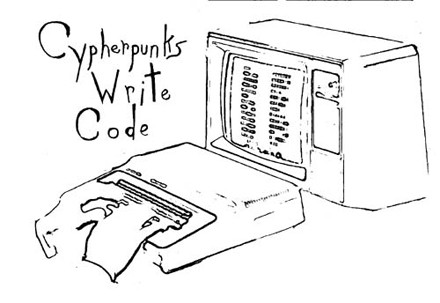
The Times – January 3, 2009Bitcoin Genesis Block Mined 03 January 2009Cypherpunks Write CodeCODE IS LAW THE SOONER HUMANKIND ACCEPTS IT, THE SOONER IT CAN BUILD AROUND ITYeah.. I wonder Why 😂Bitcoin made easyHow a Bitcoin transaction worksA humble MinerHow Bitcoin Mining WorksMining DifficultyBitcoin HalvingBitcoin Previous HalvingsPoolsBitcoin WalletsBitcoin StakeholdersBitcoin FactsPower to the PeopleTotalitarian Governments can kiss my 256-bit keyBitcoin – People’s MoneyBitcoin cannot be Shut DownThe power of the long tail…Central Bank’s 3 StrategiesF**k them, Enough !!!Upcoming Smart Contracts NetworksBitcoin Yearly CandlesBitcoin Price History – Log ScaleBitcoin Mining Ecosystem MapDefi Ecosystem in EthereumDeFi Stack: Product& Application ViewSyscoin EcosystemSyscoinBSC EcosystemPopular CryptocurrencyCrpto EcosystemPublic Companies that own BitcoinTop Banks investing in CryptoBitcoin Inflation vs. TimeWhen you’re Ready…Choose WiselyMake bitcoin thrive, let fiat become humus…Veritas non Auctoritas Facit Legem
Most people misunderstand what bitcoin miners actually do, and as a result they don’t fully grasp the level of security provided by bitcoin’s hashrate.
In this article, we’ll explain proof of work in a non-technical way so that you’ll be able to counter the misinformation about supercomputers and quantum computers attacking the Bitcoin network in the future.
Simply put, mining is a lottery to create new blocks in the Bitcoin blockchain. There are two main purposes for mining:
To permanently add transactions to the blockchain without the permission of any entity.
To fairly distribute the 21 million bitcoin supply by rewarding new coins to miners who spend real world resources (i.e. electricity) to secure the network.
To understand what is actually happening in this lottery system, let’s look at a simple analogy where every Bitcoin hash is equivalent to a dice roll.
Luck, Gambling, and SHA-256
Imagine that miners in the Bitcoin Network are all individuals gambling at a casino. In this example, each of these gamblers have a 1000 sided dice. They roll their die as quickly as possible, trying to get a number less than 10. Statistically, this may take a very long time, but as more gamblers join the game, the time it takes to hit a number less than 10 gets reduced. In short, more gamblers equals quicker rounds.
Once somebody successfully rolls a number less than 10, all gamblers at the table can look down and verify the number. This lucky gambler takes the prize money and the next round begins.
Ultimately, the process of mining bitcoin is very similar. All miners on the network are using Application Specific Integrated Circuits (ASICs), which are specialized computers designed to compute hashes as quickly as possible.
To “compute a hash” simply means plugging any random input into a mathematical function and producing an output.
More hashes per second (i.e. higher hashrate) is equivalent to more dice rolls per second, and thus a greater probability of success.
Miners propose a potential Bitcoin block of transactions, and use this for an input. The block is plugged into the SHA256 hash function which yields a fixed-sized output, known as a hash. A single hash can be computed in less than a millisecond, as it involves no complex math.
If the hash value is lower than the Bitcoin Network difficulty, then the miner who proposed the block wins. If not, then the miner continues trying by computing more hashes.
The successful miner’s block is then added to the blockchain, the miner is rewarded with newly issued bitcoin for their work, and the “next round” begins.
Sources :

https://wikipedia.com/

https://braiins.com/

https://blockdata.com/

https://coin98analytics.com/

https://scoopwhoop.com/

https://stakingrewards.com/

https://syscoin.org/

https://galaxydigitalresearch.com/

https://surveycrest.com/

The Times

The Economist

"Internet of Money" - Andreas Antonopoulus

Hal Finney Quotes

Timothy C. May Quote

Free Spirit Digital Art

!°! If I forgot someone, sorry ! Do tell and I'll add you as a source of inspiration on the list !!! Thanks for understanding !!!
Questions, opinions, critics and requests always welcomed and as time allows will be accomodated !!! 🤓 🙂 😉
Did you find this article helpful?
If so, please consider a donation to help the evolution and development of more helpful articles in the future, and show your support for alternative articles.
In a first, Bitcoin developers have done something amazing amid the criticism over the lightning network and issues associated with it. A team of developers has made an international payment using the radio … Continue reading International payment using the radio waves→
My inspiration for this page was given to me by my new aquired friend, a fellow Truth Seeker – Joris and to whom I dedicate this page… Wish you… as well as to … Continue reading Discipline Quotes→
Bitcoin white paper turns 15 and the Legacy of Satoshi Nakamoto lives on. “I’ve been working on a new electronic cash system that’s fully peer-to-peer, with no trusted third party,” Satoshi Oct. 31, … Continue reading Bitcoin White Paper turn 15→
Power to the People No more Excuses You have a Choice NowCode is LawThis is about the other 6 billion…Arise, you have nothing to lose but your barbed wired fences !!!Veritas non Auctoritas…Choose!FreedomLet the Bitcoin seed thrive…Bitcoin – People’s MoneyPeaceLoveBitcoin cannot be Shut DownVeritas non AuctoritasWhen you’re Ready…
If so, please consider a donation to help the evolution and development of more helpful articles in the future, and show your support for alternative articles.
In a first, Bitcoin developers have done something amazing amid the criticism over the lightning network and issues associated with it. A team of developers has made an international payment using the radio … Continue reading International payment using the radio waves→
My inspiration for this page was given to me by my new aquired friend, a fellow Truth Seeker – Joris and to whom I dedicate this page… Wish you… as well as to … Continue reading Discipline Quotes→
Bitcoin white paper turns 15 and the Legacy of Satoshi Nakamoto lives on. “I’ve been working on a new electronic cash system that’s fully peer-to-peer, with no trusted third party,” Satoshi Oct. 31, … Continue reading Bitcoin White Paper turn 15→
For the first time in human history there is at the disposal of the masses a tool that eliminates the middlemen and takes trust from the hands of humans and beautifully makes it a mathematics code that cannot be breaken, hacked or tricked…
In a first, Bitcoin developers have done something amazing amid the criticism over the lightning network and issues associated with it. A team of developers has made an international payment using the radio … Continue reading International payment using the radio waves→
My inspiration for this page was given to me by my new aquired friend, a fellow Truth Seeker – Joris and to whom I dedicate this page… Wish you… as well as to … Continue reading Discipline Quotes→
Bitcoin white paper turns 15 and the Legacy of Satoshi Nakamoto lives on. “I’ve been working on a new electronic cash system that’s fully peer-to-peer, with no trusted third party,” Satoshi Oct. 31, … Continue reading Bitcoin White Paper turn 15→
Power to the PeopleNot by Force but by Free WillThe Choice is always YoursArise…Choose Wisely…People do not understand the Monetary SystemPrivacy is not Secrecy.VeritasBitcoin cannot be ShutDownPower of the long tailCypherPunks Write Codebitcoin Genesis Block
In a first, Bitcoin developers have done something amazing amid the criticism over the lightning network and issues associated with it. A team of developers has made an international payment using the radio … Continue reading International payment using the radio waves→
My inspiration for this page was given to me by my new aquired friend, a fellow Truth Seeker – Joris and to whom I dedicate this page… Wish you… as well as to … Continue reading Discipline Quotes→
“A mysterious new technology emerges, seemingly out of nowhere, but actually the result of two decades of intense research and development by nearly anonymous researchers.
Political idealists project visions of liberation and revolution onto it; establishment elites heap contempt and scorn on it.
On the other hand, technologists – nerds – are transfixed by it.
They see within it enormous potential and spend their nights and weekends tinkering with it.
Eventually mainstream products, companies and industries emerge to commercialize it; its effects become profound; and later, many people
wonder why its powerful promise wasn’t more obvious from the start.
What technology am I talking about?
Personal computers in 1975, the Internet in 1993, and – I believe – Bitcoin in 2014….
The practical consequence of solving this problem is that Bitcoin gives us, for the first time, a way for one Internet user to transfer a unique piece of digital property to another Internet user, such that the transfer is guaranteed to be safe and secure, everyone knows that the transfer has taken place, and nobody can challenge the legitimacy of the transfer.
The consequences of this breakthrough are hard to overstate.
What kinds of digital property might be transferred in this way?
Think about digital signatures, digital contracts, digital keys (to physical locks, or to online lockers), digital ownership of physical assets such as cars and houses, digital stocks and bonds …
and digital money”.
– Marc Andreessen, Founder of Netscape & well-known venture capitalist, 2014
In a first, Bitcoin developers have done something amazing amid the criticism over the lightning network and issues associated with it. A team of developers has made an international payment using the radio … Continue reading International payment using the radio waves→
My inspiration for this page was given to me by my new aquired friend, a fellow Truth Seeker – Joris and to whom I dedicate this page… Wish you… as well as to … Continue reading Discipline Quotes→
Bitcoin white paper turns 15 and the Legacy of Satoshi Nakamoto lives on. “I’ve been working on a new electronic cash system that’s fully peer-to-peer, with no trusted third party,” Satoshi Oct. 31, … Continue reading Bitcoin White Paper turn 15→
Cryptoassets being held, generally as longer-term plays; sometimes used self-deprecatingly for soft or losing positions one should close, but can’t for whatever reason. “Too bad none of my alt bags saw the moon that I did today. #cryptoeclipse”
Bitcoin Maximalists
The truest believers in bitcoin’s original mission and design, often paired with a disdain for altcoins.
Block
Blocks are found in the Bitcoin block chain. Blocks connect all transactions together.
Transactions are combined into single blocks and are verified every ten minutes through mining.
Each subsequent block strengthens the verification of the previous blocks, making it impossible to double spend bitcoin transactions (see double spend below).
BIP
Bitcoin Improvement Proposal or BIP, is a technical design document providing information to the bitcoin community, or describing a new feature for bitcoin or its processes or environment which affect the Bitcoin protocol.
New features, suggestions, and design changes to the protocol should be submitted as a BIP.
The BIP author is responsible for building consensus within the community and documenting dissenting opinions.
Black Swans
A black swan is an event or occurrence that deviates beyond what is normally expected of a situation and is extremely difficult to predict.
Black swan events are typically random and unexpected.
The term was popularized by Nassim Nicholas Taleb, a finance professor, writer, and former Wall Street trader.
Block Chain
The Bitcoin block chain is a public record of all Bitcoin transactions. You might also hear the term used as a “public ledger”.
The block chain shows every single record of bitcoin transactions in order, dating back to the very first one.
The entire block chain can be downloaded and openly reviewed by anyone, or you can use a block explorer to review the block chain online.
Block Height
The block height is just the number of blocks connected together in the block chain. Height 0 for example refers to the very first block, called the “genesis block”.
Block Reward
When a block is successfully mined on the bitcoin network, there is a block reward that helps incentivize miners to secure the network.
The block reward is part of a “coinbase” transaction which may also include transaction fees.
The block rewards halves roughly every four years; see also “halving”.
BTFD | #BTFD
“Buy the Fucking Dip” Advice to other traders to pick up a coin that’s presumably hit its bottom.
“$GNT Golem making moves. Underpriced @ 7.5K If U are buying GNT under 10K still a good price 3 X LETS GO $ETH #CRYPTO #trading #BTFD”
Change
Let’s say you are spending $9.90 in your local supermarket, and you give the cashier $10.00. You will get back .10 cents in change.
The same logic applies to bitcoin transactions.
Bitcoin transactions are made up of inputs and outputs.
When you send bitcoins, you can only send them in a whole “output”.
The change is then sent back to the sender.
Cold Storage
The term cold storage is a general term for different ways of securing cryptocurrency offline (disconnected from the internet).
This would be the opposite of a hot wallet or hosted wallet, which is connected to the web for day-to-day transactions.
The purpose of using cold storage is to minimize the chances of your bitcoins being stolen from a malicious hacker and is commonly used for larger sums of bitcoins.
Cold Wallet and Hot Wallet
Cold storage is an offline wallet provided for storing cryptocurrency.
With cold storage, the digital wallet is stored on a platform that is not connected to the internet, thereby, protecting the wallet from unauthorized access, cyber hacks, and other vulnerabilities that a system connected to the internet is susceptible to.
Confirmation
A confirmation means that the bitcoin transaction has been verified by the network, through the process known as mining.
Once a transaction is confirmed, it cannot be reversed or double spent.
Transactions are included in blocks.
Cryptocurrency
Cryptocurrency is the broad name for digital currencies that use blockchain technology to work on a peer-to-peer basis.
Cryptocurrencies don’t need a bank to carry out transactions between individuals.
The nature of the blockchain means that individuals can transact with each other, even if they don’t trust each other.
The cryptocurrency network keeps track of all the transactions and ensures that no one tries to renege on a transaction.
Cryptocurrency 2.0
Also known as a decentralized app,(Dapp) a cryptocurrency 2.0 project uses the blockchain for something other than simply creating and sending money.
They typically involve decentralized versions of online services that were previously operated by a trusted third party.
Cryptography
Cryptography is used in multiple places to provide security for the Bitcoin network.
Cryptography, which is essentially mathematical and computer science algorithms used to encrypt and decrypt information, is used in bitcoin addresses, hash functions, and the block chain.
Cypherpunk
1. A person with an interest in encryption and privacy, especially one who uses encrypted email.
2. Cypherpunk, a term that appeared in Eric Hughes’ “A Cypherpunk’s Manifesto” in 1993, combines the ideas of cyberpunk, the spirit of individualism in cyberspace, with the use of strong encryption ( ciphertext is encrypted text) to preserve privacy.
Cypherpunk advocates believe that the use of strong encryption algorithms will enable individuals to have safely private transactions.
They oppose any kind of government regulation of cryptography.
They admit the likelihood that criminals and terrorists will exploit the use of strong encryption systems, but accept the risk as the price to be paid for the individual’s right to privacy.
Dark Web
The part of the World Wide Web that is only accessible by means of special software, allowing users and website operators to remain anonymous or untraceable.
The Dark Web poses new and formidable challenges for law enforcement agencies around the world.
Decentralized
Having a decentralized bitcoin network is a critical aspect.
The network is “decentralized”, meaning that it’s void of a centralized company or entity that governs the network.
Bitcoin is a peer-to-peer protocol, where all users within the network work and communicate directly with each other, instead of having their funds handled by a middleman, such as a bank or credit card company.
Difficulty
Difficulty is directly related to Bitcoin mining (see mining below), and how hard it is to verify blocks in the Bitcoin network.
Bitcoin adjusts the mining difficulty of verifying blocks every 2016 blocks.
Difficulty is automatically adjusted to keep block verification times at ten minutes.
Dogecoin
Dogecoin is an altcoin that first started as a joke in late 2013. Dogecoin, which features a Japanese fighting dog as its mascot, gained a broad international following and quickly grew to have a multi-million dollar market capitalization.
Double Spend
If someone tries to send a bitcoin transaction to two different recipients at the same time, this is double spending. Once a bitcoin transaction is confirmed, it makes it nearly impossible to double spend it. The more confirmations that a transaction has, the harder it is to double spend the bitcoins.
DYOR | #DYOR
“Do Your Own Research.” The trader’s caveat that advice shouldn’t be taken at face value.
“$BCY has an appealing risk/reward here. Could take a few months to play out, however, and will require patience. #DYOR”
Exit Scam
Traditionally a term for darknet markets and vendors that, after building up a good reputation, accumulate bitcoins and disappear; exit scams are also feared by ICO participants who worry that, once they’ve raised hundreds of millions in hard-to-trace money, the developers will take the money and run.
Fiat
Government-issued money.
Full Node
A full node is when you download the entire block chain using a bitcoin client, and you relay, validate, and secure the data within the block chain.
The data is bitcoin transactions and blocks, which is validated across the entire network of users.
FOMO | #FOMO
“Fear of Missing Out.” When a coin starts to moon, dumb money rushes in. “$LGD on a TEAR right now!!! It has major highs right now! Some major #FOMO going on!!! Sell while it’s high. It WILL drop before fight!!!”
FUD
“Fear, Uncertainty, and Doubt.”
Another non-crypto term that describes attempts to scare weak-handed coin-holders into selling their positions, often with rumors of exit scams or hacks; the cheap, dumped coins are then picked up by the FUD-ers.
Fungibility
Fungibility is a good or asset’s interchangeability with other individual goods or assets of the same type.
Assets possessing this fungibility property simplify the exchange and trade processes, as interchangeability assumes everyone values all goods of that class the same.
HODL
HOLD ON FOR DEAR LIFE!
The intentionally misspelled word hodl has its roots in a December 2013 post on the Bitcoin Talk forum, “I AM HODLING”; when the author, GameKyuubi, couldn’t be bothered to fix his typo, the community instantly turned it into a verb: to hodl.
Along with other terms, hodl is an effective litmus test for sussing out newcomers, carpetbaggers, and tourists.
Halving
Bitcoins have a finite supply, which makes them scarce.
The total amount that will ever be issued is 21 million.
The number of bitcoins generated per block is decreased 50% every 210,000 blocks,roughtly four years.
This is called “halving.”
The final halving will take place in the year 2140.
Hash
A cryptographic hash is a mathematical function that takes a file and produces a relative shortcode that can be used to identify that file.
A hash has a couple of key properties:
• It is unique.
Only a particular file can produce a particular hash, and two different files will never produce the same hash.
• It cannot be reversed.
You can’t work out what a file was by looking at its hash.
Hashing is used to prove that a set of data has not been tampered with.
It is what makes bitcoin mining possible.
Hash Rate
The hash rate is how the Bitcoin mining network processing power is measured.
In order for miners to confirm transactions and secure the block chain, the hardware they use must perform intensive computational operations which is output in hashes per second.
Then, try changing just a letter in the input text to see how the resulting hash varies significantly
Hard Fork
A hard fork is when a single cryptocurrency splits in two.
It occurs when a cryptocurrency’s existing code is changed, resulting in both an old and new version.
Meanwhile a soft fork is essentially the same thing, but the idea is that only one blockchain (and thus one coin) will remain valid as users adopt the update.
So both fork types create a split, but a hard fork is meant to create two blockchain/coins and a soft fork is meant to result in one.
Segwit was a soft fork, Bitcoin Cash, Bitcoin Gold, and Segwit2x are all hard forks.
Immutability
In object-oriented and functional programming, an immutable object (unchangeable object) is an object whose state cannot be modified after it is created.
This is in contrast to a mutable object (changeable object), which can be modified after it is created.
Lambo | #Lambo
A running joke among traders, you’re cryptorich when you can buy a Lamborghini; though absurd, it’s not unheard of — when Alexandre Cazes, the suspected founder of a major darknet marketplace, was found hanged in his Bangkok jail cell, Thai media reported that he owned four Lamborghinis.
Mining
Bitcoin mining is the process of using computer hardware to do mathematical calculations for the Bitcoin network in order to confirm transactions.
Miners collect transaction fees for the transactions they confirm and are awarded bitcoins for each block they verify.
Moon | #Moon
A rapid price increase.
Peer-to-Peer
Typically, online applications are provided by a central party that organizes all the transactions.
Your bank runs its own computers, and all the customers log into the bank’s computer to handle their transactions.
If Bob wants to send money to Alice, he asks the bank to do it, and the bank controls everything.
In a peer-to-peer arrangement, technology cuts out the middleman, meaning that people deal directly with each other.
Bob would send the money directly to Alice, and there wouldn’t be any bank involved at all.
Pool
As part of bitcoin mining, mining “pools” are a network of miners that work together to mine a block, then split the block reward among the pool miners.
Mining pools are a good way for miners to combine their resources to increase the probability of mining a block, and also contribute to the overall health and decentralization of the bitcoin network.
Private Key
A private key is a string of data that shows you have access to bitcoins in a specific wallet.
Think of a private key like a password; private keys must never be revealed to anyone but you, as they allow you to spend the bitcoins from your bitcoin wallet through a cryptographic signature.
Proof of Work
Proof of work refers to the hash of a block header (blocks of bitcoin transactions).
A block is considered valid only if its hash is lower than the current target.
Each block refers to a previous block adding to previous proofs of work, which forms a chain of blocks, known as a block chain.
Once a chain is formed, it confirms all previous Bitcoin transactions and secures the network.
Pump
A rapid price increase believed to be the result of market manipulation, a.k.a. pump and dump.
Public Address
A public bitcoin address is cryptographic hash of a public key.
A public address typically starts with the number “1.”
Think of a public address like an email address.
It can be published anywhere and bitcoins can be sent to it, just like an email can be sent to an email address.
Private Key
A private key is a string of data that shows you have access to bitcoins in a specific wallet.
Think of a private key like a password; private keys must never be revealed to anyone but you, as they allow you to spend the bitcoins from your bitcoin wallet through a cryptographic signature.
Rekt | #Rekt
Meaning “wrecked”.
“I never sell because of #FUD, and I never buy because of #FOMO.
That’s the easiest way to get #Rekt”
Sats
Satoshis, currently the smallest unit of a single bitcoin, useful for tracking coin prices. “At the rate $XRP’s moving, I wouldn’t be surprised if it hits 10K sats by the end of the day.”
Security Tokens
A security token (sometimes called an authentication token) is a small hardware device that the owner carries to authorize access to a network service.
The device may be in the form of a smart card or may be embedded in a commonly used object such as a key fob.
Shitcoins
Pejorative term for altcoins, especially low-cap coins, often affectionately used by shitcoin hodlers.
SEGWIT
SegWit is the process by which the block size limit on a blockchain is increased by removing signature data from Bitcoin transactions.
When certain parts of a transaction are removed, this frees up space or capacity to add more transactions to the chain.
Transaction
A transaction is when data is sent to and from one bitcoin address to another.
Just like financial transactions where you send money from one person to another, in bitcoin you do the same thing by sending data (bitcoins) to each other.
Bitcoins have value because it’s based on the properties of mathematics, rather than relying on physical properties (like gold and silver) or trust in central authorities, like fiat currencies.
Wallet
Just like with paper dollars you hold in your physical wallet, a bitcoin wallet is a digital wallet where you can store, send, and receive bitcoins securely.
There are many varieties of wallets available, whether you’re looking for a web or mobile solution.
Ideally, a bitcoin wallet will give you access to your public and private keys.
This means that only you have rightful access to spend these bitcoins, whenever you choose to.
Whale
Anyone who owns 5 percent of any given coin, often used as a boogeyman to explain unwanted price movements.
“Nice support $NEO. Clear whale manipulation.”
Blue Pill vs. Red PillChoose wiselyWhen You’re ready …
In a first, Bitcoin developers have done something amazing amid the criticism over the lightning network and issues associated with it. A team of developers has made an international payment using the radio … Continue reading International payment using the radio waves→
My inspiration for this page was given to me by my new aquired friend, a fellow Truth Seeker – Joris and to whom I dedicate this page… Wish you… as well as to … Continue reading Discipline Quotes→
Bitcoin white paper turns 15 and the Legacy of Satoshi Nakamoto lives on. “I’ve been working on a new electronic cash system that’s fully peer-to-peer, with no trusted third party,” Satoshi Oct. 31, … Continue reading Bitcoin White Paper turn 15→
In a first, Bitcoin developers have done something amazing amid the criticism over the lightning network and issues associated with it. A team of developers has made an international payment using the radio … Continue reading International payment using the radio waves→
My inspiration for this page was given to me by my new aquired friend, a fellow Truth Seeker – Joris and to whom I dedicate this page… Wish you… as well as to … Continue reading Discipline Quotes→
Bitcoin white paper turns 15 and the Legacy of Satoshi Nakamoto lives on. “I’ve been working on a new electronic cash system that’s fully peer-to-peer, with no trusted third party,” Satoshi Oct. 31, … Continue reading Bitcoin White Paper turn 15→
Mining Pool Payouts explained: PPS vs. FPPS vs. PPLNS vs. PPS+
What is a Mining Pool?
Mining Pools
A Mining pools is a hub where a group of Crypto currency miners share their processing power to the network in order to solve the blocks quicker.
The rewards will be split equally based on the amount of shares that they contributed in finding a block.
Pool mining was introduced during early Bitcoin mining days when solo mining became non-viable.
The more powerful your hardware is, the more shares you’ll submit, the more shares you submit, the more you’ll earn.
In order for the pool to pay its miners each pool uses its own payment scheme. Two of the most popular option is PPS and PPLNS.
Pay-Per-Share (PPS)Pay-Per-Last-N-Shares (PPLNS)
The first thing a miner has to decide is which pool mining payout is best for their requirements.
PROP (proportional), FPPS (Full Pay Per Share), SMPPS (Shared Maximum Pay Per Share), ESMPPS (Equalized Shared Maximum Pay Per Share), CPPSRB (Capped Pay Per Share with Recent Backpay), PPS (Pay Per Share), PPLNS (Pay Per Last N Share) and lastly PPS+ (Pay Per Share Plus).
Among them PPS and PPLNS are the two types of payment models that are mostly used by mining pools currently. Before we explain both PPS and PPLNS we’ll make a short note on mining pool.
There are numerous payment systems (over 15), but the vast majority of the pools operate on a PPS, FPPS, PPS+ and PPLNSbasis.
However, before trying to understand the different settlement models, it is important to come to a consensus on some terms used in crypto mining.
Block Reward: Block reward refers to the new coins issued by the network to miners for each successfully solved block.
Hashing Power: Hash rate is the speed at which a computer completes an operation in the cryptocurrency’s code. A higher hashrate increases a miner’s opportunity of finding the next block.
Luck: Luck, in mining, is the probability of success. Imagine that each miner is given a lottery ticket for a certain amount of hashing power they provide. If they are to provide 1 TH/s hashing power when the overall hashing power in the network is 10 TH/s, then they would receive 1 of 10 total lottery tickets. The probability of winning the lottery (in this case finding the block reward) would be 10%.
Transaction Fees: Some networks (like Bitcoin) also have substantial amounts of transaction fees rewarded to miners. These fees are the total fees paid by users of the network to execute transactions.
Pay-Per-Share (PPS)
PPS offers an instant flat payout for each share that is solved. With this payment method, a miner gets a standard payout rate for each share completed. Each share is worth a certain amount of mineable cryptocurrency.
After deducting the mining pool fees, the miners are given a fixed income every day. Therefore, under the PPS mode, the returns are relatively stable. Miners are exposed to risk here. They may not get the transaction fees.
It is ideal for low priced orders for an extended period. This model becomes lucrative during a bearish run of a particular coin.
Pay-Per-Last-N-Shares (PPLNS)
With this payout, profits will be allocated based on the number of shares miners contribute. This kind of allocation method is closely related to the block mined out. If the mining pool excavates multiple blocks in a day, the miners will have a high profit; if the mining pool is not able to mine a block during the whole day, the miner’s profit during the whole day is zero.
Notably, in the short term, the PPLNS model is highly correlated with a pool’s luck. If the luck factor of a particular mining pool decreases in the short term, the miner’s income will also decrease accordingly (the opposite case of the mining pool being lucky in the short term is possible too). However, in the long term, the luck factor tends to average out to the mean.
Hence, this model is ideal for fixing orders on a big pool that has a high chance of finding a block within the order time limit. Or a standard order which will have miners connected for a longer time.
Pay Per Share + (PPS+)
PPS+ is a blend of two modes mentioned above, PPS and PPLNS. The block reward is settled according to the PPS model. And the mining service charge /transaction fee is settled according to the PPLNS mode.
That is to say, in this mode, the miner can additionally obtain the income of part of the transaction fee based on the PPLNS payment method. This was a major drawback in the PPS model.
Full Pay Per Share (FPPS)
With this pool payout, both the block reward and the mining service charge are settled according to the theoretical profit. Calculate a standard transaction fee within a certain period and distribute it to miners according to their hash power contributions in the pool. It increases the miners’ earnings by sharing some of the transaction fees.
With the PPS and FPPS payment methods, you will get paid no matter if the pool finds a block or not. This is the most significant advantage over PPLNS. The risks and rewards are higher with the PPLNS plan.
The decision on which mining plan to choose from needs to be preceded by the decision of choosing the right mining infrastructure.
Difference between PPS vs PPLNS payment models?
PPLNS
PPLNS stands for Pay Per Last (luck) N Shares. This method calculates your payments based on the number of shares you submitted during a shift.
It includes shift system which is time based or by number of shares submitted by the miners on the pool.
Your pool may find blocks consistently or in overtime it may have huge variations in winning a block and that ultimately affects your payments. PPLNS greatly involves luck factor and you’ll notice huge fluctuations in your 24 hour payout.
If you maintain your mining on a single pool then your payouts will remain consistent and it only differs when new miners join or leave the pool.
PPS
Pay Per Share pays you an average of the number of shares that you contributed to the pool in finding blocks.
PPS pays you on solid rate and is more of a direct method which completely eliminates luck factor.
In PPS method regardless of the pools lucky at winning blocks you’re going to get 100% payout at the end of the day. This is because there is a standard payout set for each miners based on their hash power.
It won’t be more than 100% or less than that and with this PPS method you can easily calculate your potential earnings.
On the other hand with PPLNS payment system on average you can either get more than 100% or less than that. It is based on how lucky the pool is at finding blocks.
Should I choose PPS or PPLNS?
This is one of the common questions most miners have initially.
Should I choose Pay Per Share or Pay Per Last N Share pools?
If you are the person who don’t switch pools often then PPLNS is definitely for you as such pools are good at rewarding its loyal miners.
Pay Per Share: No matter what, if you need a fixed payouts at the end of the day to liquidate or for whatsoever reason then your choice would be PPS.
Pay Per Share works well for large mining farms who can calculate and have statistics based on their mining power.
PPS is good for large miners but really bad for pool owners as there is a guaranteed payout for work no matter if the pool hits the block or not.
For this reason and because of pool hoppers (not loyal miners of the pool) most of the mining pools have switched to PPLNS payment model.
Pay Per Last N Shares: If you are the one that is looking to accumulate and hold more coins then PPLNS is recommended.
For each block that your pool finds you’ll get a share based on your hashrate.
Unlike PPS, in PPLNS you’ll get payouts more often and in the long run you’ll be rewarded more with PPLNS than PPS.
However due to huge variance it’s really hard to calculate your mining income.
PPLNS is good for both mid-range miners and pool owners as the payouts is only based on the blocks found.
If your pool is more lucky then you’ll see payments more often. This is the reason why miners stick to a pool where there is more hash power assuming the pool finds block very often.
You can find more comparison of mining pools payment system here.
How to find out if a pool is PPS or PPLNS?
Cryptocurrency mining can be a lucrative process. However it’s very important that you find out what payment scheme your pool is using before committing your hashing power.
Most of the mining pools has this information listed on FAQ page or at payouts page. If you’re unable to find this information then the only option is to contact the pool support.
Hope the information on this page is helpful for you to decide the right mining pool.
In a first, Bitcoin developers have done something amazing amid the criticism over the lightning network and issues associated with it. A team of developers has made an international payment using the radio … Continue reading International payment using the radio waves→
My inspiration for this page was given to me by my new aquired friend, a fellow Truth Seeker – Joris and to whom I dedicate this page… Wish you… as well as to … Continue reading Discipline Quotes→
Bitcoin white paper turns 15 and the Legacy of Satoshi Nakamoto lives on. “I’ve been working on a new electronic cash system that’s fully peer-to-peer, with no trusted third party,” Satoshi Oct. 31, … Continue reading Bitcoin White Paper turn 15→
On January 3rd, 2009 Satoshi Nakamoto published the Genesis Block with the first 50 Bitcoins on Sourceforge. He also left a message on the blockchain at the time, quoting the headline in the British newspaper Times:
On January 3, 2009, the minister was on the verge of bailing out the banks.
Nakamoto started writing the white paper in 2008 and published it in October of that year.
The concept of a decentralized, anonymous, trusted currency emerged after the 2008 financial crisis, which left responsibility for the banks.
Satoshi neither supports the modern banking system nor does he like partial reserve banks.
A partial reserve bank is a bank that takes deposits and issues loans or investments, but only has to reserve a fraction of its liabilities for deposits. Basically, the bank is using money that it doesn’t own.
Satoshi wants to get rid of banks and seedy middlemen whom he believes are corrupt and unreliable. As such, he created a more community-centric digital currency.
13 years later, Bitcoin is still going strong with a market cap of nearly $ 900 billion. It is currently held by billionaires, banks, celebrities, governments, and corporations. This is evidence of how far BTC has come in its brief existence.
The precarious banking situation and economic uncertainty are also in crisis again.
In a first, Bitcoin developers have done something amazing amid the criticism over the lightning network and issues associated with it. A team of developers has made an international payment using the radio … Continue reading International payment using the radio waves→
My inspiration for this page was given to me by my new aquired friend, a fellow Truth Seeker – Joris and to whom I dedicate this page… Wish you… as well as to … Continue reading Discipline Quotes→
Bitcoin white paper turns 15 and the Legacy of Satoshi Nakamoto lives on. “I’ve been working on a new electronic cash system that’s fully peer-to-peer, with no trusted third party,” Satoshi Oct. 31, … Continue reading Bitcoin White Paper turn 15→
In a first, Bitcoin developers have done something amazing amid the criticism over the lightning network and issues associated with it. A team of developers has made an international payment using the radio … Continue reading International payment using the radio waves→
My inspiration for this page was given to me by my new aquired friend, a fellow Truth Seeker – Joris and to whom I dedicate this page… Wish you… as well as to … Continue reading Discipline Quotes→
Bitcoin white paper turns 15 and the Legacy of Satoshi Nakamoto lives on. “I’ve been working on a new electronic cash system that’s fully peer-to-peer, with no trusted third party,” Satoshi Oct. 31, … Continue reading Bitcoin White Paper turn 15→
In a first, Bitcoin developers have done something amazing amid the criticism over the lightning network and issues associated with it. A team of developers has made an international payment using the radio … Continue reading International payment using the radio waves→
My inspiration for this page was given to me by my new aquired friend, a fellow Truth Seeker – Joris and to whom I dedicate this page… Wish you… as well as to … Continue reading Discipline Quotes→
Bitcoin white paper turns 15 and the Legacy of Satoshi Nakamoto lives on. “I’ve been working on a new electronic cash system that’s fully peer-to-peer, with no trusted third party,” Satoshi Oct. 31, … Continue reading Bitcoin White Paper turn 15→
In a first, Bitcoin developers have done something amazing amid the criticism over the lightning network and issues associated with it. A team of developers has made an international payment using the radio … Continue reading International payment using the radio waves→
My inspiration for this page was given to me by my new aquired friend, a fellow Truth Seeker – Joris and to whom I dedicate this page… Wish you… as well as to … Continue reading Discipline Quotes→
Bitcoin white paper turns 15 and the Legacy of Satoshi Nakamoto lives on. “I’ve been working on a new electronic cash system that’s fully peer-to-peer, with no trusted third party,” Satoshi Oct. 31, … Continue reading Bitcoin White Paper turn 15→
Bitcoin block rewards are new bitcoins awarded to cryptocurrency miners for being the first to solve a complex math problem and creating a new block of verified bitcoin transactions.
The miners use networks of computers to do this, and every time a new block is created it is verified by all the other competing miners. Then a new math problem is introduced and the miners start over.
KEY TAKEAWAYS
A block reward refers to the number of bitcoins you get if you successfully mine a block of the currency.
The amount of the reward halves after the creation of every 210,000 blocks, or roughly every four years.
The amount is expected to hit zero around 2140.
Understanding Block Rewards
Block Reward Halving
The block reward provides an incentive for bitcoin miners to process transactions made with the cryptocurrency. Creating an immutable record of these transactions is vital for bitcoin to work as intended.
The blockchain is like a decentralized bank ledger—one that can’t be altered after being created. The miners are needed to verify the transactions and keep this ledger up to date. Block rewards, and to a lesser extent, transaction fees, are their payment for doing so.
Bitcoin was designed so that new bitcoins are created at a consistent pace. So the difficulty of the math problem is adjusted every two weeks to ensure a steady output of new bitcoins—roughly one block of transactions every 10 minutes.
Bitcoin’s Block Rewards Vs. Ethereum’s
Ethereum, bitcoin’s main competitor as a cryptocurrency, also relies on block rewards to provide incentives to miners. With Ethereum, the reward is a digital token called “ether,” which is rewarded each time a miner succeeds in providing the mathematical proof of a new block. As with bitcoin, miners are also awarded a transaction fee, known as a “gas” fee.
Unlike with bitcoin, there is no limit on the number of Ethereum ether tokens that can be created, and they are created at a much faster pace—in seconds, versus about 10 minutes. So the total number of blocks in the Ethereum chain is larger than in the bitcoin chain.
The Future of Bitcoin Block Rewards
To limit inflation, bitcoin creator Satoshi Nakamoto designed bitcoin to ultimately have only 21 million bitcoins.
This is why the size of bitcoin block rewards is halved after the creation of every 210,000 blocks, which takes around four years.
At bitcoin’s inception in 2009, each block reward was worth 50 BTC.
In May 2020, the block reward was halved a third time to 6.25 BTC.
And as of May 2021, there were already 18.7 million bitcoins in existence, or nearly 90% of the total planned supply.
Ultimately, the block reward is scheduled to reach zero around May 2140, but mining will likely no longer be profitable long before that date is reached.
As of April 2039, about 99.6% of bitcoins will already have been issued, and the block reward will be just 0.19531250 bitcoin.
Along the way, transaction fees are expected to become the primary incentive for bitcoin miners
In a first, Bitcoin developers have done something amazing amid the criticism over the lightning network and issues associated with it. A team of developers has made an international payment using the radio … Continue reading International payment using the radio waves→
My inspiration for this page was given to me by my new aquired friend, a fellow Truth Seeker – Joris and to whom I dedicate this page… Wish you… as well as to … Continue reading Discipline Quotes→
Bitcoin white paper turns 15 and the Legacy of Satoshi Nakamoto lives on. “I’ve been working on a new electronic cash system that’s fully peer-to-peer, with no trusted third party,” Satoshi Oct. 31, … Continue reading Bitcoin White Paper turn 15→





 BitHouse