Bitcoin and it’s History

Finance, like most human inventions, is constantly evolving.

In the beginning it was basic: food was traded for livestock, and livestock for resources like wood, or maize. It progressed to precious metal, such as silver and gold. And now, the next step in financial evolution has come to light.

This new form of currency has been constantly evolving over the past decade, developed by an unknown person and maintained by a collective group of the brightest minds in technology.

Itโ€™s a new form of money that is created and held digitally, and the most important part, of course, is that no government owns it, or decides its value – the peer-to-peer network community does.

We call this new money, โ€˜Bitcoinโ€™.

Historically, U.S. currency has been based on gold – you could give a dollar to the bank and receive a set amount back in gold. In contrast, Bitcoin isnโ€™t based on silver or gold – itโ€™s based on mathematical proofs validated by a public ledger called blockchain technology.

Bitcoin is generated through a complex sequence of mathematical formulas that run on computers; the network shares a public ledger using blockchain technologies that record, and validate, every transaction processed.

A single institution, such as the government, does not control the Bitcoin network.

The idea behind the technology has always been – and remains – one of decentralization – that is, remaining completely independent of a central authority, like a bank, a government, or a country.

Anyone can access the open-source software that makes Bitcoin work, and its those individuals interested that maintain it.

But, who invented Bitcoin? Is it a valid and legitimate currency like USD? And why did nobody think of this before?

But before we begin, letโ€™s talk about the creator of Bitcoin – or rather, the anonymous pseudonym that first published a concept.

How Did Bitcoin Start?
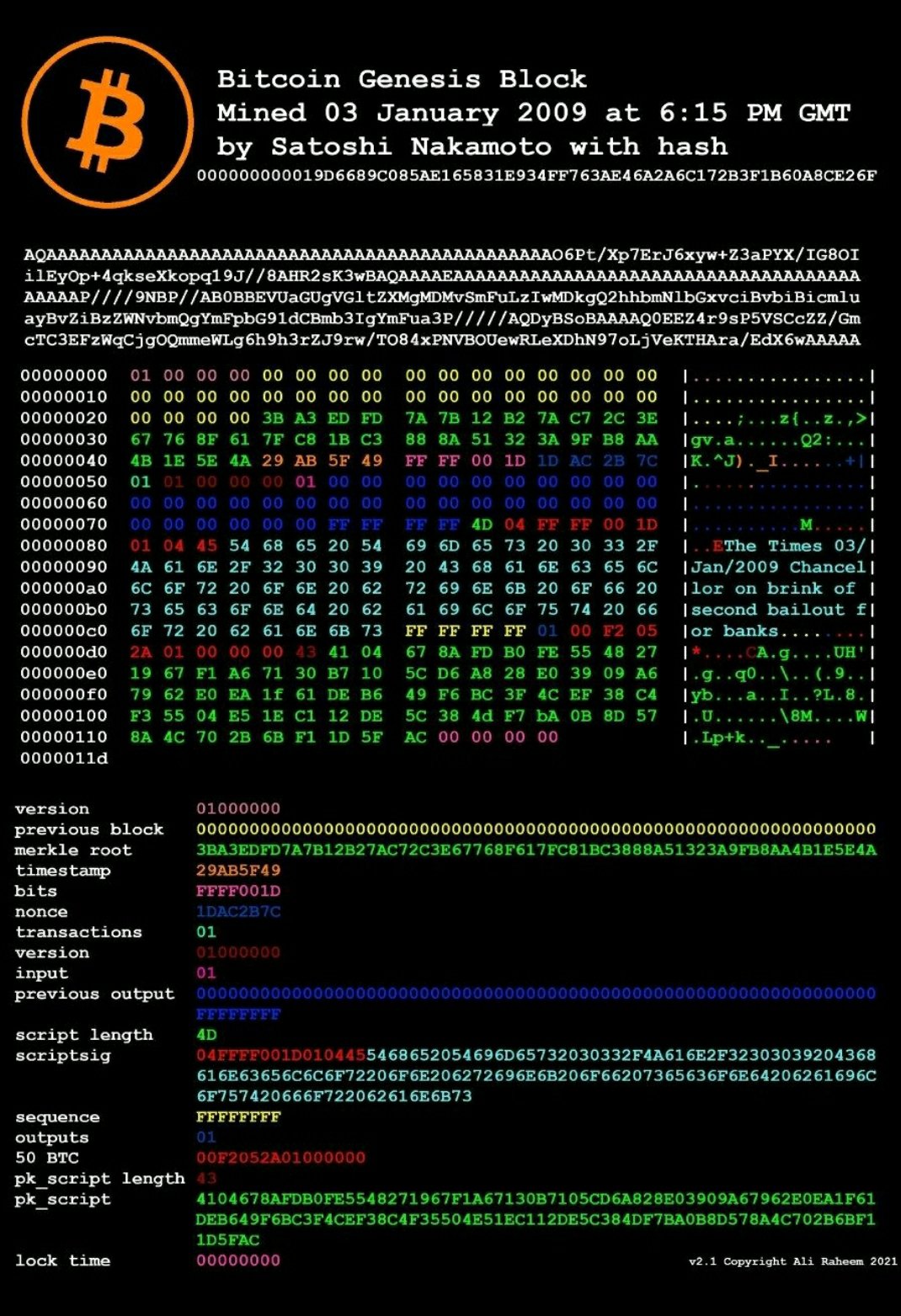
There are many questions about Bitcoin, but the most common one to be asked is, โ€œWho created it?โ€

That answer is not straightforward, because the identity of the creator remains a mystery. All we have is a pseudonym – Satoshi Nakamoto.

The accounts are no longer active; the coins in his wallet have never been spent.

Satoshi Nakamoto has disappeared from the world, or so it would seem.

Fast Company recently published an article suggesting that Satoshi Nakamoto could be a group of people, including Neal King, Vladimir Oksman, and Charles Bry. Apparently, these three people filed for a patent related to secure communication just two months prior to the purchase of the Bitcoin.org domain. Perhaps itโ€™s a coincidence; perhaps itโ€™s not.

What we do have, however, are facts:

  • On October 31st, 2008, โ€œBitcoin: A Peer-to-Peer Electronic Cash Systemโ€ was posted to a cryptography mailing list, published under the name โ€œSatoshi Nakamotoโ€. The whitepaper outlined the foundation of how Bitcoin would operate.
  • On August 18, 2008, an unknown person or entity registered the Bitcoin.org domain.
  • On January 8th, 2009, the first version of Bitcoin is announced, and shortly thereafter, Bitcoin mining begins.

The mystery that surrounds Satoshi Nakamoto is fitting; privacy was a key value for both Bitcoin, and its users.

Others have tried to claim his mantle – most recently an Australian man named Craig Wright, who has since withdrawn his claim.

While we may never know who first created Bitcoin, we do know that the technology he started has left ripples in the financial industry.

Bitcoin has risen to fame thanks to individuals such as the Winklevoss twins controlling and growing the market, and major events that have defined this new technologyโ€™s existence such as the Mt. Gox Ponzi scheme disaster.

The people involved and the events that occur are a constant reminder that this market is unregulated and seem to fall in line with Satoshi Nakamotoโ€™s goal of creating a decentralized network.

What is Bitcoin Used For?

Currency must have value to ensure stability.

The most common way for a person to judge a currencyโ€™s value is what they can use it on; Bitcoin is no different, and a host of vendors and merchants now accept it alongside, or in place of, fiat money.

One early adopter of Bitcoin was the computer retailer Dell. In fact, when Dell started accepting Bitcoin, it became one of the largest companies to do so internationally.

While the digital currency may total for just a fraction of the retailerโ€™s total transaction volume, there are other key reasons why the growth of Bitcoin could be aboon for the retailer.

Dell reported earnings of $59 billion during 2015. Traditional transaction fees range from 2 to 3 percent of the purchase price – with Bitcoin, itโ€™s much, much lower, nearing non-existent – saving the retailer a lot of money in the future.

Other companies, such as Expedia and Cheapair, have also started accepting Bitcoin, along with technology conglomerate Microsoft : users can add funds to their accounts with Bitcoin to purchase apps, games, and other types of digital content.

The acceptance of Bitcoin is a strategic decision on the part of these companies, most of which are reaching out to solidify their position with tech-savvy audiences.

Thereโ€™s a lot of benefit to Bitcoin, and a variety of reasons for its use, including :

  • Faster Payment: Accepting wire transfers and checks is time consuming, and it can take several days for payment to clear. Bitcoin is faster and can take a matter of minutes, rather than days to process payment.
  • Lower Transaction Fees: The cost to accept Bitcoins is lower compared to other payment methods, such as credit cards or Paypal.
  • Independent of Governments: Since Bitcoin is decentralized, you own it – no authority has the right to take away your Bitcoin. People with concerns about mainstream banking systems unravelling find this a major benefit.
  • Elimination of Chargebacks: Once Bitcoin is sent, thatโ€™s it – you canโ€™t chargeback, like you would with a credit card payment, which eliminates โ€˜chargeback fraudโ€™ often used by criminals and scammers.
  • Protection Against Inflation: With a fiat currency, the government can print as much money as it desires – this drastically decreases the value of currency, and may result in inflation. In contrast, Bitcoin has a fixed number – after they have all been โ€˜minedโ€™, no more Bitcoins will be created. Scarcity is an important aspect of currency which protects it from inflation.
  • Ownership of Currency: With Bitcoin, you own your coins. With other forms of digital fiat – such as Paypal – your assets may be held, and your account eventually suspending, locking you out of your earnings. Bitcoin puts you in control.

Is Bitcoin a Commodity, or a Currency?

Bitcoin is both. While it can be used to purchase items from major retailers, itโ€™s also treated as property by government jurisdictions, such as the IRS.

The IRS issued a guide on Bitcoin for tax purposes, stating it will treat virtual currencies as property for federal purposes. They go on to state that:

In some environments, virtual currency operates like โ€œrealโ€ currency โ€” i.e., the coin and paper money of the United States or of any other country that is designated as legal tender, circulates, and is customarily used and accepted as a medium of exchange in the country of issuance โ€” but it does not have legal tender status in any jurisdiction.

The notice provides that virtual currency is treated as property for U.S. federal tax purposes.

Typically, property is almost always something tangible that can be held in the physical realm.

The IRS goes on to state that:

General tax principles that apply to property transactions apply to transactions using virtual currency. Among other things, this means that:

  • Wages paid to employees using virtual currency are taxable to the employee, must be reported by an employer on a Form W-2, and are subject to federal income tax withholding and payroll taxes.
  • Payments using virtual currency made to independent contractors and other service providers are taxable and self-employment tax rules generally apply. Normally, payers must issue Form 1099.
  • The character of gain or loss from the sale or exchange of virtual currency depends on whether the virtual currency is a capital asset in the hands of the taxpayer.
  • A payment made using virtual currency is subject to information reporting to the same extent as any other payment made in property.

In addition to the IRSโ€™s guidance, the United States Commodities Futures Trading Commission in 2015 that Bitcoin is, in fact, a commodity.

The Future of Currency

Bitcoin has garnered a lot of attention over the past decade, despite constant declarations of its death – 99 Bitcoins keeps a running tab of โ€˜Bitcoin obituariesโ€™.

Despite all of this, Bitcoinโ€™s future has remained bright. Greater adoption rates, and an increasing number of brands accepting the currency (you can get a full list qui) means the long-term view on Bitcoin is that it will see market maturity as time progresses.

Mainstream investing vehicles, such as exchange-traded funds (ETFs) and Futures trading, including Bitcoin will be a major help to reaching that market maturity. Bitcoin Futures are already trading on the Chicago Mercantile Exchange (CME), and legislation to create a crypto ETF is in the works.

These securities will help stabilize cryptocurrency prices and mitigate volatility, which will help the publicโ€™s confidence grow in favor of Bitcoin.

Itโ€™s important to understand that, much like the early days of 1992, Bitcoin is a new technology – and new technologies can take decades to reach critical mass.

But, much like the Internet, no one wants to miss out on the โ€˜next big thingโ€™ – and Bitcoin is the biggest thing yet. Constant updates are occurring to Bitcoin thanks to what is called a “hard fork”.

These constant updates ensure that digital currencies continue to experience growth through technological development.


Did you find this article helpful?

If so, please consider a donation to help the evolution and development of more helpful articles in the future, and show your support for alternative articles.

Your generosity is ๐Ÿ’š ly appreciated

You can donate in any crypto your ๐Ÿ’š desires ๐Ÿ˜Š

Thank you all for your time !!!

โœŒ & ๐Ÿ’š


Bitcoin (BTC) :

1P1tTNFGRZabK65RhqQxVmcMDHQeRX9dJJ

LiteCoin(LTC) :

LYAdiSpsTJ36EWCJ5HF9EGy9iWGCwoLhed

Ethereum(ETH) :

0x602e8Ca3984943cef57850BBD58b5D0A6677D856

EthereumClassic(ETC) :

0x602e8Ca3984943cef57850BBD58b5D0A6677D856

Cardano(ADA) :

addr1q88c5cccnrqy6xesszzvf7rd4tcz87klt0m0h6uvltywqe8txwmsrrqdnpq27594tyn9vz59zv0n8367lvyc2atvrzvqlvdm9d

BinanceCoin(BNB) :

bnb1wwfnkzs34knsrv2g026t458l0mwp5a3tykeylx

BitcoinCash(BCH)

1P1tTNFGRZabK65RhqQxVmcMDHQeRX9dJJ

BitcoinSV(BSV)

1P1tTNFGRZabK65RhqQxVmcMDHQeRX9dJJ

ZCash(ZEC) :

t1fSSQX4gEhove9ngcvFafQaMPq5dtNNsNF

Dash(DASH) :

XcWmbFw1VmxEPxvF9CWdjzKXwPyDTrbMwj

Shiba(SHIB) :

0x602e8Ca3984943cef57850BBD58b5D0A6677D856

Tron(TRX) :

TCsJJkqt9xk1QZWQ8HqZHnqexR15TEowk8

Stellar(XLM) :

GBL4UKPHP2SXZ6Y3PRF3VRI5TLBL6XFUABZCZC7S7KWNSBKCIBGQ2Y54

Shared with ๐Ÿ’š by Free Spirit

โœŒ & ๐Ÿ’š

BitHouse RedBubble Shop

Visit BitHouse-Co’s shop, for cool artwork on awesome products!

https://www.redbubble.com/people/BitHouse-Co/shop?asc=u

Made with ๐Ÿ’š by Free Spirit

โœŒ & ๐Ÿ’š

Arise…

Timothy C. May

Arise, you have nothing to lose but your barbed wired fences!

Timothy C. May

Wonder In Peace bright mind!

Thanks for the guidance and wisdom!

The world will never know how much they owe you!

โœŒ & ๐Ÿ’š


Shared with ๐Ÿ’š by Free Spirit
โœŒ & ๐Ÿ’š


Vires In Numeris

Vires In Numeris

” It isnโ€™t obvious that the world had to work this way.

But somehow the universe smiles on encryption.โ€

Julian Assange

Nobody yet knows for sure if the universeโ€™s smile is genuine or not.

It is possible that our assumption of mathematical asymmetries is wrong and we find that P actually equals NP, or we find surprisingly quick solutions to specific problems which we currently assume to be hard.

If that should be the case, cryptography as we know it will cease to exist, and the implications would most likely change the world beyond recognition.

โ€œVires in Numerisโ€

=

โ€œStrength in Numbersโ€

epii

Vires in numeris is not only a catchy motto used by bitcoiners.

The realization that there is an unfathomable strength to be found in numbers is a profound one.

Understanding this, and the inversion of existing power balances which it enables changed my view of the world and the future which lies ahead of us.

One direct result of this is the fact that you donโ€™t have to ask anyone for permission to participate in Bitcoin.

There is no page to sign up, no company in charge, no government agency to send application forms to.

Simply generate a large number and you are pretty much good to go.

The central authority of account creation is mathematics.

And God only knows who is in charge of that.

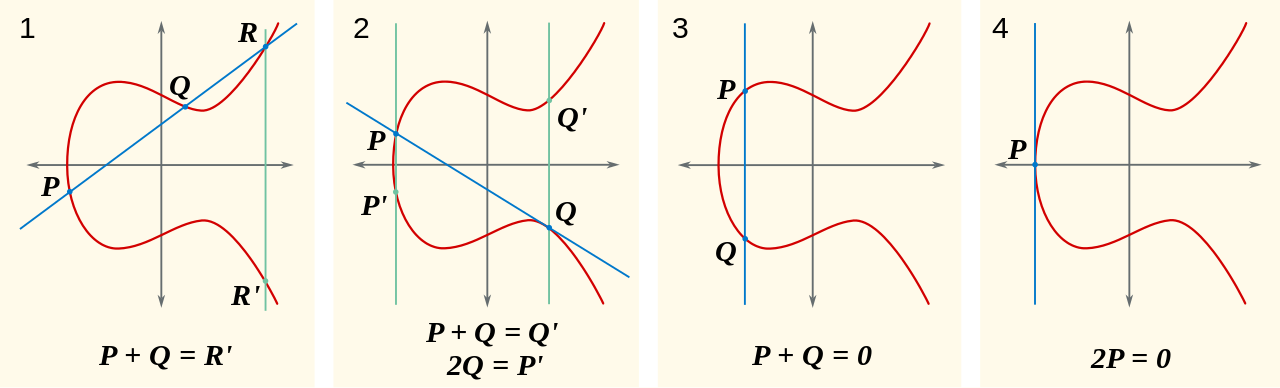
Elliptic curve examples (cc-by-sa Emmanuel Boutet)

Bitcoin is built upon our best understanding of reality.

While there are still many open problems in physics, computer science, and mathematics, we are pretty sure about some things.

That there is an asymmetry between finding solutions and validating the correctness of these solutions is one such thing.

That computation needs energy is another one.

In other words: finding a needle in a haystack is harder than checking if the pointy thing in your hand is indeed a needle or not.

And finding the needle takes work.

The vastness of Bitcoinโ€™s address space is truly mind-boggling.

The number of private keys even more so. It is fascinating how much of our modern world boils down to the improbability of finding a needle in an unfathomably large haystack.

I am now more aware of this fact than ever.

Bitcoin taught me that there is strength in numbers.

Shared with ๐Ÿ’š by Free SpiritโœŒ & ๐Ÿ’š

No, Governments Canโ€™t do a Better Job Developing Crypto

No, Governments Canโ€™t do a Better Job Developing Crypto

Would a state-backed cryptocurrency be better than its decentralized counterpart?

International media has already rolled out their opinions on the matter. Itโ€™s a YES-IT-CAN.

The opinions find theirย inspirations in comments made byย Christine Lagarde last week. The head of the International Monetary Fund (IMF) said that a government-backed cryptocurrency would eliminate the issues of trust that have clogged the decentralized cryptocurrencies like Bitcoin.

New York Times reacted to the IMF chiefโ€™s remarks, calling it โ€œa hopeful sign for digital tokens,โ€ while predicting it could โ€œhave a chilling effect on existing, nongovernmental tokens.โ€

The Guardian offered its editorial space to a long-time Bitcoin critic and economist Nouriel Roubini to furtherย his plan. He outrightย called cryptocurrencies worthless when compared to central bank digital currencies (CBDC).โ€œIf a CBDC were to be issued, it would immediately displace cryptocurrencies, which are not scalable, cheap, secure, or [actually] decentralized,โ€ Roubini claimed.

The comments mentioned above appear at a time when the cryptocurrency market cap has plunged by more than 70 percent since its all-time high.ย 

It has allowed critics to jump to the conclusion that decentralized digital currencies, mainly Bitcoin and Ethereum, have no intrinsic value, that they are highly speculative unlike central-bank issued fiat money.

Yet, critics have ignored the whys and whats that prompted the launch of decentralized assets at the first place.

They have been unable to respond to how Federal Reserve stimulus programmes, secret bailouts, and money production have destroyed the value of the US Dollar.

Their focus has turned more towards proving Bitcoin as a sugar-coated false promise of a financial revolution while ignoring the very bads of the existing financial system.

Economy believes that an assetย has value when it checks scarcity and utility.

The US Dollar lacks scarcity, for its supply is governed by a centralized body called Federal Reserve. There is no check on how many dollars would get printed, allowing insiders to manipulate a greenback-backed market on their whims.

Bitcoin, on the other hand, has a set cap of 21 million tokens. Its supply is governed by mathematical algorithms, meaning no corrupt human involvement would be able to topple it.

As far as the use-cases are concerned, Bitcoin has been constantly looked at for its potential of becoming a store-of-valueย asset like Gold, while being constantly considered for settling cross-border payments despite its price volatility.

The critics then say that bitcoin has no intrinsic value.

But even gold and paper money suffers from the same stigma.

According to the World Council, only 15 percent of the global Gold supply is used in industrial applications. The rest goes into making bars, bullions, and jewelry โ€“ mainly because people trust they have value.

Trust is the Only Factor

The launch of Bitcoin was a response to a global financial crisis in which โ€“ letโ€™s accept it โ€“ banks had f***ed up the economy.

The digital currency โ€“ more or less โ€“ follows the philosophy of the Austrian Monetary Theory.

According to it, money can be sound only when its supply is limited. It believes that money should not be controlled by the state.

These facts are missing from the reports and opinion pieces of anti-Bitcoin economists.

The Federal Reserve and central bankers believe that only they have the right to print money.

Bitcoin is only a beginning towards breaking the myth.

As long as the central banks do not innovate and protect people against currency inflation โ€“ as evident in the case of Zimbabwe and Venezuela โ€“ there is no chance they would be able to outrun crypto.

People need to trust their banks, but mainstream media and economists are avoiding a broader discussion.

The next financial crisis should bring more evidence to the theory. No rush.


Shared with ๐Ÿ’š by Free Spirit

โœŒ & ๐Ÿ’š


With ๐Ÿ’š

BitHouse LLC


Strenght in Numbers

BitHouse LLC is a client โ€“ focused and result driven CryptoCurrency Consulting and Mining Company that provides broad โ€“ based services at an affordable fee to our clients .

We will ensure that we work hard to meet and surpass our Clientsโ€™ expectations whenever they hire our services for Consulting or mine bitcoin.

At BitHouse LLC, our Clientโ€™s best interest always come first and foremost, and everything we do is guided by our high values and professional ethics.


Services

Cryptocurrency Consulting

General cryptocurrency advice, reviews and due diligence on tokens, blockchain projects, general investment advice and trading strategy.

Security and putting processes in place to backup your crypto.

Cryptocurrency Mining & Staking

Setup and advice on Cryptocurrency mining rigs. Mining does not just include Bitcoin, there are numerous other options to mine, including other tokens, rigs that provide processing power and storage.

Masternodes

Nodes are a great way to generate cryptocurrency, similar to mining just without the expensive hardware.

Setting up and running a node is not straight forward, we can help.

Proof of Stake / Staking Wallets

 Just like mining, storing your cryptocurrency in a wallet that is connected to the blockchain can generate you more crypto of that same token.

If you own POS coins and arenโ€™t staking you are missing out on ROI.


Bitcoin – People’s Money

“Better a diamond with a flaw than a pebble without.”

Confucius

Diamond with a flaw

“Try not to become a man of success. Rather become a man of value.”

Albert Einstein

Man of Value

“If you don’t know what you want, you’ll never find it.

If you don’t know what you deserve, you’ll always settle for less.

You will wander aimlessly, uncomfortably numb in your comfort zone, wondering how life has ended up here.

Life starts now, live, love, laugh and let your light shine!”

Rob Liano

Let your light shine

“A person’s worth is measured by the worth of what he values.”

Marcus Aurelius, “Meditations”

Values

“Mathematics expresses values that reflect the cosmos, including orderliness, balance, harmony, logic, and abstract beauty.”

Deepak Chopra

Mathematics

“Every job from the heart is, ultimately, of equal value.

The nurse injects the syringe; the writer slides the pen; the farmer plows the dirt; the comedian draws the laughter.

Monetary income is the perfect deceiver of a man’s true worth.”

Criss Jami, “Killosophy”

Job from the Heart

“A person that does not value your time will not value your advice.”

Orrin Woodward

Value your time

“Once you embrace your value, talents and strengths, it neutralizes when others think less of you.”

Rob Liano

Embrace your Values

“Bad times have a scientific value. These are occasions a good learner would not miss.”

Ralph Waldo Emerson

Bad times

“I say no wealth is worth my life.”

Homer, “The Iliad”

Life

“But what’s worth more than gold?

Practically everything.

You, for example.

Gold is heavy.

Your weight in gold is not very much gold at all.

Aren’t you worth more than that?”

Terry Pratchett, “Making Money” 

You are worth more than gold

“Knowledge is like money: To be of value it must circulate, and in circulating it can increase in quantity and, hopefully, in value.”

Louis L’Amour, “Education of a Wandering Man”

Knowledge

“ร”, Sunlight! The most precious gold to be found on Earth.”

Roman Payne

Sunlight

“Knowledge is like money: To be of value it must circulate, and in circulating it can increase in quantity and, hopefully, in value.”

Louis L’Amour, “Education of a Wandering Man”

Knowledge

“If life โ€” the craving for which is the very essence of our being โ€” were possessed of any positive intrinsic value, there would be no such thing as boredom at all: mere existence would satisfy us in itself, and we should want for nothing.”

Arthur Schopenhauer, “The Vanity of Existence”

Existence

“Our sole purpose on this earth is to add value to others.

It doesnโ€™t make sense to just exist in people’s lives or to be a drain on them, does it?”

Rob Liano

Sole purpose

“Value judgments are destructive to our proper business, which is curiosity and awareness.”

John Cage

Curiosity & Awareness

“We set no special value on the possession of a virtue until we percieve that it is entirely lacking in our adversary.”

Friedrich Nietzsche, “Human, All Too Human: A Book for Free Spirits”

Virtue

“Maybe you had to come close to losing something before you could remember its value.

Maybe we enjoy the last minute struggle as it slips through our hands.”

Suraj Sani

Struggle

“Always remember that the minority dictates the prices, and the majority governs the value.”

Naved Abdali

Minority vs. Majority

“It is impossible to say whether an asset class valuation is cheap or expensive in isolation.

The valuation of an asset is relative to the valuations of all other assets.”

Naved Abdali

Valuation of an Asset

“Market quotes change every second, but business evolves steadily.

You have ample time to evaluate a business to buy or not to buy.

There is no rush.”

Naved Abdali

Evaluate

“The number one reason people lose money in investing is because they buy assets without giving any thought whatsoever to the fair value.”

Naved Abdali

Fair Value

“If investors do not know or never attempt to know the fair value, they can pay any price.

More often, the price they pay is far greater than the actual value.”

Naved Abdali

Actual Value

“Watching every tick up and every tick down is just wasting your valuable time.

Do yourself a favor, and pick up a book or two about investing each month.”

Naved Abdali

Pick up a book

“An ounce of gold will always be an ounce of gold regardless of the length of possession.

The short-term value will go up or down, but gold prices will follow the general inflation rate in the long run.”

Naved Abdali

General Inflation Rate

“A Collectibleโ€™s value is primarily based on the emotions and the perception of potential buyers.”

Naved Abdali

Emotions & Perception