In a first, Bitcoin developers have done something amazing amid the criticism over the lightning network and issues associated with it. A team of developers has made an international payment using the radio waves on the lightning network.
Rodolfo Novak, the co-founder of the startup CoinKite sent out a Bitcoin transaction to Bloomberg columnist Elaine Ou from Toronto Canada to San Francisco, California. The current feat is quite remarkable given how dependent our current system of banking is on the internet. So, under the circumstances of an Internet shut down, you can still send or receive Bitcoin using the radio waves
In a first, Bitcoin developers have done something amazing amid the criticism over the lightning network and issues associated with it. A team of developers has made an international payment using the radio … Continue reading International payment using the radio waves→
My inspiration for this page was given to me by my new aquired friend, a fellow Truth Seeker – Joris and to whom I dedicate this page… Wish you… as well as to … Continue reading Discipline Quotes→
Bitcoin white paper turns 15 and the Legacy of Satoshi Nakamoto lives on. “I’ve been working on a new electronic cash system that’s fully peer-to-peer, with no trusted third party,” Satoshi Oct. 31, … Continue reading Bitcoin White Paper turn 15→
Bitcoin white paper turns 15 and the Legacy of Satoshi Nakamoto lives on.
“I’ve been working on a new electronic cash system that’s fully peer-to-peer, with no trusted third party,” Satoshi Oct. 31, 2008.
Satoshi’s email notifying other CypherPunks about the release of the Bitcoin white paper. Source: Satoshi Nakamoto Institute
The white paper was proposing a decentralized system that could facilitate peer-to-peer transactions, which could solve the “double spending” problem often associated with digital currency.
This was achieved via a network of nodes to validate and record transactions through a proof-of-work consensus mechanism, launching just two months later on Jan. 3, 2009.
How Bitcoin was brought to life
Satoshi’s computer science breakthrough came on the back of other impressive developments in the cryptography and e-money spaces.
The first reference cited in the Bitcoin white paper is Wei Dai’s invention of B-money, an electronic peer-to-peer cash system that never launched but nonetheless played a key role in Satoshi’s plans for Bitcoin.
Like Bitcoin, B-money proposed that participants in the system maintain a database of account balances, which keep track of the ownership of money.
Transactions would be initiated and completed by a broadcast message to all participants, which would update the account balances of those involved in a specific transaction.
In many ways, it could be seen as a precursor to the nodes of Bitcoin’s protocol, which keep a record of the constantly growing blockchain.
This process requires proof-of-work, a form of cryptographic proof in which one party proves to others that a certain amount of a specific computational effort has been expended.
Satoshi implemented this into Bitcoin, citing Adam Back’s invention of Hashcash in 1997, which incorporated proof-of-work to limit email spam and denial-of-service attacks.
The Cypherpunks and Fathers of Bitcoin
• Hal Finney: Reusable PoW • Adam Back: Hashcash • Wei Dai: B-money • David Chaum: DigiCash • Nick Szabo: BitGold • Phil Zimmermann: PGP • Bram Cohen: BitTorrent • Tim May: Crypto Anarchist Manifesto
In a first, Bitcoin developers have done something amazing amid the criticism over the lightning network and issues associated with it. A team of developers has made an international payment using the radio … Continue reading International payment using the radio waves→
My inspiration for this page was given to me by my new aquired friend, a fellow Truth Seeker – Joris and to whom I dedicate this page… Wish you… as well as to … Continue reading Discipline Quotes→
Bitcoin white paper turns 15 and the Legacy of Satoshi Nakamoto lives on. “I’ve been working on a new electronic cash system that’s fully peer-to-peer, with no trusted third party,” Satoshi Oct. 31, … Continue reading Bitcoin White Paper turn 15→
Plant the Seed.
Make the tree grow!
You'll never enjoy it's shadow!
But you joice knowing the next generations to come,
Will thrive under it's Legacy...
In a first, Bitcoin developers have done something amazing amid the criticism over the lightning network and issues associated with it. A team of developers has made an international payment using the radio … Continue reading International payment using the radio waves→
My inspiration for this page was given to me by my new aquired friend, a fellow Truth Seeker – Joris and to whom I dedicate this page… Wish you… as well as to … Continue reading Discipline Quotes→
Bitcoin white paper turns 15 and the Legacy of Satoshi Nakamoto lives on. “I’ve been working on a new electronic cash system that’s fully peer-to-peer, with no trusted third party,” Satoshi Oct. 31, … Continue reading Bitcoin White Paper turn 15→
The first ever bitcoin transaction from one person to another, on 2009-01-12 at 04:30 used Pay-to-Public-Key(P2PK), when Satoshi Nakamoto sent coins to Hal Finney in Block 170.
P2PK is no longer used because it is a more expensive, less private, and less secure way of receiving bitcoin than other methods.
In a first, Bitcoin developers have done something amazing amid the criticism over the lightning network and issues associated with it. A team of developers has made an international payment using the radio … Continue reading International payment using the radio waves→
My inspiration for this page was given to me by my new aquired friend, a fellow Truth Seeker – Joris and to whom I dedicate this page… Wish you… as well as to … Continue reading Discipline Quotes→
Bitcoin white paper turns 15 and the Legacy of Satoshi Nakamoto lives on. “I’ve been working on a new electronic cash system that’s fully peer-to-peer, with no trusted third party,” Satoshi Oct. 31, … Continue reading Bitcoin White Paper turn 15→
In a first, Bitcoin developers have done something amazing amid the criticism over the lightning network and issues associated with it. A team of developers has made an international payment using the radio … Continue reading International payment using the radio waves→
My inspiration for this page was given to me by my new aquired friend, a fellow Truth Seeker – Joris and to whom I dedicate this page… Wish you… as well as to … Continue reading Discipline Quotes→
Bitcoin white paper turns 15 and the Legacy of Satoshi Nakamoto lives on. “I’ve been working on a new electronic cash system that’s fully peer-to-peer, with no trusted third party,” Satoshi Oct. 31, … Continue reading Bitcoin White Paper turn 15→
Join Honorary Chair Fran Finney and the Running Bitcoin Challenge Committee as we honor legendary cypher punk, Hal Finney.
This is THE EVENT that combines Hal Finney’s love of running and Bitcoin and is raising funds and awareness to help defeat ALS, which ultimately claimed his life in 2014.
You are challenged to run (or walk, roll, or hike) the equivalent of a half marathon — cumulatively or all at once — by the end of January 10, 2023.
From wherever you are, spread the word about Bitcoin, participate in a healthy activity, feel good about doing your part to defeat ALS, and start the year off right
Hal Finney, one of the earliest bitcoin contributors, died eight years ago from complications of nervous system disease amyotrophic lateral sclerosis (ALS).
His spouse, Fran Finney, is now organizing a half marathon to raise funds for ALS research via bitcoin.
The “Running Bitcoin Challenge” is set to take place between Jan. 1 and Jan. 10. The timing of the occasion leads up to the anniversary of Hal Finney’s “Running bitcoin” tweet, in which Finney famously disclosed he was deploying a Bitcoin node.
There is no set location — participants can choose to join anywhere they wish. Players are encouraged to either run, walk, roll or hike the equivalent of a half marathon (Hal’s favorite distance) either in one go or over the entire 10-day period.
Donors contributing at least $100 will receive an official shirt with the half marathon’s logo, while the event’s top 25 fundraisers will get a Hal Finney collectible signed by his wife.
As of Wednesday morning, the event has already managed to secure nearly $10,000 in bitcoin donations.
An advocate of cryptography and digital privacy, Finney was the recipient of the first-ever bitcoin transfer from the network’s pseudonymous creator Satoshi Nakamoto.
The bitcoin community often suspected Finney was Nakamoto, a claim he consistently denied. He reportedly found out about his condition in 2009 and decided to move away from the project.
Hal’s name is high in the Bitcoin pantheon as one of the first people to voice support for Satoshi Nakamoto’s invention and for being the first person to receive a Bitcoin transaction from Satoshi.
He was, for a time, considered one of the top contenders on the list of potential Satoshis himself (many in blockchain who reject Dr. Craig Wright’s statements still falsely believe Finney to be Bitcoin’s real creator).
Hal, who referred to himself as a “cypherpunk,” was a cryptographic activist who went from developing video games to working on the Pretty Good Privacy (PGP) project in the 1990s. He described his PGP work as “dedicated to the goal of making Big Brother obsolete.”
PGP creator Phil Zimmerman hired Hal as his first employee when PGP became PGP Corporation in the early 2000s. He described Hal as a “gregarious man” who loved skiing and long-distance running.
Despite gradual paralysis that eventually forced him to stop working, Hal continued to code software and follow the Bitcoin project.
Almost as famous as his 2009 tweet is his “Bitcoin and me” post on BitcoinTalk.org in March 2013, the last he’d ever make.
It’s a long post, and Hal was “essentially paralyzed” at the time, using an eye tracker to type. Forum stats show the post has been read over 278,000 times.
“When Satoshi announced the first release of the software, I grabbed it right away,” he wrote. “I think I was the first person besides Satoshi to run bitcoin. I mined block 70-something, and I was the recipient of the first bitcoin transaction when Satoshi sent ten coins to me as a test.
I carried on an email conversation with Satoshi over the next few days, mostly me reporting bugs and him fixing them.”
Hal himself always denied being Satoshi Nakamoto, adding later that he’d sold most of the Bitcoins he mined (at pre-2014 prices) to pay for his treatments. He also mentioned putting some in a safe deposit box for his children.
“And, of course, the price gyrations of bitcoins are entertaining to me.
I have skin in the game.
But I came by my bitcoins through luck, with little credit to me.
In a first, Bitcoin developers have done something amazing amid the criticism over the lightning network and issues associated with it. A team of developers has made an international payment using the radio … Continue reading International payment using the radio waves→
My inspiration for this page was given to me by my new aquired friend, a fellow Truth Seeker – Joris and to whom I dedicate this page… Wish you… as well as to … Continue reading Discipline Quotes→
Bitcoin white paper turns 15 and the Legacy of Satoshi Nakamoto lives on. “I’ve been working on a new electronic cash system that’s fully peer-to-peer, with no trusted third party,” Satoshi Oct. 31, … Continue reading Bitcoin White Paper turn 15→
It’s been 4 years already and it seems I haven’t done nothing at all… With the little time I could spare to work on this blog, I hope I bought a tiny seed of knowledge into your 🧠zz my dear readers 😁🙂😉😋
I will try the best of my abilities to continue the work on the blog !
Untill then dear readers never forget :
Let’s find the courage and strenght, if not for us then for Them… the Future Generations that are to come after us and Go…
In a first, Bitcoin developers have done something amazing amid the criticism over the lightning network and issues associated with it. A team of developers has made an international payment using the radio … Continue reading International payment using the radio waves→
My inspiration for this page was given to me by my new aquired friend, a fellow Truth Seeker – Joris and to whom I dedicate this page… Wish you… as well as to … Continue reading Discipline Quotes→
Bitcoin white paper turns 15 and the Legacy of Satoshi Nakamoto lives on. “I’ve been working on a new electronic cash system that’s fully peer-to-peer, with no trusted third party,” Satoshi Oct. 31, … Continue reading Bitcoin White Paper turn 15→
Happy Genesis Block Day! January 3 is the 14th anniversary of Bitcoin’s Block Zero, its anchor in time.
The first sentence of the email has become iconic among the Bitcoin community:
“I’ve been working on a new electronic cash system that’s fully peer-to-peer, with no trusted third party.”
On January 3, 2009, the genesis block of the Bitcoin blockchain was mined by its pseudonymous creator Satoshi Nakamoto, marking the first time in history that a completely digital and decentralized currency went online.
In the 14 years and three halvings since, Bitcoin has grown to become one of the most important financial instruments, clearly demonstrating that a non-central bank-controlled currency is capable of challenging the established monetary order.
That time, in 2009, was one of economic turmoil—and the aftershocks from that turmoil are still rocking our world in 2023.
The Genesis Block was never “mined” like every other Bitcoin block. That started with Block #1 when Satoshi Nakamoto released the software on SourceForge.
The hash from Block #0 was done with different software and hard-coded into the original Bitcoin protocol.
“Chancellor on brink of second bailout for banks” was the Times headline. Satoshi hid in the first block’s coinbase hash as a timestamp to prove there had been no mining on the Bitcoin network before he released the software to the public.
The Times – January 3 2009
“The Chancellor will decide within weeks whether to pump billions more into the economy,” the original article in the Times said. In 2009 these seemed like desperate measures, and they were. Since 2009, though, governments across the Western world have indeed pumped billions, even trillions more, into their economies.
Satoshi was making a statement on irresponsible government interventions in the economy and their eventual erosion on markets.
“They actively sought to incentivise bad behaviour and push in typical Keynesian style the problem down the road. It would be a bigger problem, but it would be someone else’s problem.”
Just like the economy at large, Bitcoin is a long-term struggle against the worse aspects of human nature.
In the 14 years and three halvings since, Bitcoin has grown to become one of the most important financial instruments, clearly demonstrating that a non-central bank-controlled currency is capable of challenging the established monetary order.
10 most important Bitcoin Milestones
Bitcoin has reached numerous major milestones and faced several considerable obstacles over its nearly decade-and-a-half-long history.
Here are 10 events that had the biggest impact on Bitcoin so far:
November 28, 2012: First Bitcoin halving
February 28, 2014: Mt. Gox, the biggest Bitcoin exchange at the time, files for bankruptcy
July 9, 2016: Second Bitcoin halving
August 1, 2017: Bitcoin Cash hard fork
May 11, 2020: Third Bitcoin halving
February 8, 2021: Tesla invests in Bitcoin
February 20, 2021: Bitcoin reaches $1 trillion market cap for the first time
September 7, 2021: El Salvador makes Bitcoin legal tender
November 14, 2021 – Taproot upgrade is activated
November 11, 2022: Major crypto exchange FTX files for bankruptcy
Bitcoin has never closed in the red zone 2 years in a row: Will the trend continue?
Bitcoin price decreased by over -60% over the span of the last 12 months. However, there is a strong bullish precedent in play that could spell a major trend reversal in the coming months.
For starters, Bitcoin has never closed in the negative two years in a row. Granted, there is a relatively short set of historical price data to work with.
However, roughly speaking, Bitcoin has operated on 3 years of growth followed by 1 year of market retracement periods, at least so far
Bitcoin Change Year-over-Year
For world-renowned charities such as Save the Children, the White aper and the subsequent creation of Bitcoin have benefited the organization.
Antonia Roupell, Web3 lead at Save the Children, told Cointelegraph that the organization recognizes “Bitcoin’s potential to be a force for good and a force for financial inclusion,” adding:
“On Bitcoin’s 14th anniversary, and at a time of increasingly global financial inequality, the phrase ‘bitcoin is for anyone’ really resonates.”
In a first, Bitcoin developers have done something amazing amid the criticism over the lightning network and issues associated with it. A team of developers has made an international payment using the radio … Continue reading International payment using the radio waves→
My inspiration for this page was given to me by my new aquired friend, a fellow Truth Seeker – Joris and to whom I dedicate this page… Wish you… as well as to … Continue reading Discipline Quotes→
Bitcoin white paper turns 15 and the Legacy of Satoshi Nakamoto lives on. “I’ve been working on a new electronic cash system that’s fully peer-to-peer, with no trusted third party,” Satoshi Oct. 31, … Continue reading Bitcoin White Paper turn 15→
The mailing list was hosted by Metzdow and run by a group of cypherpunks who shared ideas on creating a kind of digital currency and payment system. Satoshi shared the whitepaper in a message that read, “Bitcoin P2P e-cash paper,” which outlined the main properties of the system.
“Bitcoin P2P e-cash paper Satoshi Nakamoto satoshi at vistomail.com Fri Oct 31 14:10:00 EDT 2008 Previous message: Fw: SHA-3 lounge Messages sorted by: [ date ] [ thread ] [ subject ] [ author ] I’ve been working on a new electronic cash system that’s fully peer-to-peer, with no trusted third party.
The main properties: Double-spending is prevented with a peer-to-peer network. No mint or other trusted parties. Participants can be anonymous. New coins are made from Hashcash style proof-of-work. The proof-of-work for new coin generation also powers the network to prevent double-spending.
Bitcoin: A Peer-to-Peer Electronic Cash System
Abstract. A purely peer-to-peer version of electronic cash would allow online payments to be sent directly from one party to another without the burdens of going through a financial institution. Digital signatures provide part of the solution, but the main benefits are lost if a trusted party is still required to prevent double-spending. We propose a solution to the double-spending problem using a peer-to-peer network. The network timestamps transactions by hashing them into an ongoing chain of hash-based proof-of-work, forming a record that cannot be changed without redoing the proof-of-work. The longest chain not only serves as proof of the sequence of events witnessed, but proof that it came from the largest pool of CPU power. As long as honest nodes control the most CPU power on the network, they can generate the longest chain and outpace any attackers. The network itself requires minimal structure. Messages are broadcasted on a best effort basis, and nodes can leave and rejoin the network at will, accepting the longest proof-of-work chain as proof of what happened while they were gone.
The pseudonymous Bitcoin creator disclosed that they had been working on a new electronic cash system that uses a Proof-of-Work (PoW) consensus algorithm that required no trusted third party. Although the document met mixed reactions, it was the beginning of what is known today as blockchain technology.
A couple of months after the release, the Bitcoin network was launched, with the first block mined on January 3, 2009. About eight days later, Hal Finney received the first transaction of 10 BTC from Nakamoto, after which he posted a legendary tweet that read:
In the 14 years since that day, bitcoin’s value rose from zero to a peak of $68,990 last November and was hovering above $20,000 on Monday, according to CoinDesk data. The cryptocurrency currently has a market capitalization of over $390 billion. It also inspired the creation of more than 20,000 different cryptocurrencies currently in circulation, while bitcoin remains the largest by market cap.
Over the years, several people have been rumored to be Nakamoto, including early bitcoin contributor Hal Finney, cryptographer Nick Szabo, physicist Dorian Nakamoto and even Tesla’s chief executive Elon Musk, who all denied the claims.
Satoshi’s identity is still a mystery, but Finney was well-known for his contribution to the creation of Bitcoin. He worked hand-in-hand with Nakamoto to find and fix bugs in Bitcoin’s underlying infrastructure. Before his death in 2014, Finney shared a detailed story about his journey with Bitcoin
About a year after the launch of Bitcoin, the cryptocurrency went on to record its first real-world commercial use case when a Florida man spent 10,000 BTC to purchase two large Papa John’s pizzas on May 22, 2010.
Although the coins were worth $41 at prices back then, at today’s price, the transaction is worth more than $200 million. To commemorate the event, the Bitcoin community celebrates Bitcoin Pizza Day every year on May 22.
In a first, Bitcoin developers have done something amazing amid the criticism over the lightning network and issues associated with it. A team of developers has made an international payment using the radio … Continue reading International payment using the radio waves→
My inspiration for this page was given to me by my new aquired friend, a fellow Truth Seeker – Joris and to whom I dedicate this page… Wish you… as well as to … Continue reading Discipline Quotes→
Bitcoin white paper turns 15 and the Legacy of Satoshi Nakamoto lives on. “I’ve been working on a new electronic cash system that’s fully peer-to-peer, with no trusted third party,” Satoshi Oct. 31, … Continue reading Bitcoin White Paper turn 15→
To any intelligent observer, it has been apparent that bitcoin’s primary use has emerged to be store of value/investment.
Yes, bitcoin’s decentralized/permissionless solution to creating an immutable cryptographically secured database brings a vast array of different potential revolutionary applications not seen since the advent of the internet but again, the primary use has emerged to be store of value/investment.
bitcoin has been so good at this store of value thing that it has become detrimentally successful – enter the (well-funded) hacks and puppets…attacks from the outside and from within – some of which via spread of (FUD) tangent ideas with coders, media, investors, and within bitcoin community to maybe start an idea of even ‘slight’ change.
First, please realize no other tool in modern-day finance has been so successful at being an effective savings mechanism which unlike traditional ‘savings accounts’ this bitcoin actually keeps up in value for you to be able to afford higher cost of rent, education, healthcare, vacations, etc. (due to its beautiful combination of scarcity, a ceiling of 21mill coins, immutable, permissionless->not controlled/influenced, secure, and being established/developed).
This effective savings tool of bitcoin is made accessible to the 99% of us and cuts to the core of exposing the flaw of the central bank fiat system with its funny-money creation out of thin air paper/credit-currencies benefiting the privileged institutions and then last to benefit would be the rest of us.
It can also expose flaws of fraudulent funneling of extra paper-currencies created by central banks…now think, even those privy to any fraudulent funneling of funny-money will see what’s going on and understand something like bitcoin as an alternative being effectively immune to these games that even these bad-actors themselves would buy bitcoin! Bitcoin changes the paradigm of central-bank funny-money (Bitcoin is the anti-funny-money warrior: open & mechanism)….and it has taken off….and will catch the attention of the central banks who by definition, have nearly unlimited systemic resources and influence (think governments, telecoms ISP providers, hardware/chip manufacturers, software developers, search engines, exchange conartists).
Even if a hard-fork doesn’t happen anytime in the next couple of years, it’s the threat that an attack on this pure beautiful store of value system to something even slightly different that can actually gain a noticeable percentage raises the question…is it possible that someday that the groups influencing bitcoin (those controlling mining or those involved with coding development, or the rest buy/transacting in bitcoin) would (either out of ignorance/misunderstanding or out of vested-interest to undermine bitcoin) start demanding (even slight) changes that may contradict the store-of-value that bitcoin is???
That is the big question that if the answer starts looking like yes…then value would plummet as bitcoin no longer be seen as a store of value but would eventually turn into another app coin (i.e. Ethereum) that can do many amazing things but not the one store-value amazing thing that it has done these past few years. the price would be zero-bound (compared to what we’ve been accustomed to with bitcoin today).
If the answer to that question is no (that you reading this, this community, software coders, mining operators, investors, everyday folk, work to stay educated on the above and act to keep the integrity of this bitcoin system)…then even a $50 billion market cap would still be seen as trivial in the financial assets arena where one bitcoin can easily go above $5,000 USD. But really, as the years pack on and integrity remains intact, the price would be infinity-bound.
In a first, Bitcoin developers have done something amazing amid the criticism over the lightning network and issues associated with it. A team of developers has made an international payment using the radio … Continue reading International payment using the radio waves→
My inspiration for this page was given to me by my new aquired friend, a fellow Truth Seeker – Joris and to whom I dedicate this page… Wish you… as well as to … Continue reading Discipline Quotes→
Bitcoin white paper turns 15 and the Legacy of Satoshi Nakamoto lives on. “I’ve been working on a new electronic cash system that’s fully peer-to-peer, with no trusted third party,” Satoshi Oct. 31, … Continue reading Bitcoin White Paper turn 15→
“A fixed money supply, or a supply altered only in accord with objective and calculable criteria, is a necessary condition to a meaningful just price of money.”
Fr. Bernard W. Dempsey, S.J. (1903-1960)
In a centralized economy, currency is issued by a central bank at a rate that is supposed to match the growth of the amount of goods that are exchanged so that these goods can be traded with stable prices. The monetary base is controlled by a central bank. In the United States, the Fed increases the monetary base by issuing currency, increasing the amount banks have on reserve or by a process called Quantitative Easing.
In a fully decentralized monetary system, there is no central authority that regulates the monetary base. Instead, currency is created by the nodes of a peer-to-peer network.
The Bitcoin generation algorithm defines, in advance, how currency will be created and at what rate. Any currency that is generated by a malicious user that does not follow the rules will be rejected by the network and thus is worthless.
Currency with Finite Supply
Block reward halvingControlled supply
Bitcoins are created each time a user discovers a new block. The rate of block creation is adjusted every 2016 blocks to aim for a constant two week adjustment period (equivalent to 6 per hour.)
The number of bitcoins generated per block is set to decrease geometrically, with a 50% reduction every 210,000 blocks, or approximately four years. The result is that the number of bitcoins in existence will not exceed slightly less than 21 million.
Speculated justifications for the unintuitive value “21 million” are that it matches a 4-year reward halving schedule; or the ultimate total number of Satoshis that will be mined is close to the maximum capacity of a 64-bit floating point number. Satoshi has never really justified or explained many of these constants.
Cumulated bitcoin supply
This decreasing-supply algorithm was chosen because it approximates the rate at which commodities like gold are mined. Users who use their computers to perform calculations to try and discover a block are thus called Miners.
In a first, Bitcoin developers have done something amazing amid the criticism over the lightning network and issues associated with it. A team of developers has made an international payment using the radio … Continue reading International payment using the radio waves→
My inspiration for this page was given to me by my new aquired friend, a fellow Truth Seeker – Joris and to whom I dedicate this page… Wish you… as well as to … Continue reading Discipline Quotes→
Bitcoin white paper turns 15 and the Legacy of Satoshi Nakamoto lives on. “I’ve been working on a new electronic cash system that’s fully peer-to-peer, with no trusted third party,” Satoshi Oct. 31, … Continue reading Bitcoin White Paper turn 15→
The supply of Bitcoin is fixed at 21 million BTC, and as a hard coded monetary policy of the protocol, the fixed supply of the dominant cryptocurrency cannot be altered.
Former Google Product Director Steve Lee stated that only 1 percent of the world’s population can own more than 0.28 BTC, due to the fixed supply of Bitcoin.
If you own 0.28 BTC and HODL, you can be certain no more than 1% of the current world's population can EVER own more BTC than you. A modest investment of $1,830 today can ensure you are a 1%er in a future Bitcoin world. https://t.co/9k3XZa09Yo
In late 2017, Chainalysis, a blockchain forensics company that monitors and investigates cryptocurrency transactions, revealed in a research paper that up to four million BTC are permanently lost on the blockchain as a result of theft, loss of wallets and private keys, and the dormant wallet of Bitcoin creator Satoshi Nakamoto, which experts have said is no longer accessible.
Kim Grauer, Senior Economist at Chainalysis, said at the time, that the lost supply of BTC is not taken into consideration by the market cap.That means, the real price of BTC could be substantially higher, as 4 to 6 million BTC are estimated to be lost.
Based on the estimate that the supply of Bitcoin is around 17 million, only 0.8 percent of the world population can own more than 0.28 BTC and less than 0.2 of the world population can own more than 1 BTC.
The 0.28 BTC figure introduced by Lee assumes the supply of Bitcoin to be 21 million, as it divides 21 million by 0.28 and divides the outcome of that by the world population that is 7.442 billion. If the research of Chainalysis is accurate and that 4 to 6 million BTC are lost on the blockchain, the supply of Bitcoin should be closer to around 16 to 17 million
The fact that any investor in the global market can be within the 1 percent of the world population with a $1,830 investment demonstrates that the cryptocurrency market is still at its early phase, and in terms of adoption, market development, infrastructure, and regulation, the sector can still grow significantly in the mid to long-term.
In a first, Bitcoin developers have done something amazing amid the criticism over the lightning network and issues associated with it. A team of developers has made an international payment using the radio … Continue reading International payment using the radio waves→
My inspiration for this page was given to me by my new aquired friend, a fellow Truth Seeker – Joris and to whom I dedicate this page… Wish you… as well as to … Continue reading Discipline Quotes→
Bitcoin white paper turns 15 and the Legacy of Satoshi Nakamoto lives on. “I’ve been working on a new electronic cash system that’s fully peer-to-peer, with no trusted third party,” Satoshi Oct. 31, … Continue reading Bitcoin White Paper turn 15→
“You never change things by fighting the existing reality.
To change something, build a new model that makes the existing model obsolete.”
Buckminster Fuller
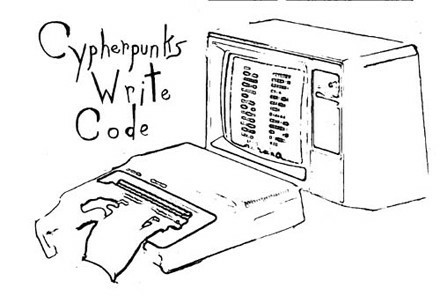
Strenght in NumbersDare to knowBitcoin / bitcoin / blockchainDYOR – Do Your Own Research LandArise…Bitcoin – People’s MoneyCypherPunks Write CodeBitcoin Genesis BlockCode Is LawA new day…Bitcoin – The Peaceful RevolutionVeritas Non Auctoritas Facit Legem🔵 or 🟠 The Choice is Yours…
In a first, Bitcoin developers have done something amazing amid the criticism over the lightning network and issues associated with it. A team of developers has made an international payment using the radio … Continue reading International payment using the radio waves→
My inspiration for this page was given to me by my new aquired friend, a fellow Truth Seeker – Joris and to whom I dedicate this page… Wish you… as well as to … Continue reading Discipline Quotes→
Bitcoin white paper turns 15 and the Legacy of Satoshi Nakamoto lives on. “I’ve been working on a new electronic cash system that’s fully peer-to-peer, with no trusted third party,” Satoshi Oct. 31, … Continue reading Bitcoin White Paper turn 15→



 In a first, Bitcoin developers have done something amazing amid the criticism over the lightning network and issues associated with it. A team of developers has made an international payment using the radio … Continue reading International payment using the radio waves
 My inspiration for this page was given to me by my new aquired friend, a fellow Truth Seeker – Joris and to whom I dedicate this page… Wish you… as well as to … Continue reading Discipline Quotes
 To all my readers from the bottom of my heart I wish you Happy Holiday among family and friends, a jolly Merry Christmas and a Happy New Year and may 2024 bring you … Continue reading Merry Christmass and A Happpy New Year to all
 Bitcoin white paper turns 15 and the Legacy of Satoshi Nakamoto lives on. “I’ve been working on a new electronic cash system that’s fully peer-to-peer, with no trusted third party,” Satoshi Oct. 31, … Continue reading Bitcoin White Paper turn 15




 BitHouse