Fear is SicknessGold is Money…Uni-VerseSuccessGenes that erase memoriesResearches can erase painful memories from the brainScientists deletes “Fearful” memories of RatsPokemon Go users give away all privacy rights“Broken People” = Raw MaterialRobert NoyceCompounding InterestSimple & Compound Interest FormulaSimple Interest & Compound InterestPBIS RewardsROI – Return On InvestmentPlay the role of a fool…Occult – Anatomy20 Fastest Growing + Declining JobsCauses and Effects of InflationThe History of LogisticsSSG 16.9 – Legal Identity for allScientists call for Protection from Non-Ionizing Electromagnetic Field ExposureProtest’s are Illegal and punished with Jail Time in a “Free” Society !!!?¿!!!Human Value ChainOpposition to the use of Blockchain Identity– Part 1Opposition to the use of Blockchain Identity– Part 2Human Capital Performance BondStrategies for Investing in Undervalued Human CapitalU.S Army TRADOC G-2Digitizing Government-to-Person (G2P) Payments
In a first, Bitcoin developers have done something amazing amid the criticism over the lightning network and issues associated with it. A team of developers has made an international payment using the radio … Continue reading International payment using the radio waves→
My inspiration for this page was given to me by my new aquired friend, a fellow Truth Seeker – Joris and to whom I dedicate this page… Wish you… as well as to … Continue reading Discipline Quotes→
Bitcoin white paper turns 15 and the Legacy of Satoshi Nakamoto lives on. “I’ve been working on a new electronic cash system that’s fully peer-to-peer, with no trusted third party,” Satoshi Oct. 31, … Continue reading Bitcoin White Paper turn 15→
R&D, wisdom, knowledge, curiosities, answers and many more questions 🙂🤣🙃
You have a Choice !!!Power to the People !!! Wake the F… Up !!! No more excuses, you have a choice now !!!WHO as in WORLD HEALTH ORGANISATIONP F I Z E R InsiderPoem of the LegacyBeing Curious…Of course it doesn’t comply…The Problem with centralized Social-Media10 Principles of Strategic LeadershipGlobal Reserve CurrencyPsychology of a Market CycleSuccessSuccessTriangle of SuccessDon’t plan for travelling when old…😋😳😋Be like a Tree…If anyone understands this please enlighten me too 😊🤭🤗http://www.revelationtimelinedecoded.comESGFor those that think WE are the Center of the Universe 🤣😅😂Confident vs. Insecure PeopleDay by day…Managing Complex ChangeThe Cone of LearningThe Hero’s JourneyElectromagnetic Field of the HeartI-ChingLanguage creates RealitySex Organs of the Machine WorldPhilosopher’s StoneIsaac NewtonAbracadabraSingularityMulti-Mind Thought Control Process APPLE INC.RetrocausalityCERNEGOSYSCOIN ECOSYSTEMJagSteinSysCoinBitcoin might bury FIAT 🙂 🤭 🙃DEFI Ecosystem on EthereumDeFi StackBitcoin Mining Ecosystem Map…the other 6 BillionbitcoinThis is about the other 6 Billion…Top NFT ProjectsBusiness CyclesCentral’s Bank’s 3 StrategiesGlobal DebtDefender of the FlowerFlower of LifeSacred GeometrySeed & Flower of LifeKnowledge – An Antidote to FearJOIN THE REVOLUTION 😋 🤣 😋Emotion – Judgement – Action…violent recolution inevitable.E S B IEvery generation…LOVE YOUR RAGE NOT YOUR CAGERevolutionThe Times – January 3, 2009REVOLUTIONBitcoin Genesis Block – 03 January 2009Introduction to BitcoinIntroduction to Decentralized FinanceIntroduction to Digital CurrenciesAll Metals We MinedMap to Multiplication Nikola TeslaTop VC’s Investing in BlockChain CompaniesAthmospheres of the Solar SystemGlobal GDP 2021Map of CyberSecurity Domains21 QuestionsSix Innovation ModelsWhat May Happen in the next 100 YearsAbstract – “…to pull the body out of dimension so that the person can walk through solid objects such as wooden doors.” Okay 🤯 😳 🤯 ?¿?China’s Social Credit SystemBlockchain Platforms Comparison (BCP)ARISE
In a first, Bitcoin developers have done something amazing amid the criticism over the lightning network and issues associated with it. A team of developers has made an international payment using the radio … Continue reading International payment using the radio waves→
My inspiration for this page was given to me by my new aquired friend, a fellow Truth Seeker – Joris and to whom I dedicate this page… Wish you… as well as to … Continue reading Discipline Quotes→
Bitcoin white paper turns 15 and the Legacy of Satoshi Nakamoto lives on. “I’ve been working on a new electronic cash system that’s fully peer-to-peer, with no trusted third party,” Satoshi Oct. 31, … Continue reading Bitcoin White Paper turn 15→
A Design For An Efficient Coordinated Financial Computing Platform
Jag Sidhu
Feb 25, 2021·41 min read
Abstract
Bitcoin was the first to attempt to offer a practical outcome in the General’s Dilemma using Crypto Economic rationale and incentives. Ethereum was the first to abstract the concept of Turing completeness within similar frameworks assumed by Bitcoin.
What Syscoin presents is a combination of both Bitcoin and Ethereum with intuitions built on top to achieve a more efficient financial computing platform which leverages coordination to achieve consensus using Crypto Economic rationale and incentives.
We propose a four-layer tech stack using Syscoin as the base (host) layer, which provides an efficient (ie, low gas cost per transaction) platform.
Some of the main advantages include building scalable decentralized applications, the introduction of a decentralized cost model around Ethereum Gas fees.
This new model proposes state-less parallelized execution and verification models while taking advantage of the security offered by the Bitcoin protocol. We may also refer to this as Web 3.0.
Table Of Contents
Abstract
Introduction
Syscoin Platform
Masternode Configuration
Chain Locks
Blockchain as a Computational Court
Scalability and Security
Efficiency
State Liveness and State Safety
Avoiding Re-execution of Transactions
Validity Proof Systems Overtop Proof-of-Work Systems
Quantum Resistance:
A Design Proposal for Web 3.0
Optimistic vs ZkRollup
Decentralized Cost Model
State-less Layer 1 Design
Related Works
Commercial Interests
Functional Overview
Give Me The Goods
Blockchain Foundry
Acknowledgements
References
Introduction
Syscoin is a cryptocurrency borrowing security and trust models of Bitcoin but with services on top which are conducive for businesses to build distributed applications through tokenization capabilities.
Syscoin has evolved since being introduced in 2013 where it offered a unique set of services through a coloured coin implementation on top of Bitcoin.
These services included aliases(identity), assets(tokens), offers(marketplace), escrow (multisig payments between aliases and marketplaces), and certificates (digital credentials).
In its current iteration, it has evolved to serve availability of consensus rather than data storage itself which requires some liveness guarantees better suited to systems like Filecoin and IPFS.
The recent iteration of Syscoin, version 4.0, streamlined the on-chain footprint to exclusively serve assets, a service which requires on-chain data availability for double-spend protection.
Ultimately, the only data that belongs on the blockchain are proofs that executions occurred (eg, coin transfers, smart contract executions, etc.) and information required to validate those proofs.
We introduced high-throughput payment rails for our asset infrastructure through an innovation we called Z-DAG [1]. This innovation offered real-time probabilistic guarantees of double-spend protection and ledger settlement for real-time point-of-sale. As a result, the token platform is one step closer to mass adoption by providing scalable infrastructure and speed that met or exceeded what was necessary to transact with digital tokens in real-life scenarios.
In addition, a two-way bridge to trustlessly interoperate with Ethereum. This enables Ethereum users to benefit from fast, cheap and secure transactions on Syscoin, and Syscoin users to leverage the Turing complete contract capabilities and ecosystem of Ethereum, all of which exclude custodians or third-parties.
Every decision we’ve made has been with security in mind. We believe that one of the biggest advantages of Syscoin is that it is merge-mined with Bitcoin.
Rather than expend more energy, Syscoin recycles the same energy spent by Bitcoin miners in order to solve blocks while being secured by the most powerful cryptocurrency mining network available.
With this energy efficiency we were able to reduce the subsidy to miners and increase subsidy to masternodes without raising the overall inflation; see Fig 1 for configuration.
Unlike Dashpay, these masternodes are not what you expect, as they have the specific job of running full nodes.
Fig 1: Masternode setup
Syscoin Platform
Today, Syscoin offers an asset protocol and deterministic validators as an enhancement on top of Bitcoin, as summarized below:
UTXO Assets
Compliance through Notary
Fungible and Non-Fungible tokens (Generic Asset infrastructure named SPT — Syscoin Platform Tokens)
Z-DAG for fast probabilistic onchain payments, working alongside payment channel systems like Lightning Networks
Deterministic validators (Masternodes) which run as Long-Living Quorums for distributed consensus decisions such as Chain Locks
Decentralized Governance, 10% of block subsidy is saved to pay out in a governance mechanism through a network wide vote via masternodes
Merged-mined with Bitcoin for shared work alongside Bitcoin miners
Masternode Configuration
With 2400+ masternodes running fullnodes, Z-DAG becomes much more dependable, as does the propagation of blocks and potential forks.
The masternodes are bonded through a loss-less strategy of putting 100000 Syscoin in an output and running full nodes in exchange for block rewards.
A seniority model incentivizes the masternodes to share long-term growth by paying them more for the longer period of service. Half of the transaction fees are also shared between the PoW miners and masternodes to ensure long term alignment once subsidy becomes negligible.
The coins are not locked at any point, and there is no slashing condition if masternodes decide to move their coins, the rewards to those masternodes simply stop.
Sharing Bitcoin’s compact block design, it consumes very little bandwidth to propagate blocks assuming the memory pool of all these nodes is roughly synchronized [2].
The traffic on the network primarily consists of propagating the missing transactions to validate these blocks. Having a baseline for a large number of full-nodes that are paid to be running allows us to create a very secure environment for users.
It proposes higher costs to would-be attackers who either have to attempt a 51% attack of Syscoin (effectively also trying to attack the Bitcoin network), or try to game the mesh network by propagating bad information which is made more difficult by incentivized full-nodes.
The health of a decentralized network consists of the following;
(a) the mining component or consensus to produce blocks, and
(b)the network topology to disseminate information in a timely manner in conditions where adversaries might be lurking.
Other attacks related to race conditions in networking or consensus code are mostly negligible as Syscoin follows a rigorous and thorough continuous development process.
This includes deterministic builds, Fuzz tests, ASAN/MSAN/TSAN, functional/unit tests, multiple clients and adequate code coverage.
Syscoin and Bitcoin protocol code bases are merged daily such that the build/signing/test processes are all identical, allowing us to leverage the massive developer base of Bitcoin.
The quality of code is reflective of taking worst case situations into account. The most critical engineers and IT specialists need confidence that value is secure should they decide to move their business to that infrastructure.
It’s true that there are numerous new ideas, new consensus protocols and mechanisms for achieving synchronization among users in a system through light/full node implementations.
However, in our experience in the blockchain industry over the last 8 years, we understand that it takes years, sometimes generations to bring those functionalities to production level quality useful for commercial applications.
Chain Locks
With a subset of nodes offering sybil resistance through the requirement of bonding 100,000 SYS to become active, plus the upcoming deterministic masternode feature in Syscoin 4.2, we have enabled Chain Locks which attempts to solve a long-standing security problem in Bitcoin [3], where Dashcore was the first project to implement this idea [4] which the industry has since widely accepted as a viable solution [5].
Our implementation is an optimized version of this, in that we do not implement Instant Send or Private Send transactions and thus Syscoin’s Chain Lock implementation is much simpler.
Because of merged-mining functionality with Bitcoin, we believe our chain coupled with Chain Locks becomes the most secure via solving Bitcoin’s most vulnerable attack vector, selfish mining.
These Chain Locks are made part of Long-Living Quorums(LLMQ) which leverage aggregatable Boneh–Lynn–Shacham(BLS) signatures that have the property of being able to combine multiple signers in a Distributed Key Generation(DKG) event to sign on decisions. In this setup, a signature can be signed on a group of parties under threshold constraints without any one of those parties holding the private key associated with that signature. In our case, the signed messages would be a ChainLock Signature (CLSIG) which represent claims on what the block hashes represent of the canonical chain [4].
This model suggests a very efficient threshold signature design was needed to be able to quickly come to consensus across the Masternode layer to decide on chain tips and lock chains preventing selfish mining attacks. See [6] to understand the qualities of BLS signatures in the context of multi-sig use cases.
Ethereum 2.0 design centers around the use of BLS signatures through adding precompile opcodes in the Ethereum Virtual Machine(EVM) for the BLS12–381 curve [7] which Syscoin has adopted.
This curve was first introduced in 2017 by Bowe [8] to the ZCash protocol. Masternodes on Syscoin use this curve and have a BLS key that is associated with each validator. There is the performance comparison to ECDSA (Secp256k1) [9] that shows its usefulness in contrast to what Bitcoin and Syscoin natively use for signature verification.
Blockchain as a Computational Court
A computational court is a way of enforcing code execution on the blockchain’s state. This was first introduced by de la Rouvier [10].
Since the inception of Syscoin and Blockchain Foundry we have subscribed to the idea that the blockchain should be used as a court system rather than a transaction processor.
This debate has stemmed from the block size debate in the Bitcoin community [11]. However, with recent revelations in cryptography surrounding Zero-Knowledge Proofs (ZKP) [12] and particularly Zero-Knowledge Succinct Non-Interactive Argument of Knowledge(zk-STARK) [13], we propose a secure ledger strategy using the Bitcoin protocol as a court (ie, host layer), an EVM or eWASM (ie, operating system layer), computational scaling through ZKP (ie, SDK layer) and business verticals (ie, application layer); see Fig 2
Fig 2: Four-layer tech stack
Scalability and Security
Scalability in blockchain environments is typically measuredbyTotal Transactions per Second (TPS).
This means full trustlessness, decentralization and liveness properties as evidenced by something like Bitcoin.
If trade-offs are made to achieve higher scale it means another property is affected.
A full node is one that creates blocks and/or fully validates every block of transactions.
For the purpose of this discussion, we will refrain on expounding on designs where light-clients are used to give semblance of higher throughput, etc.
However, if two nodes are running the same hardware and doing the same work, the one that provides more TPS performance than the other is considered more scalable. This is not to be confused with throughput which is the measure of output that can be increased by simply adding more hardware resources. Hence, more throughput does not mean more scalable.
Some blockchains require the producers of blocks to run on higher specifications, offering higher throughput but not necessarily more scale.
However, there are projects which employ parallel processing to try to achieve higher scale whilst also enforcing more capable hardware to provide a more efficient overall system [33].
As a logical experiment, the throughput of a system divided by the scalability of the system is what we define as efficiency.
In the following sections, we will outline our proposal for improved efficiency.
Efficiency
The holy grail of blockchain design resides in the ability to have a ledger that can claim to be sublinear while retaining consistency, fault tolerance and full availability (ie, CAP Theorem).
This means there are roughly constant costs for an arbitrary amount of computation performed and being secured by that ledger.
This has always been thought of as impossible and it mostly is unless acceptable trade-offs appear in application designs and they are easy to understand and work around.
Most experts make the assumption that an O(1) ledger is simply impossible and thus design blockchains and force applications to work in certain ways as a result.
We will remove such assumptions and let business processes dictate how they work by giving the ability to achieve O(logk n) for some constant k (ie, polylogarithmic) efficiency with trade-offs.
A polylogarithmic design would give the ability for almost infinite scaling over time for all intents and purposes.
The only bottlenecks would be how fast information can be propagated across the network which would improve over time as telecom infrastructure naturally evolves and increases in both capability and affordability.
Put in context, even Lightning Networks for transactional counts qualifies as a form of sublinear scaling on a transactional basis but not per user, as users must necessarily enter the main chain first before entering a payment channel.
It requires the state of the blockchain to include the users joining the system.
This state (the UTXO balances) is the single biggest factor of efficiency degradation in Bitcoin.
Users need to first start on the main chain and then move into the payment channel system to receive money, meaning that scale is at best O (N) where N is the number of users.
There are some solutions to this problem of state storage on Bitcoin by reducing it via an alternative accumulator strategy to the cost of increased bandwidth [14].
This approach would make the chain state-less, however the validation costs would remain linear to the number of transactions being done. When combined with payment channels, only the costs to get in/out are factored into the validation and this offers an interesting design for payments themselves while providing for on-chain availability.
We consider this as a good path for futuristic scalable payments.
Hence, it is not possible to employ that strategy with general computations. With this design, we are still left with the issue on how to do general computations at higher efficiency.
What we present is the ability to have a polylogarithmic chain at the cost of availability for both payments and general computations where business processes dictate availability policies, and users fully understand these limitations when using such systems.
Users may also be provided the ability to ensure availability for themselves and others at their discretion. This will be expounded upon in the following sections.
State Liveness and State Safety
While many compelling arguments can be made migrating to a state-less design [15], it is not possible to achieve sublinear efficiency without sacrificing some other desired component that we outlined above.
To achieve polylogarithmic efficiency it’s necessary to have a mix of state and stateless nodes working together in harmony on a shared ledger [15].
This should be accomplished in such a way that business processes can dictate direction, and users can choose to pay a little more for security either by using a stateful yet very scalable ledgering mechanism or by paying to ensure their own data availability amortized over the life of that user on such systems.
Presenting the ability for users to make these choices allows us to separate the consensus of such systems and reduce overall complexity.
However, in whatever solution we adopt , we need to ensure that the final implementation allow for both the liveness and safety of that state, which are defined as follows:
State Liveness — Transferring coins in a timely manner
State Safety — Private custody
It is important to adhere to these concepts; if one cannot move one’s coins, then it is as useful as if one burned their coins. Hence, if we had third party custody in place, this would give rise to custodial solutions, and lose decentralized and trustless aspects of the solution, which again is not desired.
The options as described would allow users to decide their state liveliness at their own discretion, while state safety is a required constraint throughout any system design we provide. The doorway to possibilities of sublinear design is opened by giving users the ability to decide.
Avoiding Re-execution of Transactions
In order to scale arbitrarily, independent of the number of transactions — a desired property of increasing throughput — one requires a mechanism to avoid re-executing transactions.
Further, ideally it would be able to batch these transactions together for a two-fold scaling proposition.
There are a few mechanisms in literature that attempted to solve re-execution:
Unfortunately, they require challenge response systems to ensure security, which leads to intricate attack vectors of unbounded risk/reward scenarios.
Multi-Party Computation (MPC) is a mechanism to have parties act under a threshold to decide on actions such as computational integrity of a smart contract. MPC is used in Syscoin for BLS threshold signatures for Chain Locks and Proof-of-Service in quorums of validators deterministically chosen using Fiat-Shamir heuristics on recent block hashes.
The problem with this approach is that validators may become corrupt, hence need to be wrapped in a consensus system along with DKG and random deterministic selection. This was an interesting topic of discovery for the Syscoin team early-on as a way to potentially scale smart contract execution but was ultimately discarded due to the incentive for risk/reward scenarios to favour attacks as the value of the transactions increases.
Hardware enclaves (eg, Intel SGX through remote attestation) were also of particular interest to the Syscoin team as a way to offload execution and avoid re-execution costs.
However, there are a myriad of attack vectors and censorship concerns on the Intel platform . We also should note that the Antarctica model was interesting but required a firmware update from Intel to support such a feature which raises concerns over censorship long term.
The theme amongst all of these approaches is that although re-execution is avoided the communication complexity is largely still linear with the number of transactions on the main chain. The security and trust models are also different from that of the layer 1 assumptions which was not desired. Lacking solvent solutions to avoid re-execution and enable sublinear overall complexity, we were led — in the development of Syscoin 4.0 — to build a trust-minimized two-way bridge between Syscoin and the Ethereum mainchain, offloading the concerns around smart contracts to Ethereum.
With the advent of such promising technology as ZKP and the optimizations happening around them, we have re-considered the possibilities and believe this will play an important role in the development of Web 3.0. This mathematical breakthrough led us to re-test our assumptions and options related to our desired design.
ZKP allows us the desired superlinear scaling trait we had been looking to achieve but they also offer other benefits; namely privacy is very easy to introduce and will not add detectable costs and complexities to verification on the mainchain.
With users controlling their own data, the mainchain and systems may be designed such that only balance adjustments are recorded, not transaction sets (we will explain the case with full data availability below). In this scenario there is no advantage for a miner to gain to be able to collude with users to launch attacks on systems such as Decentralize Finance (DeFi) pools and provenance of transactions.
The flexibility has to be there though for application developers that need experiences consistent with those we have today with Bitcoin/Syscoin/Ethereum, and to enable the privacy use-cases without requiring extra work, knowledge or costs.
Fig 3: Host and EVM layer
Validity Proof Systems Overtop Proof-of-Work Systems
Prior to the use of Proof Systems, the only option for “Validity Proofs” in a permissionless system involved naive replay, and as such greatly limited scalability; in essence this replay is what is still done today in Layer-1 blockchain (L1) solutions, with the known penalty to scalability.
Proof Systems offer a very appealing trait known as succinctness: in order to validate a state transition, one needs to only verify a proof, and this is done at a cost that is effectively independent of the size of the state transition (ie, polylogarithmic in the size of the state transition).
For maximal financial security, the amount of value being stored should depend on the amount of security provided on the settlement side of the ledger.
Proof-of-Work offers the highest amount of security guarantees. Our next generation financial systems begin with optimal ledgering security and add proof systems on top for scaling. Block times are not as important in a world where most users and activity are on Layer-2 blockchain (L2) validity proof based systems.
This liberates engineers who are focused on scalability to define blocks better; safe block times plus the maximal amount of data bandwidth that can be safely propagated in a time sensitive manner across full nodes in the network.
In Syscoin there are incentivized full nodes (ie, deterministic masternodes), so again we can maximize the bandwidth of ledgering capabilities while retaining Bitcoin Proof-of-Work (PoW) security through merged-mining.
Quantum Resistance:
Table 1: Estimates of quantum resilience for current cryptosystems (see [20])
As seen in Table 1, hashing with the SHA256 algorithm is regarded to be quantum safe because it requires Grover’s algorithm to crack in the post-quantum world, and at best the quantum computer will offer only 50% reduction in time to break.
On the other hand, where Shor’s algorithm applies, any pair based cryptographic system will be broken in hours.
For L2, we propose to implement ZKP in the SDK Layer (see Fig 2); namely Non-Interactive Zero Knowledge Proofs(NIZKP).
Popular implementations of NIZKP include Zero-Knowledge Succinct Non-interactive ARgument of Knowledge(zk-SNARKS) and Zero-Knowledge Scalable Transparent ARguments of Knowledge(zk-STARKS).
There are some zk-STARK/zk-SNARK friendly cipher’s employed in zkRollup designs such as MiMC and Pederson hashes for which we lack certainty on classical security, yet are hopeful and would offer quantum resistance within ZKPs.
It is important to note that Bitcoin was developed with change addresses in mind exposing the hash of a public key requires a quantum computer to use Grover’s Algorithm in order to attempt stealing that Bitcoin. Each time a Bitcoin Unspent Transaction Output(UTXO) is spent, the public key is exposed and a new change address — which does not expose the public key — is used as change.
With this in mind, any scalable L2 solution should be quantum resistant because otherwise we undermine Bitcoin design as the gold standard of security.
Fig 4: zkSync Rollup design
A Design Proposal for Web 3.0
The following describes the 4-layers (see Fig 2) of Syscoin’s proposed tech stack for Web 3.0:
[Host Layer] Bitcoin’s design is the gold standard for security and decentralization.
Proof-of-work and Nakamoto Consensus settlement security are widely regarded by academics as the most hardened solution for ledgering value.
It’s possible this may change, however it’s also arguable that the intricate design encompassing Game Theory, Economics, risk reward ratios for attack, and the minimal amounts of compromising attack vectors is likely not to change for the foreseeable future.
UTXO’s (and payments with them) are more efficient than account-based or EVM-based. That said, Bitcoin itself suffers from not being expressive enough to build abstraction for general computation.
[Operating System Layer]
EVM/eWASM is the gold standard for general computation because of its wide adoption in the community.
Anyone building smart contracts are likely using this model or will continue to use it as the standard for autonomous general computation with consensus.
[SDK Layer]
Zero-knowledge proofs are the gold standard for generalized computation scaling for blockchain applications. They enable one-time execution via a prover and enable aggregate proof checking instead of re-execution of complex transactions.
zk-STARKs or zk-SNARKs using collision resistant hash functions that work with only weak cryptographic assumptions and therefore are quantum safe.
At the moment generalized smart contracts are not there yet but we are quickly approaching the day (eg, Cairo, Zinc) when there will be abstractions made to have most Solidity code trans-compile into a native zero-knowledge aware compiler similar to how .NET runtime and C# allows an abstraction on top of C/C++ as an interpretive layer on top
[Application Layer]
Verticals or applications applying the above SDK to define business goals.
Surprisingly, these ideals represent a design that is not shared with any other project in the industry, including Bitcoin or Ethereum.
We feel these ideals, fashioned together in a singular protocol, could possibly present a grand vision for a “World Computer” blockchain infrastructure.
Syscoin has already implemented Geth + Syscoin nodes in one application instance already (ie, release 4.2), we foresee that it will not prove too challenging to have them cooperate on a consensus basis working together to form a dual chain secured by Syscoin’s PoW.
Fig 5: Proposed design
Fig 5 describes a system where nodes are running two sets of software processes, the Syscoin chain protocol and an EVM/eWASM chain protocol which are kept in sync through putting the EVM tip hash into the Syscoin block. Both have their own individual mempools and effectively the Ethereum contracts, tools and processes can directly integrate as is into the EVM chain as it stands.
Note that the two chains are processes running on the same computer together. Thus a SYS NODE and EVM NODE would be operating together on one machine instance (ie, Masternode) with ability to communicate with each other directly through Interprocess Communication(IPC).
The intersection between the two processes happens in three points:
Miner of the EVM chain collects the latest block hash and places it into the Syscoin block.
When validating Syscoin blocks, nodes confirm the validity of the EVM tip by consulting the EVM chain software locally.
Fees for the EVM chain are to be paid in SYS. We need an asset representing SYS on the EVM chain, which will be SYSX.
We will enable this through a similar working concept that we’ve already established (SysEthereum Bridge).
We may also enable pre-compiles on the EVM chain side to extract Syscoin block hashes and merkle roots to confirm validity of SYS to SYSX burn transactions.
This design separates concerns by not complicating the PoW chain with EVM execution information, keeping the processes separate yet operating within the same node.
To further delineate point 1 (see above), a miner would mine both chains. With Syscoin being merged-mined, the work spent on Bitcoin would be shared to create a Syscoin block that includes the EVM chain within it as a ledgering event representing the latest smart contract execution state (composed of Chain Hash, State Root, Receipt Root, and Transaction Trie Root).
Since the EVM chain has no consensus attached, technically a block can be created at any point in time. Creation of Syscoin and EVM blocks will be near simultaneous, and occur every one minute on average.
Fig 6: Merge mining on Syscoin
As seen in Fig 6, work done on BTC is reused to create SYS blocks through the merged-mining specification. Concurrently, the miner will execute smart contracts in the memory pool of the node running the EVM chain. Once a chain hash has been established post-execution, it will be put into the coinbase of the Syscoin block and published to the network. Upon receiving these blocks, every node would verify that the EVM chain which they would locally execute (ie, similar to the miner) matches the state described by the Syscoin block.
Technically, one would want to ensure both the latest and previous EVM block hashes inside of their respective Syscoin blocks are valid.
The block->evmblock == evmblock && block->prev == evmblock->prev is all that is needed to link the chains together with work done by Bitcoin which is propagated to Syscoin through AUXPOW and can serve as a secure ledgering mechanism for the EVM chain.
There has been much discussion as to what the safe block size should be on Ethereum. Gas limits are increasing as optimizations are made on the Ethereum network.
However, since this network would be ledgered by the Syscoin chain through PoW, there would be no concern for uncle orphaning of blocks since the blocks must adhere to the policy set inside of the Syscoin block. We should therefore be able to increase bandwidth significantly and parameterize for a system that will scale globally yet still be centered around L2 rollup designs.
A very important distinction here is that the design of Ethereum 2.0 centers around a Beacon chain and sharding served by a Casper consensus algorithm. The needs of the algorithm require a set of finality guarantees necessitating a move towards Proof-of-Stake (PoS).1
This has large security implications for which we may not have formal analysis for a long time, however we do know it comes with big risk.
We offer similar levels of scalability on a network while retaining Nakamoto Consensus security. The simpler design which has been market tested and academically verified to work would lead to a more efficient system as a whole with less unknown and undocumented attack vectors.
The only research that would need to be made therefore is on the optimal parameterization of the gas limit taking into account an L2 centric system but also a safe number of users we expect to be able to serve before fee market mechanisms begin to regulate the barrier of entry for these users.
This proposed system should be scalable enough to serve the needs of global generalized computation while sticking to the core fundamentals set forth in the design ideals above. Our upcoming whitepaper will have more analysis on these numbers but we include some theoretical scaling metrics at the end of this article.
Optimistic vs ZkRollup
ZKP are excellent for complex calculations above and beyond simple balance transfers. For payments, we feel UTXO payment channels combined with something like Z-DAG is an optimal solution.
However, we are left with rollup solutions for generalized computation involving more complex calculations requiring consensus.
Whatever solution we adopt has to be secured by L1 consensus that is considered decentralized and secure, which we achieve via merged-mining with Bitcoin.
There are two types of rollup solutions today:
(a) Optimistic roll ups (OR); and (b) zkRollups; which offer trade-offs.
Consensus about which chain or network you’re on is a really hard problem that is solved for us by Nakamoto consensus. We build on that secure longest chain rule (supplemented by Chain Locks to prevent selfish mining) to give us the world-view of the rollup states. The executions themselves can be done once by a market of provers, never to be re-executed, only verified, meaning it becomes an almost constant cost on an arbitrarily large number of executions batched together. With OR you have the same world-view but the world-view is editable without verifying executions. The role of determining the validity of that world-view is delegated to someone watching who provides guarantees through crypto-economics. Zero-knowledge proofs remove crypto-economics on execution guarantees and replace them with cryptography.
See [26] to see contrasting benefits between fraud proofs (optimistic) vs validity proofs (zk)
Key takeaways from this article are as follows
Eliminate a nasty tail risk: theft of funds from OR via intricate yet viable attack vectors;
Reduce withdrawal times from 1–2 weeks to a few minutes;
Enable fast tx confirmations and exits in practically unlimited volumes;
Introduce privacy by default.
One point missing is interoperability. A generalized form of cross-chain bridging can be seen in Chain A locking tokens based on a preimage commitment by Chain B to create a zero-knowledge proof, followed by verification of that proof as the basis for manifesting equivalence on Chain B. Any blockchain with the functionality to verify these proofs could participate in the ecosystem.
Our vision here is described using a zkRollup centric world-view, yet it can be replaced with other technologies should they be able to serve the same purpose. As an infrastructure we are not enforcing one or the other; developers can build on what they feel best suits their needs. We believe we are close to achieving this, and that the technology is nearing the point of being ready for the vision set forth in this article.
Decentralized Cost Model
Decentralized cost models lead to exponential efficiency gains in economies of scale. We set forth a more efficient design paradigm for execution models reflective of user intent. This design uses the UTXO model to reflect simple state transitions and a ZKP system for complex computations leading to state transitions. This leads to better scalability for a system by allowing people to actively make their trade-off within the same ecosystem, driven by the same miners securing that ecosystem backed by Bitcoin itself.
Furthermore, a decentralized cost model contributes to scalability in that ZKP gates can generalize complex computation better than fee-market resources like gas or the CPU/memory markets of EOS, etc.
This leads to better scalability for a system by allowing people to actively make their trade-off within the same ecosystem, driven by the same miners securing that ecosystem backed by Bitcoin itself.
Furthermore, a decentralized cost model contributes to scalability in that ZKP gates can generalize complex computation better than fee-market resources like gas or the CPU/memory markets of EOS, etc. This leads to more deterministic and efficient consumption of resources maximizing efficiency in calculations, and gives opportunity for those to scale up or down based on economic incentives without creating monopolistic opportunities unlike ASIC mining.
In other words, the cost is dictated by what the market can offer, via the cost of compute power (as dictated by Moore’s law), rather than the constrained costs of doing business on the blockchain itself.
This model could let the computing market dictate the price for Gas instead of being managed by miners of the blockchain. The miners would essentially only dictate the costs of the verification of these proofs when they enter the chain rather than the executions themselves.
We can already begin to see computational optimization through hardware happening with ZKP and with a decentralized cost model it will be much easier to understand costs of running prover services as well as know how the costs scale based on the number of users and parameters of systems that businesses would like to employ. All things considered, it will be easier to make accurate decisions on data availability policies and the consensus systems needed to keep the system censorship resistant and secure.
Rollups will be friends, that is, users of one rollup system doing X TPS and users of another doing Y TPS, with the same trust model, will in effect get us to global rates of X*Y (where X is TPS of the sidechains/rollups and Y is the number of sidechains and rollups that exist). X is fairly static in that the execution models of rollups do not change drastically (and if they do, the majority of those rollup or sidechain designs end up switching to the most efficient design for execution over time).
State-less Layer 1 Design
The single biggest limiting factor of throughput in blockchains is state growth and access to the global state.
More specifically, in Bitcoin it is the UTXO set, and in Ethereum it is the Account Storage and World State tries. State lookups typically require SSD in Ethereum full nodes because real-time processing of transactions of block arrivals are critical to reaching consensus, this is especially the case for newly arriving blocks (ie, every 10–15 seconds).
As state and storage costs rise, the number of full verifying nodes decreases due to the resource consumption of fully validating nodes and providing timely responses to peers. Consequently, network health suffers due to the risks of centralization of consensus amongst the subset peers running full nodes.
State-less designs are an obvious preference to solve problems using alternative mechanisms to validate the chain without requiring continuous updates to the global state.
In a rollup, smart contracts on L1 do not access the global state unless entering or exiting a rollup. Therefore smart contracts that provide full data availability on-chain (ie, zkRollup), would only require state updates to the local set of users within that L2. Under designs where data availability is kept off-chain, there is no state update on L1, unless entering and exiting.
Therefore, it classifies as purely state-less, whereas in zkRollup mode we can consider this partially state-less. Since these L1 contracts are state-less to the global state, nodes on the network can parallelize verification of any executions to the contracts which do not involve entering or exiting. This is in addition to the organic and natural parallel executions of transactions that are composing these rollup aggregated transactions posted on L1.
State-less layer 1 designs also allow for parallelizable smart contract execution verification. The parallelization of smart contracts running on L1 in the EVM model is a recent topic of research that some projects have implemented in production which involves defining “intent” for the execution of a contract (because nodes do not know ahead of time what the smart contract execution will entail in terms of accessing global state).
Adding in the intent of a transaction as supplied as part of the commitment of that transaction would allow nodes to reject if the execution of that contract did not correspond with the intent, possibly costing the user fees for invalid commitments.
Although these designs may be flexible, they come at the cost of additional complexity through sorting, filtering and general logic that may be susceptible to intricate attacks.
In our case, the transaction can include a field that is understood by the EVM to denote if it is intending to use global state in any way (for rollups typically this would be false) then we can simply reject any access to global states for those specific types of executions.
This would allow nodes to execute these specific types of transactions in parallel knowing that no global state is allowed to access executions. If a transaction is rejected due to incorrectly setting this field the fees are still spent to prevent users from purposefully setting this field incorrectly.
Related Works
The following organizations offer various open source third party L2 scaling solutions:
Starkware is built using a general purpose language (Cairo) with Solidity (EVM) in mind, as is Matter labs with the (Zinc) language. Hermez developed custom circuits tailor-suited to fast transactions and Decentralized Exchange (DEX) like capability. These will be able to directly integrate into Syscoin without modification.
As such, the optimizations and improvements they make should directly be portable to Syscoin, hence becoming partners to our ecosystem.
Aleo uses Zero knowledge EXEcution(Zexe) for zkSNARK proof creation through circuits created from R1CS constraints. The interesting thing about Aleo is that there is a ledger itself that is purpose-built to only verify these Zexe proofs for privacy preserving transactability. The consensus is PoW, while the proof system involves optimizing over the ability to calculate the verifications of these proofs efficiently.
The more efficient these miners become at verifying these proofs, the faster they are able to mine and thus the system provides sybil resistance through providing resources to verify Zexe proofs as a service in exchange for block creation.
However, these proof creations can be done in parallel based on the business logic for the systems the developers need to create. There is no direct need for on-chain custom verification as these can be done in an EVM contract, similar to what Cairo Generic Proving Service (GPS) verifier and Zinc Verification do.
The goal of Aleo is to incentivize miners to create specialized hardware to more efficiently mine blocks with verification proofs.
However, provers can also do this as we have seen with Matter Labs’ recent release of FPGA to do more efficient zkSNARK proofs [27]. It is a desirable property to use PoW to achieve “world-view” consensus in Aleo; however they focus on private transactions. They are typically not batched and employ a recursive outer proof to guarantee execution of an inner proof where the outer proof is sent to the blockchain to be verified. This proof is a limited 2-step recursion, consequently batching of arbitrary amounts of transactions is not supported.
However, as a result the cost of proof verification is relatively constant with a trade-off of limiting the recursion depth. Aleo is not meant to be a scalable aggregator of transactions, but mainly oriented towards privacy in their zk-SNARK constructions using Zexe.
Commercial Interests
Commercial enterprises may start to create proprietary prover technologies where costs will be lower than market in an attempt to create an advantage for user adoption. This design is made possible since the code for the prover is not required for the verifier to ensure that executions are correct. The proof is succinct whether or not the code to make the proof is available.
While the barrier of entry is low in this industry, we’ve seen the open source model and its communities optimize hardware and software and undergo academic peer review using strategies that outpace private funded corporations.
That is plausible to play out over the long term. However, an organic market will likely form on its own, forging its own path leading to mass adoption through capitalist forces.
The point here is that the privately funded vs open source nature of proving services does not change the mechanism of secure and scalable executions of calculations that are eventually rooted to decentralized and open ledgers secured by Bitcoin.
The utmost interesting propositions are the verticals that become possible by allowing infrastructure that is parameterized to scale into those economies where they are needed most, and where trust, security and auditability of value are concerns.
Smart cities, IoT, AI and Digital sovereignty are large markets that intersect with blockchain as a security blanket.
Although ZKP are tremendously useful on their own, applying them to consensus systems for smart contract executions drive them to another level due to the autonomous nature of “code-is-law” and provable deterministic state of logic. We believe a large majority of the next generation economy will depend on many of the ideas presented here.
Blockchain Foundry is working with commercial and enterprise adopters of blockchain technology. Our direct interaction with clients combined with our many collective years of experience in this field are reflected in this design.
Functional Overview
Fig 7: High-level description
For scalable simple payments, one can leverage our Syscoin Platform Token (SPT) asset infrastructure and payment channels to transact at scale.
Unique characteristics of SPTs include a generalized 8 byte field for the asset ID which is split between the upper and lower 4 bytes; the upper 4 are issued and definable (ie, NFT use cases) and lower 4 are deterministic. This enables the ability to have a generalized asset model supporting both Non-fungible Tokens (NFT) and Fungible Tokens (FT) without much extra cost at the consensus layers. 1 extra byte is used for all tokens at best case and 5 extra bytes are used for NFT at worst case.
This model promotes multiple assets to be used as input and consequently as outputs, suggesting that atomic swaps between different assets are possible within 1 transaction. This has some desirable implications when using payment channels for use cases such as paying in one currency when merchants receive another atomically.
A multi-asset payment channel is a component that is desired so users are not constrained to single tokens within a network. Composability of assets as well as composability across systems (such as users from one L2 to another) is a core fundamental to UX and convenience that needs to be built into our next generation blockchain components that we believe will enable mass adoption.
The Connext box shows how potentially you can move from one L2 on one network to another as described in [29]. This would promote seamless cross-chain L2 communication without the high gas fees. Since these L2’s are operating under an EVM/eWASM model, there are many ways to enable this cross-communication.
An EVM layer will support general smart contracts compatible with existing Ethereum infrastructure and L2 rollups will enable massive scale. The different types of zkRollups will allow businesses and rollup providers to offer ability for custom fee markets (ie, pay for fees in tokens other than base layer token SYS).
In addition, it will remove costs and thus improve scale of systems by offering custom data availability consensus modules. This design discussed here shares similarities to the zkPorter design where a smart contract would sign off on data availability checks that would get put into the ZKP as part of the validity of a zkBlock which goes on chain.
The overall idea of the zkPorter design is that the zkRollup system would be called a “shard”, and each shard would have a type either operating in “zkRollup” mode or operating in “normal” mode.
Taken from the zkPorter article the essence of it is:
If a shard type is zkRollup, then any transaction that modifies an account in this shard must contain the changes in the state that must be published as L1 calldata (same as a zkRollup).
Any transaction that modifies accounts in at least two different shards must be executed in zkRollup mode.
All other transactions that operate exclusively on the accounts of a specific shard can be executed in normal shard mode (we will call them shard transactions). If a block contains some shard transactions for a shard S, then the following rules must be observed:
The root hash of the subtree of the shard S must be published once, as calldata on L1. This guarantees that users of all other shards will be able to reconstruct their part of the state.
The smart contract of the data availability policy of this shard must be invoked to enforce additional requirements (e.g. verify the signature of the majority of the shard consensus participants).
This concludes that shards can define different consensus modules for data availability (censorship resistance mechanisms) via separating concerns around ledgering the world-view of the state (ie, ZKP that is put on L1 and the data that represents the state. Doing so would allow shards to increase scale, offload costs of data availability to consensus participants.
A few note-worthy examples of consensus for data availability are:
Non-committee, non fraud proof based consensus for data availability checks. No ⅔ online assumption; see ethresear.ch post [30].
Sublinear block validation of ZKP system. Use something like Lazy Ledger as a data availability proof engine and majority consensus; see ethresear.ch post [31].
Use a combination of above, as well as masternode quorum signatures for any of the available quorums to sign a message committing to data availability checks as well as data validity. Using masternodes can provide a deterministic set of nodes to validate decisions as a service. The data can be stored elsewhere accessible to the quorums as they reach consensus that it is indeed valid and available.
Give Me The Goods
You may be wondering what a system like this can offer in terms of scale …
Simple payments: since payment channels work with UTXO’s and also benefit from on-chain scaling via Z-DAG, 16MB blocks (with segwit weight) assumed, we will see somewhere around 8MB-12MB effectively per minute (per block).
We foresee that is sufficient to serve 7 Billion people who may enter and exit the payment channel networks once a year (ie, 2 transactions on chain per person per year) for a total of 14 Billion transactions.
Let’s conservatively assume 8MB blocks and 300 bytes per transaction. Once on a payment channel, the number of transactions is not limited to on-chain bandwidth, but to network related latencies and bandwidth costs. Therefore, we will conclude that our payment scalability will be able to serve billions of people doing 2 on-chain transactions per year which is arguably realistic based on the way we envision payments to unfold; whether that is an L2 or payment channel network that will hold users to pay through instant transaction mechanisms.
On-chain, we have some metrics on Z-DAG throughput [1]; in those cases someone needs to transact for point-of-sale using the Syscoin chain. The solution for payments ends up looking like a hybrid mechanism of on-chain (Z-DAG) and off-chain (ie, payment channel) style payments.
Complex transactions such as smart contracts using zkRollups require a small amount of time to verify each proof. In this case, we assume that we will host data off-chain while using an off-chain consensus mechanism to ensure data availability for censorship resistance; so the only thing that goes on the chain are validity proofs. We will assume that we will assign 16MB blocks for the EVM chain per minute.
A proof size will be about 300kB for about 300k transactions batched together which will take about 60–80ms to verify and roughly 5 to 10 minutes to create such proofs.
These are the Reddit bake-off estimates using zk-STARKs which present quantum resistance and no trusted setup.
After speaking with Eli Ben-Sasson, we were made aware that proving and verifications metrics are already developed compared to what is currently presented by Starkware [34].
Hence, zk-SNARKs offer even smaller proofs and verification times at the expense of trusted setups and stronger cryptography assumptions (not post-quantum safe).
We foresee that these numbers will improve over time as the cryptography improves, but current estimates suggest a rough theoretical capacity of around 1 Million TPS.
Starkware was able to process 300k transactions over 8 blocks with a total cost of 94.5M gas; final throughput was 3000 TPS (see Reddit bake-off estimates). As a result, or the following calculations, let’s assume one batch-run to be 300k transactions.
Ethereum can process ~200kB of data per minute, with a cost limit of 50M gas per minute. Therefore, considering the Starkware benchmark test, and assuming a block interval of 13 seconds, we would achieve ~ 3000 TPS (ie, 300 k transactions per batch-run / (8 blocks per batch-run * 13 seconds per block))
It is estimated that Syscoin will be able to process ~16MB of data per minute on the EVM layer (ie, SYSX in Fig 3), which is ~80x gain over Ethereum; thus a cost limit of 4B gas (ie, 80*50M) per minute.
Therefore, if the Starkware benchmark test was run on Syscoin, it is estimated that Syscoin could run the equivalent of 42 batch-runs per minute (ie, 4B gas per minute / 94.5 M gas per batch-run).
That would result in an equivalent of 210 k TPS (ie, 42 batch-runs per minute * 300 k transactions per batch-run / 60 seconds per minute).
If we were to consider using Validum on the Syscoin EVM layer, we estimate that we could achieve 800 batch-runs per minute (ie, 4B gas per minute / 5 M gas per batch-run). That would equate to an equivalent of 4M TPS (ie, 800 batch-runs per minute * 300 k transactions per batch-run / 60 seconds per minute).
Table 2: Gas costs and Total throughput
* Because all transactions are on-chain, which would include state lookups and modifications, it would likely result in a smaller total throughput depending on the node. This would be on average somewhere between 50–150 TPS total due to the state lookup bottlenecks, which are not an issue in a rollup design and can be done in a state-less way on-chain (meaning the throughput can instead be bounded by computational verification of the ZKPs)
**Rollups post the transitions on-chain and Validium does not, but note that the transitions on chain are account transitions and not transactions and so if some accounts interact within the same batch it will be just those account transitions recorded to the chain regardless of how many actual transactions are done between them.This is the minimum TPS with full layer 1 decentralized security. The amortized cost per Tx thus drops as accounts are reused within the This is the minimum TPS with full layer 1 decentralized security. The amortized cost per Tx thus drops as accounts are reused within the batch and the total TPS would subsequently rise.
Optimizations to the verification process are likely and would be required to get to those numbers, but the bandwidth would allow for such scale should those optimizations come to fruition.
For example 800 zk-STARK verifications at roughly 80ms per zk-STARK would take around 64 seconds, however these proofs can be verified in parallel so with a 32-core machine. It would take ~2–3 seconds total spent on these proofs, and likely decrease further with optimizations (note that TPS includes total account adjustments).
The aforementioned calculations demonstrate the full State Safety of the mainchain secured by Bitcoin, and no asynchronous network assumptions which make theoretical calculations impractical in many other claims of blockchain throughput due to execution model bottlenecks.
These results were extrapolated based on real results with constant overhead added that becomes negligible with optimizations. It is imperative to note that transactions in this strategy are not re-executable; there is little to no complexity in this model other than verifying succinct proofs. The proof creation strategy is parallelized organically using this model. The verifications on the main chain can also be parallelized as they are executed on separate shards or rollup networks. Dual parallel execution and verification gives exponentially more scalability than other architectures.
Additionally, privacy can be built into these models at minimal to no extra cost, depending on the business model. Lastly, we suggest these are sustainable throughput calculations and not burst capacity numbers which would be much higher (albeit with a marginally higher fee based on fee markets).
For example Ethereum is operating at 15 TPS but there are around 150k transactions pending, and the average cost is about 200 gWei currently. The fee rate is based on the calculation that it takes around 10000 seconds to clear, assuming this many transactions, no new transactions, and there is demand to settle earlier.
Extrapolating on 4M TPS the ratio would become 40B transactions pending with 4M TPS to achieve the same fee rate on Ethereum today assuming the memory pool is big enough on nodes to support that many pending transactions.
Since masternodes on Syscoin are paid to provide uptime, we can expect network bandwidth to scale up naturally to support higher throughput as demand for transaction settlement increases.
Today, the ability to transact at a much higher rate using the same hardware provides the ability for a greater scale than the state-of-the-art in blockchain design without the added desired caveat of avoiding asynchronous network assumptions.
We believe this proposed design will become the new state-of-the-art blockchain, which is made viable due to its security, flexibility and parallelizable computational capacity.
In regards to uncle rates with higher block sizes, keep in mind we make uncle rates and re-organizations in general negligible through the use of the PoW chain mining Syscoin along with Chain Locks. We provide intuition that block sizes can be increased substantially without affecting network health.
Furthermore, the gas limits can be adjusted by miners up to 0.1% from the previous block and so a natural equilibrium can form where even if more than 4B gas is required it can be established based on demand and how well the network behaves with such increases.
There is a lot to unpack with such statements and so we will cover this in a separate technical post as it is out-of-scope for this discussion.
Blockchain Foundry
One of the main reasons for a profit company is to take advantage of some of the aforementioned verticals which we expect to underpin the economies of tomorrow with infrastructure similar to what is presented here.
Since the company’s beginning in 2016, we have spent the majority of our existence designing architecture parameterized to global financial markets.
Breakthroughs in cryptography and consensus designs as described here lead us to formalize these designs to apply to market verticals, formulating new applications and solutions that would not have been possible before.
Specifically, , we believe these ideas can be IP protected without requiring privatization of the entire tech stack. These value-added ideas that will use existing open-source tech stacks enabling a massive network effect of value through incentivization of commercial and enterprise adoption.
These new ideas, innovations and proprietary production quality solutions could steer in a new wave of prosperity for civilization.
References
[1] J. Sidhu, E, Scott, and A. Gabriel, Z-DAG: An interactive DAG protocol for real-time crypto payments with Nakamoto consensus security parameters, Blockchain Foundry Inc, Feb. 2018. Accessed on: Feb 2021. [Online]. Available: https://syscoin.org
[3] I. Eyal and E. G. Sirer, Majority is not enough: Bitcoin mining is vulnerable, Proceedings of International Conference on Financial Cryptography and Data Security, pp. 436–454, 2014.
[11] Anonymous Kid, Why the fuck did Satoshi implement the 1 MB blocksize limit? [Online forum comment], Jan 2018, Accessed on: Feb 2021. [Online]. Available: https://bitcointalk.org/index.php?topic=2786690.0
[12] Zero-Knowledge Proofs What are they, how do they work, and are they fast yet? Accessed on: Feb 2021. [Online]. Available: https://zkp.science/
[13] E. Ben-Sasson, I. Bentov, Y. Horesh, and M. Riabzev, Scalable, transparent, and post-quantum secure computational integrity, IACR Cryptol, 2018, pp 46
[14] Dryja, T, Utreexo: A dynamic hash-based accumulator optimized for the bitcoin UTXO set, IACR Cryptol. ePrint Arch., 2019, p. 611.
[16] S. Bowe, A. Chiesa, M. Green, I. Miers, P. Mishra, H. Wu: Zexe: Enabling decentralized private computation. Cryptology ePrint Archive, Report 2018/962 (2018). Accessed on: Feb 2021. [Online]. Available: https://par.nsf.gov/servlets/purl/10175111
[17] A. Nilsson, P.N. Bideh, J. Brorsson, A survey of published attacks on Intel SGX. 2020, arXiv:2006.13598
[20] Quantum Computing’s Implications for Cryptography (Chapter 4), National Academies of Sciences, Engineering, and Medicine: Quantum Computing: Progress and Prospects. The National Academies Press, Washington, DC, 2018.
[24] V. Buterin and V. Griffith, Casper the Friendly Finality Gadget. CoRR, Vol. abs/1710.09437, 2017. arxiv: 1710.09437, http://arxiv.org/abs/1710.09437
[25] M. Neuder, D.J. Moroz, R. Rao, and D.C. Parkes, Low-cost attacks on Ethereum 2.0 by sub-1/3 stakeholders, 2021. arXiv:2102.02247, https://arxiv.org/abs/2102.02247
[32] T. Chen, X. Li, Y. Wang, J. Chen, Z Li, X. Luo, M. H. Au, and X. Zhang. An adaptive gas cost mechanism for Ethereum to defend against under-priced DoS attacks. Proceedings of Information Security Practice and Experience — 13th International Conference ISPEC, 2017
[33] Y. Sompolinsky, and A. Zohar, Secure High-rate Transaction Processing in Bitcoin, Proc. 19th Int. Conf. Financial Cryptogr, Data Secur. (FC’20), Jan 2015, pp. 507–527
[34] Starkware Team, Rescue STARK Documentation — Version 1.0, Jul 2020
Finance, like most human inventions, is constantly evolving.
In the beginning it was basic: food was traded for livestock, and livestock for resources like wood, or maize. It progressed to precious metal, such as silver and gold. And now, the next step in financial evolution has come to light.
This new form of currency has been constantly evolving over the past decade, developed by an unknown person and maintained by a collective group of the brightest minds in technology.
It’s a new form of money that is created and held digitally, and the most important part, of course, is that no government owns it, or decides its value – the peer-to-peer network community does.
We call this new money, ‘Bitcoin’.
Historically, U.S. currency has been based on gold – you could give a dollar to the bank and receive a set amount back in gold. In contrast, Bitcoin isn’t based on silver or gold – it’s based on mathematical proofs validated by a public ledger called blockchain technology.
Bitcoin is generated through a complex sequence of mathematical formulas that run on computers; the network shares a public ledger using blockchain technologies that record, and validate, every transaction processed.
A single institution, such as the government, does not control the Bitcoin network.
The idea behind the technology has always been – and remains – one of decentralization – that is, remaining completely independent of a central authority, like a bank, a government, or a country.
Anyone can access the open-source software that makes Bitcoin work, and its those individuals interested that maintain it.
But, who invented Bitcoin? Is it a valid and legitimate currency like USD? And why did nobody think of this before?
But before we begin, let’s talk about the creator of Bitcoin – or rather, the anonymous pseudonym that first published a concept.
How Did Bitcoin Start?
There are many questions about Bitcoin, but the most common one to be asked is, “Who created it?”
That answer is not straightforward, because the identity of the creator remains a mystery. All we have is a pseudonym – Satoshi Nakamoto.
The accounts are no longer active; the coins in his wallet have never been spent.
Satoshi Nakamoto has disappeared from the world, or so it would seem.
Fast Company recently published an article suggesting that Satoshi Nakamoto could be a group of people, including Neal King, Vladimir Oksman, and Charles Bry. Apparently, these three people filed for a patent related to secure communication just two months prior to the purchase of the Bitcoin.org domain. Perhaps it’s a coincidence; perhaps it’s not.
What we do have, however, are facts:
On October 31st, 2008, “Bitcoin: A Peer-to-Peer Electronic Cash System” was posted to a cryptography mailing list, published under the name “Satoshi Nakamoto”. The whitepaper outlined the foundation of how Bitcoin would operate.
On August 18, 2008, an unknown person or entity registered the Bitcoin.org domain.
On January 8th, 2009, the first version of Bitcoin is announced, and shortly thereafter, Bitcoin mining begins.
The mystery that surrounds Satoshi Nakamoto is fitting; privacy was a key value for both Bitcoin, and its users.
Others have tried to claim his mantle – most recently an Australian man named Craig Wright, who has since withdrawn his claim.
While we may never know who first created Bitcoin, we do know that the technology he started has left ripples in the financial industry.
Bitcoin has risen to fame thanks to individuals such as the Winklevoss twins controlling and growing the market, and major events that have defined this new technology’s existence such as the Mt. Gox Ponzi scheme disaster.
The people involved and the events that occur are a constant reminder that this market is unregulated and seem to fall in line with Satoshi Nakamoto’s goal of creating a decentralized network.
What is Bitcoin Used For?
Currency must have value to ensure stability.
The most common way for a person to judge a currency’s value is what they can use it on; Bitcoin is no different, and a host of vendors and merchants now accept it alongside, or in place of, fiat money.
One early adopter of Bitcoin was the computer retailer Dell. In fact, when Dell started accepting Bitcoin, it became one of the largest companies to do so internationally.
While the digital currency may total for just a fraction of the retailer’s total transaction volume, there are other key reasons why the growth of Bitcoin could be aboon for the retailer.
Dell reported earnings of $59 billion during 2015. Traditional transaction fees range from 2 to 3 percent of the purchase price – with Bitcoin, it’s much, much lower, nearing non-existent – saving the retailer a lot of money in the future.
Other companies, such as Expedia and Cheapair, have also started accepting Bitcoin, along with technology conglomerate Microsoft : users can add funds to their accounts with Bitcoin to purchase apps, games, and other types of digital content.
The acceptance of Bitcoin is a strategic decision on the part of these companies, most of which are reaching out to solidify their position with tech-savvy audiences.
There’s a lot of benefit to Bitcoin, and a variety of reasons for its use, including :
Faster Payment: Accepting wire transfers and checks is time consuming, and it can take several days for payment to clear. Bitcoin is faster and can take a matter of minutes, rather than days to process payment.
Lower Transaction Fees: The cost to accept Bitcoins is lower compared to other payment methods, such as credit cards or Paypal.
Independent of Governments: Since Bitcoin is decentralized, you own it – no authority has the right to take away your Bitcoin. People with concerns about mainstream banking systems unravelling find this a major benefit.
Elimination of Chargebacks: Once Bitcoin is sent, that’s it – you can’t chargeback, like you would with a credit card payment, which eliminates ‘chargeback fraud’ often used by criminals and scammers.
Protection Against Inflation: With a fiat currency, the government can print as much money as it desires – this drastically decreases the value of currency, and may result in inflation. In contrast, Bitcoin has a fixed number – after they have all been ‘mined’, no more Bitcoins will be created. Scarcity is an important aspect of currency which protects it from inflation.
Ownership of Currency: With Bitcoin, you own your coins. With other forms of digital fiat – such as Paypal – your assets may be held, and your account eventually suspending, locking you out of your earnings. Bitcoin puts you in control.
Is Bitcoin a Commodity, or a Currency?
Bitcoin is both. While it can be used to purchase items from major retailers, it’s also treated as property by government jurisdictions, such as the IRS.
The IRS issued a guide on Bitcoin for tax purposes, stating it will treat virtual currencies as property for federal purposes. They go on to state that:
In some environments, virtual currency operates like “real” currency — i.e., the coin and paper money of the United States or of any other country that is designated as legal tender, circulates, and is customarily used and accepted as a medium of exchange in the country of issuance — but it does not have legal tender status in any jurisdiction.
The notice provides that virtual currency is treated as property for U.S. federal tax purposes.
Typically, property is almost always something tangible that can be held in the physical realm.
The IRS goes on to state that:
General tax principles that apply to property transactions apply to transactions using virtual currency. Among other things, this means that:
Wages paid to employees using virtual currency are taxable to the employee, must be reported by an employer on a Form W-2, and are subject to federal income tax withholding and payroll taxes.
Payments using virtual currency made to independent contractors and other service providers are taxable and self-employment tax rules generally apply. Normally, payers must issue Form 1099.
The character of gain or loss from the sale or exchange of virtual currency depends on whether the virtual currency is a capital asset in the hands of the taxpayer.
A payment made using virtual currency is subject to information reporting to the same extent as any other payment made in property.
Bitcoin has garnered a lot of attention over the past decade, despite constant declarations of its death – 99 Bitcoins keeps a running tab of ‘Bitcoin obituaries’.
Despite all of this, Bitcoin’s future has remained bright. Greater adoption rates, and an increasing number of brands accepting the currency (you can get a full list qui) means the long-term view on Bitcoin is that it will see market maturity as time progresses.
Mainstream investing vehicles, such as exchange-traded funds (ETFs) and Futures trading, including Bitcoin will be a major help to reaching that market maturity. Bitcoin Futures are already trading on the Chicago Mercantile Exchange (CME), and legislation to create a crypto ETF is in the works.
These securities will help stabilize cryptocurrency prices and mitigate volatility, which will help the public’s confidence grow in favor of Bitcoin.
It’s important to understand that, much like the early days of 1992, Bitcoin is a new technology – and new technologies can take decades to reach critical mass.
But, much like the Internet, no one wants to miss out on the ‘next big thing’ – and Bitcoin is the biggest thing yet. Constant updates are occurring to Bitcoin thanks to what is called a “hard fork”.
These constant updates ensure that digital currencies continue to experience growth through technological development.
Did you find this article helpful?
If so, please consider a donation to help the evolution and development of more helpful articles in the future, and show your support for alternative articles.
Happy New Year!May the coming year be full of grand adventures , peace, prosperity and opportunities.Dream big and make the most of … Continue reading Happy New Year !!!!→
Timothy May on the cover of the second issue of Wired magazine with 2 fellow cypherpunks
Sadly, this past week we lost an icon that helped to spur the cypherpunk movement. Timothy May, who wrote The Crypto Anarchist Manifesto in 1988, lauched a movement that is still very prominent today.
For the uninitiated, a Crypto-Anarchist focuses on subverting the current laws and using new technologies to the benefit of the common man.
In the original manifesto, May says crypto-anarchy focuses on “encryption, digital money, anonymous networks, digital pseudonyms, zero-knowledge, reputations, information markets, black markets, collapse of governments”.
The manifesto was written just before the first crypto wars began during the early 1990’s.
The governments of the world fiercely opposed the general public using cryptographic encryption protocols.
The idea that a normal citizen could completely hide what they say in an electronic message was their biggest concern.
The governments cited national security as a concern (We’ve heard this excuse used many times before).
RSA Security, a leading computer securty company founded by world-renowned cryptologists, created this poster against a hardware chip that used a US-government supplied encryption standard
The legislation of the anti-encryption laws would also affect payment processing technology. There was a large push back from tech companies that would have to deal with these issues first-hand.
The crypto wars of the 1990’s ended with the concession from the government that encryption was readily available around the world.
The public had won their first bout against the government surveillance state. Alongside the public, you had the cypherpunks and large tech companies that were all fighting a common threat.
There was not much of an issue in terms of encryption for quite a few more years.
Every few years afterward, the idea of backdoors into encryption schemes were brought up but nothing ever came about these new ideations.
The Crypto Wars Redux
The expansion of computational power and development of more efficient processing equipment closed the gap as to who can gain access to encryption software.
The widespread availabilty of software/hardware that can perform these cryptographic calculations involved in encryption and the ease of use has made it possible for the layman to encrypt their own personal messages, video calls,emails, and notes.
Encrypting an email with someone who has never imported a key to their keyring, or generated their own PGP public/private key pair is a thing of the past.
Many of the services that exist today offer these solutions out of the box. The process has become much easier for all parties involved.
Anyone that is now using this technology benefits from this on a privacy and security level.
With all parties benefitting, the leviathan rears its head once more. Australia has passed an anti-encryption bill that will force large tech companies to allow the Australian government to obtain hardware access(citing national security as a major reason).
Outrage has spilled out of the larger tech companies. The end-to-end zero knowledge messaging/calling app, Signal, has taken a stand against this bill.
This sounds very similar to the issues Tim May was battling with during the early days of the First Crypto War.
The cypherpunks came out on top and I’m sure this legislation will face a similar fate.
May’s Impact on the World
The imprint that Timothy May left on the world is profound. The mass adoption of encryption as well as cryptocurrencies shows just how far ahead of the times he was.
May urged the importance of privacy.
He insisted on the use of encryption to keep your communications private.
Currently on a majority of mobile phones there are applications that provide encrypted communications. Whatsapp uses the Signal protocol which was developed by cypherpunk Moxie Marlinspike.
The rise of cryptocurrencies is an ideal that May was very hopeful for.
May did come out against the anti-privacy issues of bitcoin.
There are projects that offer solutions for this privacy debate.
Much of the developer-base of these certain cryptocurrencies have their foundation based in the cypherpunk tradition.
The Cryptocurrencies that aim for a privacy by default mechanism are monero and the soon to launch GRIN which uses the Mimblewimble Protocol (To see an extremely entertaining introduction to the GRIN project via talk-to-text chat for privacy preservation, listen to the creator of Grin).
Zcash is moving in the direction of private by default and the superior cryptography of the ZK range proofs will help to create a very private cryptocurrency.
Cody WIlson and Amir Taaki who worked on projects focused on the crypto-anarchic tradition including Dark Wallet and Defense Distributed
The impact Tim May made on the world by helping to create a social movement shows the importance and strength of his ideals.
He has impacted a generation of people that are growing up in the digital age.
He influenced builders in the 21st century.
You have people creating new currencies, exposing government surveillance on a national scale, circumventing the broken bueracratic system by creating their own markets, anonymous internet protocols, as well as making encryption applicable to the common man (You can find a list of prominent cypherpunks here and also here).
There isn’t enough that can be said about the applications in which he believed could positively affect us.
May was cognizant of the encroaching all-seeing eye of the state but I believe we are in much better shape now than we’ve ever been.
There may be negative news about what we currently face as individuals, from the unprecedented surveillance of the Snowden leaks to the aforementioned Australian anti-encryption bill, but looking at the grand scheme of our daily lives, these tools and their functions have helped to create a much better day than May could have imagined in 1988.
He was a proponent for the industriousness of human nature to outpace the slow moving regulation that would try to bog down any progress.
You can listen here to what he thought people/creators should do when they develop ground breaking technology.
Arise, you have nothing to lose but your barbed wire fences!
Happy New Year!May the coming year be full of grand adventures , peace, prosperity and opportunities.Dream big and make the most of … Continue reading Happy New Year !!!!→
” The combination of strong, unbreakable public key cryptography and virtual network communities in cyberspace will produce interesting and profound changes in the nature of economic and social systems.
Crypto anarchy is the cyberspatial realization of anarcho-capitalism, transcending national boundaries and freeing individuals to make the economic arrangements they wish to make consensually.
Strong cryptography, exemplified by RSA (a public key algorithm) and PGP (Pretty Good Privacy), provides encryption that essentially cannot be broken with all the computing power in the universe.
This ensures security and privacy. Public key cryptography is rightly considered to be a revolution.
Digital mixes, or anonymous remailers, use crypto to create untraceable e-mail, which has many uses. (Numerous anonymous remailers, in several countries, are now operating. Message traffic is growing exponentially.)
Digital pseudonyms, the creation of persistent network personas that cannot be forged by others and yet which are unlinkable to the “true names” of their owners, are finding major uses in ensuring free speech, in allowing controversial opinions to be aired, and in providing for economic transactions that cannot be blocked by local governments.
The technology being deployed by the Cypherpunks and others, means their identities, nationalities, and even which continents they are on are untraceable — unless they choose to reveal this information.
This alters the conventional “relationship topology” of the world, allowing diverse interactions without external governmental regulation, taxation, or interference.
Digital cash, untraceable and anonymous (like real cash), is also coming, though various technical and practical hurdles remain.
“Swiss banks in cyberspace” will make economic transactions much more liquid and much less subject to local rules and regulations.
Tax avoidance is likely to be a major attraction for many.
An example of local interest to Monte Carlo might be the work underway to develop anonymous, untraceable systems for “cyberspace casinos.”
While not as attractive to many as elegant casinos, the popularity of “numbers games” and bookies in general suggests a opportunity to pursue.
Data havens and information markets are already springing up, using the methods described to make information retrievable anonymously and untraceably.
Governments see their powers eroded by these technologies, and are taking various well-known steps to try to limit the use of strong crypto by their subjects.
The U.S. has several well-publicized efforts, including the Clipper chip, the Digital Telephony wiretap law, and proposals for “voluntary” escrow of cryptographic keys.
Cypherpunks and others expect these efforts to be bypassed. Technology has let the genie out of the bottle.
Crypto anarchy is liberating individuals from coercion by their physical neighbors—who cannot know who they are on the Net—and from governments.
For libertarians, strong crypto provides the means by which government will be avoided.
The presentation will describe how several of these systems work, briefly, and will outline the likely implications of this combination of crypto anarchy and virtual cyberspace communities.
1. Introduction
This paper describes the combination of two major technologies:
Strong Crypto: including encryption, digital signatures, digital cash, digital mixes (remailers), and related technologies.
Cyberspatial Virtual Communities: including networks, anonymous communications, MUDs and MOOs, and “Multiverse”-type virtual realities.
This paper describes the combination of two major technologies:
These areas have generally remained separate, at least in published papers.
Certainly the developers of cyberspace systems, such as MUDs, MOOs, and Habitat-like systems, appreciate the importance of cryptography for user authentication, overall security, and certainly for (eventual) digital purchase of services.
But for the most part the combination of these two areas has been the province of the science fiction writer, notably writers such as Vernor Vinge, William Gibson, Bruce Sterling, and Orson Scott Card.
The “Cypherpunks” group, a loose, anarchic mailing list and group of hackers, was formed by several of us in 1992 as a group to make concrete some of the abstract ideas often presented at conferences.
We’ve had some successes, and some failures.
The Cypherpunks group also appeared at a fortuitous time, as PGP was becoming popular, as Wired magazine appeared (they featured us on the cover of their second issue), and as the publicity (hype?) about the Information Superhighway and the World Wide Web reached a crescendo.
The site ftp.csua.berkeley.edu has a number of essays and files, including crypto files, in the directory pub/cypherpunks. I have also written/ compiled a very large 1.3 MB FAQ on these issues, the Cyphernomicon, available at various sites, including my ftp directory, ftp.netcom.com, in the directory pub/tc/tcmay.
The Cypherpunks group is also a pretty good example of a “virtual community.” Scattered around the world, communicating electronically in matters of minutes, and seeming oblivious to local laws, the Cypherpunks are indeed a community, and a virtual one. Many members use pseudonyms, and use anonymous remailers to communicate with the list. The list itself thus behaves as a “message pool,” a place where information of all sort may be anonymous deposited—and anonymous received (since everyone sees the entire list, like a newspaper, the intended recipient is anonymized).
Legal Caveat: Consult your local laws before applying any of the methods described here.
In some jurisdictions, it may be illegal to even read papers like this (seriously).
In particular, I generally won’t be giving ftp site addresses for copies of PGP, remailer access, digital cash systems, etc.
These are well-covered in more current forums, e.g., sci.crypt or talk.politics.crypto, and there are some unresolved issues about whether giving the address of such sites constitutes (or “aids and abets”) violation of various export and munitions laws (crypto is considered a munition in the U.S. and probably elsewhere….some nations consider a laser printer to be a munitions item!).
2. Modern Cryptography
The past two decades have produced a revolution in cryptography (crypto, for short) the science of the making of ciphers and codes.
Beyond just simple ciphers, useful mainly for keeping communications secret, modern crypto includes diverse tools for authentication of messages, for digital timestamping of documents, for hiding messages in other documents (steganography), and even for schemes for digital cash.
Public key cryptography, the creation of Diffie and Hellman, has dramatically altered the role of crypto.
Coming at the same time as the wholesale conversion to computer networks and worldwide communications, it has been a key element of security, confidence, and success.
The role of crypto will only become more important over the coming decades.
Pretty Good Privacy, PGP, is a popular version of the algorithm developed by Rivest, Shamir, and Adleman, known of course as RSA.
The RSA algorithm was given a patent in the U.S., though not in any European countries, and is licensed commercially.
These tools are described in detail in various texts and Conference proceedings, and are not the subject of this paper.
The focus here is on the implications of strong crypto for cyberspace, especially on virtual communities.
Mention should be made of the role of David Chaum in defining the key concepts here.
In several seminal papers, Chaum introduced the ideas of using public key cryptography methods for anonymous, untraceable electronic mail, for digital money systems in which spender identity is not revealed, and in schemes related to these. (I make no claims of course that Chaum agrees with my conclusions about the political and socioeconomic implications of these results.)
3. Virtual Communities
Notes: cyberspace, Habitat, VR, Vinge, etc. Crypto holds up the “walls” of these cyberspatial realities. Access control, access rights, modification privileges.
Virtual communities are the networks of individuals or groups which are not necessarily closely-connected geographically.
The “virtual” is meant to imply a non-physical linking, but should not be taken to mean that these are any less community-like than are conventional physical communities.
Examples include churches, service organizations, clubs, criminal gangs, cartels, fan groups, etc.
The Catholic Church and the Boy Scouts are both examples of virtual communities which span the globe, transcend national borders, and create a sense of allegiance, of belonging, and a sense of “community.”
Likewise, the Mafia is a virtual community (with its enforcement mechanisms, its own extra-legal rules, etc.)
Lots of other examples: Masons, Triads, Red Cross, Interpol, Islam, Judaism, Mormons, Sindero Luminoso, the IRA, drug cartels, terrorist groups, Aryan Nation, Greenpeace, the Animal Liberation Front, and so on.
There are undoubtedly many more such virtual communities than there are nation-states, and the ties that bind them are for the most part much stronger than are the chauvinist nationalism emotions.
Any group in which the common interests of the group, be it a shared ideology or a particular interest, are enough to create a cohesive community.
Corporations are another prime example of a virtual community, having scattered sites, private communication channels (generally inaccessible to the outside world, including the authorities), and their own goals and methods.
In fact, many “cyberpunk” (not cypherpunk) fiction authors make a mistake, I think, in assuming the future world will be dominated by transnational megacorporate “states.”
In fact, corporations are just one example—of many—of such virtual communities which will be effectively on a par with nation-states.
(Note especially that any laws designed to limit use of crypto cause immediate and profound problems for corporations-countries like France and the Philippines, which have attempted to limit the use of crypto, have mostly been ignored by corporations. Any attempts to outlaw crypto will produce a surge of sudden “incorporations,” thus gaining for the new corporate members the aegis of corporate privacy.)
In an academic setting, “invisible colleges” are the communities of researchers.
These virtual communities typically are “opaque” to outsiders.
Attempts to gain access to the internals of these communities are rarely successful. Law enforcement and intelligence agencies (such as the NSA in the U.S., Chobetsu in Japan, SDECE in France, and so on, in every country) may infiltrate such groups and use electronic surveillance (ELINT) to monitor these virtual communities. Not surprisingly, these communities are early adopters of encryption technology, ranging from scrambled cellphones to full-blown PGP encryption.[6]
The use of encryption by “evil” groups, such as child pornographers, terrorists, abortionists, abortion protestors, etc., is cited by those who wish to limit civilian access to crypto tools.
We call these the “Four Horseman of the Infocalypse,” as they are so often cited as the reason why ordinary citizen-units of the nation-state are not to have access to crypto.
This is clearly a dangerous argument to make, for various good reasons.
The basic right of free speech is the right to speak in a language one’s neighbors or governing leaders may not find comprehensible: encrypted speech.
There’s not enough space here to go into the many good arguments against a limit on access to privacy, communications tools, and crypto.
The advent of full-featured communications systems for computer-mediated virtual communities will have even more profound implications.
MUDs and MOOs (multi-user domains, etc.) and 3D virtual realities are one avenue, and text-centric Net communications are another. (Someday, soon, they’ll merge, as described in Vernor Vinge’s prophetic 1980 novella, True Names.)
4. Observability and Surveillance
An interesting way to view issues of network visibility is in terms of the “transparency” of nodes and links between nodes.
Transparent means visible to outsiders, perhaps those in law enforcement or the intelligence community.
Opaque mean not transparent, not visible. A postcard is transparent, a sealed letter is opaque.
PGP inventor Phil Zimmermann has likened the requirement for transparency to being ordered to use postcards for all correspondence, with encryption the equivalent of an opaque envelope (envelopes can be opened, of course, and long have been).
Transparent links and nodes are the norm in a police state, such as the U.S.S.R., Iraq, China, and so forth. Communications channels are tapped, and private use of computers is restricted. (This is becoming increasingly hard to do, even for police states; many cite the spread of communications options as a proximate cause of the collapse of communism in recent years.)
There are interesting “chemistries” or “algebras” of transparent vs. opaque links and nodes.
What happens if links must be transparent, but nodes are allowed to be opaque? (The answer: the result is as if opaque links and nodes were allowed, i.e., full implications of strong crypto.
Hence, any attempt to ban communications crypto while still allowing private CPUs to exist….)
If Alice and Bob are free to communicate, and to choose routing paths, then Alice can use “crypto arbitrage” (a variation on the term, “regulatory arbitrage,” the term Eric Hughes uses to capture this idea of moving transactions to other jurisdictions) to communicate with sites—perhaps in other countries—that will perform as she wishes.
This can mean remailing, mixing, etc. As an example, Canadian citizens who are told they cannot access information on the Homolka-Teale murder case (a controversial case in which the judge has ordered the media in Canada, and entering Canada, not to discuss the gory details) nevertheless have a vast array of options, including using telnet, gopher, ftp, the Web, etc., to access sites in many other countries–or even in no country in particular.
Most of the consequences described here arise from this chemistry of links and nodes: unless nearly all node and links are forced to be transparent, including links to other nations and the nodes in those nations, then the result is that private communication can still occur. Crypto anarchy results.
5. Crypto Anarchy
“The Net is an anarchy.”
This truism is the core of crypto anarchy.
No central control, no ruler, no leader (except by example, reputation), no “laws.”
No single nation controls the Net, no administrative body sets policy. The Ayatollah in Iran is as powerless to stop a newsgroup—alt.wanted.moslem.women or alt.wanted.moslem.gay come to mind—he doesn’t like as the President of France is as powerless to stop, say, the abuse of French in soc.culture.french. Likewise, the CIA can’t stop newsgroups, or sites, or Web pages, which give away their secrets.
At least not in terms of the Net itself…what non-Net steps might be taken is left as an exercise for the paranoid and the cautious.
This essential anarchy is much more common than many think.
Anarchy—the absence of a ruler telling one what to do—is common in many walks of life: choice of books to read, movies to see, friends to socialize with, etc.
Anarchy does not mean complete freedom—one can, after all, only read the books which someone has written and had published—but it does mean freedom from external coercion.
Anarchy as a concept, though, has been tainted by other associations.
First, the “anarchy” here is not the anarchy of popular conception: lawlessness, disorder, chaos, and “anarchy.”
Nor is it the bomb-throwing anarchy of the 19th century “black” anarchists, usually associated with Russia and labor movements.
Nor is it the “black flag” anarchy of anarcho-syndicalism and writers such as Proudhon.
Rather, the anarchy being spoken of here is the anarchy of “absence of government” (literally, “an arch,” without a chief or head).
This is the same sense of anarchy used in “anarchocapitalism,” the libertarian free market ideology which promotes voluntary, uncoerced economic transactions.
I devised the term crypto anarchy as a pun on crypto, meaning “hidden,” on the use of “crypto” in combination with political views (as in Gore Vidal’s famous charge to William F. Buckley: “You crypto fascist!”), and of course because the technology of crypto makes this form of anarchy possible.
The first presentation of this was in a 1988 “Manifesto,” whimsically patterned after another famous manifesto.
Perhaps a more popularly understandable term, such as “cyber liberty,” might have some advantages, but crypto anarchy has its own charm, I think.
And anarchy in this sense does not mean local hierarchies don’t exist, nor does it mean that no rulers exist. Groups outside the direct control of local governmental authorities may still have leaders, rulers, club presidents, elected bodies, etc. Many will not, though.
Politically, virtual communities outside the scope of local governmental control may present problems of law enforcement and tax collection. (Some of us like this aspect.)
Avoidance of coerced transactions can mean avoidance of taxes, avoidance of laws saying who one can sell to and who one can’t, and so forth.
It is likely that many will be unhappy that some are using cryptography to avoid laws designed to control behavior.
National borders are becoming more transparent than ever to data.
A flood of bits crosses the borders of most developed countries—phone lines, cables, fibers, satellite up/downlinks, and millions of diskettes, tapes, CDs, etc.
Stopping data at the borders is less than hopeless.
Finally, the ability to move data around the world at will, the ability to communicate to remote sites at will, means that a kind of “regulatory arbitrage” can be used to avoid legal roadblocks.
For example, remailing into the U.S. from a site in the Netherlands…whose laws apply? (If one thinks that U.S. laws should apply to sites in the Netherlands, does Iraqi law apply in the U.S.? And so on.)
This regulatory arbitrage is also useful for avoiding the welter of laws and regulations which operations in one country may face, including the “deep pockets” lawsuits so many in the U.S. face.
Moving operations on the Net outside a litigious jurisdiction is one step to reduce this business liability. Like Swiss banks, but different.
6. True Names and Anonymous Systems
Something needs to be said about the role of anonymity and digital pseudonyms.
This is a topic for an essay unto itself, of course.
Are true names really needed? Why are they asked for? Does the nation-state have any valid reason to demand they be used?
People want to know who they are dealing with, for psychological/evolutionary reasons and to better ensure traceability should they need to locate a person to enforce the terms of a transaction.
The purely anonymous person is perhaps justifiably viewed with suspicion.
And yet pseudonyms are successful in many cases.
And we rarely know whether someone who presents himself by some name is “actually” that person.
Authors, artists, performers, etc., often use pseudonyms.
What matters is persistence, and nonforgeability.
Crypto provides this.
On the Cypherpunks list, well-respected digital pseudonyms have appeared and are thought of no less highly than their “real” colleagues are.
The whole area of digitally-authenticated reputations, and the “reputation capital” that accumulates or is affected by the opinions of others, is an area that combines economics, game theory, psychology, and expectations.
A lot more study is needed.
It is unclear if governments will move to a system of demanding “Information Highway Driver’s Licenses,” figuratively speaking, or how systems like this could ever be enforced. (The chemistry of opaque nodes and links, again.)
7. Examples and Uses
It surprises many people that some of these uses are already being intensively explored.
Anonymous remailers are used by tens of thousands of persons-and perhaps abused.
And of course encryption, via RSA, PGP, etc., is very common in some communities. (Hackers, Net users, freedom fighters, white separatists, etc….I make no moral judgments here about those using these methods).
Remailers are a good example to look at in more detail. There are two current main flavors of remailers:
“Cypherpunk”-style remailers, which process text messages to redirect mail to another sites, using a command syntax that allows arbitrary nesting of remailing (as many sites as one wishes), with PGP encryption at each level of nesting.
“Julf”-style remailer(s), based on the original work of Karl Kleinpaste and operated/maintained by Julf Helsingius, in Finland.
No encryption, and only one such site at present. (This system has been used extensively for messages posted to the Usenet, and is basically successful. The model is based on operator trustworthiness, and his location in Finland, beyond the reach of court orders and subpoenas from most countries.)
The Cypherpunks remailers currently number about 20, with more being added every month. There is no reason not to expect hundreds of such remailers in a few years.
One experimental “information market” is BlackNet, a system which appeared in 1993 and which allows fully-anonymous, two-way exchanges of information of all sorts.
There are reports that U.S. authorities have investigated this because of its presence on networks at Defense Department research labs. Not much they can do about it, of course, and more such entities are expected.
(The implications for espionage are profound, and largely unstoppable. Anyone with a home computer and access to the Net or Web, in various forms, can use these methods to communicate securely, anonymously or pseudonymously, and with little fear of detection. “Digital dead drops” can be used to post information obtained, far more securely than the old physical dead drops…no more messages left in Coke cans at the bases of trees on remote roads.)
Whistleblowing is another growing use of anonymous remailers, with folks fearing retaliation using remailers to publicly post information. (Of course, there’s a fine line between whistleblowing, revenge, and espionage.)
Data havens, for the storage and marketing of controversial information is another area of likely future growth.
Nearly any kind of information, medical, religious, chemical, etc., is illegal or proscribed in one or more countries, so those seeking this illegal information will turn to anonymous messaging systems to access—and perhaps purchase, with anonymous digital cash—this information.
This might include credit data bases, deadbeat renter files, organ bank markets, etc. (These are all things which have various restrictions on them in the U.S., for example….one cannot compile credit data bases, or lists of deadbeat renters, without meeting various restrictions.
A good reason to move them into cyberspace, or at least outside the U.S., and then sell access through remailers.)
Matching buyers and sellers of organs is another such market. A huge demand (life and death), but various laws tightly controlling such markets.
Digital cash efforts. A lot has been written about digital cash.
David Chaum’s company, DigiCash, has the most interesting technology, and has recently begun market testing.
Stefan Brands may or may not have a competing system which gets around some of Chaum’s patents. (The attitude crypto anarchists might take about patents is another topic for discussion. Suffice it to say that patents and other intellectual property issues continue to have relevance in the practical world, despite erosion by technological trends.)
Credit card-based systems, such as the First Virtual system, are not exactly digital cash, in the Chaumian sense of blinded notes, but offer some advantages the market may find useful until more advanced systems are available.
I expect to see many more such experiments over the next several years, and some of them will likely be market successes.
8. Commerce and Colonization of Cyberspace
How will these ideas affect the development of cyberspace?
“You can’t eat cyberspace” is a criticism often levelled at argument about the role of cyberspace in everyday life.
The argument made is that money and resources “accumulated” in some future (or near-future) cyberspatial system will not be able to be “laundered” into the real world.
Even such a prescient thinker as Neal Stephenson, in Snow Crash, had his protagonist a vastly wealthy man in “The Multiverse,” but a near-pauper in the physical world.
This is implausible for several reasons.
First, we routinely see transfers of wealth from the abstract world of stock tips, arcane consulting knowledge, etc., to the real world. “Consulting” is the operative word.
Second, a variety of means of laundering money, via phony invoices, uncollected loans, art objects, etc., are well-known to those who launder money…these methods, and more advanced ones to come, are likely to be used by those who wish their cyberspace profits moved into the real world.
(Doing this anonymously, untraceably, is another complication. There may be methods of doing this–proposals have looked pretty solid, but more work is needed.)
The World Wide Web is growing at an explosive pace. Combined with cryptographically-protected communication and digital cash of some form (and there are several being tried), this should produce the long-awaited colonization of cyberspace.
Most Net and Web users already pay little attention to the putative laws of their local regions or nations, apparently seeing themselves more as members of various virtual communities than as members of locally-governed entities.
This trend is accelerating.
Most importantly, information can be bought and sold (anonymously, too) and then used in the real world.
There is no reason to expect that this won’t be a major reason to move into cyberspace.
9. Implications
I’ve touched on the implications in several places.
Many thoughtful people are worried about some of the possibilities made apparent by strong crypto and anonymous communication systems.
Some are proposing restrictions on access to crypto tools. The recent debate in the U.S. over “Clipper” and other key escrow systems shows the strength of emotions on this issue.
Abhorrent markets may arise. For example, anonymous systems and untraceable digital cash have some obvious implications for the arranging of contract killings and such. (The greatest risk in arranging such hits is that physical meetings expose the buyers and sellers of such services to stings. Crypto anarchy lessens, or even eliminates, this risk, thus lowering transaction costs. The risks to the actual triggermen are not lessened, but this is a risk the buyers need not worry about. Think of anonymous escrow services which hold the digital money until the deed is done. Lots of issues here. It is unfortunate that this area is so little-discussed….people seem to have an aversion for exploring the logical consequences in such areas.)
The implications for corporate and national espionage have already been touched upon.
Combined with liquid markets in information, this may make secrets much harder to keep. (Imagine a “Digital Jane’s,” after the military weapons handbooks, anonymously compiled and sold for digital money, beyond the reach of various governments which don’t want their secrets told.)
New money-laundering approaches are of course another area to explore.
Something that is inevitable is the increased role of individuals, leading to a new kind of elitism.
Those who are comfortable with the tools described here can avoid the restrictions and taxes that others cannot.
If local laws can be bypassed technologically, the implications are pretty clear.
The implications for personal liberty are of course profound.
No longer can nation-states tell their citizen-units what they can have access to, not if these citizens can access the cyberspace world through anonymous systems.
10. How Likely?
I am making no bold predictions that these changes will sweep the world anytime soon.
Most people are ignorant of these methods, and the methods themselves are still under development.
A wholesale conversion to “living in cyberspace” is just not in the cards, at least not in the next few decades.
But to an increasingly large group, the Net is reality.
It is where friends are made, where business is negotiated, where intellectual stimulation is found.
And many of these people are using crypto anarchy tools. Anonymous remailers, message pools, information markets.
Consulting via pseudonyms has begun to appear, and should grow. (As usual, the lack of a robust digital cash system is slowing things down.
Can crypto anarchy be stopped?
Although the future evolution in unclear, as the future almost always is, it seems unlikely that present trends can be reversed:
Dramatic increases in bandwidth and local, privately-owned computer power.
Exponential increase in number of Net users.
Explosion in “degrees of freedom” in personal choices, tastes, wishes, goals.
Inability of central governments to control economies, cultural trends, etc.
The Net is integrally tied to economic transactions, and no country can afford to “disconnect” itself from it. (The U.S.S.R. couldn’t do it, and they were light-years behind the U.S., European, and Asian countries. And in a few more years, no hope of limiting these tools at all, something the U.S. F.B.I. has acknowledged.
Technological Inevitability: These tools are already in widespread use, and only draconian steps to limit access to computers and communications channels could significantly impact further use. (Scenarios for restrictions on private use of crypto.)
As John Gilmore has noted, “the Net tends to interpret censorship as damage, and routes around it.” This applies as well to attempts to legislate behavior on the Net. (The utter impossibility of regulating the worldwide Net, with entry points in more than a hundred nations, with millions of machines, is not yet fully recognized by most national governments. They still speak in terms of “controlling” the Net, when in fact the laws of one nation generally have little use in other countries.)
Digital money in its various forms is probably the weakest link at this point. Most of the other pieces are operational, at least in basic forms, but digital cash is (understandably) harder to deploy. Hobbyist or “toy” experiments have been cumbersome, and the “toy” nature is painfully obvious. It is not easy to use digital cash systems at this time (“To use Magic Money, first create a client…”), especially as compared to the easily understood alternatives.[14] People are understandably reluctant to entrust actual money to such systems. And it’s not yet clear what can be bought with digital cash (a chicken or egg dilemma, likely to be resolved in the next several years).
And digital cash, digital banks, etc., are a likely target for legislative moves to limit the deployment of crypto anarchy and digital economies. Whether through banking regulation or tax laws, it is not likely that digital money will be deployed easily. “Kids, don’t try this at home!” Some of the current schemes may also incorporate methods for reporting transactions to the tax authorities, and may include “software key escrow” features which make transactions fully or partly visible to authorities.
11. Conclusions
Strong crypto provides new levels of personal privacy, all the more important in an era of increased surveillance, monitoring, and the temptation to demand proofs of identity and permission slips. Some of the “credentials without identity” work of Chaum and others may lessen this move toward a surveillance society.
The implications are, as I see it, that the power of nation-states will be lessened, tax collection policies will have to be changed, and economic interactions will be based more on personal calculations of value than on societal mandates.
Is this a Good Thing? Mostly yes. Crypto anarchy has some messy aspects, of this there can be little doubt. From relatively unimportant things like price-fixing and insider trading to more serious things like economic espionage, the undermining of corporate knowledge ownership, to extremely dark things like anonymous markets for killings.
But let’s not forget that nation-states have, under the guise of protecting us from others, killed more than 100 million people in this century alone. Mao, Stalin, Hitler, and Pol Pot, just to name the most extreme examples. It is hard to imagine any level of digital contract killings ever coming close to nationstate barbarism. (But I agree that this is something we cannot accurately speak about; I don’t think we have much of a choice in embracing crypto anarchy or not, so I choose to focus on the bright side.)
It is hard to argue that the risks of anonymous markets and tax evasion are justification for worldwide suppression of communications and encryption tools. People have always killed each other, and governments have not stopped this (arguably, they make the problem much worse, as the wars of this century have shown).
Also, there are various steps that can be taken to lessen the risks of crypto anarchy impinging on personal safety.
Strong crypto provides a technological means of ensuring the practical freedom to read and write what one wishes to. (Albeit perhaps not in one’s true name, as the nation-state-democracy will likely still try to control behavior through majority votes on what can be said, not said, read, not read, etc.) And of course if speech is free, so are many classes of economic interaction that are essentially tied to free speech.
A phase change is coming. Virtual communities are in their ascendancy, displacing conventional notions of nationhood. Geographic proximity is no longer as important as it once was.
A lot of work remains. Technical cryptography still hasn’t solved all problems, the role of reputations (both positive and negative) needs further study, and the practical issues surrounding many of these areas have barely been explored.
We will be the colonizers of cyberspace.
12. Acknowledgments
My thanks to my colleagues in the Cypherpunks group, all 700 of them, past or present. Well over 100 megabytes of list traffic has passed through he Cypherpunks mailing list, so there have been a lot of stimulating ideas. But especially my appreciation goes to Eric Hughes, Sandy Sandfort, Duncan Frissell, Hal Finney, Perry Metzger, Nick Szabo, John Gilmore, Whit Diffie, Carl Ellison, Bill Stewart, and Harry Bartholomew. Thanks as well to Robin Hanson, Ted Kaehler, Keith Henson, Chip Morningstar, Eric Dean Tribble, Mark Miller, Bob Fleming, Cherie Kushner, Michael Korns, George Gottlieb, Jim Bennett, Dave Ross, Gayle Pergamit, and—especially—the late Phil Salin. Finally, thanks for valuable discussions, sometimes brief, sometimes long, with Vernor Vinge, David Friedman, Rudy Rucker, David Chaum, Kevin Kelly, and Steven Levy.



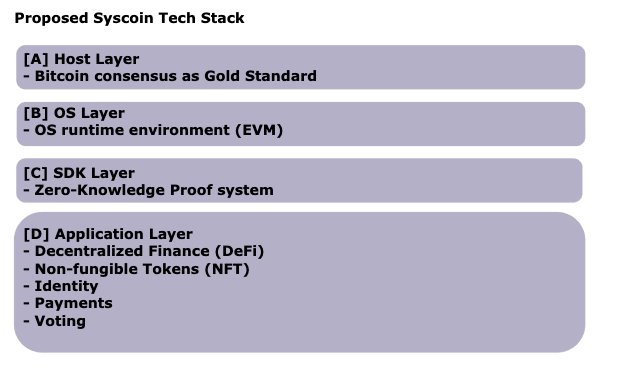


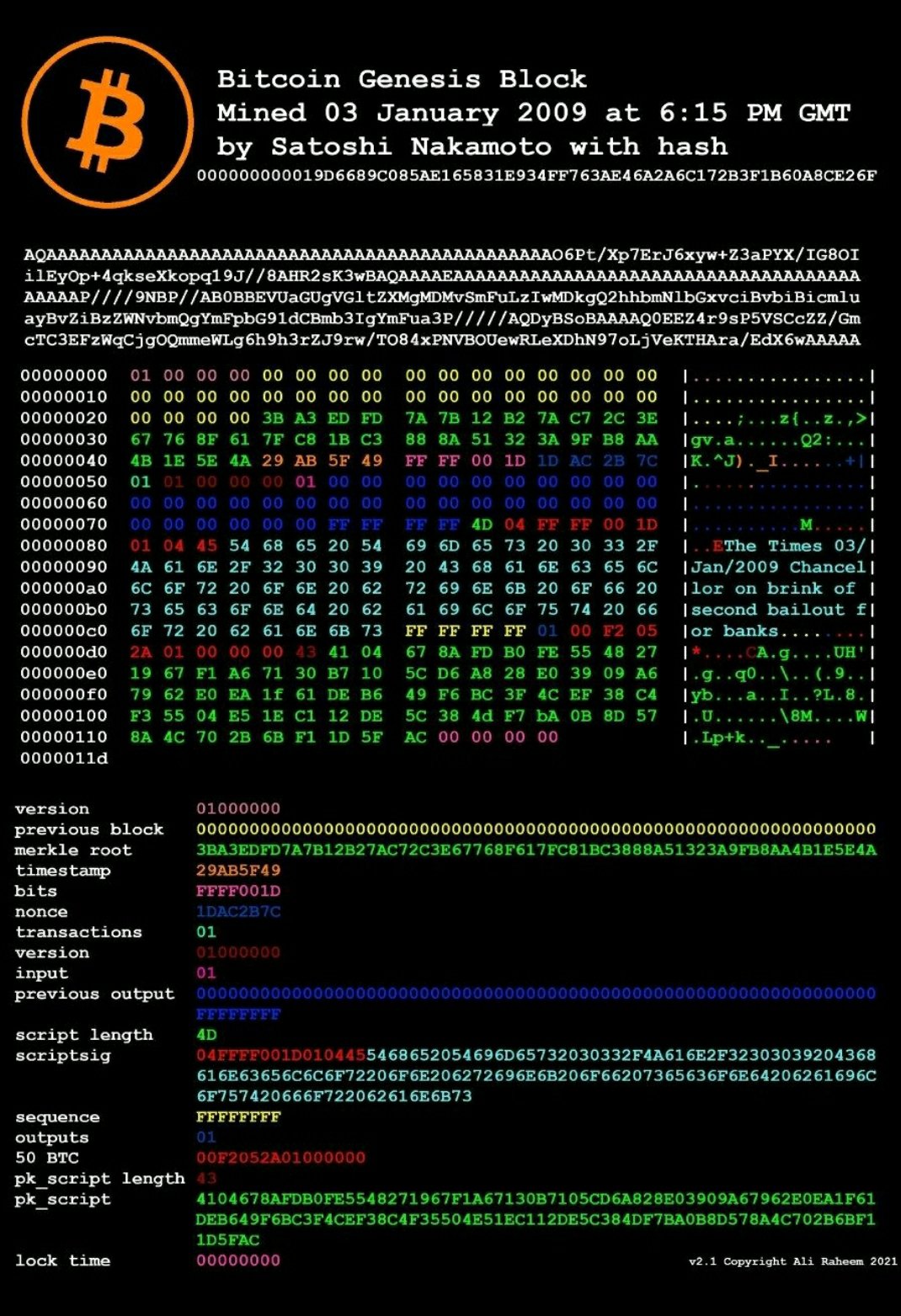


 BitHouse