Nathan is a tech entrepreneur turned pleb-at-large. He brought the core team together to accelerate app development. Having built, sold, invested in and advised tech businesses over the years he is now focused on bitcoin, building BTCMap.org, gamertron.net and delivering bitcoin education for kids.
Igor is a long time bitcoiner, mapper, and digital nomad living abroad. He created BTC Map as an Android application and the project has since gained worldwide momentum from there. He now also maintains all of the backend infrastructure for the project.
A self-taught Web Developer, secondl1ght dove head first down the bitcoin rabbit hole and left his fiat career to focus on bitcoin development full-time. He created and maintains the BTC Map web application and works on lightning network tools at Amboss Technologies.
Karnage is the lead designer on the web app and created the BTC Map brand. He has contributed to many high profile bitcoin open source projects. His mission is to help startup founders succeed and creates products to achieve this goal. Pixel-perfect product design every time. Get it shipped.
All credit and Kudos goes to :

https://btcmap.org/
We’re on a mission to help Bitcoiners easily find places to spend sats.
In a first, Bitcoin developers have done something amazing amid the criticism over the lightning network and issues associated with it. A team of developers has made an international payment using the radio waves on the lightning network. Rodolfo Novak, the co-founder of the startup CoinKite sent out a Bitcoin transaction to Bloomberg columnist Elaine … Continue reading International payment using the radio waves→
My inspiration for this page was given to me by my new aquired friend, a fellow Truth Seeker – Joris and to whom I dedicate this page… Wish you… as well as to all my readers, to find a sparkle of wisdom in these quotes, that shall illuminate your path/s…. Always in my heart and … Continue reading Discipline Quotes→
To all my readers from the bottom of my heart I wish you Happy Holiday among family and friends, a jolly Merry Christmas and a Happy New Year and may 2024 bring you all what you strive and work for so hard! Yours truly, Free Spirit with Joy & Love
Bitcoin white paper turns 15 and the Legacy of Satoshi Nakamoto lives on. “I’ve been working on a new electronic cash system that’s fully peer-to-peer, with no trusted third party,” Satoshi Oct. 31, 2008. The white paper was proposing a decentralized system that could facilitate peer-to-peer transactions, which could solve the “double spending” problem often … Continue reading Bitcoin White Paper turn 15→
The first ever bitcoin transaction from one person to another, on 2009-01-12 at 04:30 used Pay-to-Public-Key(P2PK), when Satoshi Nakamoto sent coins to Hal Finney in Block 170.
P2PK is no longer used because it is a more expensive, less private, and less secure way of receiving bitcoin than other methods.
In a first, Bitcoin developers have done something amazing amid the criticism over the lightning network and issues associated with it. A team of developers has made an international payment using the radio … Continue reading International payment using the radio waves→
My inspiration for this page was given to me by my new aquired friend, a fellow Truth Seeker – Joris and to whom I dedicate this page… Wish you… as well as to … Continue reading Discipline Quotes→
Bitcoin white paper turns 15 and the Legacy of Satoshi Nakamoto lives on. “I’ve been working on a new electronic cash system that’s fully peer-to-peer, with no trusted third party,” Satoshi Oct. 31, … Continue reading Bitcoin White Paper turn 15→
In a first, Bitcoin developers have done something amazing amid the criticism over the lightning network and issues associated with it. A team of developers has made an international payment using the radio … Continue reading International payment using the radio waves→
My inspiration for this page was given to me by my new aquired friend, a fellow Truth Seeker – Joris and to whom I dedicate this page… Wish you… as well as to … Continue reading Discipline Quotes→
Bitcoin white paper turns 15 and the Legacy of Satoshi Nakamoto lives on. “I’ve been working on a new electronic cash system that’s fully peer-to-peer, with no trusted third party,” Satoshi Oct. 31, … Continue reading Bitcoin White Paper turn 15→
Join Honorary Chair Fran Finney and the Running Bitcoin Challenge Committee as we honor legendary cypher punk, Hal Finney.
This is THE EVENT that combines Hal Finney’s love of running and Bitcoin and is raising funds and awareness to help defeat ALS, which ultimately claimed his life in 2014.
You are challenged to run (or walk, roll, or hike) the equivalent of a half marathon — cumulatively or all at once — by the end of January 10, 2023.
From wherever you are, spread the word about Bitcoin, participate in a healthy activity, feel good about doing your part to defeat ALS, and start the year off right
Hal Finney, one of the earliest bitcoin contributors, died eight years ago from complications of nervous system disease amyotrophic lateral sclerosis (ALS).
His spouse, Fran Finney, is now organizing a half marathon to raise funds for ALS research via bitcoin.
The “Running Bitcoin Challenge” is set to take place between Jan. 1 and Jan. 10. The timing of the occasion leads up to the anniversary of Hal Finney’s “Running bitcoin” tweet, in which Finney famously disclosed he was deploying a Bitcoin node.
There is no set location — participants can choose to join anywhere they wish. Players are encouraged to either run, walk, roll or hike the equivalent of a half marathon (Hal’s favorite distance) either in one go or over the entire 10-day period.
Donors contributing at least $100 will receive an official shirt with the half marathon’s logo, while the event’s top 25 fundraisers will get a Hal Finney collectible signed by his wife.
As of Wednesday morning, the event has already managed to secure nearly $10,000 in bitcoin donations.
An advocate of cryptography and digital privacy, Finney was the recipient of the first-ever bitcoin transfer from the network’s pseudonymous creator Satoshi Nakamoto.
The bitcoin community often suspected Finney was Nakamoto, a claim he consistently denied. He reportedly found out about his condition in 2009 and decided to move away from the project.
Hal’s name is high in the Bitcoin pantheon as one of the first people to voice support for Satoshi Nakamoto’s invention and for being the first person to receive a Bitcoin transaction from Satoshi.
He was, for a time, considered one of the top contenders on the list of potential Satoshis himself (many in blockchain who reject Dr. Craig Wright’s statements still falsely believe Finney to be Bitcoin’s real creator).
Hal, who referred to himself as a “cypherpunk,” was a cryptographic activist who went from developing video games to working on the Pretty Good Privacy (PGP) project in the 1990s. He described his PGP work as “dedicated to the goal of making Big Brother obsolete.”
PGP creator Phil Zimmerman hired Hal as his first employee when PGP became PGP Corporation in the early 2000s. He described Hal as a “gregarious man” who loved skiing and long-distance running.
Despite gradual paralysis that eventually forced him to stop working, Hal continued to code software and follow the Bitcoin project.
Almost as famous as his 2009 tweet is his “Bitcoin and me” post on BitcoinTalk.org in March 2013, the last he’d ever make.
It’s a long post, and Hal was “essentially paralyzed” at the time, using an eye tracker to type. Forum stats show the post has been read over 278,000 times.
“When Satoshi announced the first release of the software, I grabbed it right away,” he wrote. “I think I was the first person besides Satoshi to run bitcoin. I mined block 70-something, and I was the recipient of the first bitcoin transaction when Satoshi sent ten coins to me as a test.
I carried on an email conversation with Satoshi over the next few days, mostly me reporting bugs and him fixing them.”
Hal himself always denied being Satoshi Nakamoto, adding later that he’d sold most of the Bitcoins he mined (at pre-2014 prices) to pay for his treatments. He also mentioned putting some in a safe deposit box for his children.
“And, of course, the price gyrations of bitcoins are entertaining to me.
I have skin in the game.
But I came by my bitcoins through luck, with little credit to me.
In a first, Bitcoin developers have done something amazing amid the criticism over the lightning network and issues associated with it. A team of developers has made an international payment using the radio … Continue reading International payment using the radio waves→
My inspiration for this page was given to me by my new aquired friend, a fellow Truth Seeker – Joris and to whom I dedicate this page… Wish you… as well as to … Continue reading Discipline Quotes→
Bitcoin white paper turns 15 and the Legacy of Satoshi Nakamoto lives on. “I’ve been working on a new electronic cash system that’s fully peer-to-peer, with no trusted third party,” Satoshi Oct. 31, … Continue reading Bitcoin White Paper turn 15→
It’s been 4 years already and it seems I haven’t done nothing at all… With the little time I could spare to work on this blog, I hope I bought a tiny seed of knowledge into your 🧠zz my dear readers 😁🙂😉😋
I will try the best of my abilities to continue the work on the blog !
Untill then dear readers never forget :
Let’s find the courage and strenght, if not for us then for Them… the Future Generations that are to come after us and Go…
In a first, Bitcoin developers have done something amazing amid the criticism over the lightning network and issues associated with it. A team of developers has made an international payment using the radio … Continue reading International payment using the radio waves→
My inspiration for this page was given to me by my new aquired friend, a fellow Truth Seeker – Joris and to whom I dedicate this page… Wish you… as well as to … Continue reading Discipline Quotes→
Bitcoin white paper turns 15 and the Legacy of Satoshi Nakamoto lives on. “I’ve been working on a new electronic cash system that’s fully peer-to-peer, with no trusted third party,” Satoshi Oct. 31, … Continue reading Bitcoin White Paper turn 15→
Happy Genesis Block Day! January 3 is the 14th anniversary of Bitcoin’s Block Zero, its anchor in time.
The first sentence of the email has become iconic among the Bitcoin community:
“I’ve been working on a new electronic cash system that’s fully peer-to-peer, with no trusted third party.”
On January 3, 2009, the genesis block of the Bitcoin blockchain was mined by its pseudonymous creator Satoshi Nakamoto, marking the first time in history that a completely digital and decentralized currency went online.
In the 14 years and three halvings since, Bitcoin has grown to become one of the most important financial instruments, clearly demonstrating that a non-central bank-controlled currency is capable of challenging the established monetary order.
That time, in 2009, was one of economic turmoil—and the aftershocks from that turmoil are still rocking our world in 2023.
The Genesis Block was never “mined” like every other Bitcoin block. That started with Block #1 when Satoshi Nakamoto released the software on SourceForge.
The hash from Block #0 was done with different software and hard-coded into the original Bitcoin protocol.
“Chancellor on brink of second bailout for banks” was the Times headline. Satoshi hid in the first block’s coinbase hash as a timestamp to prove there had been no mining on the Bitcoin network before he released the software to the public.
The Times – January 3 2009
“The Chancellor will decide within weeks whether to pump billions more into the economy,” the original article in the Times said. In 2009 these seemed like desperate measures, and they were. Since 2009, though, governments across the Western world have indeed pumped billions, even trillions more, into their economies.
Satoshi was making a statement on irresponsible government interventions in the economy and their eventual erosion on markets.
“They actively sought to incentivise bad behaviour and push in typical Keynesian style the problem down the road. It would be a bigger problem, but it would be someone else’s problem.”
Just like the economy at large, Bitcoin is a long-term struggle against the worse aspects of human nature.
In the 14 years and three halvings since, Bitcoin has grown to become one of the most important financial instruments, clearly demonstrating that a non-central bank-controlled currency is capable of challenging the established monetary order.
10 most important Bitcoin Milestones
Bitcoin has reached numerous major milestones and faced several considerable obstacles over its nearly decade-and-a-half-long history.
Here are 10 events that had the biggest impact on Bitcoin so far:
November 28, 2012: First Bitcoin halving
February 28, 2014: Mt. Gox, the biggest Bitcoin exchange at the time, files for bankruptcy
July 9, 2016: Second Bitcoin halving
August 1, 2017: Bitcoin Cash hard fork
May 11, 2020: Third Bitcoin halving
February 8, 2021: Tesla invests in Bitcoin
February 20, 2021: Bitcoin reaches $1 trillion market cap for the first time
September 7, 2021: El Salvador makes Bitcoin legal tender
November 14, 2021 – Taproot upgrade is activated
November 11, 2022: Major crypto exchange FTX files for bankruptcy
Bitcoin has never closed in the red zone 2 years in a row: Will the trend continue?
Bitcoin price decreased by over -60% over the span of the last 12 months. However, there is a strong bullish precedent in play that could spell a major trend reversal in the coming months.
For starters, Bitcoin has never closed in the negative two years in a row. Granted, there is a relatively short set of historical price data to work with.
However, roughly speaking, Bitcoin has operated on 3 years of growth followed by 1 year of market retracement periods, at least so far
Bitcoin Change Year-over-Year
For world-renowned charities such as Save the Children, the White aper and the subsequent creation of Bitcoin have benefited the organization.
Antonia Roupell, Web3 lead at Save the Children, told Cointelegraph that the organization recognizes “Bitcoin’s potential to be a force for good and a force for financial inclusion,” adding:
“On Bitcoin’s 14th anniversary, and at a time of increasingly global financial inequality, the phrase ‘bitcoin is for anyone’ really resonates.”
In a first, Bitcoin developers have done something amazing amid the criticism over the lightning network and issues associated with it. A team of developers has made an international payment using the radio … Continue reading International payment using the radio waves→
My inspiration for this page was given to me by my new aquired friend, a fellow Truth Seeker – Joris and to whom I dedicate this page… Wish you… as well as to … Continue reading Discipline Quotes→
Bitcoin white paper turns 15 and the Legacy of Satoshi Nakamoto lives on. “I’ve been working on a new electronic cash system that’s fully peer-to-peer, with no trusted third party,” Satoshi Oct. 31, … Continue reading Bitcoin White Paper turn 15→
The mailing list was hosted by Metzdow and run by a group of cypherpunks who shared ideas on creating a kind of digital currency and payment system. Satoshi shared the whitepaper in a message that read, “Bitcoin P2P e-cash paper,” which outlined the main properties of the system.
“Bitcoin P2P e-cash paper Satoshi Nakamoto satoshi at vistomail.com Fri Oct 31 14:10:00 EDT 2008 Previous message: Fw: SHA-3 lounge Messages sorted by: [ date ] [ thread ] [ subject ] [ author ] I’ve been working on a new electronic cash system that’s fully peer-to-peer, with no trusted third party.
The main properties: Double-spending is prevented with a peer-to-peer network. No mint or other trusted parties. Participants can be anonymous. New coins are made from Hashcash style proof-of-work. The proof-of-work for new coin generation also powers the network to prevent double-spending.
Bitcoin: A Peer-to-Peer Electronic Cash System
Abstract. A purely peer-to-peer version of electronic cash would allow online payments to be sent directly from one party to another without the burdens of going through a financial institution. Digital signatures provide part of the solution, but the main benefits are lost if a trusted party is still required to prevent double-spending. We propose a solution to the double-spending problem using a peer-to-peer network. The network timestamps transactions by hashing them into an ongoing chain of hash-based proof-of-work, forming a record that cannot be changed without redoing the proof-of-work. The longest chain not only serves as proof of the sequence of events witnessed, but proof that it came from the largest pool of CPU power. As long as honest nodes control the most CPU power on the network, they can generate the longest chain and outpace any attackers. The network itself requires minimal structure. Messages are broadcasted on a best effort basis, and nodes can leave and rejoin the network at will, accepting the longest proof-of-work chain as proof of what happened while they were gone.
The pseudonymous Bitcoin creator disclosed that they had been working on a new electronic cash system that uses a Proof-of-Work (PoW) consensus algorithm that required no trusted third party. Although the document met mixed reactions, it was the beginning of what is known today as blockchain technology.
A couple of months after the release, the Bitcoin network was launched, with the first block mined on January 3, 2009. About eight days later, Hal Finney received the first transaction of 10 BTC from Nakamoto, after which he posted a legendary tweet that read:
In the 14 years since that day, bitcoin’s value rose from zero to a peak of $68,990 last November and was hovering above $20,000 on Monday, according to CoinDesk data. The cryptocurrency currently has a market capitalization of over $390 billion. It also inspired the creation of more than 20,000 different cryptocurrencies currently in circulation, while bitcoin remains the largest by market cap.
Over the years, several people have been rumored to be Nakamoto, including early bitcoin contributor Hal Finney, cryptographer Nick Szabo, physicist Dorian Nakamoto and even Tesla’s chief executive Elon Musk, who all denied the claims.
Satoshi’s identity is still a mystery, but Finney was well-known for his contribution to the creation of Bitcoin. He worked hand-in-hand with Nakamoto to find and fix bugs in Bitcoin’s underlying infrastructure. Before his death in 2014, Finney shared a detailed story about his journey with Bitcoin
About a year after the launch of Bitcoin, the cryptocurrency went on to record its first real-world commercial use case when a Florida man spent 10,000 BTC to purchase two large Papa John’s pizzas on May 22, 2010.
Although the coins were worth $41 at prices back then, at today’s price, the transaction is worth more than $200 million. To commemorate the event, the Bitcoin community celebrates Bitcoin Pizza Day every year on May 22.
In a first, Bitcoin developers have done something amazing amid the criticism over the lightning network and issues associated with it. A team of developers has made an international payment using the radio … Continue reading International payment using the radio waves→
My inspiration for this page was given to me by my new aquired friend, a fellow Truth Seeker – Joris and to whom I dedicate this page… Wish you… as well as to … Continue reading Discipline Quotes→
Bitcoin white paper turns 15 and the Legacy of Satoshi Nakamoto lives on. “I’ve been working on a new electronic cash system that’s fully peer-to-peer, with no trusted third party,” Satoshi Oct. 31, … Continue reading Bitcoin White Paper turn 15→
The supply of Bitcoin is fixed at 21 million BTC, and as a hard coded monetary policy of the protocol, the fixed supply of the dominant cryptocurrency cannot be altered.
Former Google Product Director Steve Lee stated that only 1 percent of the world’s population can own more than 0.28 BTC, due to the fixed supply of Bitcoin.
If you own 0.28 BTC and HODL, you can be certain no more than 1% of the current world's population can EVER own more BTC than you. A modest investment of $1,830 today can ensure you are a 1%er in a future Bitcoin world. https://t.co/9k3XZa09Yo
In late 2017, Chainalysis, a blockchain forensics company that monitors and investigates cryptocurrency transactions, revealed in a research paper that up to four million BTC are permanently lost on the blockchain as a result of theft, loss of wallets and private keys, and the dormant wallet of Bitcoin creator Satoshi Nakamoto, which experts have said is no longer accessible.
Kim Grauer, Senior Economist at Chainalysis, said at the time, that the lost supply of BTC is not taken into consideration by the market cap.That means, the real price of BTC could be substantially higher, as 4 to 6 million BTC are estimated to be lost.
Based on the estimate that the supply of Bitcoin is around 17 million, only 0.8 percent of the world population can own more than 0.28 BTC and less than 0.2 of the world population can own more than 1 BTC.
The 0.28 BTC figure introduced by Lee assumes the supply of Bitcoin to be 21 million, as it divides 21 million by 0.28 and divides the outcome of that by the world population that is 7.442 billion. If the research of Chainalysis is accurate and that 4 to 6 million BTC are lost on the blockchain, the supply of Bitcoin should be closer to around 16 to 17 million
The fact that any investor in the global market can be within the 1 percent of the world population with a $1,830 investment demonstrates that the cryptocurrency market is still at its early phase, and in terms of adoption, market development, infrastructure, and regulation, the sector can still grow significantly in the mid to long-term.
In a first, Bitcoin developers have done something amazing amid the criticism over the lightning network and issues associated with it. A team of developers has made an international payment using the radio … Continue reading International payment using the radio waves→
My inspiration for this page was given to me by my new aquired friend, a fellow Truth Seeker – Joris and to whom I dedicate this page… Wish you… as well as to … Continue reading Discipline Quotes→
Bitcoin white paper turns 15 and the Legacy of Satoshi Nakamoto lives on. “I’ve been working on a new electronic cash system that’s fully peer-to-peer, with no trusted third party,” Satoshi Oct. 31, … Continue reading Bitcoin White Paper turn 15→
“You never change things by fighting the existing reality.
To change something, build a new model that makes the existing model obsolete.”
Buckminster Fuller
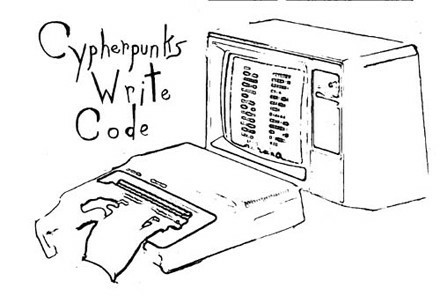
Strenght in NumbersDare to knowBitcoin / bitcoin / blockchainDYOR – Do Your Own Research LandArise…Bitcoin – People’s MoneyCypherPunks Write CodeBitcoin Genesis BlockCode Is LawA new day…Bitcoin – The Peaceful RevolutionVeritas Non Auctoritas Facit Legem🔵 or 🟠 The Choice is Yours…
In a first, Bitcoin developers have done something amazing amid the criticism over the lightning network and issues associated with it. A team of developers has made an international payment using the radio … Continue reading International payment using the radio waves→
My inspiration for this page was given to me by my new aquired friend, a fellow Truth Seeker – Joris and to whom I dedicate this page… Wish you… as well as to … Continue reading Discipline Quotes→
Bitcoin white paper turns 15 and the Legacy of Satoshi Nakamoto lives on. “I’ve been working on a new electronic cash system that’s fully peer-to-peer, with no trusted third party,” Satoshi Oct. 31, … Continue reading Bitcoin White Paper turn 15→
First time/Small miner reference for getting started.
If you want to start mining here is what you need… and what you need to know.
This is written for home miners/small farms, but can be used as a guideline for most operations. Use this as a reference for what you need to research, or what questions you need to ask before jumping in.
What you need to mine can be broken down into the following categories:
You CAN NOT meaningfully mine bitcoin today with CPU, GPU or even FPGAs. Bitcoin difficulty adapts to match the amount of mining done on the network and has reached levels trillions of times too high to mine meaningfully with PCs, laptops, tablets, phones, webpages, javascript, GPUs, and even generalised SHA hardware.
Even if you combined all the computers in the world, including all known supercomputer, you would not even approach 0.1% of the bitcoin hashrate today.
There isn’t any point attempting to mine bitcoin with CPU or GPU even in the interests of learning as it shares almost nothing with how bitcoin is mined with ASICs and will not teach you anything.
Hardware
Asic Miner:
Here is a list of the companies currently manufacturing Miners for public purchase.
Each one has their Pro’s and Con’s it is up to you to do your research and decide what is best for you.
A few points to consider while researching are :
efficiency
reliability
warranty period/policy
power draw
Each company has a different way of handling warranty repairs, depending on your situation and the policy repairs can become cost prohibitive. I will touch more on efficiency and power draw in the electricity section.
• Current list of competitive hardware
Power supply: You will need to purchase a power supply to run your miners. You will find ATX and Server grade PSU’s, the latter being preferred for mining BTC.
When it comes to selecting a PSU purchase something with a capacity 25% higher than your miner is rated to draw. This will have you operating within the 80% rule.(explained further in the electricity section)
EX. Miner draws 1000 PSU should be able to provide 1250W.
** Many current generation miners are now being manufactured with Integrated PSU. Again do your research to see if your unit comes with or without. Generally you will still need to source a power cable.**
Auxilliaries – Avalon miners require an external controller, 1 per 20 miners. You may have to run additional fans for intake and exhaust depending on your location.
PSU’s can be purchased large enough to run 2 Miners; or the opposite 1 Miner fed by 2 PSU’s. Ensure the PSU you have selected will have the correct amount of PCI-E connectors required to operate your miner(s)
You can also find a large supply of used miners and PSU’s. Again it’s up to you to do your research as these often are a no return transaction.
Electricity
Follow all local codes and regulations
This is the number 1 factor in whether mining is right for you. As discussed with Miners being a 24/7 machine drawing power those costs will make it cost prohibitive for some people to mine. You need to be aware of what your costs/kWh are and run the numbers.
This will be done in a profitability calculator. This is just an example of 1 there are many out there.
( Miner usage in kW ) * ( Hours run per day ) 24 * ( Cost/kWh ) = Cost per Day to Operate
( Ideally less than the FIAT value of BTC mined )
The second part to the electrical requirements of mining is the available service; written for North America.
You will need to figure out the amperage you can spare, what circuits and receptacles you have in place, are you setting up on 220V or 110V. You will need to make sure that you have the right cord end for your PSU to match the receptacle, picking the wrong one can cost you a few days of mining if it has to be shipped.
If you can try and set up on a 220V circuit for 2 reasons :
– You will pull half the amps, and it is more efficient.
– Doing so requires 2 breaker spaces in your panel. Breaker sizing will depend on how many miners you plan to run. Here is the formula for calculating amps.
Watts / Voltage = Amps
Here is where you will bring the 80% rule back into play by sizing the continuous miner load to 80% of the breaker rating. 12 Amps on a 15 Amp breaker, 16 Amps max on a 20 Amp breaker, 24 Amps on a 30 amp breaker.
If/when you increase the amount of miners you are running you may want to look into PDU’s, as opposed to more receptacles.
Location
This is something that is often overlooked to the headache and frustration of many would be miners. These machines are loud and hot . You essentially have an electric heater that also uses an industrial fan to keep it from melting itself. This space will need to have the electrical requirements as discussed previously.
So make sure you have a space that is well ventilated with a plan to exhaust heat, and bring in fresh dust free air. I say this as using AC to cool the room will eat into your profits and may even make mining unprofitable.
The noise issue is a consideration you can sort out depending on whats available. (garage, basement, remote building)
Both of these issues can be handled with hosting, which is further explained in the information section.
Internet connection
Some miner setups have the option to use wifi. It is advisable to use a wired connection where available. This will provide a more stable connection and ensure you are submitting the expected amount of shares which is directly related to your payouts.
Please note that mining uses a negligible amount of bandwidth, and will not affect your other internet usage.
Information
You can use this information in this post as a good baseline to get you going. In addition to this you will want to research network difficulty; this readjusts every 2016 blocks to maintain a 10 minute block time on average. While this can go down it generally increases.
Solo or Pool?
You can solo mine but this is essentially a lottery even as a large scale miner. Should you chose this you can check this out as a starting point.
solo.ckpool.org 1% fee solo mining USA/DE 250 blocks solved!
Odds are most of you will join a pool. I will only say that it is in your best interest to mine at a pool that pays transaction fees (miner rewards). Then you will want to consider the fees associated with the pool.
When it comes to these pools you want them to be large enough that they are getting at least 1 block every Difficulty adjustment period. Larger pools will offer smaller rewards paid out more frequently, and vice versa.
In a first, Bitcoin developers have done something amazing amid the criticism over the lightning network and issues associated with it. A team of developers has made an international payment using the radio … Continue reading International payment using the radio waves→
My inspiration for this page was given to me by my new aquired friend, a fellow Truth Seeker – Joris and to whom I dedicate this page… Wish you… as well as to … Continue reading Discipline Quotes→
Bitcoin white paper turns 15 and the Legacy of Satoshi Nakamoto lives on. “I’ve been working on a new electronic cash system that’s fully peer-to-peer, with no trusted third party,” Satoshi Oct. 31, … Continue reading Bitcoin White Paper turn 15→
Calculating your share of the bitcoins mined can be complex. In an ongoing effort to come up with the fairest method and prevent gaming of the system, many calculation schemes have been invented.
PPS
The Pay-per-Share (PPS) approach offers an instant, guaranteed payout for each share that is solved by a miner. Miners are paid out from the pools existing balance and can withdraw their payout immediately. This model allows for the least possible variance in payment for miners while also transferring much of the risk to the pool’s operator.
PPS, or ‘pay per share’ shifts the risk to the mining pool while they guarantee payment for every share you contribute.
PPS payment schemes require a very large reserve of 10,000 BTC in order to ensure they have the means of enduring a streak of bad luck. For this reason, most Bitcoin mining pools no longer support it.
PROP
The Proportional approach offers a proportional distribution of the reward when a block is found amongst all workers, based off of the number of shares they have each found.
PPLNS
The Pay Per Last N Shares (PPLN) approach is similar to the proportional method, but instead of counting the number of shares in the round, it instead looks at the last N shares, no matter the boundaries of the round.
DGM
The Double Geometric Method (DGM) is a hybrid approach that enables the operator to absorb some of the risk. The operator receives a portion of payouts during short rounds and returns it during longer rounds to normalize payments.
DGM is a popular payment scheme because it offers a nice balance between short round and long round blocks. However, end users must wait for full round confirmations long after the blocks are processed.
SMPPS
The Shared Maximum Pay Per Share (SMPPS) uses a similar approach to PPS but never pays more than the Bitcoin mining pool has earned.
ESMPPS
The Equalized Shared Maximum Pay Per Share (ESMPPS) is similar to SMPPS, but distributes payments equally among all miners in the Bitcoin mining pool.
RSMPPS
The Recent Shared Maximum Pay Per Share (RSMPPS) is also similar to SMPPS, but the system prioritizes the most recent Bitcoin miners first.
CPPSRB
The Capped Pay Per Share with Recent Backpay uses a Maximum Pay Per Share (MPPS) reward system that will pay Bitcoin miners as much as possible using the income from finding blocks, but will never go bankrupt.
BPM
Bitcoin Pooled mining (BPM), also known as “Slush’s pool”, uses a system where older shares from the beginning of a block round are given less weight than more recent shares. This reduces the ability to cheat the mining pool system by switching pools during a round.
POT
The Pay on Target (POT) approach is a high variance PPS that pays out in accordance with the difficulty of work returned to the pool by a miner, rather than the difficulty of work done by the pool itself.
SCORE
The SCORE based approach uses a system whereby a proportional reward is distributed and weighed by the time the work was submitted. This process makes later shares worth more than earlier shares and scored by time, thus rewards are calculated in proportion to the scores and not shares submitted.
ELIGIUS
Eligius was designed by Luke Jr., creator of BFGMiner, to incorporate the strengths of PPS and BPM pools, as miners submit proofs-of-work to earn shares and the pool pays out immediately. When the block rewards are distributed, they are divided equally among all shares since the last valid block and the shares contributed to stale blocks are cycled into the next block’s shares. Rewards are only paid out if a miner earns at least. 67108864 and if the amount owed is less than that it will be rolled over to the next block until the limit is achieved. However, if a Bitcoin miner does not submit a share for over a period of a week, then the pool will send any remaining balance, regardless of its size.
Triplemining
Triplemining brings together medium-sized pools with no fees and redistributes 1% of every block found, which allows your share to grow faster than any other Bitcoin mining pool approach. The administrators of these Bitcoin mining pools use some of the Bitcoins generated when a block is found to add to a jackpot that is triggered and paid out to the member of the pool who found the block. In this way, everyone in the pool has a better chance to make additional Bitcoins, regardless of their processing power.
In a first, Bitcoin developers have done something amazing amid the criticism over the lightning network and issues associated with it. A team of developers has made an international payment using the radio … Continue reading International payment using the radio waves→
My inspiration for this page was given to me by my new aquired friend, a fellow Truth Seeker – Joris and to whom I dedicate this page… Wish you… as well as to … Continue reading Discipline Quotes→
Bitcoin white paper turns 15 and the Legacy of Satoshi Nakamoto lives on. “I’ve been working on a new electronic cash system that’s fully peer-to-peer, with no trusted third party,” Satoshi Oct. 31, … Continue reading Bitcoin White Paper turn 15→
Assigning the most powerful supercomputer to mine bitcoin would be comparable to hiring a grandmaster chess player to move a pile of bricks by hand.
The job would get done eventually but the chess player is much better at thinking and playing chess than exerting energy to repetitively move bricks.
Likewise, combining the computing power of the most powerful supercomputers in the world and using them to mine bitcoin would essentially be pointless when compared to the ASIC machines used today.
ASICs are designed to do one thing as quickly and efficiently as possible, whereas a supercomputer is designed to do complicated tasks or math problems.
Since Bitcoin mining is a lottery based on random trial and error rather than complex math, specialization (ASICs)beatsgeneral excellence (supercomputers) everytime.
In a first, Bitcoin developers have done something amazing amid the criticism over the lightning network and issues associated with it. A team of developers has made an international payment using the radio … Continue reading International payment using the radio waves→
My inspiration for this page was given to me by my new aquired friend, a fellow Truth Seeker – Joris and to whom I dedicate this page… Wish you… as well as to … Continue reading Discipline Quotes→
Bitcoin white paper turns 15 and the Legacy of Satoshi Nakamoto lives on. “I’ve been working on a new electronic cash system that’s fully peer-to-peer, with no trusted third party,” Satoshi Oct. 31, … Continue reading Bitcoin White Paper turn 15→
Why this crazyness with rabbits ?!? And their holes, you would ask ?!? Why is the rabbit hole so deep ?¿
And what does the rabbit hole has to do with that BitCorn thing I keep hearing about all over the place ?¿
I like to start from the begining, as I think so I am 😋😂
Rabbit Hole is a play written by David Lindsay-Abaire. It was the recipient of the 2007 Pulitzer Prize for Drama. The play premiered on Broadway in 2006, and it has also been produced by regional theatres in cities such as Los Angeles, Philadelphia and Pittsburgh. The play had its Spanish language premiere in San Juan, Puerto Rico in Autumn of 2010.
The play deals with the ways family members survive a major loss, and includes comedy as well as tragedy. Cynthia Nixon won the 2006 Tony Award for Best Performance by a Leading Actress in a Play for her performance as Becca in the New York production, and the play was nominated for several other Tony awards.
Rabbit Hole
A situation, journey, or process that is particularly strange, problematic, difficult, complex, or chaotic, especially one that becomes increasingly so as it develops or unfolds.
An allusion to “Alice’s Adventures in Wonderland” by Lewis Carroll, it is used especially in the phrase “(go) down the rabbit hole.”
Overhauling the current tax legislation is a rabbit hole I don’t think this administration should go down at this point.I’ve stayed away from drugs and alcohol since coming to college. I have an addictive personality, so I decided to just avoid that rabbit hole altogether.
What does rabbit hole mean?
Used especially in the phrase going down the rabbit hole or fallingdown the rabbit hole, a rabbit hole is a metaphor for something that transports someone into a wonderfully (or troublingly) surreal state or situation.
On the internet, a rabbit holefrequently refers to an extremely engrossing and time-consuming topic.
Where does rabbit hole come from?
Alice’s Adventures in WonderLand
Literally, a rabbit hole is what the animal digs for its home. The earliest written record of the phrase dates back to the 17th century. But the figurative rabbit hole begins with Lewis Carroll’s 1865 classic, Alice’s Adventures in Wonderland.
In its opening chapter, “Down the Rabbit-Hole,” Alice follows the White Rabbit into his burrow, which transports her to the strange, surreal, and nonsensical world of Wonderland.
Since then, Carroll’s rabbit hole has proved a popular and useful reference. The Oxford English Dictionary finds the first allusive rabbit hole in a 1938 edition of TheYale Law Journal: “It is the Rabbit-Hole down which we fell into the Law, and to him who has gone down it, no queer performance is strange.”
Over much of the 20th century, rabbit hole has been used to characterize bizarre and irrational experiences. It’s especially used to reference magical, challenging, and even dangerous places or positions, similar to Carroll’s topsy-turvy Wonderland.
Rabbit holehas many metaphorical applications—from frustrating red tape to the mind-bending complexity of science to hallucinations during altered states—all united by a common sense of passing into some labyrinthine, logic-defying realm that, once entered, is hard to get out of.
One can fall down the rabbit hole of government bureaucracy, healthcare, obtaining a green card, tax law, the political economy of modern Japan, puberty, college admissions, or quantum mechanics.
If you’re Neo in the hit film The Matrix, you can take the red pill—a pill that shows you the truth, as opposed to the blue pill, which keeps you in ignorance—and “see how deep the rabbit hole goes.”
In a related note, some people literally take pills and go down the rabbit hole of a psychedelic drug trip.
But as Kathryn Schulz observed for The New Yorker in 2015, rabbit hole has further evolved in the information age: “These days…when we say that we fell down the rabbit hole, we seldom mean that we wound up somewhere psychedelically strange. We mean that we got interested in something to the point of distraction—usually by accident, and usually to a degree that the subject in question might not seem to merit.”
Thanks to the abundance, variety, and instant access of content online, many fall down internet rabbit holes which are often spectacularly, and addictively, niche: scary stories, obscure conspiracy theories, or famous last meals, for instance.
Other rabbit holes tend to be opened up by specific services or social media, which serve users item after item, link after link: Wikipedia, Netflix, Amazon, Facebook, YouTube, and so forth.
These rabbit holes have become so common that people sometimes swap out rabbit for the name of the particular site, e.g. “I’ve fallen down an Instragram hole” or “I’m falling down a wikihole.”
Who uses rabbit hole?
From formal documents to internet status updates, rabbit hole is a very popular and widespread expression. Unlike earlier iterations of the metaphor, internet rabbit holes convey less a sense of weirdness, disorientation, or difficulty than they do of an intensely captivating diversion.
Rabbit hole is also showing increasing use as a modifier, e.g. a rabbit-hole question or phenomenon.
Now… that we have a basic and broader understanding about this Hole and it’s rabbit that digged it 😋😂
Let me show you a journey that I took to get to know, understand, admire, be amazed and support the BitCorn everybody is so crazy about …
Bitcoin Glossary
Block
Blocks are found in the Bitcoin blockchain. Blocks connect all transactions together. Transactions are combined into single blocks and are verified every ten minutes through mining. Each subsequent block strengthens the verification of the previous blocks, making it impossible to double spend bitcoin transactions (see double spend below).
BIP
Bitcoin Improvement Proposal or BIP, is a technical design document providing information to the bitcoin community, or describing a new feature for bitcoin or its processes or environment which affect the Bitcoin protocol. New features, suggestions, and design changes to the protocol should be submitted as a BIP. The BIP author is responsible for building consensus within the community and documenting dissenting opinions.
Blockchain
The Bitcoin blockchain is a public record of all Bitcoin transactions. You might also hear the term used as a “public ledger.” The blockchain shows every single record of bitcoin transactions in order, dating back to the very first one. The entire blockchain can be downloaded and openly reviewed by anyone, or you can use a block explorer to review the blockchain online.
Block Height
The block height is just the number of blocks connected together in the block chain. Height 0 for example refers to the very first block, called the “genesis block.”
Block Reward
When a block is successfully mined on the bitcoin network, there is a block reward that helps incentivize miners to secure the network. The block reward is part of a “coinbase” transaction which may also include transaction fees. The block rewards halves roughly every four years; see also “halving.”
Change
Let’s say you are spending $1.90 in your local supermarket, and you give the cashier $2.00. You will get back .10 cents in change. The same logic applies to bitcoin transactions. Bitcoin transactions are made up of inputs and outputs. When you send bitcoins, you can only send them in a whole “output.” The change is then sent back to the sender.
Cold Storage
The term cold storage is a general term for different ways of securing your bitcoins offline (disconnected from the internet). This would be the opposite of a hot wallet or hosted wallet, which is connected to the web for day-to-day transactions. The purpose of using cold storage is to minimize the chances of your bitcoins being stolen from a malicious hacker and is commonly used for larger sums of bitcoins.
Confirmation
A confirmation means that the bitcoin transaction has been verified by the network, through the process known as mining. Once a transaction is confirmed, it cannot be reversed or double spent. Transactions are included in blocks.
Cryptography
Cryptography is used in multiple places to provide security for the Bitcoin network. Cryptography, which is essentially mathematical and computer science algorithms used to encrypt and decrypt information, is used in bitcoin addresses, hash functions, and the blockchain.
Decentralized
Having a decentralized bitcoin network is a critical aspect. The network is “decentralized,” meaning that it’s void of a centralized company or entity that governs the network. Bitcoin is a peer-to-peer protocol, where all users within the network work and communicate directly with each other, instead of having their funds handled by a middleman, such as a bank or credit card company.
Difficulty
Difficulty is directly related to Bitcoin mining (see mining below), and how hard it is to verify blocks in the Bitcoin network. Bitcoin adjusts the mining difficulty of verifying blocks every 2016 blocks. Difficulty is automatically adjusted to keep block verification times at ten minutes.
Double Spend
If someone tries to send a bitcoin transaction to two different recipients at the same time, this is double spending. Once a bitcoin transaction is confirmed, it makes it nearly impossible to double spend it. The more confirmations that a transaction has, the harder it is to double spend the bitcoins.
Full Node
A full node is when you download the entire blockchain using a bitcoin client, and you relay, validate, and secure the data within the blockchain. The data is bitcoin transactions and blocks, which is validated across the entire network of users.
Halving
Bitcoins have a finite supply, which makes them scarce. The total amount that will ever be issued is 21 million. The number of bitcoins generated per block is decreased 50% every four years. This is called “halving.” The final halving will take place in the year 2140.
Hash Rate
The hash rate is how the Bitcoin mining network processing power is measured. In order for miners to confirm transactions and secure the blockchain, the hardware they use must perform intensive computational operations which is output in hashes per second.
Hash (txid)
A transaction hash (sometimes referred to as a transaction ID or txid) is a unique identifier that can be used on any block explorer to look up all of the public details of a particular transaction. Every on-chain transaction has a unique hash made up of a long string of alphanumeric characters.
Mining
Bitcoin mining is the process of using computer hardware to do mathematical calculations for the Bitcoin network in order to confirm transactions. Miners collect transaction fees for the transactions they confirm and are awarded bitcoins for each block they verify.
Pool
As part of bitcoin mining, mining “pools” are a network of miners that work together to mine a block, then split the block reward among the pool miners. Mining pools are a good way for miners to combine their resources to increase the probability of mining a block, and also contribute to the overall health and decentralization of the bitcoin network.
Private Key
A private key is a string of data that shows you have access to bitcoins in a specific wallet. Think of a private key like a password; private keys must never be revealed to anyone but you, as they allow you to spend the bitcoins from your bitcoin wallet through a cryptographic signature.
Proof of Work
Proof of work refers to the hash of a block header (blocks of bitcoin transactions). A block is considered valid only if its hash is lower than the current target. Each block refers to a previous block adding to previous proofs of work, which forms a chain of blocks, known as a blockchain. Once a chain is formed, it confirms all previous Bitcoin transactions and secures the network.
Public Address
A public bitcoin address is cryptographic hash of a public key. A public address typically starts with the number “1.” Think of a public address like an email address. It can be published anywhere and bitcoins can be sent to it, just like an email can be sent to an email address.
RBF
RBF stands for Replace By Fee, and refers to a method that allows a sender to replace a “stuck” or unconfirmed transaction with a new one that uses a higher fee. This is done to make sure a transaction confirms as quickly as possible. The “replacement” transaction uses the same inputs as the original one. This is not considered a double spend, as the receiving address(es) typically remain the same.
Satoshi Nakamoto
Bitcoin’s existence began with an academic paper written in 2008 by a developer under the name of Satoshi Nakamoto. Satoshi is the name used as the original inventor of Bitcoin.
Transaction
A transaction is when data is sent to and from one bitcoin address to another. Just like financial transactions where you send money from one person to another, in bitcoin you do the same thing by sending data (bitcoins) to each other. Bitcoins have value because it’s based on the properties of mathematics, rather than relying on physical properties (like gold and silver) or trust in central authorities, like fiat currencies.
Wallet
Just like with paper dollars you hold in your physical wallet, a bitcoin wallet is a digital wallet where you can store, send, and receive bitcoins securely. There are many varieties of wallets available, whether you’re looking for a web or mobile solution. Ideally, a bitcoin wallet will give you access to your public and private keys. This means that only you have rightful access to spend these bitcoins, whenever you choose to.
In a first, Bitcoin developers have done something amazing amid the criticism over the lightning network and issues associated with it. A team of developers has made an international payment using the radio … Continue reading International payment using the radio waves→
My inspiration for this page was given to me by my new aquired friend, a fellow Truth Seeker – Joris and to whom I dedicate this page… Wish you… as well as to … Continue reading Discipline Quotes→
Bitcoin white paper turns 15 and the Legacy of Satoshi Nakamoto lives on. “I’ve been working on a new electronic cash system that’s fully peer-to-peer, with no trusted third party,” Satoshi Oct. 31, … Continue reading Bitcoin White Paper turn 15→



 In a first, Bitcoin developers have done something amazing amid the criticism over the lightning network and issues associated with it. A team of developers has made an international payment using the radio waves on the lightning network. Rodolfo Novak, the co-founder of the startup CoinKite sent out a Bitcoin transaction to Bloomberg columnist Elaine … Continue reading International payment using the radio waves
 My inspiration for this page was given to me by my new aquired friend, a fellow Truth Seeker – Joris and to whom I dedicate this page… Wish you… as well as to all my readers, to find a sparkle of wisdom in these quotes, that shall illuminate your path/s…. Always in my heart and … Continue reading Discipline Quotes
 To all my readers from the bottom of my heart I wish you Happy Holiday among family and friends, a jolly Merry Christmas and a Happy New Year and may 2024 bring you all what you strive and work for so hard! Yours truly, Free Spirit with Joy & Love
 Bitcoin white paper turns 15 and the Legacy of Satoshi Nakamoto lives on. “I’ve been working on a new electronic cash system that’s fully peer-to-peer, with no trusted third party,” Satoshi Oct. 31, 2008. The white paper was proposing a decentralized system that could facilitate peer-to-peer transactions, which could solve the “double spending” problem often … Continue reading Bitcoin White Paper turn 15






 BitHouse