In a first, Bitcoin developers have done something amazing amid the criticism over the lightning network and issues associated with it. A team of developers has made an international payment using the radio waves on the lightning network.
Rodolfo Novak, the co-founder of the startup CoinKite sent out a Bitcoin transaction to Bloomberg columnist Elaine Ou from Toronto Canada to San Francisco, California. The current feat is quite remarkable given how dependent our current system of banking is on the internet. So, under the circumstances of an Internet shut down, you can still send or receive Bitcoin using the radio waves
In a first, Bitcoin developers have done something amazing amid the criticism over the lightning network and issues associated with it. A team of developers has made an international payment using the radio … Continue reading International payment using the radio waves→
My inspiration for this page was given to me by my new aquired friend, a fellow Truth Seeker – Joris and to whom I dedicate this page… Wish you… as well as to … Continue reading Discipline Quotes→
Bitcoin white paper turns 15 and the Legacy of Satoshi Nakamoto lives on. “I’ve been working on a new electronic cash system that’s fully peer-to-peer, with no trusted third party,” Satoshi Oct. 31, … Continue reading Bitcoin White Paper turn 15→
“The journey of a thousand miles begins with a single step.”
Lao Tzu
The First step …🤔🙄🤔 Brings me back on the memory lane… In the ancient times of 2011, when I read for the first time about this BitCorn thing…
Then, I read the WhitePaper… As much or little as I understood at the time, I had a strange Sehnsucht about it and went down the proverbial rabbit hole…
Only to discover with amazement and dismay… It’s the Moria’s Mines down here…
In a first, Bitcoin developers have done something amazing amid the criticism over the lightning network and issues associated with it. A team of developers has made an international payment using the radio … Continue reading International payment using the radio waves→
My inspiration for this page was given to me by my new aquired friend, a fellow Truth Seeker – Joris and to whom I dedicate this page… Wish you… as well as to … Continue reading Discipline Quotes→
Bitcoin white paper turns 15 and the Legacy of Satoshi Nakamoto lives on. “I’ve been working on a new electronic cash system that’s fully peer-to-peer, with no trusted third party,” Satoshi Oct. 31, … Continue reading Bitcoin White Paper turn 15→
P2P crypto exchanges simply remove the middlemen, the core strength of Bitcoin’s design. Allowing users to buy/sell directly with each other without any trusted third-party to help carrying out transactions.
It is this 🤓 miners strong believe and best practice that privacy and security matter, then P2P exchanges will likely be a better option than the regular exchanges for handling your cryptocurrency!
Peer-to-peer bitcoin exchanges offer anonymous ways to buy and sell Bitcoin with a wide range of payment methods.
It’s no surprise that the P2P marketplaces have grown considerably in recent years.
In a first, Bitcoin developers have done something amazing amid the criticism over the lightning network and issues associated with it. A team of developers has made an international payment using the radio … Continue reading International payment using the radio waves→
My inspiration for this page was given to me by my new aquired friend, a fellow Truth Seeker – Joris and to whom I dedicate this page… Wish you… as well as to … Continue reading Discipline Quotes→
Bitcoin white paper turns 15 and the Legacy of Satoshi Nakamoto lives on. “I’ve been working on a new electronic cash system that’s fully peer-to-peer, with no trusted third party,” Satoshi Oct. 31, … Continue reading Bitcoin White Paper turn 15→
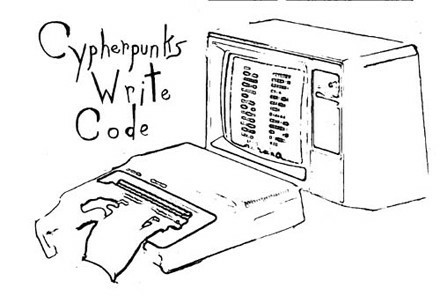
Let’s make a journey back in time to see where blockchain technology and cryptocurrencies came from. It will take us back to the CypherPunk Movement starting in the 1970’s.
Cryptography for the People
Encryption was primarily used for military purposes before the 1970s. People at that time were living in an analog world. Few had computers and even fewer could imagine a technology that would connect almost every human being on the planet – the internet.
Two publications brought cryptography into the open, namely the “Data Encryption Standard” published by the US Government, and a paper called “New Directions in Cryptography” by Dr. Whitfield Diffie and Dr. Martin Hellman, published in 1976.
Dr. David Chaum started writing on topics such as anonymous digital cash and pseudonymous reputation systems in the 1980s, such as the ones described in “Security without Identification: Transaction Systems to make Big Brother Obsolete”. This was the first step toward the digital currencies we see today.
The Cypherpunks
We walk on shoulders of Giants! Hughes, May, Back, Finney, Gilmore, Szabo
It wasn’t until 1992 that a group of cryptographers in the San Francisco Bay area started meeting up on a regular basis to discuss their work and related ideas. They built a basis for years of cryptographic research to come.
Besides their regular meetings, they also started the Cypherpunk mailing list in which they discussed many ideas including those which led to the birth of Bitcoin.
In late 1992 Eric Hughes, one of the first cypherpunks, wrote “A Cypherpunk’s Manifesto” laying out the ideals and vision of the movement.
Note: We encourage you to read A Cypherpunk’s Manifesto. The Manifesto is just as relevant today as it was in 1992. This short read takes only a few minutes of your time. It’s astonishing to see how much foresight the early members had when most people didn’t even think about computers yet.
A Cypherpunks’s Manifesto
An excerpt from the Manifesto:
“Privacy is necessary for an open society in the electronic age.
Privacy is not secrecy.
A private matter is something one doesn’t want the whole world to know, but a secret matter is something one doesn’t want anybody to know.
Privacy is the power to selectively reveal oneself to the world.”
“Privacy in an open society also requires cryptography.
If I say something, I want it heard only by those for whom I intend it.
If the content of my speech is available to the world, I have no privacy.
To encrypt is to indicate the desire for privacy, and to encrypt with weak cryptography is to indicate not too much desire for privacy.”
“We must defend our own privacy if we expect to have any.
We must come together and create systems which allow anonymous transactions to take place.
People have been defending their own privacy for centuries with whispers, darkness, envelopes, closed doors, secret handshakes, and couriers.
The technologies of the past did not allow for strong privacy, but electronic technologies do.”
“We the Cypherpunks are dedicated to building anonymous systems.
We are defending our privacy with cryptography, with anonymous mail forwarding systems, with digital signatures, and with electronic money.”
Electronic Cash
Although you might have just heard about this movement for the first time, you have most definitely benefitted from the efforts of some of their members in building Tor, BitTorrent, SSL, and PGP encryption. It should not surprise you that many concepts and ideas that originated from this group led to the emergence of cryptocurrencies.
In 1997, Dr. Adam Back created HashCash, which he proposed as a measure against spam. A little later, in 1998, Wei Dai published his idea for b-money and conceived the ideas of Proof-of-Work and Proof-of-Stake to achieve consensus across a distributed network. In 2005 Nick Szabo published a proposal for Bit Gold. There was no cap on the maximum supply but he introduced the idea to value each unit of Bit Gold by the amount of computational work that went into producing it. Although this is not how cryptocurrencies are valued, the price of production (comprised of hardware and electricity cost) plays a role in the pricing of these digital assets.
In 2008, Satoshi Nakamoto released the Bitcoin white paper, citing and building upon HashCash and b-money. Citations from his early communications and parts of his white paper, such as the following on privacy, suggest Nakamoto was close to the cypherpunk movement.
“The traditional banking model achieves a level of privacy by limiting access to information to the parties involved and the trusted third party. The necessity to announce all transactions publicly precludes this method, but privacy can still be maintained by breaking the flow of information in another place: by keeping public keys anonymous. The public can see that someone is sending an amount to someone else, but without information linking the transaction to anyone. This is similar to the level of information released by stock exchanges, where the time and size of individual trades, the ‘tape’, is made public, but without telling who the parties were.”
Technology did not enable strong privacy prior to the 20th century, but neither did it enable affordable mass surveillance. We believe in the human right to privacy and work towards enabling anyone who wishes to claim his or her privacy to do so. We see a cryptocurrency with selective privacy as a good step in the right direction of reclaiming our privacy.
In a first, Bitcoin developers have done something amazing amid the criticism over the lightning network and issues associated with it. A team of developers has made an international payment using the radio … Continue reading International payment using the radio waves→
My inspiration for this page was given to me by my new aquired friend, a fellow Truth Seeker – Joris and to whom I dedicate this page… Wish you… as well as to … Continue reading Discipline Quotes→
Bitcoin white paper turns 15 and the Legacy of Satoshi Nakamoto lives on. “I’ve been working on a new electronic cash system that’s fully peer-to-peer, with no trusted third party,” Satoshi Oct. 31, … Continue reading Bitcoin White Paper turn 15→
The first ever bitcoin transaction from one person to another, on 2009-01-12 at 04:30 used Pay-to-Public-Key(P2PK), when Satoshi Nakamoto sent coins to Hal Finney in Block 170.
P2PK is no longer used because it is a more expensive, less private, and less secure way of receiving bitcoin than other methods.
In a first, Bitcoin developers have done something amazing amid the criticism over the lightning network and issues associated with it. A team of developers has made an international payment using the radio … Continue reading International payment using the radio waves→
My inspiration for this page was given to me by my new aquired friend, a fellow Truth Seeker – Joris and to whom I dedicate this page… Wish you… as well as to … Continue reading Discipline Quotes→
Bitcoin white paper turns 15 and the Legacy of Satoshi Nakamoto lives on. “I’ve been working on a new electronic cash system that’s fully peer-to-peer, with no trusted third party,” Satoshi Oct. 31, … Continue reading Bitcoin White Paper turn 15→
In a first, Bitcoin developers have done something amazing amid the criticism over the lightning network and issues associated with it. A team of developers has made an international payment using the radio … Continue reading International payment using the radio waves→
My inspiration for this page was given to me by my new aquired friend, a fellow Truth Seeker – Joris and to whom I dedicate this page… Wish you… as well as to … Continue reading Discipline Quotes→
Bitcoin white paper turns 15 and the Legacy of Satoshi Nakamoto lives on. “I’ve been working on a new electronic cash system that’s fully peer-to-peer, with no trusted third party,” Satoshi Oct. 31, … Continue reading Bitcoin White Paper turn 15→
Join Honorary Chair Fran Finney and the Running Bitcoin Challenge Committee as we honor legendary cypher punk, Hal Finney.
This is THE EVENT that combines Hal Finney’s love of running and Bitcoin and is raising funds and awareness to help defeat ALS, which ultimately claimed his life in 2014.
You are challenged to run (or walk, roll, or hike) the equivalent of a half marathon — cumulatively or all at once — by the end of January 10, 2023.
From wherever you are, spread the word about Bitcoin, participate in a healthy activity, feel good about doing your part to defeat ALS, and start the year off right
Hal Finney, one of the earliest bitcoin contributors, died eight years ago from complications of nervous system disease amyotrophic lateral sclerosis (ALS).
His spouse, Fran Finney, is now organizing a half marathon to raise funds for ALS research via bitcoin.
The “Running Bitcoin Challenge” is set to take place between Jan. 1 and Jan. 10. The timing of the occasion leads up to the anniversary of Hal Finney’s “Running bitcoin” tweet, in which Finney famously disclosed he was deploying a Bitcoin node.
There is no set location — participants can choose to join anywhere they wish. Players are encouraged to either run, walk, roll or hike the equivalent of a half marathon (Hal’s favorite distance) either in one go or over the entire 10-day period.
Donors contributing at least $100 will receive an official shirt with the half marathon’s logo, while the event’s top 25 fundraisers will get a Hal Finney collectible signed by his wife.
As of Wednesday morning, the event has already managed to secure nearly $10,000 in bitcoin donations.
An advocate of cryptography and digital privacy, Finney was the recipient of the first-ever bitcoin transfer from the network’s pseudonymous creator Satoshi Nakamoto.
The bitcoin community often suspected Finney was Nakamoto, a claim he consistently denied. He reportedly found out about his condition in 2009 and decided to move away from the project.
Hal’s name is high in the Bitcoin pantheon as one of the first people to voice support for Satoshi Nakamoto’s invention and for being the first person to receive a Bitcoin transaction from Satoshi.
He was, for a time, considered one of the top contenders on the list of potential Satoshis himself (many in blockchain who reject Dr. Craig Wright’s statements still falsely believe Finney to be Bitcoin’s real creator).
Hal, who referred to himself as a “cypherpunk,” was a cryptographic activist who went from developing video games to working on the Pretty Good Privacy (PGP) project in the 1990s. He described his PGP work as “dedicated to the goal of making Big Brother obsolete.”
PGP creator Phil Zimmerman hired Hal as his first employee when PGP became PGP Corporation in the early 2000s. He described Hal as a “gregarious man” who loved skiing and long-distance running.
Despite gradual paralysis that eventually forced him to stop working, Hal continued to code software and follow the Bitcoin project.
Almost as famous as his 2009 tweet is his “Bitcoin and me” post on BitcoinTalk.org in March 2013, the last he’d ever make.
It’s a long post, and Hal was “essentially paralyzed” at the time, using an eye tracker to type. Forum stats show the post has been read over 278,000 times.
“When Satoshi announced the first release of the software, I grabbed it right away,” he wrote. “I think I was the first person besides Satoshi to run bitcoin. I mined block 70-something, and I was the recipient of the first bitcoin transaction when Satoshi sent ten coins to me as a test.
I carried on an email conversation with Satoshi over the next few days, mostly me reporting bugs and him fixing them.”
Hal himself always denied being Satoshi Nakamoto, adding later that he’d sold most of the Bitcoins he mined (at pre-2014 prices) to pay for his treatments. He also mentioned putting some in a safe deposit box for his children.
“And, of course, the price gyrations of bitcoins are entertaining to me.
I have skin in the game.
But I came by my bitcoins through luck, with little credit to me.
In a first, Bitcoin developers have done something amazing amid the criticism over the lightning network and issues associated with it. A team of developers has made an international payment using the radio … Continue reading International payment using the radio waves→
My inspiration for this page was given to me by my new aquired friend, a fellow Truth Seeker – Joris and to whom I dedicate this page… Wish you… as well as to … Continue reading Discipline Quotes→
Bitcoin white paper turns 15 and the Legacy of Satoshi Nakamoto lives on. “I’ve been working on a new electronic cash system that’s fully peer-to-peer, with no trusted third party,” Satoshi Oct. 31, … Continue reading Bitcoin White Paper turn 15→
It’s been 4 years already and it seems I haven’t done nothing at all… With the little time I could spare to work on this blog, I hope I bought a tiny seed of knowledge into your 🧠zz my dear readers 😁🙂😉😋
I will try the best of my abilities to continue the work on the blog !
Untill then dear readers never forget :
Let’s find the courage and strenght, if not for us then for Them… the Future Generations that are to come after us and Go…
In a first, Bitcoin developers have done something amazing amid the criticism over the lightning network and issues associated with it. A team of developers has made an international payment using the radio … Continue reading International payment using the radio waves→
My inspiration for this page was given to me by my new aquired friend, a fellow Truth Seeker – Joris and to whom I dedicate this page… Wish you… as well as to … Continue reading Discipline Quotes→
Bitcoin white paper turns 15 and the Legacy of Satoshi Nakamoto lives on. “I’ve been working on a new electronic cash system that’s fully peer-to-peer, with no trusted third party,” Satoshi Oct. 31, … Continue reading Bitcoin White Paper turn 15→
Happy Genesis Block Day! January 3 is the 14th anniversary of Bitcoin’s Block Zero, its anchor in time.
The first sentence of the email has become iconic among the Bitcoin community:
“I’ve been working on a new electronic cash system that’s fully peer-to-peer, with no trusted third party.”
On January 3, 2009, the genesis block of the Bitcoin blockchain was mined by its pseudonymous creator Satoshi Nakamoto, marking the first time in history that a completely digital and decentralized currency went online.
In the 14 years and three halvings since, Bitcoin has grown to become one of the most important financial instruments, clearly demonstrating that a non-central bank-controlled currency is capable of challenging the established monetary order.
That time, in 2009, was one of economic turmoil—and the aftershocks from that turmoil are still rocking our world in 2023.
The Genesis Block was never “mined” like every other Bitcoin block. That started with Block #1 when Satoshi Nakamoto released the software on SourceForge.
The hash from Block #0 was done with different software and hard-coded into the original Bitcoin protocol.
“Chancellor on brink of second bailout for banks” was the Times headline. Satoshi hid in the first block’s coinbase hash as a timestamp to prove there had been no mining on the Bitcoin network before he released the software to the public.
The Times – January 3 2009
“The Chancellor will decide within weeks whether to pump billions more into the economy,” the original article in the Times said. In 2009 these seemed like desperate measures, and they were. Since 2009, though, governments across the Western world have indeed pumped billions, even trillions more, into their economies.
Satoshi was making a statement on irresponsible government interventions in the economy and their eventual erosion on markets.
“They actively sought to incentivise bad behaviour and push in typical Keynesian style the problem down the road. It would be a bigger problem, but it would be someone else’s problem.”
Just like the economy at large, Bitcoin is a long-term struggle against the worse aspects of human nature.
In the 14 years and three halvings since, Bitcoin has grown to become one of the most important financial instruments, clearly demonstrating that a non-central bank-controlled currency is capable of challenging the established monetary order.
10 most important Bitcoin Milestones
Bitcoin has reached numerous major milestones and faced several considerable obstacles over its nearly decade-and-a-half-long history.
Here are 10 events that had the biggest impact on Bitcoin so far:
November 28, 2012: First Bitcoin halving
February 28, 2014: Mt. Gox, the biggest Bitcoin exchange at the time, files for bankruptcy
July 9, 2016: Second Bitcoin halving
August 1, 2017: Bitcoin Cash hard fork
May 11, 2020: Third Bitcoin halving
February 8, 2021: Tesla invests in Bitcoin
February 20, 2021: Bitcoin reaches $1 trillion market cap for the first time
September 7, 2021: El Salvador makes Bitcoin legal tender
November 14, 2021 – Taproot upgrade is activated
November 11, 2022: Major crypto exchange FTX files for bankruptcy
Bitcoin has never closed in the red zone 2 years in a row: Will the trend continue?
Bitcoin price decreased by over -60% over the span of the last 12 months. However, there is a strong bullish precedent in play that could spell a major trend reversal in the coming months.
For starters, Bitcoin has never closed in the negative two years in a row. Granted, there is a relatively short set of historical price data to work with.
However, roughly speaking, Bitcoin has operated on 3 years of growth followed by 1 year of market retracement periods, at least so far
Bitcoin Change Year-over-Year
For world-renowned charities such as Save the Children, the White aper and the subsequent creation of Bitcoin have benefited the organization.
Antonia Roupell, Web3 lead at Save the Children, told Cointelegraph that the organization recognizes “Bitcoin’s potential to be a force for good and a force for financial inclusion,” adding:
“On Bitcoin’s 14th anniversary, and at a time of increasingly global financial inequality, the phrase ‘bitcoin is for anyone’ really resonates.”
In a first, Bitcoin developers have done something amazing amid the criticism over the lightning network and issues associated with it. A team of developers has made an international payment using the radio … Continue reading International payment using the radio waves→
My inspiration for this page was given to me by my new aquired friend, a fellow Truth Seeker – Joris and to whom I dedicate this page… Wish you… as well as to … Continue reading Discipline Quotes→
Bitcoin white paper turns 15 and the Legacy of Satoshi Nakamoto lives on. “I’ve been working on a new electronic cash system that’s fully peer-to-peer, with no trusted third party,” Satoshi Oct. 31, … Continue reading Bitcoin White Paper turn 15→
If you are new to cryptocurrencies, you might find the topic a bit confusing due to the terminology involved. Just refer to this page when you see an unfamiliar word or phrase.
A
ADDRESS – a cryptocurrency address is a string, containing numbers and letters, from which you can send and receive crypto payments.
ALGORITHM – kit of rules, which are solving a problem via calculations, using a computer. It’s encrypting and transferring data, which makes it mining’s base when it comes to extracting cryptocurrencies.
ASIC – (Application Specific Integrated Circuit) a dedicated mining device, which is able to extract coins, working with on one particular algorithm.
ASIC-RESISTANCE – memory hard algorithms that are hardly cooperating with ASICs, because they are built to be resistance to this kind of devices.
ATTACK 51% – a miner possess 51% of the pool’s hash rate, so he’s able to manipulate the network.
B
BANDWIDTH – the maximum capacity of the network to transmit data.
BLOCK – a piece of the blockchain, containing transactions.
BLOCKCHAIN – a public ledger, which contains lots of data, encrypted in separate block in the form of hashes (messages). Considered immutable and unable to manipulate.
BLOCK HEADER – a string long 80 bytes, which miners hash with the nonce to find the solution of the block.
BLOCK REWARD – this is what a miner gets for successfully calculating a valid hash in the block when performing a mining process.
BLOCK SIZE – this is a limit of bytes that the block might contain (also limits of transactions in one piece).
BLOCK TIME – the average time needed to find a block’s solutions. It’s different for each coin.
BLOCK SYNCHRONIZATION – the time requested for the blockchain to sync with your device (for full nodes usually).
C
CENTRALIZATION – an organization or system, which is controlled by a central authority.
CLOUD MINING – performing a mining process via rented hashing power from a third-party provider.
COIN – a term used to describe units of blockchain value.
CONFIRMATION – the process of validating if a transaction is including on the blockchain.
CONSENSUS – a rule all participant agrees on when operating on the same network.
CONTRIBUTION SHARE – the hash rate a miner puts into the pool to contribute.
CPU – (Central Processing Unit) a processor, which coordinates the work of all the other part of a computer.
D
DAO (Decentralized Anonymous Organization) – organization running smart contracts.
DIFFICULTY – a measure of how difficult might be to mine a new block.
DIFFICULTY BOMB – malicious attack, increasing difficulty that much, that the reward doesn’t cover the expenses to mine.
DISTRIBUTION – percentage of each pool from all the ones available in the network for this coin.
DOUBLE SPENDING – general issue of the decentralized conception or spending a same amount twice.
DOWNTIME – a period when a machine isn’t working.
E
EXCHANGE – a platform to buy, trade and sell cryptocurrencies.
F
FIAT MONEY – national currency of a central government.
FORK – changing in the rules of the consensus, which might be able to exist with the old established rules (soft fork) or not (hard fork).
FPGA – a modern mining device, improving the ASIC, which can mine coins from one particular algorithm. The interesting here is that you can modify it to mine a different algorithm if you decide to change the coin you mine.
FULL NODE – storing the blockchain data locally on your PC.
G
GAINS – increasing profits (reward).
GENESIS BLOCK – the first block, computationally created in the blockchain. It contains the initial transaction.
GPU (Graphic Processing Unit) – a graphic card, also known as a video card (part of a computer), which is successfully used for mining purposes.
H
HASH FUNCTION – encrypted message with fixes size and unique value.
HASH RATE – a unit to measure the computational power by which a miner contributes in the mining process.
HASH RENTAL – a rented computing power for mining purposes by a cloud mining provider.
HARD FORK – this is a protocol change, which results in splitting into two different chains and the longer one continuous existing. If both of them do – we have a chain split. These changes cannot cooperate with the old rules and require an update.
HARD DISK SPACE – the storage a user needs to locally store the blockchain data on a desktop PC.
Halving – decreasing the reward of gained coins per block using a particular formula.
I
ICO (Initial Coin Offering) – crowdfunding via crypto coins for the purpose of gaining capital for a particular project.
IMMUTABLE – unable to change in time.
K
KYC (Know Your Customer) – an identification process for the users in the network.
L
LEDGER – a piece of record of data, which is immutable.
LIGHT CLIENT – not storing the entire blockchain data but using just parts of it (a block’s header). To have some more information, they trust a full node.
LIGHTNING NETWORK – an additional layer of the blockchain to perform faster transactions between the nodes participating in the network.
LIQUIDITY – the ease to buying and selling, without bothering the market’s price.
M
MARKET CAPITALIZATION – a cryptocurrency’s price, according the total supply.
MARKET SHARE – the hash share of the market with which the pool operates.
MINEABLE – a coin which can be mined in return of reward.
MINER – either the device or the person who’s performing the mining process.
MINER’s FEE – this is the reward a miner receives for its contribution to the network by validating transactions. Normally, miners choose transactions with higher fees to add in the next block to profit more and faster.
MINING – a process of extracting a cryptocurrency by adding and verifying transactions to the blockchain, respectively gaining a reward for it.
MINING POOL – group of miners, combining their power to find a block faster and sharing the reward from it too.
MINING RIG – this is a set of multiple mining hardware, combined to mine with higher hash rate and find a block faster.
N
NODE – a computer that keeps a copy of the blockchain.
NONCE – an arbitrary number in a cryptographic communication. It is generated during the hashing process and can be used only once.
O
ORPHAN BLOCK – a valid block, which isn’t part of the blockchain and occurs when two miners find the same block in the same time. The one which is late becomes orphan.
P
PAYOUT LIMIT – the minimum amount of coins which you can withdraw from your account.
POOL DISTRIBUTION – a percentage of each pool, possessed for this particular coin.
POOL FEES – the fees requested from the pool for maintenance.
POW (Proof-of-Work) – when it comes to mining this is a consensus mechanism where miners are using a nonce to search the block’s solutions and get rewarded proportionally of their contribution (work). There’s no need of trust, since everybody’s “work” (share) is visible in the network.
PPS – (Pay Per Share) a type of rewarding system, based on contribution.
PPLNS – (Pay Per Last N Shares) a type of rewarding system, based on time a contribution.
PRIVATE KEY – this is the “password” which helps you to access your public address. It’s the one and only, which let you read the hashes (messages) sent to your public key.
PROP – (Proportional) a type of rewarding system, based on a proportional relation between contribution and luck.
PUBLIC KEY – this is a recipient’s address to receive any crypto assets in the form of a hash, which might be read with only one specific private key.
Q
QR-CODE – a graphic sign, which can be scanned via smartphone camera to read a wallet’s public address and send some coins within it.
R
REWARDING SYSTEM – a method of rewarding the miners, depending on their contribution to the network.
REPOSITORY – a software where you keep all your information, which might be retrieved at some point.
S
STALE SHARE – when two miners send a share to the network to affirm, they found a block, the one which is late is a stale one.
SPV (Simple Payment Verification) – a client which checks on transactions, using only the headers of the blocks, which is considered a proof of inclusion.
T
TRAFFIC (incoming & outcoming) – the traffic from one point to another (movement of data and actions). It’s important when it’s up to cryptocurrencies because it can define your speed when broadcasting a transaction.
TRANSACTION FEE – a payment to broadcast your transaction on the network.
U
UPTIME – the time during which a mining machine is properly working.
UTXO (Unspent Transaction Output) – a value, calculating the balance of unspent coins, based on all the previously spent outputs and inputs, based on the public ledger’s history of transactions.
V
VALID BLOCK – there’s a signal that the block is mined and the user’s waiting for confirmation from other nodes to gain the reward.
VARDIFF (Variable Difficulty) – the share’s difficulty might rise or fall, depending on the hash rate.
VPS (Virtual Private Server) – a PC with static IP, supporting the network.
W
WALLET – a digital wallet to store, send and receive crypto assets.
WORKER – either a mining device, either an account in the mining pool configuration.
In a first, Bitcoin developers have done something amazing amid the criticism over the lightning network and issues associated with it. A team of developers has made an international payment using the radio … Continue reading International payment using the radio waves→
My inspiration for this page was given to me by my new aquired friend, a fellow Truth Seeker – Joris and to whom I dedicate this page… Wish you… as well as to … Continue reading Discipline Quotes→
Bitcoin white paper turns 15 and the Legacy of Satoshi Nakamoto lives on. “I’ve been working on a new electronic cash system that’s fully peer-to-peer, with no trusted third party,” Satoshi Oct. 31, … Continue reading Bitcoin White Paper turn 15→
Just as the crypto industry is expanding and getting local adoption from individuals, co-operations, organisations and few countries the same rate at which we have crypto enthusiast increasing in number which i see so worrisome and also a call for major concern.
Reason been that as more people get involved in the crypto business the more scammers are likely to increase their technique and the more scammers get recruited.
To avoid walking on scammers path, requires to be well informed of every new technique they can ever deploy against their potential victim.
To stay off scammers path users must:
Avoid phishing links.
Make sure to pay attention to the spelling of the website, as well as their URL as this can reveal whether it is a phishing site or not.
Never invest in a project without a well structured community
Pay close attention to the engagement within the community for suspicious activities
Ensure you assets are off CEX
Be more smart and less greedy
Don’t jump into a project/coin only based on the hype from advertisers (especially twitter)
Avoid any “too good to be true” investment
Avoid send me 1$ and I’ll send back 2$ scams, no matter how reputable is the account calling for that
Protect your coins (keep your coins on your wallet, use hardware wallet where possible, never give out wallet’s seed, keep backup seed offline)
Don’t be greedy and/or illiterate.
Be sure to feed yourself with necessary knowledge, if you want to invest.
Knowledge from experience is good but you can also take legitimate one from other people.
Not everything that is being offered to you is true. Do not be deceived.
Be careful who you are trusting.
Always be skeptical !!!
Enable Two-factor authentication for all your accounts.
Using of firewalls.
Installing an up to date anti virus software.
Use strong passwords and yet easily accessible ones for your convenience.
Stay away from malicious links or attachments you come across on the web.
Make sure your private keys are well stored and in hard wallet
Make sure your passwords are not vulnerable online to attacks i.e don’t store passwords online or any website
Whenever a stranger message you first for a business or an investment, it is a Red flag.
Someone who doesn’t know you would want you to make big money, another Red flag.
Whenever they introduce a” business opportunity” to you and then hasten you in order make you take a hasty decision it’s not genuine, they are trying their best to make you take a fast decision without telling your loved ones and friends who will discourage you.
It is safer to assume anyone you don’t know, communicating with you is a scammer until it is proven otherwise.
Read the whitepaper and research well of the company where you are going to invest because many scams are done by this method.
Check whether it is genuine or fake.
Scammers are constantly upgrading their scam methods and anyone can be the next target.
Loss doesn’t just happen due to an internal or intentional mistake, and when it does happen everyone has a similar sense of remorse and risks that are absolute consequences.
You’ll be fooled many times by those scammers that have maintained a well structured fake community.
They can hire those PRs and people talking inside their community to make it look like they’re a legit community.
As for their workers, they’ll just tell that they need engagement but the purpose of it, they’re not talking about it because that’s what the main purpose it.
And that’s to make it look genuine that they have real people inside the community. But in reality, it’s all fake people that they’ve hired just to make discussions all over their place.
It’s safe to say as well that it’s not just the crypto industry that is not safe for newbies, everything that talks about money is not safe for everyone.
Crypto is the latest thing and in the last 5 years it become so successful that scammers make this as their paradise as there are a lot of naive investors in the market.
Do your investigations, and don’t listen to influencers and believe them.
Think that this is your hard earn money so you need to be careful where you are going to invest it.
Don’t be Greedy.
Don’t jump on it like a hungry cow.
Don’t trust the sweet words they offer you. Most of them are too good to be true but they will always sound inviting to invest with.
Make a wall to not fully support them unless they have proven themselves worthy of that kind of respect.
Always be in doubt. That will be the shield that will protect you from being scammed.
Must simply assume that our coins are never really safe despite our best efforts, so it is important to always be on alert and protect our coins to the best of our ability.
Improve the security of your coins by an important margin by buying a hardware wallet, since they are very secure devices and they are relatively cheap, instead of risking storing our coins in our computers or at an exchange.
Always good to know how to make technical and fundamental analysis so that you can get specific information what is the situation of the projects you want to invest
Many projects are delivering a good testament, but they always ended into a scam , so we need to be smart enough and have a lot of preparation before investing or trading
In a first, Bitcoin developers have done something amazing amid the criticism over the lightning network and issues associated with it. A team of developers has made an international payment using the radio … Continue reading International payment using the radio waves→
My inspiration for this page was given to me by my new aquired friend, a fellow Truth Seeker – Joris and to whom I dedicate this page… Wish you… as well as to … Continue reading Discipline Quotes→
Bitcoin white paper turns 15 and the Legacy of Satoshi Nakamoto lives on. “I’ve been working on a new electronic cash system that’s fully peer-to-peer, with no trusted third party,” Satoshi Oct. 31, … Continue reading Bitcoin White Paper turn 15→
The supply of Bitcoin is fixed at 21 million BTC, and as a hard coded monetary policy of the protocol, the fixed supply of the dominant cryptocurrency cannot be altered.
Former Google Product Director Steve Lee stated that only 1 percent of the world’s population can own more than 0.28 BTC, due to the fixed supply of Bitcoin.
If you own 0.28 BTC and HODL, you can be certain no more than 1% of the current world's population can EVER own more BTC than you. A modest investment of $1,830 today can ensure you are a 1%er in a future Bitcoin world. https://t.co/9k3XZa09Yo
In late 2017, Chainalysis, a blockchain forensics company that monitors and investigates cryptocurrency transactions, revealed in a research paper that up to four million BTC are permanently lost on the blockchain as a result of theft, loss of wallets and private keys, and the dormant wallet of Bitcoin creator Satoshi Nakamoto, which experts have said is no longer accessible.
Kim Grauer, Senior Economist at Chainalysis, said at the time, that the lost supply of BTC is not taken into consideration by the market cap.That means, the real price of BTC could be substantially higher, as 4 to 6 million BTC are estimated to be lost.
Based on the estimate that the supply of Bitcoin is around 17 million, only 0.8 percent of the world population can own more than 0.28 BTC and less than 0.2 of the world population can own more than 1 BTC.
The 0.28 BTC figure introduced by Lee assumes the supply of Bitcoin to be 21 million, as it divides 21 million by 0.28 and divides the outcome of that by the world population that is 7.442 billion. If the research of Chainalysis is accurate and that 4 to 6 million BTC are lost on the blockchain, the supply of Bitcoin should be closer to around 16 to 17 million
The fact that any investor in the global market can be within the 1 percent of the world population with a $1,830 investment demonstrates that the cryptocurrency market is still at its early phase, and in terms of adoption, market development, infrastructure, and regulation, the sector can still grow significantly in the mid to long-term.
In a first, Bitcoin developers have done something amazing amid the criticism over the lightning network and issues associated with it. A team of developers has made an international payment using the radio … Continue reading International payment using the radio waves→
My inspiration for this page was given to me by my new aquired friend, a fellow Truth Seeker – Joris and to whom I dedicate this page… Wish you… as well as to … Continue reading Discipline Quotes→
Bitcoin white paper turns 15 and the Legacy of Satoshi Nakamoto lives on. “I’ve been working on a new electronic cash system that’s fully peer-to-peer, with no trusted third party,” Satoshi Oct. 31, … Continue reading Bitcoin White Paper turn 15→
“You never change things by fighting the existing reality.
To change something, build a new model that makes the existing model obsolete.”
Buckminster Fuller
Strenght in NumbersDare to knowBitcoin / bitcoin / blockchainDYOR – Do Your Own Research LandArise…Bitcoin – People’s MoneyCypherPunks Write CodeBitcoin Genesis BlockCode Is LawA new day…Bitcoin – The Peaceful RevolutionVeritas Non Auctoritas Facit Legem🔵 or 🟠 The Choice is Yours…
In a first, Bitcoin developers have done something amazing amid the criticism over the lightning network and issues associated with it. A team of developers has made an international payment using the radio … Continue reading International payment using the radio waves→
My inspiration for this page was given to me by my new aquired friend, a fellow Truth Seeker – Joris and to whom I dedicate this page… Wish you… as well as to … Continue reading Discipline Quotes→
Bitcoin white paper turns 15 and the Legacy of Satoshi Nakamoto lives on. “I’ve been working on a new electronic cash system that’s fully peer-to-peer, with no trusted third party,” Satoshi Oct. 31, … Continue reading Bitcoin White Paper turn 15→



 In a first, Bitcoin developers have done something amazing amid the criticism over the lightning network and issues associated with it. A team of developers has made an international payment using the radio … Continue reading International payment using the radio waves
 My inspiration for this page was given to me by my new aquired friend, a fellow Truth Seeker – Joris and to whom I dedicate this page… Wish you… as well as to … Continue reading Discipline Quotes
 To all my readers from the bottom of my heart I wish you Happy Holiday among family and friends, a jolly Merry Christmas and a Happy New Year and may 2024 bring you … Continue reading Merry Christmass and A Happpy New Year to all
 Bitcoin white paper turns 15 and the Legacy of Satoshi Nakamoto lives on. “I’ve been working on a new electronic cash system that’s fully peer-to-peer, with no trusted third party,” Satoshi Oct. 31, … Continue reading Bitcoin White Paper turn 15




 BitHouse