Assigning the most powerful supercomputer to mine bitcoin would be comparable to hiring a grandmaster chess player to move a pile of bricks by hand.
The job would get done eventually but the chess player is much better at thinking and playing chess than exerting energy to repetitively move bricks.
Likewise, combining the computing power of the most powerful supercomputers in the world and using them to mine bitcoin would essentially be pointless when compared to the ASIC machines used today.
ASICs are designed to do one thing as quickly and efficiently as possible, whereas a supercomputer is designed to do complicated tasks or math problems.
Since Bitcoin mining is a lottery based on random trial and error rather than complex math, specialization (ASICs)beatsgeneral excellence (supercomputers) everytime.
In a first, Bitcoin developers have done something amazing amid the criticism over the lightning network and issues associated with it. A team of developers has made an international payment using the radio … Continue reading International payment using the radio waves→
My inspiration for this page was given to me by my new aquired friend, a fellow Truth Seeker – Joris and to whom I dedicate this page… Wish you… as well as to … Continue reading Discipline Quotes→
Bitcoin white paper turns 15 and the Legacy of Satoshi Nakamoto lives on. “I’ve been working on a new electronic cash system that’s fully peer-to-peer, with no trusted third party,” Satoshi Oct. 31, … Continue reading Bitcoin White Paper turn 15→
Why this crazyness with rabbits ?!? And their holes, you would ask ?!? Why is the rabbit hole so deep ?¿
And what does the rabbit hole has to do with that BitCorn thing I keep hearing about all over the place ?¿
I like to start from the begining, as I think so I am 😋😂
Rabbit Hole is a play written by David Lindsay-Abaire. It was the recipient of the 2007 Pulitzer Prize for Drama. The play premiered on Broadway in 2006, and it has also been produced by regional theatres in cities such as Los Angeles, Philadelphia and Pittsburgh. The play had its Spanish language premiere in San Juan, Puerto Rico in Autumn of 2010.
The play deals with the ways family members survive a major loss, and includes comedy as well as tragedy. Cynthia Nixon won the 2006 Tony Award for Best Performance by a Leading Actress in a Play for her performance as Becca in the New York production, and the play was nominated for several other Tony awards.
Rabbit Hole
A situation, journey, or process that is particularly strange, problematic, difficult, complex, or chaotic, especially one that becomes increasingly so as it develops or unfolds.
An allusion to “Alice’s Adventures in Wonderland” by Lewis Carroll, it is used especially in the phrase “(go) down the rabbit hole.”
Overhauling the current tax legislation is a rabbit hole I don’t think this administration should go down at this point.I’ve stayed away from drugs and alcohol since coming to college. I have an addictive personality, so I decided to just avoid that rabbit hole altogether.
What does rabbit hole mean?
Used especially in the phrase going down the rabbit hole or fallingdown the rabbit hole, a rabbit hole is a metaphor for something that transports someone into a wonderfully (or troublingly) surreal state or situation.
On the internet, a rabbit holefrequently refers to an extremely engrossing and time-consuming topic.
Where does rabbit hole come from?
Alice’s Adventures in WonderLand
Literally, a rabbit hole is what the animal digs for its home. The earliest written record of the phrase dates back to the 17th century. But the figurative rabbit hole begins with Lewis Carroll’s 1865 classic, Alice’s Adventures in Wonderland.
In its opening chapter, “Down the Rabbit-Hole,” Alice follows the White Rabbit into his burrow, which transports her to the strange, surreal, and nonsensical world of Wonderland.
Since then, Carroll’s rabbit hole has proved a popular and useful reference. The Oxford English Dictionary finds the first allusive rabbit hole in a 1938 edition of TheYale Law Journal: “It is the Rabbit-Hole down which we fell into the Law, and to him who has gone down it, no queer performance is strange.”
Over much of the 20th century, rabbit hole has been used to characterize bizarre and irrational experiences. It’s especially used to reference magical, challenging, and even dangerous places or positions, similar to Carroll’s topsy-turvy Wonderland.
Rabbit holehas many metaphorical applications—from frustrating red tape to the mind-bending complexity of science to hallucinations during altered states—all united by a common sense of passing into some labyrinthine, logic-defying realm that, once entered, is hard to get out of.
One can fall down the rabbit hole of government bureaucracy, healthcare, obtaining a green card, tax law, the political economy of modern Japan, puberty, college admissions, or quantum mechanics.
If you’re Neo in the hit film The Matrix, you can take the red pill—a pill that shows you the truth, as opposed to the blue pill, which keeps you in ignorance—and “see how deep the rabbit hole goes.”
In a related note, some people literally take pills and go down the rabbit hole of a psychedelic drug trip.
But as Kathryn Schulz observed for The New Yorker in 2015, rabbit hole has further evolved in the information age: “These days…when we say that we fell down the rabbit hole, we seldom mean that we wound up somewhere psychedelically strange. We mean that we got interested in something to the point of distraction—usually by accident, and usually to a degree that the subject in question might not seem to merit.”
Thanks to the abundance, variety, and instant access of content online, many fall down internet rabbit holes which are often spectacularly, and addictively, niche: scary stories, obscure conspiracy theories, or famous last meals, for instance.
Other rabbit holes tend to be opened up by specific services or social media, which serve users item after item, link after link: Wikipedia, Netflix, Amazon, Facebook, YouTube, and so forth.
These rabbit holes have become so common that people sometimes swap out rabbit for the name of the particular site, e.g. “I’ve fallen down an Instragram hole” or “I’m falling down a wikihole.”
Who uses rabbit hole?
From formal documents to internet status updates, rabbit hole is a very popular and widespread expression. Unlike earlier iterations of the metaphor, internet rabbit holes convey less a sense of weirdness, disorientation, or difficulty than they do of an intensely captivating diversion.
Rabbit hole is also showing increasing use as a modifier, e.g. a rabbit-hole question or phenomenon.
Now… that we have a basic and broader understanding about this Hole and it’s rabbit that digged it 😋😂
Let me show you a journey that I took to get to know, understand, admire, be amazed and support the BitCorn everybody is so crazy about …
Bitcoin Glossary
Block
Blocks are found in the Bitcoin blockchain. Blocks connect all transactions together. Transactions are combined into single blocks and are verified every ten minutes through mining. Each subsequent block strengthens the verification of the previous blocks, making it impossible to double spend bitcoin transactions (see double spend below).
BIP
Bitcoin Improvement Proposal or BIP, is a technical design document providing information to the bitcoin community, or describing a new feature for bitcoin or its processes or environment which affect the Bitcoin protocol. New features, suggestions, and design changes to the protocol should be submitted as a BIP. The BIP author is responsible for building consensus within the community and documenting dissenting opinions.
Blockchain
The Bitcoin blockchain is a public record of all Bitcoin transactions. You might also hear the term used as a “public ledger.” The blockchain shows every single record of bitcoin transactions in order, dating back to the very first one. The entire blockchain can be downloaded and openly reviewed by anyone, or you can use a block explorer to review the blockchain online.
Block Height
The block height is just the number of blocks connected together in the block chain. Height 0 for example refers to the very first block, called the “genesis block.”
Block Reward
When a block is successfully mined on the bitcoin network, there is a block reward that helps incentivize miners to secure the network. The block reward is part of a “coinbase” transaction which may also include transaction fees. The block rewards halves roughly every four years; see also “halving.”
Change
Let’s say you are spending $1.90 in your local supermarket, and you give the cashier $2.00. You will get back .10 cents in change. The same logic applies to bitcoin transactions. Bitcoin transactions are made up of inputs and outputs. When you send bitcoins, you can only send them in a whole “output.” The change is then sent back to the sender.
Cold Storage
The term cold storage is a general term for different ways of securing your bitcoins offline (disconnected from the internet). This would be the opposite of a hot wallet or hosted wallet, which is connected to the web for day-to-day transactions. The purpose of using cold storage is to minimize the chances of your bitcoins being stolen from a malicious hacker and is commonly used for larger sums of bitcoins.
Confirmation
A confirmation means that the bitcoin transaction has been verified by the network, through the process known as mining. Once a transaction is confirmed, it cannot be reversed or double spent. Transactions are included in blocks.
Cryptography
Cryptography is used in multiple places to provide security for the Bitcoin network. Cryptography, which is essentially mathematical and computer science algorithms used to encrypt and decrypt information, is used in bitcoin addresses, hash functions, and the blockchain.
Decentralized
Having a decentralized bitcoin network is a critical aspect. The network is “decentralized,” meaning that it’s void of a centralized company or entity that governs the network. Bitcoin is a peer-to-peer protocol, where all users within the network work and communicate directly with each other, instead of having their funds handled by a middleman, such as a bank or credit card company.
Difficulty
Difficulty is directly related to Bitcoin mining (see mining below), and how hard it is to verify blocks in the Bitcoin network. Bitcoin adjusts the mining difficulty of verifying blocks every 2016 blocks. Difficulty is automatically adjusted to keep block verification times at ten minutes.
Double Spend
If someone tries to send a bitcoin transaction to two different recipients at the same time, this is double spending. Once a bitcoin transaction is confirmed, it makes it nearly impossible to double spend it. The more confirmations that a transaction has, the harder it is to double spend the bitcoins.
Full Node
A full node is when you download the entire blockchain using a bitcoin client, and you relay, validate, and secure the data within the blockchain. The data is bitcoin transactions and blocks, which is validated across the entire network of users.
Halving
Bitcoins have a finite supply, which makes them scarce. The total amount that will ever be issued is 21 million. The number of bitcoins generated per block is decreased 50% every four years. This is called “halving.” The final halving will take place in the year 2140.
Hash Rate
The hash rate is how the Bitcoin mining network processing power is measured. In order for miners to confirm transactions and secure the blockchain, the hardware they use must perform intensive computational operations which is output in hashes per second.
Hash (txid)
A transaction hash (sometimes referred to as a transaction ID or txid) is a unique identifier that can be used on any block explorer to look up all of the public details of a particular transaction. Every on-chain transaction has a unique hash made up of a long string of alphanumeric characters.
Mining
Bitcoin mining is the process of using computer hardware to do mathematical calculations for the Bitcoin network in order to confirm transactions. Miners collect transaction fees for the transactions they confirm and are awarded bitcoins for each block they verify.
Pool
As part of bitcoin mining, mining “pools” are a network of miners that work together to mine a block, then split the block reward among the pool miners. Mining pools are a good way for miners to combine their resources to increase the probability of mining a block, and also contribute to the overall health and decentralization of the bitcoin network.
Private Key
A private key is a string of data that shows you have access to bitcoins in a specific wallet. Think of a private key like a password; private keys must never be revealed to anyone but you, as they allow you to spend the bitcoins from your bitcoin wallet through a cryptographic signature.
Proof of Work
Proof of work refers to the hash of a block header (blocks of bitcoin transactions). A block is considered valid only if its hash is lower than the current target. Each block refers to a previous block adding to previous proofs of work, which forms a chain of blocks, known as a blockchain. Once a chain is formed, it confirms all previous Bitcoin transactions and secures the network.
Public Address
A public bitcoin address is cryptographic hash of a public key. A public address typically starts with the number “1.” Think of a public address like an email address. It can be published anywhere and bitcoins can be sent to it, just like an email can be sent to an email address.
RBF
RBF stands for Replace By Fee, and refers to a method that allows a sender to replace a “stuck” or unconfirmed transaction with a new one that uses a higher fee. This is done to make sure a transaction confirms as quickly as possible. The “replacement” transaction uses the same inputs as the original one. This is not considered a double spend, as the receiving address(es) typically remain the same.
Satoshi Nakamoto
Bitcoin’s existence began with an academic paper written in 2008 by a developer under the name of Satoshi Nakamoto. Satoshi is the name used as the original inventor of Bitcoin.
Transaction
A transaction is when data is sent to and from one bitcoin address to another. Just like financial transactions where you send money from one person to another, in bitcoin you do the same thing by sending data (bitcoins) to each other. Bitcoins have value because it’s based on the properties of mathematics, rather than relying on physical properties (like gold and silver) or trust in central authorities, like fiat currencies.
Wallet
Just like with paper dollars you hold in your physical wallet, a bitcoin wallet is a digital wallet where you can store, send, and receive bitcoins securely. There are many varieties of wallets available, whether you’re looking for a web or mobile solution. Ideally, a bitcoin wallet will give you access to your public and private keys. This means that only you have rightful access to spend these bitcoins, whenever you choose to.
In a first, Bitcoin developers have done something amazing amid the criticism over the lightning network and issues associated with it. A team of developers has made an international payment using the radio … Continue reading International payment using the radio waves→
My inspiration for this page was given to me by my new aquired friend, a fellow Truth Seeker – Joris and to whom I dedicate this page… Wish you… as well as to … Continue reading Discipline Quotes→
Bitcoin white paper turns 15 and the Legacy of Satoshi Nakamoto lives on. “I’ve been working on a new electronic cash system that’s fully peer-to-peer, with no trusted third party,” Satoshi Oct. 31, … Continue reading Bitcoin White Paper turn 15→
The Great Pyramid of Giza (also known as the Pyramid of Khufu or the Pyramid of Cheops) is the oldest and largest of the pyramids in the Giza pyramid complex bordering present-day Giza in Greater Cairo, Egypt.
Egyptologists conclude that the pyramid was built as a tomb for the Fourth Dynasty Egyptian pharaoh Khufu and estimate that it was built in the 26th century BC during a period of around 27 years.
Initially standing at 146.5 metres (481 feet), the Great Pyramid was the tallest man-made structure in the world for more than 3,800 years.
Over time, most of the smooth white limestone casing was removed, which lowered the pyramid’s height to the present 138.5 metres (454.4 ft).
What is seen today is the underlying core structure. The base was measured to be about 230.3 metres (755.6 ft) square, giving a volume of roughly 2.6 million cubic metres (92 million cubic feet), which includes an internal hillock.
The dimensions of the pyramid were 280 royal cubits (146.7 m; 481.4 ft) high, a base length of 440 cubits (230.6 m; 756.4 ft), with a seked of 5+1/2 palms (a slope of 51°50’40”).
The Great Pyramid was built by quarrying an estimated 2.3 million large blocks weighing 6 million tonnes total.
The majority of stones are not uniform in size or shape and are only roughly dressed.The outside layers were bound together by mortar.
Primarily local limestone from the Giza Plateau was used. Other blocks were imported by boat down the Nile: White limestone from Tura for the casing, and granite blocks from Aswan, weighing up to 80 tonnes, for the King’s Chamber structure.
There are three known chambers inside the Great Pyramid. The lowest was cut into the bedrock, upon which the pyramid was built, but remained unfinished. The so-called Queen’s Chamber and King’s Chamber, that contains a granite sarcophagus, are higher up, within the pyramid structure. Khufu’s vizier, Hemiunu (also called Hemon), is believed by some to be the architect of the Great Pyramid.
Many varying scientific and alternative hypotheses attempt to explain the exact construction techniques.
The funerary complex around the pyramid consisted of two mortuary temples connected by a causeway (one close to the pyramid and one near the Nile), tombs for the immediate family and court of Khufu, including three smaller pyramids for Khufu’s wives, an even smaller “satellite pyramid” and five buried solar barges.
Flavian Amphitheatre a.k.a Colloseum Rome – Italy
The Colosseum (Colosseo[kolosˈsɛːo]) is an oval amphitheatre in the centre of the city of Rome, Italy, just east of the Roman Forum.
It is the largest ancient amphitheatre ever built, and is still the largest standing amphitheatre in the world today, despite its age.
Construction began under the emperor Vespasian (r. 69–79 AD) in 72 and was completed in 80 AD under his successor and heir, Titus (r. 79–81).
Further modifications were made during the reign of Domitian (r. 81–96).
The three emperors that were patrons of the work are known as the Flavian dynasty, and the amphitheatre was named the Flavian Amphitheatre (Latin: Amphitheatrum Flavium; Italian: Anfiteatro Flavio[aɱfiteˈaːtro ˈflaːvjo]) by later classicists and archaeologists for its association with their family name (Flavius).
The Colosseum is built of travertine limestone, tuff (volcanic rock), and brick-faced concrete.
The Colosseum could hold an estimated 50,000 to 80,000 spectators at various points in its history having an average audience of some 65,000; it was used for gladiatorial contests and public spectacles including animal hunts, executions, re-enactments of famous battles, and dramas based on Roman mythology, and briefly mock sea battles.
The building ceased to be used for entertainment in the early medieval era.
It was later reused for such purposes as housing, workshops, quarters for a religious order, a fortress, a quarry, and a Christian shrine.
Although substantially ruined because of earthquakes and stone-robbers (for spolia), the Colosseum is still an iconic symbol of Imperial Rome and was listed as one of the New 7 Wonders of the World.
It is one of Rome’s most popular tourist attractions and also has links to the Roman Catholic Church, as each Good Friday the Pope leads a torchlit “Way of the Cross” procession that starts in the area around the Colosseum.
The Colosseum is also depicted on the Italian version of the five-cent euro coin.
Several walls were built from as early as the 7th century BC,with selective stretches later joined together by Qin Shi Huang (220–206 BC), the first emperor of China.
Little of the Qin wall remains. Later on, many successive dynasties built and maintained multiple stretches of border walls. The best-known sections of the wall were built by the Ming dynasty (1368–1644).
Apart from defense, other purposes of the Great Wall have included border controls, allowing the imposition of duties on goods transported along the Silk Road, regulation or encouragement of trade and the control of immigration and emigration.
Furthermore, the defensive characteristics of the Great Wall were enhanced by the construction of watchtowers, troop barracks, garrison stations, signaling capabilities through the means of smoke or fire, and the fact that the path of the Great Wall also served as a transportation corridor.
The frontier walls built by different dynasties have multiple courses. Collectively, they stretch from Liaodong in the east to Lop Lake in the west, from the present-day Sino–Russian border in the north to Tao River (Taohe) in the south; along an arc that roughly delineates the edge of the Mongolian steppe; spanning 21,196.18 km (13,170.70 mi) in total.
Today, the defensive system of the Great Wall is generally recognized as one of the most impressive architectural feats in history.
As history has left behind, monumental architectural constructions that we can admire and reamain in awe as we look at them, after thousands of years since the first stone was put, in today’s world our digital PoW can be seen and admired the same as the Great Wall of China or the Piramid of Giza !!!
Wich brings us to the question, what is Free talking about ?!?
Long Live the CypherPunksCypherPunks Write CodeGenesisBitcoin Genesis Block Mined 03 January 2009The Times January 3, 2009Bitcoin – Proof Of Work
Bitcoin-type Proof Of Work
In 2009, the Bitcoin network went online. Bitcoin is a proof-of-work digital currency that, like Finney’s RPoW, is also based on the Hashcash PoW.
But in Bitcoin, double-spend protection is provided by a decentralized P2P protocol for tracking transfers of coins, rather than the hardware trusted computing function used by RPoW.
Bitcoin has better trustworthiness because it is protected by computation. Bitcoins are “mined” using the Hashcash proof-of-work function by individual miners and verified by the decentralized nodes in the P2P bitcoin network.
The difficulty is periodically adjusted to keep the block time around a target time.
Since the creation of Bitcoin, proof-of-work has been the predominant design of peer-to-peer cryptocurrency. Studies have estimated the total energy consumption of cryptocurrency mining.
The PoW mechanism requires a vast amount of computing resources, which consume a significant amount of electricity. Recent estimates from the University of Cambridge put Bitcoin’s energy consumption as equal to that of Switzerland.
History modification
Each block that is added to the blockchain, starting with the block containing a given transaction, is called a confirmation of that transaction.
Ideally, merchants and services that receive payment in the cryptocurrency should wait for at least one confirmation to be distributed over the network, before assuming that the payment was done.
The more confirmations that the merchant waits for, the more difficult it is for an attacker to successfully reverse the transaction in a blockchain—unless the attacker controls more than half the total network power, in which case it is called a 51% attack.
2ASICs and mining pools
Within the Bitcoin community there are groups working together in mining pools.
Some miners use application-specific integrated circuits (ASICs) for PoW. This trend toward mining pools and specialized ASICs has made mining some cryptocurrencies economically infeasible for most players without access to the latest ASICs, nearby sources of inexpensive energy, or other special advantages.
Some PoWs claim to be ASIC-resistant, i.e. to limit the efficiency gain that an ASIC can have over commodity hardware, like a GPU, to be well under an order of magnitude.
ASIC resistance has the advantage of keeping mining economically feasible on commodity hardware, but also contributes to the corresponding risk that an attacker can briefly rent access to a large amount of unspecialized commodity processing power to launch a 51% attack against a cryptocurrency.
Plant the Seed The choice is YoursChoose Wisely The Choice is Yours
In a first, Bitcoin developers have done something amazing amid the criticism over the lightning network and issues associated with it. A team of developers has made an international payment using the radio … Continue reading International payment using the radio waves→
My inspiration for this page was given to me by my new aquired friend, a fellow Truth Seeker – Joris and to whom I dedicate this page… Wish you… as well as to … Continue reading Discipline Quotes→
Bitcoin white paper turns 15 and the Legacy of Satoshi Nakamoto lives on. “I’ve been working on a new electronic cash system that’s fully peer-to-peer, with no trusted third party,” Satoshi Oct. 31, … Continue reading Bitcoin White Paper turn 15→
Fear is SicknessGold is Money…Uni-VerseSuccessGenes that erase memoriesResearches can erase painful memories from the brainScientists deletes “Fearful” memories of RatsPokemon Go users give away all privacy rights“Broken People” = Raw MaterialRobert NoyceCompounding InterestSimple & Compound Interest FormulaSimple Interest & Compound InterestPBIS RewardsROI – Return On InvestmentPlay the role of a fool…Occult – Anatomy20 Fastest Growing + Declining JobsCauses and Effects of InflationThe History of LogisticsSSG 16.9 – Legal Identity for allScientists call for Protection from Non-Ionizing Electromagnetic Field ExposureProtest’s are Illegal and punished with Jail Time in a “Free” Society !!!?¿!!!Human Value ChainOpposition to the use of Blockchain Identity– Part 1Opposition to the use of Blockchain Identity– Part 2Human Capital Performance BondStrategies for Investing in Undervalued Human CapitalU.S Army TRADOC G-2Digitizing Government-to-Person (G2P) Payments
In a first, Bitcoin developers have done something amazing amid the criticism over the lightning network and issues associated with it. A team of developers has made an international payment using the radio … Continue reading International payment using the radio waves→
My inspiration for this page was given to me by my new aquired friend, a fellow Truth Seeker – Joris and to whom I dedicate this page… Wish you… as well as to … Continue reading Discipline Quotes→
Bitcoin white paper turns 15 and the Legacy of Satoshi Nakamoto lives on. “I’ve been working on a new electronic cash system that’s fully peer-to-peer, with no trusted third party,” Satoshi Oct. 31, … Continue reading Bitcoin White Paper turn 15→
The Times – January 3, 2009Bitcoin Genesis Block Mined 03 January 2009Cypherpunks Write CodeCODE IS LAW THE SOONER HUMANKIND ACCEPTS IT, THE SOONER IT CAN BUILD AROUND ITYeah.. I wonder Why 😂Bitcoin made easyHow a Bitcoin transaction worksA humble MinerHow Bitcoin Mining WorksMining DifficultyBitcoin HalvingBitcoin Previous HalvingsPoolsBitcoin WalletsBitcoin StakeholdersBitcoin FactsPower to the PeopleTotalitarian Governments can kiss my 256-bit keyBitcoin – People’s MoneyBitcoin cannot be Shut DownThe power of the long tail…Central Bank’s 3 StrategiesF**k them, Enough !!!Upcoming Smart Contracts NetworksBitcoin Yearly CandlesBitcoin Price History – Log ScaleBitcoin Mining Ecosystem MapDefi Ecosystem in EthereumDeFi Stack: Product& Application ViewSyscoin EcosystemSyscoinBSC EcosystemPopular CryptocurrencyCrpto EcosystemPublic Companies that own BitcoinTop Banks investing in CryptoBitcoin Inflation vs. TimeWhen you’re Ready…Choose WiselyMake bitcoin thrive, let fiat become humus…Veritas non Auctoritas Facit Legem
Most people misunderstand what bitcoin miners actually do, and as a result they don’t fully grasp the level of security provided by bitcoin’s hashrate.
In this article, we’ll explain proof of work in a non-technical way so that you’ll be able to counter the misinformation about supercomputers and quantum computers attacking the Bitcoin network in the future.
Simply put, mining is a lottery to create new blocks in the Bitcoin blockchain. There are two main purposes for mining:
To permanently add transactions to the blockchain without the permission of any entity.
To fairly distribute the 21 million bitcoin supply by rewarding new coins to miners who spend real world resources (i.e. electricity) to secure the network.
To understand what is actually happening in this lottery system, let’s look at a simple analogy where every Bitcoin hash is equivalent to a dice roll.
Luck, Gambling, and SHA-256
Imagine that miners in the Bitcoin Network are all individuals gambling at a casino. In this example, each of these gamblers have a 1000 sided dice. They roll their die as quickly as possible, trying to get a number less than 10. Statistically, this may take a very long time, but as more gamblers join the game, the time it takes to hit a number less than 10 gets reduced. In short, more gamblers equals quicker rounds.
Once somebody successfully rolls a number less than 10, all gamblers at the table can look down and verify the number. This lucky gambler takes the prize money and the next round begins.
Ultimately, the process of mining bitcoin is very similar. All miners on the network are using Application Specific Integrated Circuits (ASICs), which are specialized computers designed to compute hashes as quickly as possible.
To “compute a hash” simply means plugging any random input into a mathematical function and producing an output.
More hashes per second (i.e. higher hashrate) is equivalent to more dice rolls per second, and thus a greater probability of success.
Miners propose a potential Bitcoin block of transactions, and use this for an input. The block is plugged into the SHA256 hash function which yields a fixed-sized output, known as a hash. A single hash can be computed in less than a millisecond, as it involves no complex math.
If the hash value is lower than the Bitcoin Network difficulty, then the miner who proposed the block wins. If not, then the miner continues trying by computing more hashes.
The successful miner’s block is then added to the blockchain, the miner is rewarded with newly issued bitcoin for their work, and the “next round” begins.
Sources :

https://wikipedia.com/

https://braiins.com/

https://blockdata.com/

https://coin98analytics.com/

https://scoopwhoop.com/

https://stakingrewards.com/

https://syscoin.org/

https://galaxydigitalresearch.com/

https://surveycrest.com/

The Times

The Economist

"Internet of Money" - Andreas Antonopoulus

Hal Finney Quotes

Timothy C. May Quote

Free Spirit Digital Art

!°! If I forgot someone, sorry ! Do tell and I'll add you as a source of inspiration on the list !!! Thanks for understanding !!!
Questions, opinions, critics and requests always welcomed and as time allows will be accomodated !!! 🤓 🙂 😉
Did you find this article helpful?
If so, please consider a donation to help the evolution and development of more helpful articles in the future, and show your support for alternative articles.
In a first, Bitcoin developers have done something amazing amid the criticism over the lightning network and issues associated with it. A team of developers has made an international payment using the radio … Continue reading International payment using the radio waves→
My inspiration for this page was given to me by my new aquired friend, a fellow Truth Seeker – Joris and to whom I dedicate this page… Wish you… as well as to … Continue reading Discipline Quotes→
Bitcoin white paper turns 15 and the Legacy of Satoshi Nakamoto lives on. “I’ve been working on a new electronic cash system that’s fully peer-to-peer, with no trusted third party,” Satoshi Oct. 31, … Continue reading Bitcoin White Paper turn 15→
R&D, wisdom, knowledge, curiosities, answers and many more questions 🙂🤣🙃
You have a Choice !!!Power to the People !!! Wake the F… Up !!! No more excuses, you have a choice now !!!WHO as in WORLD HEALTH ORGANISATIONP F I Z E R InsiderPoem of the LegacyBeing Curious…Of course it doesn’t comply…The Problem with centralized Social-Media10 Principles of Strategic LeadershipGlobal Reserve CurrencyPsychology of a Market CycleSuccessSuccessTriangle of SuccessDon’t plan for travelling when old…😋😳😋Be like a Tree…If anyone understands this please enlighten me too 😊🤭🤗http://www.revelationtimelinedecoded.comESGFor those that think WE are the Center of the Universe 🤣😅😂Confident vs. Insecure PeopleDay by day…Managing Complex ChangeThe Cone of LearningThe Hero’s JourneyElectromagnetic Field of the HeartI-ChingLanguage creates RealitySex Organs of the Machine WorldPhilosopher’s StoneIsaac NewtonAbracadabraSingularityMulti-Mind Thought Control Process APPLE INC.RetrocausalityCERNEGOSYSCOIN ECOSYSTEMJagSteinSysCoinBitcoin might bury FIAT 🙂 🤭 🙃DEFI Ecosystem on EthereumDeFi StackBitcoin Mining Ecosystem Map…the other 6 BillionbitcoinThis is about the other 6 Billion…Top NFT ProjectsBusiness CyclesCentral’s Bank’s 3 StrategiesGlobal DebtDefender of the FlowerFlower of LifeSacred GeometrySeed & Flower of LifeKnowledge – An Antidote to FearJOIN THE REVOLUTION 😋 🤣 😋Emotion – Judgement – Action…violent recolution inevitable.E S B IEvery generation…LOVE YOUR RAGE NOT YOUR CAGERevolutionThe Times – January 3, 2009REVOLUTIONBitcoin Genesis Block – 03 January 2009Introduction to BitcoinIntroduction to Decentralized FinanceIntroduction to Digital CurrenciesAll Metals We MinedMap to Multiplication Nikola TeslaTop VC’s Investing in BlockChain CompaniesAthmospheres of the Solar SystemGlobal GDP 2021Map of CyberSecurity Domains21 QuestionsSix Innovation ModelsWhat May Happen in the next 100 YearsAbstract – “…to pull the body out of dimension so that the person can walk through solid objects such as wooden doors.” Okay 🤯 😳 🤯 ?¿?China’s Social Credit SystemBlockchain Platforms Comparison (BCP)ARISE
In a first, Bitcoin developers have done something amazing amid the criticism over the lightning network and issues associated with it. A team of developers has made an international payment using the radio … Continue reading International payment using the radio waves→
My inspiration for this page was given to me by my new aquired friend, a fellow Truth Seeker – Joris and to whom I dedicate this page… Wish you… as well as to … Continue reading Discipline Quotes→
Bitcoin white paper turns 15 and the Legacy of Satoshi Nakamoto lives on. “I’ve been working on a new electronic cash system that’s fully peer-to-peer, with no trusted third party,” Satoshi Oct. 31, … Continue reading Bitcoin White Paper turn 15→
Syscoin combines the best of both worlds to bring you a network to build the most secure, reliable, and fastest Web 3.0 applications.
Open-Source Protocol
Syscoin is a decentralized and open source project founded in 2014 by the founders of Blockchain Foundry, who remain Syscoin’s core developers. The core project has been guided by Syscoin Foundation since 2019.
A Vision of Transformation
We believe the future is stronger together, and that’s why we started with combining the power of Bitcoin and Ethereum, and will continue to build on a roadmap to the most cutting-edge technology.
Syscoin is built to bring prosperity through a protocol that transforms the way we interact with the world. The team builds to disrupt the way we experience the blockchain and how it will connect to affect lives.
With the great power of a decentralized future, comes the responsibility to provide security, functionality, and a roadmap to create a growing, collaborative future.
We build to be the protocol that you, your family, and your community trust everyday.
Cutting-edge research to help you.
Syscoin gives you the best of Bitcoin + Ethereum all in one place to build the most ambitious Web 3.0 applications.
Syscoin Foundation
The Syscoin Foundation is the official body representing Syscoin Platform. The board is broadly responsible for the growth and adoption of the platform, and its members play a guiding and steering role in its development.
Jag Sidhu Foundation President Lead DeveloperMichiel Foundation Vice President Project ManagerWilly Ko Foundation Treasurer DeveloperBrad Hammerston Foundation BoardChris Foundation Board Marketing & RelationsBradley Foundation Board Marketing & Social MediaSebastian Dimichele Foundation BoardAlex Foundation Board
In a first, Bitcoin developers have done something amazing amid the criticism over the lightning network and issues associated with it. A team of developers has made an international payment using the radio … Continue reading International payment using the radio waves→
My inspiration for this page was given to me by my new aquired friend, a fellow Truth Seeker – Joris and to whom I dedicate this page… Wish you… as well as to … Continue reading Discipline Quotes→
Bitcoin white paper turns 15 and the Legacy of Satoshi Nakamoto lives on. “I’ve been working on a new electronic cash system that’s fully peer-to-peer, with no trusted third party,” Satoshi Oct. 31, … Continue reading Bitcoin White Paper turn 15→
Power to the People No more Excuses You have a Choice NowCode is LawThis is about the other 6 billion…Arise, you have nothing to lose but your barbed wired fences !!!Veritas non Auctoritas…Choose!FreedomLet the Bitcoin seed thrive…Bitcoin – People’s MoneyPeaceLoveBitcoin cannot be Shut DownVeritas non AuctoritasWhen you’re Ready…
If so, please consider a donation to help the evolution and development of more helpful articles in the future, and show your support for alternative articles.
In a first, Bitcoin developers have done something amazing amid the criticism over the lightning network and issues associated with it. A team of developers has made an international payment using the radio … Continue reading International payment using the radio waves→
My inspiration for this page was given to me by my new aquired friend, a fellow Truth Seeker – Joris and to whom I dedicate this page… Wish you… as well as to … Continue reading Discipline Quotes→
Bitcoin white paper turns 15 and the Legacy of Satoshi Nakamoto lives on. “I’ve been working on a new electronic cash system that’s fully peer-to-peer, with no trusted third party,” Satoshi Oct. 31, … Continue reading Bitcoin White Paper turn 15→
Totalitarianism is a form of government and political system that prohibits all opposition parties, outlaws individual opposition to the state and its claims, and exercises an extremely high degree of control and regulation over public and private life.
It is regarded as the most extreme and complete form of authoritarianism.
As a political ideology in itself, totalitarianism is a distinctly modernist phenomenon, and it has very complex historical roots. Philosopher Karl Popper traced its roots to Plato, Georg Wilhelm Friedrich Hegel‘s conception of the state, and the political philosophy of Karl Marx, although Popper’s conception of totalitarianism has been criticized in academia, and remains highly controversial.
“Man has become the master of the world, a master unbound by any links to nature, society, and history.”
In the 20th century, the idea of absolute state power was first developed by Italian Fascists, and concurrently in Germany by a jurist and Nazi academic named Carl Schmitt during the Weimar Republic in the 1920s.
Benito Mussolini, the founder of Italian Fascism, defined fascism as such: “Everything within the state, nothing outside the state, nothing against the state.”
Schmitt used the term Totalstaat (lit. ’Total state’) in his influential 1927 work titled The Concept of the Political, which described the legal basis of an all-powerful state.
Totalitarian regimes are different from other authoritarian regimes, as the latter denotes a state in which the single power holder, usually an individual dictator, a committee, a military junta, or an otherwise small group of political elites, monopolizes political power.
A totalitarian regime may attempt to control virtually all aspects of social life, including the economy, the education system, arts, science, and the private lives and morals of citizens through the use of an elaborate ideology. It can also mobilize the whole population in pursuit of its goals.
Historian Robert Conquest describes a totalitarian state as a state which recognizes no limit on its authority in any sphere of public or private life and extends that authority to whatever length it considers feasible.
Totalitarianism is contrasted with authoritarianism. According to Radu Cinpoes, an authoritarian state is “only concerned with political power, and as long as it is not contested it gives society a certain degree of liberty.”
Cinpoes writes that authoritarianism “does not attempt to change the world and human nature.”
In contrast, Richard Pipes stated that the officially proclaimed ideology “penetrating into the deepest reaches of societal structure, and the totalitarian government seeks to completely control the thoughts and actions of its citizens.”
Carl Joachim Friedrich wrote that “[a] totalist ideology, a party reinforced by a secret police, and monopolistic control of industrial mass society are the three features of totalitarian regimes that distinguish them from other autocracies.”
Rijndael is a family of ciphers with different key and block sizes. For AES, NIST selected three members of the Rijndael family, each with a block size of 128 bits, but three different key lengths: 128, 192 and 256 bits.
The algorithm described by AES is a symmetric-key algorithm, meaning the same key is used for both encrypting and decrypting the data.
In the United States, AES was announced by the NIST as U.S. FIPS PUB 197 (FIPS 197) on November 26, 2001.
This announcement followed a five-year standardization process in which fifteen competing designs were presented and evaluated, before the Rijndael cipher was selected as the most suitable.
AES is included in the ISO/IEC18033-3 standard. AES became effective as a U.S. federal government standard on May 26, 2002, after approval by the U.S. Secretary of Commerce.
AES is available in many different encryption packages, and is the first (and only) publicly accessible cipher approved by the U.S. National Security Agency (NSA) for top secret information when used in an NSA approved cryptographic module.
Andreas M. Antonopoulos (born 1972 in London) is a British-Greek Bitcoin advocate, tech entrepreneur, and author.
He is a host on the Speaking of Bitcoin podcast (formerly called Let’s Talk Bitcoin!) and a teaching fellow for the M.Sc. Digital Currencies at the University of Nicosia.
Antonopoulos was born in 1972 in London, UK, and moved to Athens, Greece during the Greek Junta.
He spent his childhood there, and at the age of 17 returned to the UK.
In a first, Bitcoin developers have done something amazing amid the criticism over the lightning network and issues associated with it. A team of developers has made an international payment using the radio … Continue reading International payment using the radio waves→
My inspiration for this page was given to me by my new aquired friend, a fellow Truth Seeker – Joris and to whom I dedicate this page… Wish you… as well as to … Continue reading Discipline Quotes→
Bitcoin white paper turns 15 and the Legacy of Satoshi Nakamoto lives on. “I’ve been working on a new electronic cash system that’s fully peer-to-peer, with no trusted third party,” Satoshi Oct. 31, … Continue reading Bitcoin White Paper turn 15→
I am happy to share with you this chapter from my forthcoming book, The Fiat Standard, which will be out in November in hardcover, audio, and ebook formats.
Chapter 1: Introduction
On August 6, 1915, His Majesty’s Government issued this appeal:
“In view of the importance of strengthening the gold reserves of the country for exchange purposes, the Treasury has instructed the Post Office and all public departments charged with the duty of making cash payments to use notes instead of gold coins whenever possible.
The public generally are earnestly requested, in the national interest, to cooperate with the Treasury in this policy by
(1) paying in gold to the Post Office and to the Banks;
(2) asking for payment of cheques in notes rather than in gold;
(3) using notes rather than gold for payment of wages and cash disbursements generally”.
August 6th, 1915– His Majesty’s Government
With this obscure and largely forgotten announcement, the Bank of England effectively began the global monetary system’s move away from a gold standard, in which all government and bank obligations were redeemable in physical gold.
At the time, gold coins and bars were still widely used worldwide, but they were of limited use for international trade, which necessitated resorting to the clearance mechanisms of international banks.
Chief among all banks at the time, the Bank of England’s network spanned the globe, and its pound sterling had, for centuries, acquired the reputation of being as good as gold.
Instead of the predictable and reliable stability naturally provided by gold, the new global monetary standard was built around government rules, hence its name. The Latin word fiat means ‘let it be done’ and, in English, has been adopted to mean a formal decree, authorization, or rule.
It is an apt term for the current monetary standard, as what distinguishes it most is that it substitutes government dictates for the judgment of the market.
Value on fiat’s base layer is not based on a freely traded physical commodity, but is instead dictated by authority, which can control its issuance, supply, clearance, and settlement, and even confiscate it at any time it sees fit.
With the move to fiat, peaceful exchange on the market no longer determined the value and choice of money. Instead, it was the victors of world wars and the gyrations of international geopolitics that would dictate the choice and value of the medium that constitutes one half of every market transaction.
While the 1915 Bank of England announcement, and others like it at the time, were assumed to be temporary emergency measures necessary to fight the Great War, today, more than a century later, the Bank of England is yet to resume the promised redemption of its notes in gold.
Temporary arrangements restricting note convertibility into gold have turned into the permanent financial infrastructure of the fiat system that took off over the next century.
Never again would the world’s predominant monetary systems be based on currencies fully redeemable in gold.
The above decree might be considered the equivalent of Satoshi Nakamoto’s email to the cryptography mailing list announcing Bitcoin, but unlike Nakamoto, His Majesty’s Government provided no software, white paper, nor any kind of technical specification as to how such a monetary system could be made practical and workable. Unlike the cold precision of Satoshi’s impersonal and dispassionate tone, His Majesty’s Government relied on appeal to authority, and emotional manipulation of its subjects’ sense of patriotism.
Whereas Satoshi was able to launch the Bitcoin network in operational form a few months after its initial announcement, it took two world wars, dozens of monetary conferences, multiple financial crises, and three generations of governments, bankers, and economists struggling to ultimately bring about a fully operable implementation of the fiat standard in 1971.
Fifty years after taking its final form, and one century after its genesis, an assessment of the fiat system is now both possible and necessary. Its longevity makes it unreasonable to keep dismissing the fiat system as an irredeemable fraud on the brink of collapse, as many of its detractors have done for decades. Many people at the end of their life today have never used anything but fiat money, and neither did their long-deceased parents. This cannot be written off as an unexplained fluke, and economists should be able to explain how this system functions and survives, despite its many obvious flaws.
There are, after all, plenty of markets around the world that are massively distorted by government interventions, but they nonetheless continue to survive. It is no endorsement of these interventions to attempt to explain how they persist.
It is also not appropriate to judge fiat systems based on the marketing material of their promoters and beneficiaries in government-financed academia and the popular press.
While the global fiat system so far avoided the complete collapse its detractors would predict, that cannot vindicate its promoters’ advertising of it as a free-lunch-maker with no opportunity cost or consequence. More than fifty episodes of hyperinflation have taken place around the world using fiat monetary systems in the past century. Moreover, the global fiat system avoiding catastrophic collapse is hardly enough to make the case for it as a positive technological, economic, and social development.
Between the relentless propaganda of its enthusiasts and the rabid venom of its detractors, this book attempts to offer something new: an exploration of the fiat monetary system as a technology, from an engineering and functional perspective, outlining its purposes and common failure modes, and deriving the wider economic, political, and social implications of its use. I believe that adopting this approach to writing
The Bitcoin Standard contributed to making it the best-selling book on bitcoin to date, helping hundreds of thousands of readers across more than 20 languages understand the significance and implications of bitcoin. Rather than focus on the details of how bitcoin operates, I chose to focus on why it operates the way it does, and what the implications are.
If you have read the Bitcoin Standard and enjoyed my exploration of bitcoin, I hope you will enjoy this exploration of the operation of fiat.
Perhaps counter-intuitively, I believe that by first understanding the operation of bitcoin, you can then better understand the equivalent operations in fiat.
It is easier to explain an abacus to a computer user than it is to explain a computer to an abacus user.
A more advanced technology performs its functions more productively and efficiently, allowing a clear exposition of the mechanisms of the simpler technology, and exposing its weaknesses.
For the reader who has become familiar with the operation of bitcoin, a good way to understand the operation of fiat is by drawing analogy to the operation of bitcoin using concepts like mining, nodes, balances, and proof of work.
My aim is to explain the operation and engineering structure of the fiat monetary system and how it operates, in reality, away from the naive romanticism of governments and banks who have benefited from this system for a century.
The first seven chapters of The Bitcoin Standard explained the history and function of money, and its importance to the economic order. With that foundation laid, the final three chapters introduced bitcoin, explained its operation, and elaborated on how its operation relates to the economic questions discussed in the earlier chapters.
My motivation as an author was to allow readers to understand how bitcoin operates and its monetary significance without requiring them to have a previous background in economics or digital currencies.
Had Bitcoin not been invented, the first seven chapters of The Bitcoin Standard could have served as an introduction to explaining the operation of the fiat monetary system.
This book picks up where Chapter 7 of “The Bitcoin Standard” left off. The first chapters of this book are modeled on the last three chapters of the Bitcoin Standard, except applied to fiat money.
How does the fiat system actually function, in an operational sense? The success of bitcoin in operating as a bare-bones and standalone free market monetary system helps elucidate the properties and functions necessary to make a monetary system function.
Bitcoin was designed by a software engineer who boiled a monetary system down to its essentials. These choices were then validated by a free market of millions of people around the world who continue to use this system, and currently entrust it to hold more than $300 billion of their wealth.
The fiat monetary system, by contrast, has never been put on a free market for its users to pass the only judgment that matters on it. The all-too-frequent systemic collapses of the fiat monetary system are arguably the true market judgment emerging after suppression by governments.
With bitcoin showing us how an advanced monetary system can function entirely independently of government control, we can see clearly the properties required for a monetary system to operate on the free market, and in the process, better understand fiat’s modes of operation, and all-too-frequent modes of failure.
While fiat systems have not won acceptance on the free market, and though their failings and limitations are many, there is no denying the fact that many fiat systems have worked for large parts of the last century, and facilitated an unfathomably large number of transactions and trades all around the world. Its continued operation makes understanding it useful, particularly as we still live in a world that runs on fiat. Just because you may be done with fiat does not mean that fiat is done with you!
Understanding how the fiat standard works, and how it frequently fails, is essential knowledge for being able to navigate it.
This is a preview chapter from my forthcoming book, The Fiat Standard, which will be out in November in hardcover, audio, and ebook formats.
To begin, it’s important to understand that the fiat system was not a carefully, consciously, or deliberately designed financial operating system like bitcoin; rather, it evolved through a complex process of compromise between political constraints and expedience.
The next chapter illustrates this by examining newly-released historical documents on just how the fiat standard was born, and how it replaced the gold standard, beginning in England in the early twentieth century, completing the transition in 1971 across the Atlantic.
This is not a history book, however, and it will not attempt a full historical account of the development of the fiat standard over the past century, in the same way the Bitcoin Standard did not delve too deeply into the study of the historical development of the bitcoin software protocol. The focus of the first part of the book will be on the operation and function of the fiat monetary system, by making analogy to the operation of the bitcoin network, in what might be called a comparative study of the economics of different monetary engineering systems.
Chapter 3 examines the underlying technology behind the fiat standard. Contrary to what the name suggests, modern fiat money is not conjured out of thin air through government fiat.
Government does not just print currency and hand it out to a society that accepts it as money. Modern fiat money is far more sophisticated and convoluted in its operation. The fundamental engineering feature of the fiat system is that it treats future promises of money as if they were as good as present money because the government guarantees these promises.
While such an arrangement would not survive in the free market, the coercion of the government can maintain it for a very long time. Government can meet any present financial obligations by diverting them onto future taxpayers or onto current fiat holders through taxes or inflation; and, further, through legal tender laws, the government can prevent any alternatives to its money from gaining traction.
By leveraging their monopoly on the legal use of violence to meet present financial obligations from potential future income, government fiat makes debt into money, forces its acceptance across society, and prevents it from collapsing.
Chapter 4 examines how the fiat network’s native tokens come into existence, using fiat’s antiquated and haphazard version of mining.
As fiat money is credit, credit creation in a fiat currency results in the creation of new money, which means that lending is the fiat version of mining.
Fiat miners are the financial institutions capable of generating fiat-based debt with guarantees from the government and/or central banks.
Unlike with bitcoin’s difficulty adjustment, fiat has no mechanisms for controlling issuance. Credit money, instead, causes constant cycles of expansion and contraction in the money supply with eventual devastating consequences, as this chapter examines.
Chapter 5 explains the topography of the fiat network, which is centered around its only full node, the US Federal Reserve.
The Fed is the only institution that can validate or refuse any transaction on any layer of the network.
Another 200 or so central bank nodes are spread around the world, and these have geographic monopolies on financial and monetary services, where they regulate and manage tens of thousands of commercial bank nodes worldwide.
Unlike with bitcoin, the incentive for running a fiat node is enormous.
Chapter 6 then analyzes balances on the fiat network, and how fiat has the unique feature where many, if not most, users, have negative account balances.
The enormous incentive to mine fiat by issuing debt means individuals, corporations, and governments all face a strong incentive to get into debt.
The monetization and universalization of debt is also a war on savings, and one which governments have persecuted stealthily and mostly quite successfully against their citizens over the last century.
Based on this analysis, Chapter 7 concludes the first section of the book by discussing the uses of fiat, and the problems it solves.
The two obvious uses of fiat are that it allows for the government to easily finance itself, and that it allows banks to engage in maturity-mismatching and fractional reserve banking while largely protected from the inevitable downside.
But the third use of fiat is the one that has been the most important to its survival: salability across space.
From the outset, I will make a confession to the reader. Attempting to think of the fiat monetary system in engineering terms and trying to understand the problem it solves have resulted in giving me an appreciation of its usefulness, and a less harsh assessment of the motives and circumstances which led to its emergence.
Understanding the problem this fiat system solves makes the move from the gold standard to the fiat standard appear less outlandish and insane than it had appeared to me while writing The Bitcoin Standard, as a hard money believer who could see nothing good or reasonable about the move to an easier money.
Seeing that the analytical framework of “The Bitcoin Standard” was built around the concept of salability across time, and the ability of money to hold its value into the future, and the implications of that to society, the fiat standard initially appears as a deliberate nefarious conspiracy to destroy human civilization.
But writing this book, and thinking very hard about the operational reality of fiat, has brought into sharper focus the property of salability across space, and in the process, made the rationale for the emergence of the fiat standard clearer, and more comprehensible.
For all its many failings, there is no escaping the conclusion that the fiat standard was indeed a solution to a real and debilitating problem with the gold standard, namely its low spatial salability.
More than any conspiracy, the limited spatial salability of gold as global trade advanced allowed the survival of the fiat standard for so long, making its low temporal salability a tolerable problem, and allowing governments worldwide tremendous leeway to bribe their current citizens at the expense of their future citizens by creating the easy fiat tokens that operate their payment networks.
As we take stock of a whole century of operation for this monetary system, a sober and nuanced assessment can appreciate the significance of this solution for facilitating global trade, while also understanding how it has allowed the inflation that benefited governments at the expense of their future citizens.
Fiat may have been a huge step backward in terms of its salability across time, but it was a substantial leap forward in terms of salability across space.
Having laid out the mechanics for the operation of fiat in the first section, the book’s second section, Fiat Life, examines the economic, societal, and political implications of a society utilizing such a form of money with uncertain and usually poor inter-temporal salability.
This section focuses on analyzing the implications of two economic causal mechanisms of fiat money: the utilization of debt as money; and the ability of the government to grant this debt at essentially no cost.
Fiat increasingly divorces economic reward from economic productivity, and instead bases it on political allegiance. This attempted suspension of the concept of opportunity cost makes fiat a revolt against the natural order of the world, in which humans, and all other animals, have to struggle against scarcity every day of their lives.
Nature provides humans with reward only when their toil is successful, and similarly, markets only reward humans when they are able to produce something that others value subjectively.
After a century of economic value being assigned at the point of a gun, these indisputable realities of life are unknown to, or denied by, huge swathes of the world’s population who look to their government for their salvation and sustenance.
The suspension of the normal workings of scarcity through government dictat has enormous implications on individual time preference and decision-making, with important consequences to many facets of life.
In the second section of the book, we explore the impacts of fiat on family, food, education, science, health, fuels, and security.
While the title of the book refers to fiat, this really is a book about bitcoin, and the first two sections build up the analytical foundation for the main course that is the third part of the book, examining the all-too-important question with which “The Bitcoin Standard” leaves the reader: what will the relationship between fiat and bitcoin be in the coming years?
Chapter 16 examines the specific properties of bitcoin that make it a potential solution to the problems of fiat.
While “The Bitcoin Standard” focused on bitcoin’s intertemporal salability, The Fiat Standard examines how bitcoin’s salability across space is the mechanism that makes it a more serious threat to fiat than gold and other physical monies with low spatial salability.
Bitcoin’s high salability across space allows us to monetize a hard asset itself, and not credit claims on it, as was the case with the gold standard.
At its most basic, bitcoin increases humanity’s capacity for long-distance international settlement by around 500,000 transactions a day, and completes that settlement in a few hours.
This is an enormous upgrade over gold’s capacity, and makes international settlement a far more open market, much harder to monopolize.
This also helps us understand bitcoin’s value proposition as not just in being harder than gold, but also in traveling much faster.
Bitcoin effectively combines gold’s salability across time with fiat’s salability across space in one apolitical immutable open source package.
By being a hard asset, bitcoin is also debt-free, and its creation does not incentivize the creation of debt. By offering finality of settlement every ten minutes, bitcoin also makes the use of credit money very difficult. At each block interval, the ownership of all bitcoins is confirmed by tens of thousands of nodes all over the world. There can be no authority whose fiat can make good a broken promise to deliver a bitcoin by a certain block time.
Financial institutions that engage in fractional reserve banking in a bitcoin economy will always be under the threat of a bank run as long as no institution exists that can conjure present bitcoin at significantly lower than the market rate, as governments are able to do with their fiat.
Chapter 17 discusses bitcoin scaling in detail, and argues it will likely happen through second layer solutions which will be optimized for speed, high volume, and low cost, but involve trade-offs in security and liquidity.
Chapter 18 builds on this analysis to discuss what banking would look like under a Bitcoin Standard, while chapter 19 discusses how savings would work under such a system.
Chapter 20 studies bitcoin’s energy consumption, how it is related to bitcoin’s security, and how it can positively impact the market for energy worldwide.
With this foundation, the book can tackle the question: how can bitcoin rise in the world of fiat, and what are the implications for these two monetary standards coexisting?
Chapter 21 analyzes different scenarios in which bitcoin continues to grow and thrive, while Chapter 22 examines scenarios where bitcoin fails.
I hope you enjoyed this preview chapter from my forthcoming book, The Fiat Standard, which will be out in November in hardcover, audio, and ebook formats.
In a first, Bitcoin developers have done something amazing amid the criticism over the lightning network and issues associated with it. A team of developers has made an international payment using the radio … Continue reading International payment using the radio waves→
My inspiration for this page was given to me by my new aquired friend, a fellow Truth Seeker – Joris and to whom I dedicate this page… Wish you… as well as to … Continue reading Discipline Quotes→
Bitcoin white paper turns 15 and the Legacy of Satoshi Nakamoto lives on. “I’ve been working on a new electronic cash system that’s fully peer-to-peer, with no trusted third party,” Satoshi Oct. 31, … Continue reading Bitcoin White Paper turn 15→
Staking Vs. Yield Farming Vs. Liquidity Mining – Key Differences
The DeFi space is growing, and there is no reason to deny it. Enterprises and individuals want to capitalize on the benefits of decentralized finance with the newly emerging solutions. Decentralized finance has not only opened up the possibilities for improved financial inclusion throughout the world but also strengthened the possibilities for using and managing digital assets.
The most notable factor which comes up in discussions about DeFi trading would refer to the staking vs. yield farming vs. liquidity mining differences.
All three of them are popular solutions in the domain of DeFi for obtaining plausible returns on crypto assets.
The three approaches differ in the way participants have to pledge their crypto assets in decentralized protocols or applications.
In addition, the underlying technologies also provide further indications of differences between staking and the other two approaches.
Understanding Yield Farming
The first thing that you should take into account about yield farming is its definition. Yield generation is a popular approach for obtaining returns on crypto assets.
Basically, it offers a flexible approach for earning passive income through depositing crypto assets in a liquidity pool.
The liquidity pools in the case of yield farming could refer to bank accounts in the conventional sense.
Yield generation is the practice that involves investors locking in their crypto assets in liquidity pools based on smart contracts.
The assets locked in the liquidity pools are available for other users to borrow in the same protocol.
Yield farming is a crucial aspect of the DeFi ecosystem as it supports the foundation of DeFi protocols for enabling exchange and lending services.
It is also essential for maintaining the liquidity of crypto assets on different decentralized exchanges or DEXs.
Yield farmers could also earn rewards in the form of APY.
Working of Yield Generation
In order to develop a better impression of yield generation in staking vs. yield farming vs. liquidity mining, it is important to understand how to yield generation works. First of all, it is important to note that Automated Market Makers or AMMs are responsible for yield farming.
AMMs are just smart contracts that leverage mathematical algorithms for enabling digital asset trading.
Automated Market Makers play a highly critical role in yield farming for maintaining consistent liquidity as the transactions do not need any counterparties for the transaction.
You could find two distinct components in AMMs such as liquidity pools and liquidity providers.
Liquidity pools are basically the smart contracts that drive the DeFi ecosystem. The pools include digital assets which can help users in purchasing, selling, borrowing, lending, and swapping tokens.
Liquidity providers are the users or investors who have locked their assets in the liquidity pool.
Yield farming also offers a plausible foundation for easier trading of tokens with low trading volume in the open market.
Risks in Yield Farming
The understanding of staking vs. yield farming vs. liquidity mining can only get better with an awareness of risks with each.
It is important to note that yield generation offers high risk and high reward ventures for investment.
The notable risks with yield farming include impermanent loss, smart contract risk, composability risk, and liquidation risk.
Understanding Staking
The second important entry in a debate on staking vs. yield farming vs. liquidity mining would obviously bring another notable and common consensus algorithm. Staking is basically an interesting way of pledging crypto assets as collateral in the case of blockchain networks leveraging the Proof-of-Stake algorithm. Just like miners use computational power for achieving consensus in Proof-of-Work blockchains, users with the highest stakes are selected for validating transactions on the PoS blockchains.
Working of the Proof of Stake Consensus
You might be wondering about the potential rewards for staking your crypto assets in a PoS blockchain-based DeFi protocol. First of all, you are investing in a highly scalable blockchain consensus algorithm with staking, which also ensures improved energy efficiency. Proof-of-Stake algorithms also create new avenues of opportunities for earning rewards.
With higher stakes in the protocol, investors could get better rewards from the network. It is important to note that rewards in the case of staking are allocated on-chain. Therefore, new tokens of the cryptocurrency are minted and distributed as staking rewards for the validation of each block. PoS blockchain does not imply the need for expensive computational equipment, thereby providing better usability.
Risks in Staking
The risks associated with Proof-of-Stake protocols are also another highlight in discussions on staking vs. yield farming vs. liquidity mining.
Interestingly, the aspect of risk is considerably lower in the case of staking when compared to other approaches for passive investment. You should note that the safety of the staked tokens depends directly on the safety of the protocol.
At the same time, you would still notice some prominent risks in staking cryptocurrencies, such as slashing, volatility risks, validator risks, and server risks. In addition, you might have to encounter issues of loss or theft of funds, waiting periods for rewards, project failure, liquidity risks, minimum holdings, and extended lock-up periods.
Understanding Liquidity Mining
The final entry in the staking vs. yield farming vs. liquidity mining also deserves adequate attention when it comes to discussions on DeFi. As a matter of fact, liquidity mining serves as the core highlight in any DeFi project. Furthermore, it also focuses on offering improved liquidity in the DeFi protocols.
Participants have to offer their crypto assets to liquidity pools in DeFi protocols for the purpose of crypto trading. However, it is important to note that participants do not offer crypto assets into liquidity pools for crypto lending and borrowing in the case of liquidity mining. Investors place their crypto assets in trading pairs such as ETH/USDT, and the protocol offers a Liquidity Provider or LP token to them.
Working of Liquidity Mining
A deeper understanding of how liquidity mining works can help in anticipating its differences with the other strategies for crypto investment.
The investors would receive rewards from the protocol for the tokens they place in the liquidity pool.
The rewards in liquidity mining are in the form of native governance tokens, which are mined at every block.
In addition, investors also have the LP token from the first stage of locking their crypto assets into the liquidity pool.
It is important to note that the reward in liquidity mining depends profoundly on the share in total pool liquidity.
Furthermore, the newly minted tokens could also offer access to governance of a project alongside prospects for exchanging to obtain other cryptocurrencies or better rewards.
Risks in Liquidity Mining
The understanding of staking vs. yield farming vs. liquidity mining would be complete with an impression of their risks.
Just like the other two approaches, liquidity mining also presents some notable risks such as impermanent loss, smart contract risks, and project risks. In addition, liquidity miners are also vulnerable to the rug pull effect in their projects.
Staking vs. Yield Farming vs. Liquidity Mining – Key Differences
Staking vs Yield Farming vs Liquidity Mining
The differences between the three players in staking vs. yield farming vs. liquidity mining would refer directly to some key pointers. Here are some of them outlined in brief for your understanding.
Yield farming is a proven approach for investing your crypto assets in liquidity pools of protocols.
Staking involves locking your crypto assets in the protocol in return for privileges to validate transactions on the protocol.
Liquidity mining involves locking in crypto assets in protocols in return for governance privileges in the protocol.
In terms of objectives, yield farming aims to offer you the highest possible returns on the crypto assets of users. On the other hand, liquidity mining focuses on improving liquidity of a DeFi protocol. Furthermore, staking emphasizes maintaining the security of a blockchain network.
Bottom Line
On a concluding note, it is quite clear that staking as well as yield generation and liquidity miners provide distinct approaches for investing crypto assets.
The growing attention towards crypto assets is undoubtedly opening up many new opportunities for investors.
However, investors need to understand the strategies they need to follow for the type of returns they are expecting.
Therefore, a clear impression of staking vs. yield farming vs. liquidity mining differences could help in making a plausible decision.
Yield generation, liquidity mining, and Proof-of-Stake blockchains also have some setbacks you should look for.
Start discovering more about yield farming and the other two crypto investment strategies now.
*Disclaimer: The article should not be taken as, and is not intended to provide any investment advice. Claims made in this article do not constitute investment advice and should not be taken as such. 101 Blockchains shall not be responsible for any loss sustained by any person who relies on this article. Do your own research!
In a first, Bitcoin developers have done something amazing amid the criticism over the lightning network and issues associated with it. A team of developers has made an international payment using the radio … Continue reading International payment using the radio waves→
My inspiration for this page was given to me by my new aquired friend, a fellow Truth Seeker – Joris and to whom I dedicate this page… Wish you… as well as to … Continue reading Discipline Quotes→
Bitcoin white paper turns 15 and the Legacy of Satoshi Nakamoto lives on. “I’ve been working on a new electronic cash system that’s fully peer-to-peer, with no trusted third party,” Satoshi Oct. 31, … Continue reading Bitcoin White Paper turn 15→
For the first time in human history there is at the disposal of the masses a tool that eliminates the middlemen and takes trust from the hands of humans and beautifully makes it a mathematics code that cannot be breaken, hacked or tricked…
In a first, Bitcoin developers have done something amazing amid the criticism over the lightning network and issues associated with it. A team of developers has made an international payment using the radio … Continue reading International payment using the radio waves→
My inspiration for this page was given to me by my new aquired friend, a fellow Truth Seeker – Joris and to whom I dedicate this page… Wish you… as well as to … Continue reading Discipline Quotes→
Bitcoin white paper turns 15 and the Legacy of Satoshi Nakamoto lives on. “I’ve been working on a new electronic cash system that’s fully peer-to-peer, with no trusted third party,” Satoshi Oct. 31, … Continue reading Bitcoin White Paper turn 15→
“Bitcoin actually has the balance and incentives right, and that is why it is starting to take off. “
Julian Assange
Bitcoin has the balance and incentives right
” It isn’t obvious that the world had
to work this way.
But somehow the universe smiles
on encryption.”
Julian Assange
The universe smiles on encryption
” The innovation is that BTC
is hard to shut down. […]
Designed from the ground up
to survive under the most
adversarial conditions. “
Hasu
Bitcoin is hard to shut down
” Bitcoin is the most successful
privacy coin to date. “
Pierre Rochard
Most successful privacy coin to date
” Bitcoin is a technological innovation that happens once a species. “
Trace Mayer
Technological innovation that happens once in a species
” Bitcoin doesn’t care about
who you are or what your feelings are.
Bitcoin represents equal opportunity
to participate in a systemnot encumbered by our
legacyfiat structures. “
White Rabbit
Participate in a system not encumbered by FIAT
” We’re here to unfuck the money
and there’s no stopping us.
Fix the money, Change the World. “
White Rabbit
Fix the money, change the world
” Hardly anybody actually
understands money. “
Nick Szabo
Nobody understands money
” When you have a disruptive technology, they call it a category killer.
Bitcoin is a serial killer – it’s going to go through 40 or 50 different industries. “
Dan Morehead
Bitcoin is a serial killer
” It’s 21 Million or Death.”
Robert Breedlove
21 million or death
” It might make sense just to get some
in case it catches on. “
Satoshi Nakamoto
In case it catches on
” Trusted third parties are
security holes. “
Nick Szabo
Trusted third parties
” There are only going to be
21 million coins, there are
billions of people in the world,
some reasonable percentage
of who might find it interesting
to own a piece of Bitcoin.”
Adam Back
21 million coins
” I think it’s essential for a program of this nature to be open source. “
Satoshi Nakamoto
Open Source
” SHA-256 is very strong.
It’s not like the incremental step
from MD5 to SHA1.
It can last several decades
unless there’s some massive breakthrough attack. “
Satoshi Nakamoto
Sha-256
” Code mixed with robust
game theory is superior
to hierarchical command and control. “
ℭoinsure
Code superior to hierarchical command and control
” Given that money is one half
of every commercial transaction and that whole civilizations literally
rise and fall based on the quality of their money, we are talking about
an awesome power, one that
flies under the cover of night. “
Ron Paul
Money…an awesome power
” The world has to adapt to bitcoin,
not the other way round. “
Herzmeister
The world has to adapt to bitcoin
” When I first bought bitcoin it took me two years of speculation to understand what Bitcoin really was.
But once I fully had a grasp of it,
it was life altering. “
Russell Okung
Bitcoin is life altering
” Many countries stand to gain from Bitcoin’s adoption as it would remove their dependence on the US dollar and provide them with a feasible alternative. “
Misir Mahmudov
Bitcoin a feasible alternative to the US $
” Bitcoin is a optimist bet on the future, a bet on human ingenuity.
Gold is a pessimist bet on the past and, often a bet the end of civilization. “
Rodolfo Novak
Bitcoin a bet on human ingenuity
” Everyone has got to believe in something.
Why not believe in something verifiable and unforgeable. “
Hass McCook
Believe in something Verifiable and Unforgeable
” Open source software is a meritocracy of ideas, not of people.
So people are always talking about
“Who controls Bitcoin?”
Good ideas control Bitcoin.
Not people.”
Ben Prentice
Good ideeas control Bitcoin
Bitcoin is a seed of hope in a society which lost vision years ago and perspective just recently. “
Kim Neunert
Bitcoin a seed of hope
” Bitcoin has an inescapable, unavoidable, and omnipotent magnetism for the brightest and most revolutionary minds on the planet.
I’ve never witnessed anything like it. “
Brandon Bridge
Bitcoin’s magnetism
” This is why proof of work needs
to be expensive, if it is cheap you can roll back things easily.
You want it to be very difficult to change history.
The only way to make it difficult to change history is to make the
process of writing the current
history very expensive. “
Jimmy Song
Difficult to Change History
” Bitcoin is like gold but with this magical abilitythat
you can teleport it.”
Vijay Boyapati
Bitcoin magical ability to teleport it
” Can Bitcoin be stopped?
“Not really, this thing is a beast.
As Mises wrote:
Ideas can only be overcome by other ideas. “
Trace Mayer
Bitcoin Cannot Be Stopped
” I’m not here to fix Bitcoin. “
Michael Saylor
Fix bitcoin
” Buying bitcoin is the most powerful protest an individual can make against the current economic system. “
Luc Dossis
Buying bitcoin is the most powerful protest
” These numbers have nothing to do with the technology of the devices;
they are the maximums that thermodynamics will allow.
And they strongly imply that brute-force attacks against 256-bit keys will be infeasible until computers are built from something other than matter and occupy something other than space. “
Bruce Schneier
Maximums that thermodynamics will allow
” Cryptocurrency is such a powerful concept that it can almost
overturn governments. “
Charles Lee
Cryptocurrency can almost overturn governments
” Bitcoin will do to banks what
email did to the postal industry. “
Rick Falkvinge
Bitcoin is the email for the postal industry
” I do think Bitcoin is the first [encrypted money] that has the potential to do something like change the world. “
Peter Thiel
Bitcoin has the potential to change the world
” Bitcoin is the most important invention in the history of the world since the Internet. “
Roger Ver
Bitcoin the most important invention in the history since the Internet
” Gold is a great way to preserve wealth, but it is hard to move around.
You do need some kind of alternative and Bitcoin fits the bill. “
Jim Rickards
Bitcoin fits the bill as a way to preserve wealth
” You can’t stop things like Bitcoin.
It will be everywhere and the world will have to readjust.
World governments will have to readjust. “
John McAfee
Bitcoin will be everywhere and the world will have to readjust
” I think the fact that within the bitcoin universe an algorithm replaces the function of the government… is actually pretty cool. “
Al Gore
An algorithm replaces the function of government
People have made fortunes off Bitcoin, some have lost money.
It is volatile, but people make money off of volatility too. “
Richard Branson
Some Lost, some Won with Bitcoin
” The ability to create something which is not duplicable in the digital world has enormous value…
Lot’s of people will build businesses on top of that. “
Eric Schmidt
Create something wich is not duplicable
PayPal had these goals of creating a new currency.
We failed at that…
I think Bitcoin has succeeded on the level of a new currency, but the payment system is lacking. “
Peter Thiel
Bitcoin Succeeded as a New Currency
” As people move into Bitcoin for payments and receipts they stop using US Dollars, Euros and Chinese Yuan which in the long-term devalues these currencies. “
John McAfee
Bitcoin devalues $ € ¥
” Bitcoin is the currency of resistance…
If Satoshi had released Bitcoin
10 years earlier,
9/11 would never have happened. “
Max Keiser
Bitcoin the Currency of Resistance
“At its core, bitcoin is a smart currency, designed by very forward-thinking engineers. “
Peter Diamandis
Bitcoin is a smart currency
” The internet is going to be one of the major forces for reducing
the role of government.
One thing that’s missing but that
will soon be developed,
is a reliable e-cash. “
Milton Friedman
E-Cash
” Bitcoin is a technological
tour de force. “
Bill Gates
Tour de force
” If you don’t believe it or don’t get it,
I don’t have the time
to try to convince you, sorry. “
Satoshi Nakamoto
Don’t have the time
” WikiLeaks
has kickedthe hornet’s nest,
and the swarm is headed towards us. “
Satoshi Nakamoto
WikiLeaks
” Lost coins only make everyone else’s coins worth slightly more.
Think of it as a donation to everyone.
Satoshi Nakamoto
Lost Coins
” In a few decades when the reward
gets too small, the transaction fee
will become the main
compensation for [mining] nodes.
I’m sure that in 20 years
there will either be very large transaction volume or no volume.
Satoshi Nakamoto
Transaction fee
” As computers get faster and the total computing power applied to creating bitcoins increases, the difficulty increases proportionally to keep the total new production constant.
Thus, it is known in advance how many new bitcoins will be created every year in the future.
Coins have to get initially distributed somehow, and a constant rate seems like the best formula.
Satoshi Nakamoto
Coins distribution at a Constant Rate is the best Formula
” Bitcoin is the beginning
of something great:
a currency without a government, something necessary and imperative. “
Nassim Taleb
Bitcoin a Currency Without a Government
” Those who believe in Bitcoin also believe in cleverness. “
Arif Naseem
Believe in bitcoin believe in cleverness
” Bitcoin is the most stellar
and most useful system
of mutual trust ever devised. “
Arif Naseem
Bitcoin a System of Mutual Trust
“Cryptocurrency is freedom,
Banking is slavery. “
Arif Naseem
Cryptocurrency is Freedom
” Our basic thesis for bitcoin
is that it is better than gold. “
Tyler Winklevoss
Bitcoin better than gold
” I think the whole narrative
of blockchain without bitcoin will amount to very little. “
Fred Ehrsam
Blockchain without bitcoin
” Every informed person needs
to know about Bitcoin because
it might be one of the world’s most important developments. “
Leon Louw
Bitcoin world’s most important developments
” Bitcoin is a very exciting development, it might lead to a world currency.
I think over the next decade
it willgrow to becomeone of the most importantways to pay for things and transfer assets. “
Kim Dotcom (CEO of MegaUpload)
Bitcoin might lead to a world currency
” Bitcoin may be the TCP/IP of money. “
Paul Buchheit (Creator of Gmail)
Bitcoin the TCP/IP of money
” We have elected to put our money
and faith in a mathematical
framework that is free of politics
and human error. “
Tyler Winklevoss (Co-inventor of Facebook)
Mathematical framework free of politics and human error
” I really like Bitcoin.
I own Bitcoins.
It’s a store of value,
a distributed ledger.
It’s a great place to put assets, especially in places like Argentina
with 40 percent inflation,
where $1 today is worth 60 cents in a year, and a government’s currency
does not hold value.
It’s also a good investment vehicle if you have an appetite for risk.
But it won’t be a currency until volatility slows down. “
David Marcus (CEO of Paypal)
Bitcoin a store of value
” [Virtual Currencies] may hold long-term promise,particularly if the innovations promote a faster,
more secure and more efficient payment system. “
Ben Bernanke (Chairman of the Federal Reserve)
Bitcoin may hold long-term promise
There are 3 Eras of currency:
Commodity based,
Politically based,
and now, Math based. “
Chris Dixon (Co-founder of Hunch now owned by Ebay, Co-founder of SiteAdvisor now owned by McAfee)
Math based currency
” Bitcoin is here to stay.
There would be a hacker uproar to anyone who attempted to take credit for the patent of cryptocurrency.
And I wouldn’t want to be on the receiving end of hacker fury. “
Adam Draper
Bitcoin is here to stay
” It’s money 2.0,
a huge hugehuge deal. “
Chamath Palihapitiya (Previous head of AOL instant messenger)
Money 2.0
” If there is one positive takeaway
from the collapse of Mt.Gox,
it is the willingness of a new generation of Bitcoin companies to work together to ensure the future of Bitcoin and the security of customer funds. “
Brian Armstrong (CEO of Coinbase)
Future of bitcoin
” Bitcoin seems to be a very
promising idea.
I like the idea of basing security on the assumption that the CPU power of honest participants outweighs that of the attacker.
It is a very modern notion that exploits the power of the long tail. “
Hal Finney
Bitcoin a promising idea
” Bitcoin enables certain uses
that are very unique.
I think it offers possibilities that
no other currency allows.
For example the ability to spend a coin that only occurs when two separate parties agree to spend the coin; with a third party that couldn’t run away with the coin itself. “
Pieter Wuille
Bitcoin enables uses that are very unique
” At its core, bitcoin is a smart currency, designed by very forward-thinking engineers.
It eliminates the need for banks,
gets rid of credit cardfees,
currency exchange fees,
money transfer fees,
and reduces the needfor lawyers
in transitions… all good things. “
Peter Diamandis
Good things
” There is so much potential …
I am just waiting for it to be
a billion dollar industry.”
“ Wow, Silk Road actually works ”
Charlie Shrem
Silk Road actually works
Andreas AntonopoulusPlant the Seed… Don’t buy to get Rich… Educate Yourself !!! Then Educate Others !!!The sooner you accept the Truth, The better you will build upon it !!!You have a choice now !!!
Did you find this article helpful?
If so, please consider a donation to help the evolution and development of more helpful articles in the future, and show your support for alternative articles.
In a first, Bitcoin developers have done something amazing amid the criticism over the lightning network and issues associated with it. A team of developers has made an international payment using the radio … Continue reading International payment using the radio waves→
My inspiration for this page was given to me by my new aquired friend, a fellow Truth Seeker – Joris and to whom I dedicate this page… Wish you… as well as to … Continue reading Discipline Quotes→
Bitcoin white paper turns 15 and the Legacy of Satoshi Nakamoto lives on. “I’ve been working on a new electronic cash system that’s fully peer-to-peer, with no trusted third party,” Satoshi Oct. 31, … Continue reading Bitcoin White Paper turn 15→






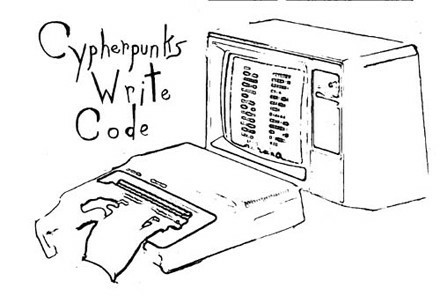


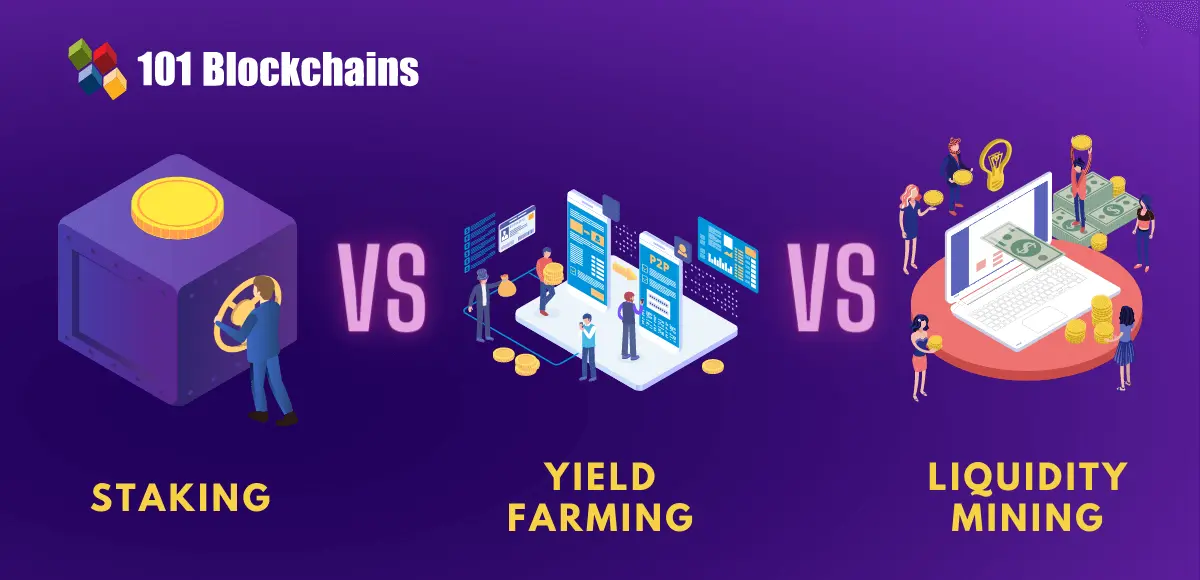


 BitHouse