Mining Pool Payouts

Mining Pool Payouts explained: PPS vs. FPPS vs. PPLNS vs. PPS+

What is a Mining Pool?

Mining Pools

A Mining pools is a hub where a group of Crypto currency miners share their processing power to the network in order to solve the blocks quicker.

The rewards will be split equally based on the amount of shares that they contributed in finding a block.

Pool mining was introduced during early Bitcoin mining days when solo mining became non-viable.

The more powerful your hardware is, the more shares youโ€™ll submit, the more shares you submit, the more youโ€™ll earn.

In order for the pool to pay its miners each pool uses its own payment scheme. Two of the most popular option is PPS and PPLNS.


Mining Pool payouts explained PPS vs. FPPS vs. PPLNS vs. PPS+
Mining pool payouts explained: Pay-per-share (PPS)
Pay-Per-Share (PPS)
Pay-per-last-n-shares (PPLNS) MineBest
Pay-Per-Last-N-Shares (PPLNS)
Different mining pool payouts explained: PPS vs. FPPS vs. PPLNS vs. PPS+

The first thing a miner has to decide is which pool mining payout is best for their requirements.

PROPย (proportional),ย FPPSย (Full Pay Per Share),ย SMPPSย (Shared Maximum Pay Per Share),ย ESMPPSย (Equalized Shared Maximum Pay Per Share),ย CPPSRBย (Capped Pay Per Share with Recent Backpay),ย PPSย (Pay Per Share),ย PPLNSย (Pay Per Last N Share) and lastlyย PPS+ย (Pay Per Share Plus).

Among them PPS and PPLNS are the two types of payment models that are mostly used by mining pools currently. Before we explain both PPS and PPLNS weโ€™ll make a short note on mining pool.

There are numerous payment systems (over 15), but the vast majority of the pools operate on a PPS, FPPS, PPS+ and PPLNS basis.

However, before trying to understand the different settlement models, it is important to come to a consensus on some terms used inย crypto mining.

Block Reward:ย Block reward refers to the new coins issued by the network to miners for each successfully solved block.

Hashing Power:ย Hash rate is the speed at which a computer completes an operation in the cryptocurrencyโ€™s code. A higher hashrate increases a minerโ€™s opportunity of finding the next block.

Luck:ย Luck, in mining, is the probability of success. Imagine that each miner is given a lottery ticket for a certain amount of hashing power they provide. If they are to provide 1 TH/s hashing power when the overall hashing power in the network is 10 TH/s, then they would receive 1 of 10 total lottery tickets. The probability of winning the lottery (in this case finding the block reward) would be 10%.

Transaction Fees:ย Some networks (like Bitcoin) also have substantial amounts of transaction fees rewarded to miners. These fees are the total fees paid by users of the network to execute transactions.

Pay-Per-Share (PPS)

PPS offers an instant flat payout for each share that is solved. With this payment method, a miner gets a standard payout rate for each share completed. Each share is worth a certain amount of mineable cryptocurrency.

After deducting the mining pool fees, the miners are given a fixed income every day. Therefore, under the PPS mode, the returns are relatively stable. Miners are exposed to risk here. They may not get the transaction fees.

It is ideal for low priced orders for an extended period. This model becomes lucrative during a bearish run of a particular coin.

Pay-Per-Last-N-Shares (PPLNS)

With this payout, profits will be allocated based on the number of shares miners contribute. This kind of allocation method is closely related to the block mined out. If the mining pool excavates multiple blocks in a day, the miners will have a high profit; if the mining pool is not able to mine a block during the whole day, the minerโ€™s profit during the whole day is zero.

Notably, in the short term, the PPLNS model is highly correlated with a poolโ€™s luck. If the luck factor of a particular mining pool decreases in the short term, the minerโ€™s income will also decrease accordingly (the opposite case of the mining pool being lucky in the short term is possible too). However, in the long term, the luck factor tends to average out to the mean.

Hence, this model is ideal for fixing orders on a big pool that has a high chance of finding a block within the order time limit. Or a standard order which will have miners connected for a longer time.

Pay Per Share + (PPS+)

PPS+ is a blend of two modes mentioned above, PPS and PPLNS. The block reward is settled according to the PPS model. And the mining service charge /transaction fee is settled according to the PPLNS mode.

That is to say, in this mode, the miner can additionally obtain the income of part of the transaction fee based on the PPLNS payment method. This was a major drawback in the PPS model.

Full Pay Per Share (FPPS)

With this pool payout, both the block reward and the mining service charge are settled according to the theoretical profit. Calculate a standard transaction fee within a certain period and distribute it to miners according to their hash power contributions in the pool. It increases the minersโ€™ earnings by sharing some of the transaction fees.

With the PPS and FPPS payment methods, you will get paid no matter if the pool finds a block or not. This is the most significant advantage over PPLNS. The risks and rewards are higher with the PPLNS plan.

The decision on which mining plan to choose from needs to be preceded by the decision of choosing the right mining infrastructure.


Difference between PPS vs PPLNS payment models?

PPLNS

PPLNS stands for Pay Per Last (luck) N Shares. This method calculates your payments based on the number of shares you submitted during a shift.

It includes shift system which is time based or by number of shares submitted by the miners on the pool.

Your pool may find blocks consistently or in overtime it may have huge variations in winning a block and that ultimately affects your payments. PPLNS greatly involves luck factor and youโ€™ll notice huge fluctuations in your 24 hour payout.

If you maintain your mining on a single pool then your payouts will remain consistent and it only differs when new miners join or leave the pool.

PPS

Pay Per Share pays you an average of the number of shares that you contributed to the pool in finding blocks.

PPS pays you on solid rate and is more of a direct method which completely eliminates luck factor.

In PPS method regardless of the pools lucky at winning blocks youโ€™re going to get 100% payout at the end of the day. This is because there is a standard payout set for each miners based on their hash power.

It wonโ€™t be more than 100% or less than that and with this PPS method you can easily calculate your potential earnings.

On the other hand with PPLNS payment system on average you can either get more than 100% or less than that. It is based on how lucky the pool is at finding blocks.

Should I choose PPS or PPLNS?

This is one of the common questions most miners have initially.

Should I choose Pay Per Share or Pay Per Last N Share pools?

If you are the person who donโ€™t switch pools often then PPLNS is definitely for you as such pools are good at rewarding its loyal miners.

Pay Per Share:ย No matter what, if you need a fixed payouts at the end of the day to liquidate or for whatsoever reason then your choice would be PPS.

Pay Per Share works well for large mining farms who can calculate and have statistics based on their mining power.

PPS is good for large miners but really bad for pool owners as there is a guaranteed payout for work no matter if the pool hits the block or not.

For this reason and because of pool hoppers (not loyal miners of the pool) most of the mining pools have switched to PPLNS payment model.

Pay Per Last N Shares: If you are the one that is looking to accumulate and hold more coins then PPLNS is recommended.

For each block that your pool finds youโ€™ll get a share based on your hashrate.

Unlike PPS, in PPLNS youโ€™ll get payouts more often and in the long run youโ€™ll be rewarded more with PPLNS than PPS.

However due to huge variance itโ€™s really hard to calculate your mining income.

PPLNS is good for both mid-range miners and pool owners as the payouts is only based on the blocks found.

If your pool is more luckyย  then youโ€™ll see payments more often. This is the reason why miners stick to a pool where there is more hash power assuming the pool finds block very often.

You can find more comparison of mining pools payment systemย here.

How to find out if a pool is PPS or PPLNS?

Cryptocurrency mining can be a lucrative process. However itโ€™s very important that you find out what payment scheme your pool is using before committing your hashing power.

Most of the mining pools has this information listed on FAQ page or at payouts page. If youโ€™re unable to find this information then the only option is to contact the pool support.

Hope the information on this page is helpful for you to decide the right mining pool.


Happy Hashing


Shared with ๐Ÿ’š by Free Spirit

โœŒ & ๐Ÿ’š

#1 Book of the Year I recomend reading…

“Ego is the Enemy”


“Re-read it each year. It’s that important.”

Derek Sivers, author of “Anything you want”

โ€œThis is a book I want every athlete, aspiring leader, entrepreneur, thinker and doer to read. Ryan Holiday is one of the most promising young writers of his generation.โ€

George Raveling, Hall of Fame Basketball Coach

โ€œRyan Holiday is one of his generationโ€™s finest thinkers, and this book is his best yet.โ€

Steven Pressfield, author of “The War of Art” and “Gates of Fire

โ€œRyan Holiday has written a brilliant and engaging book, well beyond his yearsโ€ฆ It is invaluable.โ€

Brian Koppelman, screenwriter and director, “Rounders”, “Oceanโ€™s Thirteen” and “Billions”

Ego Is the Enemy

โ€œWhile the history books are filled with tales of obsessive, visionary geniuses who remade the world in their image with sheer, almost irrational force, Iโ€™ve found that history is also made by individuals who fought their egos at every turn, who eschewed the spotlight, and who put their higher goals above their desire for recognition.โ€ โ€“ from the Prologue

Many of us insist the main impediment to a full, successful life is the outside world. In fact, the most common enemy lies within: our ego. Early in our careers, it impedes learning and the cultivation of talent. With success, it can blind us to our faults and sow future problems. In failure, it magnifies each blow and makes recovery more difficult. At every stage, ego holds us back.

The Ego is the Enemy draws on a vast array of stories and examples, from literature to philosophy to history. We meet fascinating figures like Howard Hughes, Katharine Graham, Bill Belichick, and Eleanor Roosevelt, all of whom reached the highest levels of power and success by conquering their own egos. Their strategies and tactics can be ours as well.

But why should we bother fighting ego in an era that glorifies social media, reality TV, and other forms of shameless self-promotion?  Armed with the lessons in this book, as Holiday writes, โ€œyou will be less invested in the story you tell about your own specialness, and as a result, you will be liberated to accomplish the world-changing work youโ€™ve set out to achieve.


RYAN HOLIDAY


Ryan Holiday is a strategist and writer. He dropped out of college at nineteen to apprenยญtice under Robert Greene, author of “The 48 Laws of Power”, and later served as the director of marยญketing for American Apparel.

His company, Brass Check, has advised clients like Google, TASER, and Complex, as well as many prominent bestselling authors.

Holiday has written four previous books, most recently The Obstacle Is the Way, which has been translated into seventeen languages and has a cult following among NFL coaches, world-class athletes, TV personalities, political leaders, and others around the world.

He lives on a small ranch outside Austin, Texas. 


Made with ๐Ÿ’š by Free Spirit

โœŒ & ๐Ÿ’š


Did you find this article helpful?

If so, please consider a donation to help the evolution and development of more helpful articles in the future, and show your support for alternative articles.

Your generosity is ๐Ÿ’šly appreciated.

You can donate in any crypto your ๐Ÿ’š desires ๐Ÿ˜Š

Thank you all for your time ! ๐Ÿค— !

โœŒ & ๐Ÿ’š


Bitcoin (BTC) :

1P1tTNFGRZabK65RhqQxVmcMDHQeRX9dJJ


LiteCoin(LTC) :

LYAdiSpsTJ36EWCJ5HF9EGy9iWGCwoLhed


Ethereum(ETH) :

0x602e8Ca3984943cef57850BBD58b5D0A6677D856


EthereumClassic(ETC) :

0x602e8Ca3984943cef57850BBD58b5D0A6677D856


Cardano(ADA) :

addr1q88c5cccnrqy6xesszzvf7rd4tcz87klt0m0h6uvltywqe8txwmsrrqdnpq27594tyn9vz59zv0n8367lvyc2atvrzvqlvdm9d


BinanceCoin(BNB) :

bnb1wwfnkzs34knsrv2g026t458l0mwp5a3tykeylx


BitcoinCash (BCH)

1P1tTNFGRZabK65RhqQxVmcMDHQeRX9dJJ


Bitcoin SV (BSV)

1P1tTNFGRZabK65RhqQxVmcMDHQeRX9dJJ


ZCash(ZEC) :

t1fSSQX4gEhove9ngcvFafQaMPq5dtNNsNF


Dash(DASH) :

XcWmbFw1VmxEPxvF9CWdjzKXwPyDTrbMwj


Shiba(SHIB) :

0x602e8Ca3984943cef57850BBD58b5D0A6677D856


Tron(TRX) :

TCsJJkqt9xk1QZWQ8HqZHnqexR15TEowk8


Stellar(XLM) :

GBL4UKPHP2SXZ6Y3PRF3VRI5TLBL6XFUABZCZC7S7KWNSBKCIBGQ2Y54


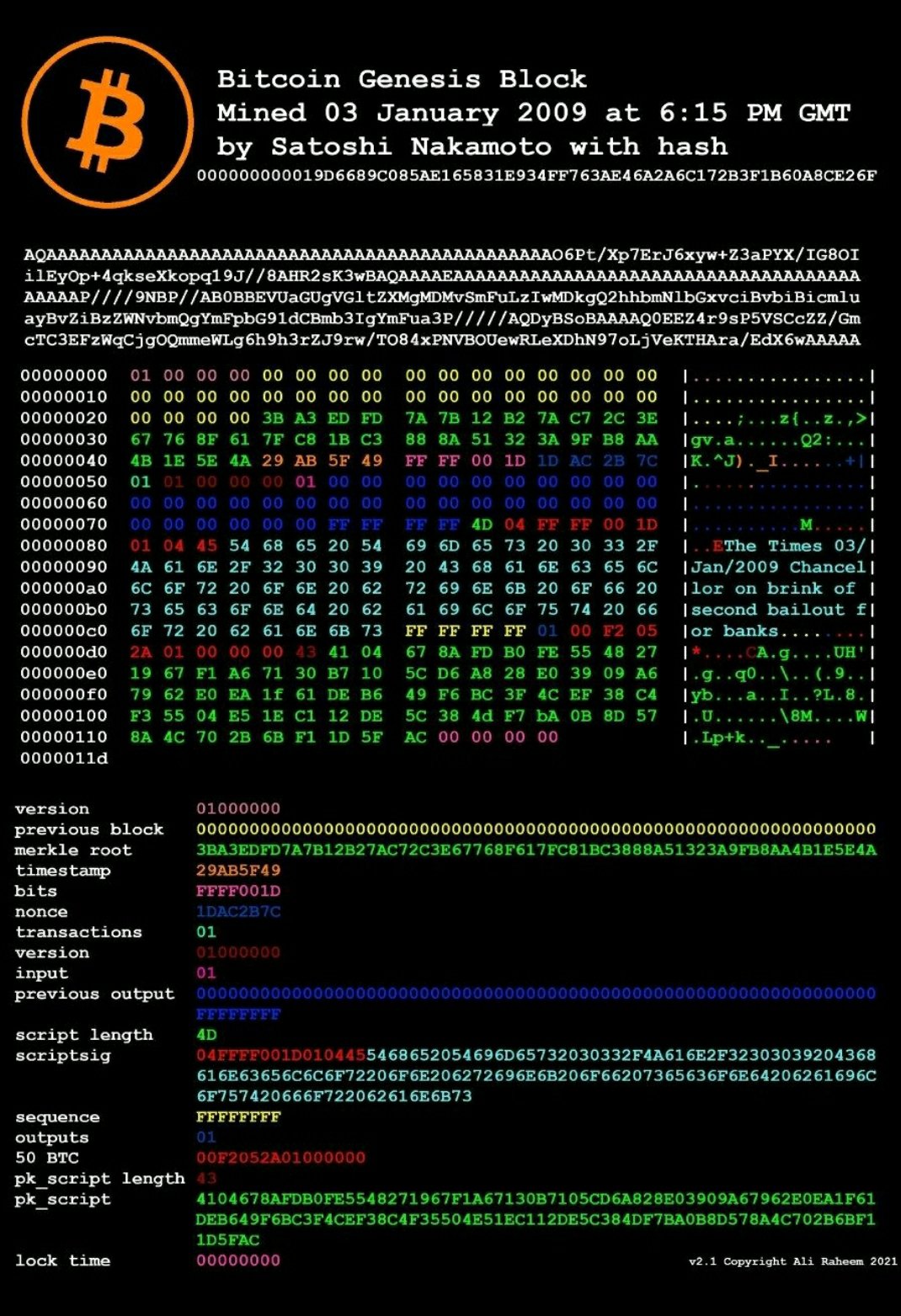
Kudos to @ChessurKot

I ๐Ÿ’š it so much i had to share it !!!

Amazing poster and imagination !!!

Shared with ๐Ÿ’š by Free Spirit

โœŒ & ๐Ÿ’š

Bitcoin and it’s History

Finance, like most human inventions, is constantly evolving.

In the beginning it was basic: food was traded for livestock, and livestock for resources like wood, or maize. It progressed to precious metal, such as silver and gold. And now, the next step in financial evolution has come to light.

This new form of currency has been constantly evolving over the past decade, developed by an unknown person and maintained by a collective group of the brightest minds in technology.

Itโ€™s a new form of money that is created and held digitally, and the most important part, of course, is that no government owns it, or decides its value – the peer-to-peer network community does.

We call this new money, โ€˜Bitcoinโ€™.

Historically, U.S. currency has been based on gold – you could give a dollar to the bank and receive a set amount back in gold. In contrast, Bitcoin isnโ€™t based on silver or gold – itโ€™s based on mathematical proofs validated by a public ledger called blockchain technology.

Bitcoin is generated through a complex sequence of mathematical formulas that run on computers; the network shares a public ledger using blockchain technologies that record, and validate, every transaction processed.

A single institution, such as the government, does not control the Bitcoin network.

The idea behind the technology has always been – and remains – one of decentralization – that is, remaining completely independent of a central authority, like a bank, a government, or a country.

Anyone can access the open-source software that makes Bitcoin work, and its those individuals interested that maintain it.

But, who invented Bitcoin? Is it a valid and legitimate currency like USD? And why did nobody think of this before?

But before we begin, letโ€™s talk about the creator of Bitcoin – or rather, the anonymous pseudonym that first published a concept.

How Did Bitcoin Start?

There are many questions about Bitcoin, but the most common one to be asked is, โ€œWho created it?โ€

That answer is not straightforward, because the identity of the creator remains a mystery. All we have is a pseudonym – Satoshi Nakamoto.

The accounts are no longer active; the coins in his wallet have never been spent.

Satoshi Nakamoto has disappeared from the world, or so it would seem.

Fast Company recently published an article suggesting that Satoshi Nakamoto could be a group of people, including Neal King, Vladimir Oksman, and Charles Bry. Apparently, these three people filed for a patent related to secure communication just two months prior to the purchase of the Bitcoin.org domain. Perhaps itโ€™s a coincidence; perhaps itโ€™s not.

What we do have, however, are facts:

  • On October 31st, 2008, โ€œBitcoin: A Peer-to-Peer Electronic Cash Systemโ€ was posted to a cryptography mailing list, published under the name โ€œSatoshi Nakamotoโ€. The whitepaper outlined the foundation of how Bitcoin would operate.
  • On August 18, 2008, an unknown person or entity registered the Bitcoin.org domain.
  • On January 8th, 2009, the first version of Bitcoin is announced, and shortly thereafter, Bitcoin mining begins.

The mystery that surrounds Satoshi Nakamoto is fitting; privacy was a key value for both Bitcoin, and its users.

Others have tried to claim his mantle – most recently an Australian man named Craig Wright, who has since withdrawn his claim.

While we may never know who first created Bitcoin, we do know that the technology he started has left ripples in the financial industry.

Bitcoin has risen to fame thanks to individuals such as the Winklevoss twins controlling and growing the market, and major events that have defined this new technologyโ€™s existence such as the Mt. Gox Ponzi scheme disaster.

The people involved and the events that occur are a constant reminder that this market is unregulated and seem to fall in line with Satoshi Nakamotoโ€™s goal of creating a decentralized network.

What is Bitcoin Used For?

Currency must have value to ensure stability.

The most common way for a person to judge a currencyโ€™s value is what they can use it on; Bitcoin is no different, and a host of vendors and merchants now accept it alongside, or in place of, fiat money.

One early adopter of Bitcoin was the computer retailer Dell. In fact, when Dell started accepting Bitcoin, it became one of the largest companies to do so internationally.

While the digital currency may total for just a fraction of the retailerโ€™s total transaction volume, there are other key reasons why the growth of Bitcoin could be aboon for the retailer.

Dell reported earnings of $59 billion during 2015. Traditional transaction fees range from 2 to 3 percent of the purchase price – with Bitcoin, itโ€™s much, much lower, nearing non-existent – saving the retailer a lot of money in the future.

Other companies, such as Expedia and Cheapair, have also started accepting Bitcoin, along with technology conglomerate Microsoft : users can add funds to their accounts with Bitcoin to purchase apps, games, and other types of digital content.

The acceptance of Bitcoin is a strategic decision on the part of these companies, most of which are reaching out to solidify their position with tech-savvy audiences.

Thereโ€™s a lot of benefit to Bitcoin, and a variety of reasons for its use, including :

  • Faster Payment: Accepting wire transfers and checks is time consuming, and it can take several days for payment to clear. Bitcoin is faster and can take a matter of minutes, rather than days to process payment.
  • Lower Transaction Fees: The cost to accept Bitcoins is lower compared to other payment methods, such as credit cards or Paypal.
  • Independent of Governments: Since Bitcoin is decentralized, you own it – no authority has the right to take away your Bitcoin. People with concerns about mainstream banking systems unravelling find this a major benefit.
  • Elimination of Chargebacks: Once Bitcoin is sent, thatโ€™s it – you canโ€™t chargeback, like you would with a credit card payment, which eliminates โ€˜chargeback fraudโ€™ often used by criminals and scammers.
  • Protection Against Inflation: With a fiat currency, the government can print as much money as it desires – this drastically decreases the value of currency, and may result in inflation. In contrast, Bitcoin has a fixed number – after they have all been โ€˜minedโ€™, no more Bitcoins will be created. Scarcity is an important aspect of currency which protects it from inflation.
  • Ownership of Currency: With Bitcoin, you own your coins. With other forms of digital fiat – such as Paypal – your assets may be held, and your account eventually suspending, locking you out of your earnings. Bitcoin puts you in control.

Is Bitcoin a Commodity, or a Currency?

Bitcoin is both. While it can be used to purchase items from major retailers, itโ€™s also treated as property by government jurisdictions, such as the IRS.

The IRS issued a guide on Bitcoin for tax purposes, stating it will treat virtual currencies as property for federal purposes. They go on to state that:

In some environments, virtual currency operates like โ€œrealโ€ currency โ€” i.e., the coin and paper money of the United States or of any other country that is designated as legal tender, circulates, and is customarily used and accepted as a medium of exchange in the country of issuance โ€” but it does not have legal tender status in any jurisdiction.

The notice provides that virtual currency is treated as property for U.S. federal tax purposes.

Typically, property is almost always something tangible that can be held in the physical realm.

The IRS goes on to state that:

General tax principles that apply to property transactions apply to transactions using virtual currency. Among other things, this means that:

  • Wages paid to employees using virtual currency are taxable to the employee, must be reported by an employer on a Form W-2, and are subject to federal income tax withholding and payroll taxes.
  • Payments using virtual currency made to independent contractors and other service providers are taxable and self-employment tax rules generally apply. Normally, payers must issue Form 1099.
  • The character of gain or loss from the sale or exchange of virtual currency depends on whether the virtual currency is a capital asset in the hands of the taxpayer.
  • A payment made using virtual currency is subject to information reporting to the same extent as any other payment made in property.

In addition to the IRSโ€™s guidance, the United States Commodities Futures Trading Commission in 2015 that Bitcoin is, in fact, a commodity.

The Future of Currency

Bitcoin has garnered a lot of attention over the past decade, despite constant declarations of its death – 99 Bitcoins keeps a running tab of โ€˜Bitcoin obituariesโ€™.

Despite all of this, Bitcoinโ€™s future has remained bright. Greater adoption rates, and an increasing number of brands accepting the currency (you can get a full list qui) means the long-term view on Bitcoin is that it will see market maturity as time progresses.

Mainstream investing vehicles, such as exchange-traded funds (ETFs) and Futures trading, including Bitcoin will be a major help to reaching that market maturity. Bitcoin Futures are already trading on the Chicago Mercantile Exchange (CME), and legislation to create a crypto ETF is in the works.

These securities will help stabilize cryptocurrency prices and mitigate volatility, which will help the publicโ€™s confidence grow in favor of Bitcoin.

Itโ€™s important to understand that, much like the early days of 1992, Bitcoin is a new technology – and new technologies can take decades to reach critical mass.

But, much like the Internet, no one wants to miss out on the โ€˜next big thingโ€™ – and Bitcoin is the biggest thing yet. Constant updates are occurring to Bitcoin thanks to what is called a “hard fork”.

These constant updates ensure that digital currencies continue to experience growth through technological development.


Did you find this article helpful?

If so, please consider a donation to help the evolution and development of more helpful articles in the future, and show your support for alternative articles.

Your generosity is ๐Ÿ’š ly appreciated

You can donate in any crypto your ๐Ÿ’š desires ๐Ÿ˜Š

Thank you all for your time !!!

โœŒ & ๐Ÿ’š


Bitcoin (BTC) :

1P1tTNFGRZabK65RhqQxVmcMDHQeRX9dJJ

LiteCoin(LTC) :

LYAdiSpsTJ36EWCJ5HF9EGy9iWGCwoLhed

Ethereum(ETH) :

0x602e8Ca3984943cef57850BBD58b5D0A6677D856

EthereumClassic(ETC) :

0x602e8Ca3984943cef57850BBD58b5D0A6677D856

Cardano(ADA) :

addr1q88c5cccnrqy6xesszzvf7rd4tcz87klt0m0h6uvltywqe8txwmsrrqdnpq27594tyn9vz59zv0n8367lvyc2atvrzvqlvdm9d

BinanceCoin(BNB) :

bnb1wwfnkzs34knsrv2g026t458l0mwp5a3tykeylx

BitcoinCash(BCH)

1P1tTNFGRZabK65RhqQxVmcMDHQeRX9dJJ

BitcoinSV(BSV)

1P1tTNFGRZabK65RhqQxVmcMDHQeRX9dJJ

ZCash(ZEC) :

t1fSSQX4gEhove9ngcvFafQaMPq5dtNNsNF

Dash(DASH) :

XcWmbFw1VmxEPxvF9CWdjzKXwPyDTrbMwj

Shiba(SHIB) :

0x602e8Ca3984943cef57850BBD58b5D0A6677D856

Tron(TRX) :

TCsJJkqt9xk1QZWQ8HqZHnqexR15TEowk8

Stellar(XLM) :

GBL4UKPHP2SXZ6Y3PRF3VRI5TLBL6XFUABZCZC7S7KWNSBKCIBGQ2Y54

Shared with ๐Ÿ’š by Free Spirit

โœŒ & ๐Ÿ’š

Door of Opportunityโ€ฆ

Oliver Napoleon Hillย (October 26, 1883 โ€“ November 8, 1970) was an Americanย  self-helpย author.

He is best known for his bookย Think and Grow Richย (1937), which is among the 10 best-selling self-help books of all time.

Hill's works insisted that fervid expectations are essential to improving one's life.

Most of his books were promoted as expounding principles to achieve "success".
Napoleon Hill

Born : October 26, 1883
Pound, Virginia, U.S.

Died : November 8, 1970ย (agedย 87)
Greenville, South Carolina, U.S.

Occupation : Author,ย  journalist,ย  salesman,ย lecturer

Citizenship : American

Period : 1928โ€“1970

Genre : Non-fiction,ย self-help


Notable works :

โ€ข Think and Grow Rich (1937)
โ€ข The Law of Success (1928)
โ€ข Outwitting the Devil (1938)

Spouse :

Florence Elizabeth Horner (1910โ€“1935)

Rosa Lee Beelandย (1937โ€“1940?)

Annie Lou Norman (1943โ€“1970)

Children : 3


Hill is, in modern times, a controversial figure.

Accused of fraud, modern historians also doubt many of his claims, such as that he metย Andrew Carnegieย and that he was an attorney.

Gizmodoย has called him "the most famous conman you've probably never heard of".

Did you find this article helpful?

If so, please consider a donation to help the evolution and development of more helpful articles in the future, and show your support for alternative articles.

Your generosity is ๐Ÿ’š ly appreciated

You can donate in any crypto your ๐Ÿ’š desires ๐Ÿ˜Š

Thank you all for your time !!!

โœŒ & ๐Ÿ’š


Bitcoin (BTC) :

1P1tTNFGRZabK65RhqQxVmcMDHQeRX9dJJ

LiteCoin(LTC) :

LYAdiSpsTJ36EWCJ5HF9EGy9iWGCwoLhed

Ethereum(ETH) :

0x602e8Ca3984943cef57850BBD58b5D0A6677D856

EthereumClassic(ETC) :

0x602e8Ca3984943cef57850BBD58b5D0A6677D856

Cardano(ADA) :

addr1q88c5cccnrqy6xesszzvf7rd4tcz87klt0m0h6uvltywqe8txwmsrrqdnpq27594tyn9vz59zv0n8367lvyc2atvrzvqlvdm9d

BinanceCoin(BNB) :

bnb1wwfnkzs34knsrv2g026t458l0mwp5a3tykeylx

BitcoinCash (BCH)

1P1tTNFGRZabK65RhqQxVmcMDHQeRX9dJJ

Bitcoin SV (BSV)

1P1tTNFGRZabK65RhqQxVmcMDHQeRX9dJJ

ZCash(ZEC) :

t1fSSQX4gEhove9ngcvFafQaMPq5dtNNsNF

Dash(DASH) :

XcWmbFw1VmxEPxvF9CWdjzKXwPyDTrbMwj

Shiba(SHIB) :

0x602e8Ca3984943cef57850BBD58b5D0A6677D856

Tron(TRX) :

TCsJJkqt9xk1QZWQ8HqZHnqexR15TEowk8

Stellar(XLM) :

GBL4UKPHP2SXZ6Y3PRF3VRI5TLBL6XFUABZCZC7S7KWNSBKCIBGQ2Y54

Made with ๐Ÿ’š by Free Spirit

โœŒ & ๐Ÿ’š