P.O.W In Human History


Proof Of Work

in the

History of Humankind


Great Pyramid of Giza (a.k.a)
Pyramid of Khu
Egypt

The Great Pyramid of Giza (also known as the Pyramid of Khufu or the Pyramid of Cheops) is the oldest and largest of the  pyramids in the Giza pyramid complex  bordering present-day Giza  in Greater Cairo, Egypt.

It is the oldest of the Seven Wonders of the Ancient World, and the only one to remain largely intact.

Egyptologists conclude that the pyramid was built as a tomb for the Fourth Dynasty  Egyptian pharaoh Khufu and estimate that it was built in the 26th century BC during a period of around 27 years.

Initially standing at 146.5 metres (481 feet), the Great Pyramid was the tallest man-made structure in the world for more than 3,800 years.

Over time, most of the smooth white limestone casing was removed, which lowered the pyramid’s height to the present 138.5 metres (454.4 ft).

What is seen today is the underlying core structure. The base was measured to be about 230.3 metres (755.6 ft) square, giving a volume of roughly 2.6 million cubic metres (92 million cubic feet), which includes an internal hillock.

The dimensions of the pyramid were 280 royal cubits (146.7 m; 481.4 ft) high, a base length of 440 cubits (230.6 m; 756.4 ft), with a seked of 5+1/2 palms (a slope of 51ยฐ50’40”).

The Great Pyramid was built by quarrying an estimated 2.3 million large blocks weighing 6 million tonnes total.

The majority of stones are not uniform in size or shape and are only roughly dressed.The outside layers were bound together by mortar.

Primarily local limestone from the Giza Plateau was used. Other blocks were imported by boat down the Nile: White limestone from Tura for the casing, and granite blocks from Aswan, weighing up to 80 tonnes, for the King’s Chamber structure.

There are three known chambers inside the Great Pyramid. The lowest was cut into the bedrock, upon which the pyramid was built, but remained unfinished. The so-called Queen’s Chamber and King’s Chamber, that contains a granite sarcophagus, are higher up, within the pyramid structure. Khufu’s vizier, Hemiunu (also called Hemon), is believed by some to be the architect of the Great Pyramid.

Many varying scientific and alternative hypotheses attempt to explain the exact construction techniques.

The funerary complex around the pyramid consisted of two mortuary temples  connected by a causeway (one close to the pyramid and one near the Nile), tombs for the immediate family and court of Khufu, including three smaller pyramids for Khufu’s wives, an even smaller “satellite pyramid” and five buried solar barges.


Flavian Amphitheatre
a.k.a Colloseum
Rome – Italy

The Colosseum (Colosseo[kolosหˆsษ›หo]) is an oval amphitheatre in the centre of the city of Rome, Italy, just east of the Roman Forum.

It is the largest ancient amphitheatre ever built, and is still the largest standing amphitheatre in the world today, despite its age.

Construction began under the emperor Vespasian (r. 69โ€“79 AD) in 72 and was completed in 80 AD under his successor and heir, Titus (r. 79โ€“81).

Further modifications were made during the reign of Domitian (r. 81โ€“96).

The three emperors that were patrons of the work are known as the Flavian dynasty, and the amphitheatre was named the Flavian Amphitheatre (Latin: Amphitheatrum Flavium; Italian: Anfiteatro Flavio[aษฑfiteหˆaหtro หˆflaหvjo]) by later classicists and  archaeologists for its association with their family name (Flavius).

The Colosseum is built of travertine limestone, tuff (volcanic rock), and brick-faced concrete.

The Colosseum could hold an estimated 50,000 to 80,000 spectators at various points in its history  having an average audience of some 65,000; it was used for gladiatorial  contests and  public spectacles including  animal hunts, executions, re-enactments of famous battles, and dramas based on Roman mythology, and briefly mock sea battles.

The building ceased to be used for entertainment in the early medieval era.

It was later reused for such purposes as housing, workshops, quarters for a religious order, a fortress, a quarry, and a Christian shrine.

Although substantially ruined because of earthquakes and stone-robbers (for spolia), the Colosseum is still an iconic symbol of Imperial Rome and was listed as one of the New 7 Wonders of the World.

It is one of Rome’s most popular tourist attractions and also has links to the Roman Catholic Church, as each Good Friday  the Pope leads a torchlit “Way of the Cross” procession that starts in the area around the Colosseum.

The Colosseum is also depicted on the Italian version of the five-cent euro coin.


The Ming dynasty
Great Wall
at Jinshanling

The Great Wall of China (traditional Chinese: ่ฌ้‡Œ้•ทๅŸŽ; simplified Chinese: ไธ‡้‡Œ้•ฟๅŸŽ; pinyinWร nlว Chรกngchรฉng) is a series of fortifications that were built across the historical northern borders of ancient Chinese states and Imperial China as protection against various nomadic groups from the Eurasian Steppe.

Several walls were built from as early as the 7th century BC,with selective stretches later joined together by Qin Shi Huang  (220โ€“206 BC), the first emperor of China.

Little of the Qin wall remains. Later on, many successive dynasties built and maintained multiple stretches of border walls. The best-known sections of the wall were built by the Ming dynasty (1368โ€“1644).

Apart from defense, other purposes of the Great Wall have included border controls, allowing the imposition of duties on goods transported along the Silk Road, regulation or encouragement of trade and the control of immigration and emigration.

Furthermore, the defensive characteristics of the Great Wall were enhanced by the construction of watchtowers, troop barracks, garrison stations, signaling capabilities through the means of smoke or fire, and the fact that the path of the Great Wall also served as a transportation corridor.

The frontier walls built by different dynasties have multiple courses. Collectively, they stretch from Liaodong in the east to Lop Lake in the west, from the present-day Sinoโ€“Russian border in the north to Tao River (Taohe) in the south; along an arc that roughly delineates the edge of the Mongolian steppe; spanning 21,196.18 km (13,170.70 mi) in total.

Today, the defensive system of the Great Wall is generally recognized as one of the most impressive architectural feats in history.


As history has left behind, monumental architectural constructions that we can admire and reamain in awe as we look at them, after thousands of years since the first stone was put, in today’s world our digital PoW can be seen and admired the same as the Great Wall of China or the Piramid of Giza !!!

Wich brings us to the question, what is Free talking about ?!?


Long Live the CypherPunks

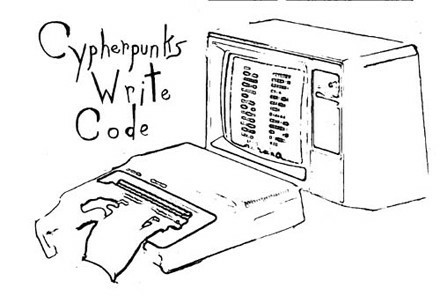
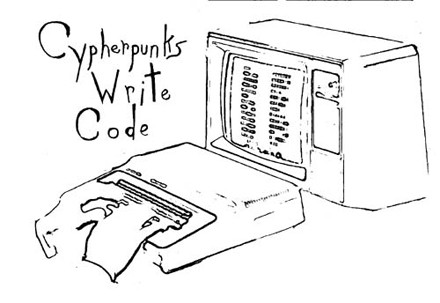
CypherPunks Write Code

Genesis

Bitcoin Genesis Block
Mined 03 January 2009

The Times
January 3, 2009

Bitcoin – Proof Of Work


Bitcoin-type Proof Of Work


In 2009, the Bitcoin network went online. Bitcoin is a proof-of-work digital currency that, like Finney’s RPoW, is also based on the Hashcash PoW.

But in Bitcoin, double-spend protection is provided by a decentralized P2P protocol for tracking transfers of coins, rather than the hardware trusted computing function used by RPoW.

Bitcoin has better trustworthiness because it is protected by computation. Bitcoins are “mined” using the Hashcash proof-of-work function by individual miners and verified by the decentralized nodes in the P2P bitcoin network.

The difficulty is periodically adjusted to keep the block time around a target time.

Since the creation of Bitcoin, proof-of-work has been the predominant design of peer-to-peer cryptocurrency. Studies have estimated the total energy consumption of cryptocurrency mining.

The PoW mechanism requires a vast amount of computing resources, which consume a significant amount of electricity. Recent estimates from the University of Cambridge put Bitcoinโ€™s energy consumption as equal to that of Switzerland.

History modification

Each block that is added to the blockchain, starting with the block containing a given transaction, is called a confirmation of that transaction.

Ideally, merchants and services that receive payment in the cryptocurrency should wait for at least one confirmation to be distributed over the network, before assuming that the payment was done.

The more confirmations that the merchant waits for, the more difficult it is for an attacker to successfully reverse the transaction in a blockchainโ€”unless the attacker controls more than half the total network power, in which case it is called a 51% attack.

2ASICs and mining pools

Within the Bitcoin community there are groups working together in mining pools.

Some miners use application-specific integrated circuits (ASICs) for PoW. This trend toward mining pools and specialized ASICs has made mining some cryptocurrencies economically infeasible for most players without access to the latest ASICs, nearby sources of inexpensive energy, or other special advantages.

Some PoWs claim to be ASIC-resistant,  i.e. to limit the efficiency gain that an ASIC can have over commodity hardware, like a GPU, to be well under an order of magnitude.

ASIC resistance has the advantage of keeping mining economically feasible on commodity hardware, but also contributes to the corresponding risk that an attacker can briefly rent access to a large amount of unspecialized commodity processing power to launch a 51% attack against a cryptocurrency.


Plant the Seed
The choice is Yours

Choose Wisely
The Choice is Yours


With ๐Ÿ’š


Bitcoin Mining – Where the Profitable Future Lies


The Times – January 3, 2009

Bitcoin Genesis Block
Mined 03 January 2009

Cypherpunks Write Code

CODE IS LAW
THE SOONER HUMANKIND ACCEPTS IT,
THE SOONER IT CAN BUILD AROUND IT

Yeah.. I wonder Why ๐Ÿ˜‚


Bitcoin made easy

How a Bitcoin transaction works

A humble Miner


How Bitcoin Mining Works

Mining Difficulty

Bitcoin Halving

Bitcoin Previous Halvings

Pools

Bitcoin Wallets

Bitcoin Stakeholders

Bitcoin Facts

Power to the People

Totalitarian Governments can kiss my 256-bit key

Bitcoin – People’s Money

Bitcoin cannot be Shut Down


The power of the long tail…


Central Bank’s 3 Strategies

F**k them, Enough !!!


Upcoming Smart Contracts Networks

Bitcoin Yearly Candles

Bitcoin Price History – Log Scale

Bitcoin Mining Ecosystem Map

Defi Ecosystem in Ethereum

DeFi Stack: Product& Application View

Syscoin Ecosystem


Syscoin

BSC Ecosystem

Popular Cryptocurrency

Crpto Ecosystem

Public Companies that own Bitcoin

Top Banks investing in Crypto

Bitcoin Inflation vs. Time

When you’re Ready…


Choose Wisely

Make bitcoin thrive, let fiat become humus…


Veritas non Auctoritas
Facit Legem

Most people misunderstand what bitcoin miners actually do, and as a result they don’t fully grasp the level of security provided by bitcoin’s hashrate.

In this article, we’ll explain proof of work in a non-technical way so that youโ€™ll be able to counter the misinformation about supercomputers and quantum computers attacking the Bitcoin network in the future. 

Simply put, mining is a lottery to create new blocks in the Bitcoin blockchain. There are two main purposes for mining:

  1. To permanently add transactions to the blockchain without the permission of any entity.
  2. To fairly distribute the 21 million bitcoin supply by rewarding new coins to miners who spend real world resources (i.e. electricity) to secure the network.

To understand what is actually happening in this lottery system, let’s look at a simple analogy where every Bitcoin hash is equivalent to a dice roll.


Luck, Gambling, and SHA-256


Imagine that miners in the Bitcoin Network are all individuals gambling at a casino. In this example, each of these gamblers have a 1000 sided dice. They roll their die as quickly as possible, trying to get a number less than 10. Statistically, this may take a very long time, but as more gamblers join the game, the time it takes to hit a number less than 10 gets reduced. In short, more gamblers equals quicker rounds.

Once somebody successfully rolls a number less than 10, all gamblers at the table can look down and verify the number. This lucky gambler takes the prize money and the next round begins.

Ultimately, the process of mining bitcoin is very similar. All miners on the network are using Application Specific Integrated Circuits (ASICs), which are specialized computers designed to compute hashes as quickly as possible.

To โ€œcompute a hashโ€ simply means plugging any random input into a mathematical function and producing an output.

More hashes per second (i.e. higher hashrate) is equivalent to more dice rolls per second, and thus a greater probability of success.

Miners propose a potential Bitcoin block of transactions, and use this for an input. The block is plugged into the SHA256 hash function which yields a fixed-sized output, known as a hash. A single hash can be computed in less than a millisecond, as it involves no complex math.

If the hash value is lower than the Bitcoin Network difficulty, then the miner who proposed the block wins. If not, then the miner continues trying by computing more hashes.

The successful minerโ€™s block is then added to the blockchain, the miner is rewarded with newly issued bitcoin for their work, and the โ€œnext roundโ€ begins.


Sources :

https://wikipedia.com/

https://braiins.com/

https://blockdata.com/

https://coin98analytics.com/

https://scoopwhoop.com/

https://stakingrewards.com/

https://syscoin.org/

https://galaxydigitalresearch.com/

https://surveycrest.com/

The Times

The Economist

"Internet of Money" - Andreas Antonopoulus

Hal Finney Quotes

Timothy C. May Quote

Free Spirit Digital Art

!ยฐ! If I forgot someone, sorry ! Do tell and I'll add you as a source of inspiration on the list !!! Thanks for understanding !!!


Questions, opinions, critics and requests always welcomed and as time allows will be accomodated !!! ๐Ÿค“ ๐Ÿ™‚ ๐Ÿ˜‰


Did you find this article helpful?

If so, please consider a donation to help the evolution and development of more helpful articles in the future, and show your support for alternative articles.

Your generosity is ๐Ÿ’š ly appreciated

You can donate in any crypto your ๐Ÿ’š desires ๐Ÿ˜Š

Thank you all for your time !!!

โœŒ & ๐Ÿ’š


Bitcoin (BTC) :

1P1tTNFGRZabK65RhqQxVmcMDHQeRX9dJJ


LiteCoin(LTC) :

LYAdiSpsTJ36EWCJ5HF9EGy9iWGCwoLhed


Ethereum(ETH) :

0x602e8Ca3984943cef57850BBD58b5D0A6677D856


EthereumClassic(ETC) :

0x602e8Ca3984943cef57850BBD58b5D0A6677D856


Cardano(ADA) :

addr1q88c5cccnrqy6xesszzvf7rd4tcz87klt0m0h6uvltywqe8txwmsrrqdnpq27594tyn9vz59zv0n8367lvyc2atvrzvqlvdm9d


BinanceCoin(BNB) :

bnb1wwfnkzs34knsrv2g026t458l0mwp5a3tykeylx


BitcoinCash (BCH)

1P1tTNFGRZabK65RhqQxVmcMDHQeRX9dJJ


Bitcoin SV (BSV)

1P1tTNFGRZabK65RhqQxVmcMDHQeRX9dJJ


ZCash(ZEC) :

t1fSSQX4gEhove9ngcvFafQaMPq5dtNNsNF


Dash(DASH) :

XcWmbFw1VmxEPxvF9CWdjzKXwPyDTrbMwj


Shiba(SHIB) :

0x602e8Ca3984943cef57850BBD58b5D0A6677D856


Tron(TRX) :

TCsJJkqt9xk1QZWQ8HqZHnqexR15TEowk8


Stellar(XLM) :

GBL4UKPHP2SXZ6Y3PRF3VRI5TLBL6XFUABZCZC7S7KWNSBKCIBGQ2Y54


A world where anything is possible…
The choice is yours People !!!


With ๐Ÿ’š

The other 6 Billion

Free Spirit’s Wondering…

Some moments of my online wondering…

R&D, wisdom, knowledge, curiosities, answers and many more questions ๐Ÿ™‚๐Ÿคฃ๐Ÿ™ƒ


You have a Choice !!!

Power to the People !!!
Wake the F… Up !!!
No more excuses, you have a choice now !!!

WHO as in WORLD HEALTH ORGANISATION

P F I Z E Rย  Insider

Poem of the Legacy

Being Curious…

Of course it doesn’t comply…

The Problem with centralized Social-Media

10 Principles of Strategic Leadership

Global Reserve Currency

Psychology of a Market Cycle


Success

Triangle of Success


Be like a Tree…

If anyone understands this please enlighten me too ๐Ÿ˜Š๐Ÿคญ๐Ÿค—

http://www.revelationtimelinedecoded.com

ESG

For those that think WE are the Center of the Universe ๐Ÿคฃ๐Ÿ˜…๐Ÿ˜‚

Confident vs. Insecure People

Day by day…

Managing Complex Change

The Cone of Learning

The Hero’s Journey

Electromagnetic Field of the Heart

I-Ching

Language creates Reality

Sex Organs of the Machine World


Philosopher’s Stone

Isaac Newton

Abracadabra

Singularity

Multi-Mind Thought Control Process
APPLE INC.

Retrocausality

CERN


EGO

SYSCOIN ECOSYSTEM


JagStein

SysCoin

Bitcoin might bury FIAT ๐Ÿ™‚ ๐Ÿคญ ๐Ÿ™ƒ

DEFI Ecosystem on Ethereum

DeFi Stack


Bitcoin Mining Ecosystem Map

…the other 6 Billion

bitcoin

This is about the other 6 Billion…

Top NFT Projects


Defender of the Flower

Flower of Life

Sacred Geometry

Seed & Flower of Life

Knowledge – An Antidote to Fear

JOIN THE REVOLUTION ๐Ÿ˜‹ ๐Ÿคฃ ๐Ÿ˜‹

Emotion – Judgement – Action

…violent recolution inevitable.

E S B I

Every generation…

LOVE YOUR RAGE
NOT YOUR CAGE

Revolution

The Times – January 3, 2009

REVOLUTION

Bitcoin Genesis Block – 03 January 2009

Introduction to Bitcoin

Introduction to Decentralized Finance

Introduction to Digital Currencies


All Metals We Mined

Map to Multiplication
Nikola Tesla

Top VC’s Investing in BlockChain Companies

Athmospheres of the Solar System

Global GDP 2021

Map of CyberSecurity Domains

21 Questions

Six Innovation Models

What May Happen in the next 100 Years

Abstract – “…to pull the body out
of dimension so that the person
can walk through solid objects
such as wooden doors.”
Okay ๐Ÿคฏ ๐Ÿ˜ณ ๐Ÿคฏ ?ยฟ?

China’s Social Credit System

Blockchain Platforms Comparison (BCP)


ARISE


With ๐Ÿ’š

No more excuses !!!

You have a Choice Now !!!


Power to the People No more Excuses You have a Choice Now

Code is Law


This is about the other 6 billion…

Arise, you have nothing to lose but your barbed wired fences !!!

Veritas non Auctoritas…

Choose!

Freedom

Let the Bitcoin seed thrive…

Bitcoin – People’s Money
Peace

Love

Bitcoin cannot be Shut Down

Veritas non Auctoritas

When you’re Ready…


Did you find this article helpful?

If so, please consider a donation to help the evolution and development of more helpful articles in the future, and show your support for alternative articles.

Your generosity is ๐Ÿ’š ly appreciated

You can donate in any crypto your ๐Ÿ’š desires ๐Ÿ˜Š

Thank you all for your time !!!

โœŒ & ๐Ÿ’š


Bitcoin (BTC) :

1P1tTNFGRZabK65RhqQxVmcMDHQeRX9dJJ


LiteCoin(LTC) :

LYAdiSpsTJ36EWCJ5HF9EGy9iWGCwoLhed


Ethereum(ETH) :

0x602e8Ca3984943cef57850BBD58b5D0A6677D856


EthereumClassic(ETC) :

0x602e8Ca3984943cef57850BBD58b5D0A6677D856


Cardano(ADA) :

addr1q88c5cccnrqy6xesszzvf7rd4tcz87klt0m0h6uvltywqe8txwmsrrqdnpq27594tyn9vz59zv0n8367lvyc2atvrzvqlvdm9d


BinanceCoin(BNB) :

bnb1wwfnkzs34knsrv2g026t458l0mwp5a3tykeylx


BitcoinCash (BCH)

1P1tTNFGRZabK65RhqQxVmcMDHQeRX9dJJ


Bitcoin SV (BSV)

1P1tTNFGRZabK65RhqQxVmcMDHQeRX9dJJ


ZCash(ZEC) :

t1fSSQX4gEhove9ngcvFafQaMPq5dtNNsNF


Dash(DASH) :

XcWmbFw1VmxEPxvF9CWdjzKXwPyDTrbMwj


Shiba(SHIB) :

0x602e8Ca3984943cef57850BBD58b5D0A6677D856


Tron(TRX) :

TCsJJkqt9xk1QZWQ8HqZHnqexR15TEowk8


Stellar(XLM) :

GBL4UKPHP2SXZ6Y3PRF3VRI5TLBL6XFUABZCZC7S7KWNSBKCIBGQ2Y54


With ๐Ÿ’š

Totalitarian Governments..

Totalitarianismย is aย form of governmentย andย political systemย that prohibits all opposition parties, outlaws individual opposition to theย stateย and its claims, and exercises an extremely high degree of control and regulation over public and private life.

It is regarded as the most extreme and complete form ofย authoritarianism.

In totalitarian states,ย political powerย is often held byย autocrats, such asย  dictatorsย  andย absolute monarchs, who employ all-encompassing campaigns in whichย propagandaย is broadcast by state-controlledย mass mediaย in order to control the citizenry.

It remains a useful word but the old 1950s theory was considered to be outdated by the 1980s,and is defunct among scholars.

The proposed concept gained prominent influence in Western anti-communist andย McCarthyistย political discourse during theย Cold Warย era as a tool to convert pre-World War IIanti-fascismย into post-warย anti-communism.


Leaders who have been described as totalitarian rulers, from left to right and top to bottom in picture, includeย Joseph Stalin, formerย General Secretary of the Communist Party of the Soviet Union;ย Adolf Hitler, formerย Fรผhrerย ofย Nazi Germany;ย Augusto Pinochet, formerย Presidentย ofย Chile;ย Mao Zedong, formerย Chairman of the Communist Party of China;ย Benito Mussolini, formerย Duceย ofย Fascist Italy; andย Kim Il-sung, theย Eternal President of the Republicย ofย North Korea

As aย political ideologyย in itself, totalitarianism is a distinctly modernistย  phenomenon, and it has very complex historical roots. Philosopherย Karl Popperย traced its roots toย Plato,ย Georg Wilhelm Friedrich Hegel‘s conception of theย state, and the political philosophy ofย Karl Marx, although Popper’s conception of totalitarianism has been criticized in academia, and remains highly controversial.

Other philosophers and historians such asย Theodor W. Adornoย andย Max Horkheimerย trace the origin of totalitarian doctrines to theย Age of Enlightenment, especially to theย anthropocentristย idea that:

“Man has become the master of the world, a master unbound by any links to nature, society, and history.”

In the 20th century, the idea of absolute state power was first developed byย Italian Fascists, and concurrently in Germany by a jurist andย Naziย academic namedย Carl Schmittย during theย Weimar Republicย in the 1920s.

Benito Mussolini, the founder of Italian Fascism, defined fascism as such: “Everything within the state, nothing outside the state, nothing against the state.”

Schmitt used the termย Totalstaatย (lit.โ€‰’Total state’) in his influential 1927 work titledย The Concept of the Political, which described the legal basis of an all-powerful state.

Totalitarian regimes are different from otherย authoritarianย regimes, as the latter denotes a state in which the single power holder, usually an individual dictator, a committee, aย military junta, or an otherwise small group of political elites, monopolizes political power.

A totalitarian regime may attempt to control virtually all aspects of social life, including the economy, the education system, arts, science, and the private lives and morals of citizens through the use of an elaborate ideology. It can also mobilize the whole population in pursuit of its goals.

Definition

Totalitarian regimes are often characterized by extremeย political repression, to a greater extent than those of authoritarian regimes, under an undemocratic government, widespreadย personality cultismย around the person or the group which is in power, absoluteย control over the economy, large-scaleย censorshipย andย mass surveillanceย systems, limited or non-existentย freedom of movementย (the freedom to leave the country), and the widespread usage ofย state terrorism.

Other aspects of a totalitarian regime include the extensive use ofย internment camps, an omnipresentย secret police, practices ofย religious persecutionย orย racism, the imposition ofย theocraticย rule orย state atheism, the common use ofย death penaltiesย andย show trials, fraudulent elections (if they took place), the possible possession ofย weapons of mass destruction, a potential for state-sponsoredย mass murdersย andย genocides, and the possibility of engaging in aย war, orย colonialismย against other countries, which is often followed byย annexationย of their territories.

Historianย Robert Conquestย describes a totalitarian state as a state which recognizes no limit on its authority in any sphere of public or private life and extends that authority to whatever length it considers feasible.

Totalitarianism is contrasted withย authoritarianism. According to Radu Cinpoes, an authoritarian state is “only concerned with political power, and as long as it is not contested it gives society a certain degree of liberty.”

Cinpoes writes that authoritarianism “does not attempt to change the world and human nature.”

In contrast,ย Richard Pipesย stated that the officially proclaimedย ideologyย “penetrating into the deepest reaches of societal structure, and the totalitarian government seeks to completely control the thoughts and actions of its citizens.”

Carl Joachim Friedrichย wrote that “[a] totalist ideology, a party reinforced by aย secret police, and monopolistic control of industrial mass society are the three features of totalitarian regimes that distinguish them from other autocracies.”


Visualization of the AES round function

Advanced Encryption Standard

Theย Advanced Encryption Standardย (AES), also known by its original nameย Rijndaelย (Dutch pronunciation:ย [หˆrษ›indaหl]), is a specification for theย encryptionย of electronic data established by the U.S.ย National Institute of Standards and Technologyย (NIST) in 2001.

AES is a variant of the Rijndaelย block cipher developed by twoย  Belgianย  cryptographers, Vincent Rijmenย andย Joan Daemen, who submitted a proposalto NIST during theย AES selection process.

Rijndael is a family of ciphers with different key and block sizes. For AES, NIST selected three members of the Rijndael family, each with a block size of 128 bits, but three different key lengths: 128, 192 and 256 bits.

AES has been adopted by theย U.S. government. It supersedes theย Data Encryption Standardย (DES), which was published in 1977.

The algorithm described by AES is aย symmetric-key algorithm, meaning the same key is used for both encrypting and decrypting the data.

In the United States, AES was announced by the NIST as U.S.ย FIPSย PUB 197 (FIPS 197) on November 26, 2001.

This announcement followed a five-year standardization process in which fifteen competing designs were presented and evaluated, before the Rijndael cipher was selected as the most suitable.

AES is included in theย ISO/IECย 18033-3ย  standard. AES became effective as a U.S. federal government standard on May 26, 2002, after approval by the U.S.ย Secretary of Commerce.

AES is available in many different encryption packages, and is the first (and only) publicly accessibleย cipherย approved by the U.S.ย National Security Agencyย (NSA) forย top secretย information when used in an NSA approved cryptographic module.


Andreas M. Antonopoulosย (born 1972 in London) is a British-Greek Bitcoinย advocate, tech entrepreneur, and author.

He is a host on theย Speaking of Bitcoinย podcastย (formerly calledย Let’s Talk Bitcoin!) and a teaching fellow for theย M.Sc.ย Digital Currencies at theย University of Nicosia.

Antonopoulos was born in 1972 in London, UK, and moved to Athens, Greece during theย Greek Junta.

He spent his childhood there, and at the age of 17 returned to the UK.

Antonopoulos obtained his degrees inย Computer scienceย and Data Communications, Networks and Distributed Systems fromย University College London.

Books


All Credit goes to Andreas M. Antonopoulos


Shared with ๐Ÿ’š & Admiration by Free Spirit

โœŒ & ๐Ÿ’š


BitHouse with ๐Ÿ’š


Smart Contracts Networks

Top upcoming Smart Contract Networks


Comparing the Top Upcoming Smart Contract Networks

Shared with ๐Ÿ’š by Free Spirit

โœŒ & ๐Ÿ’š


BitHouse with ๐Ÿ’š


Bitcoin/Crypto Wallet types

Choose the wallet that better suits You

You may choose a wallet based on what best suits your needs. we will explore various
types of wallets and clients:

โ€ข Web
โ€ข Desktop
โ€ข Mobile
โ€ข Hardware
โ€ข Paper (Not Secure Anymore)

Wallets and clients can be chosen based on a number of criteria:

  • How much bitcoin is being used / stored
  • IT proficiency (beginner vs. expert)
  • Type of device
  • Occasional use vs. everyday use
  • Security and privacy concerns
  • Cryptocurrencies being used
  • Type and complexity of transactions

Find the wallet thatโ€™s right for you:


https://bitcoin.org/en/choose-your-wallet

Made with ๐Ÿ’š by Free Spirit

โœŒ & ๐Ÿ’š

BitHouse with ๐Ÿ’š

Bitcoin – The People’s Money


Power to the People

Not by Force but by Free Will

The Choice is always Yours

Arise…

Choose Wisely…

People do not understand the Monetary System

Privacy is not Secrecy.

Veritas

Bitcoin cannot be ShutDown

Power of the long tail

CypherPunks Write Code

bitcoin Genesis Block


BitHouse with ๐Ÿ’š


Why bitcoin matters

Why Bitcoin Matters ?


โ€œA mysterious new technology emerges, seemingly out of nowhere, but actually the result of two decades of intense
research and development by nearly anonymous researchers.

Political idealists project visions of liberation and revolution onto it; establishment elites heap contempt and scorn on it.

On the other hand, technologists โ€“ nerds โ€“ are transfixed by it.

They see within it enormous potential and spend their nights and weekends tinkering with it.

Eventually mainstream products, companies and industries emerge to commercialize it; its effects become profound; and later, many people

wonder why its powerful promise wasnโ€™t more obvious from the start.

What technology am I talking about?

Personal computers in 1975, the Internet in 1993, and โ€“ I believe โ€“ Bitcoin in 2014โ€ฆ.

The practical consequence of solving this problem is that Bitcoin gives us, for the first time, a way for one Internet user to transfer a unique piece of digital property to another Internet user, such that the transfer is guaranteed to be safe and secure, everyone knows that the transfer has taken place, and nobody can challenge the legitimacy of the transfer.

The consequences of this breakthrough are hard to overstate.

What kinds of digital property might be transferred in this way?

Think about digital signatures, digital contracts, digital keys (to physical locks, or to online lockers), digital ownership of physical assets such as cars and houses, digital stocks and bonds โ€ฆ

and digital moneyโ€.

โ€“ Marc Andreessen, Founder of Netscape & well-known venture capitalist, 2014

Marc Lowell Andreessen

(/รฆnหˆdriหsษ™n/ann-DREE-sษ™n;

born July 9, 1971) is an American entrepreneurinvestor, and software engineer.

He is the co-author of Mosaic, the first widely used web browser; co-founder of Netscape; and co-founder and general partner of Silicon Valleyventure capital firm Andreessen Horowitz.

He co-founded and later sold the software company Opsware to Hewlett-Packard.

Andreessen is also a co-founder of Ning, a company that provides a platform for social networking websites.

He sits on the board of directors of Meta Platforms.

Andreessen was one of six inductees in the World Wide Web Hall of Fame announced at the First International Conference on the World-Wide Web in 1994.

Shared with ๐Ÿ’š by Free Spirit

โœŒ & ๐Ÿ’š

BitHouse with ๐Ÿ’š

Crypto Terminology

Crypto Terminology


Glossary of Terms


Bags

Cryptoassets being held, generally as longer-term plays; sometimes used self-deprecatingly for soft or losing positions one should close, but canโ€™t for whatever reason. โ€œToo bad none of my alt bags saw the moon that I did today. #cryptoeclipseโ€

Bitcoin Maximalists

The truest believers in bitcoinโ€™s original mission and design, often paired with a disdain for altcoins.

Block

Blocks are found in the Bitcoin block chain. Blocks connect all transactions together.

Transactions are combined into single blocks and are verified every ten minutes through mining.

Each subsequent block strengthens the verification of the previous blocks, making it impossible to double spend bitcoin transactions (see double spend below).

BIP

Bitcoin Improvement Proposal or BIP, is a technical design document providing information to the bitcoin community, or describing a new feature for bitcoin or its processes or environment which affect the Bitcoin protocol.

New features, suggestions, and design changes to the protocol should be submitted as a BIP.

The BIP author is responsible for building consensus within the community and documenting dissenting opinions.

Black Swans

A black swan is an event or occurrence that deviates beyond what is normally expected of a situation and is extremely difficult to predict.

Black swan events are typically random and unexpected.

The term was popularized by Nassim Nicholas Taleb, a finance professor, writer, and former Wall Street trader.

Block Chain

The Bitcoin block chain is a public record of all Bitcoin transactions. You might also hear the term used as a โ€œpublic ledgerโ€.

The block chain shows every single record of bitcoin transactions in order, dating back to the very first one.

The entire block chain can be downloaded and openly reviewed by anyone, or you can use a block explorer to review the block chain online.

Block Height

The block height is just the number of blocks connected together in the block chain. Height 0 for example refers to the very first block, called the โ€œgenesis blockโ€.

Block Reward

When a block is successfully mined on the bitcoin network, there is a block reward that helps incentivize miners to secure the network.

The block reward is part of a โ€œcoinbaseโ€ transaction which may also include transaction fees.

The block rewards halves roughly every four years; see also โ€œhalvingโ€.

BTFD | #BTFD

โ€œBuy the Fucking Dipโ€ Advice to other traders to pick up a coin thatโ€™s presumably hit its bottom.

โ€œ$GNT Golem making moves. Underpriced @ 7.5K If U are buying GNT under 10K still a good price 3 X LETS GO $ETH #CRYPTO #trading #BTFDโ€

Change

Letโ€™s say you are spending $9.90 in your local supermarket, and you give the cashier $10.00. You will get back .10 cents in change.

The same logic applies to bitcoin transactions.

Bitcoin transactions are made up of inputs and outputs.

When you send bitcoins, you can only send them in a whole โ€œoutputโ€.

The change is then sent back to the sender.

Cold Storage

The term cold storage is a general term for different ways of securing cryptocurrency offline (disconnected from the internet).

This would be the opposite of a hot wallet or hosted wallet, which is connected to the web for day-to-day transactions.

The purpose of using cold storage is to minimize the chances of your bitcoins being stolen from a malicious hacker and is commonly used for larger sums of bitcoins.

Cold Wallet and Hot Wallet

Cold storage is an offline wallet provided for storing cryptocurrency.

With cold storage, the digital wallet is stored on a platform that is not connected to the internet, thereby, protecting the wallet from unauthorized access, cyber hacks, and other vulnerabilities that a system connected to the internet is susceptible to.

Confirmation

A confirmation means that the bitcoin transaction has been verified by the network, through the process known as mining.

Once a transaction is confirmed, it cannot be reversed or double spent.

Transactions are included in blocks.

Cryptocurrency

Cryptocurrency is the broad name for digital currencies that use blockchain technology to work on a peer-to-peer basis.

Cryptocurrencies donโ€™t need a bank to carry out transactions between individuals.

The nature of the blockchain means that individuals can transact with each other, even if they donโ€™t trust each other.

The cryptocurrency network keeps track of all the transactions and ensures that no one tries to renege on a transaction.

Cryptocurrency 2.0

Also known as a decentralized app,(Dapp) a cryptocurrency 2.0 project uses the blockchain for something other than simply creating and sending money.

They typically involve decentralized versions of online services that were previously operated by a trusted third party.

Cryptography

Cryptography is used in multiple places to provide security for the Bitcoin network.

Cryptography, which is essentially mathematical and computer science algorithms used to encrypt and decrypt information, is used in bitcoin addresses, hash functions, and the block chain.

Cypherpunk

1. A person with an interest in encryption and privacy, especially one who uses encrypted email.

2. Cypherpunk, a term that appeared in Eric Hughesโ€™ โ€œA Cypherpunkโ€™s Manifestoโ€ in 1993, combines the ideas of cyberpunk, the spirit of individualism in cyberspace, with the use of strong  encryption ( ciphertext is encrypted text) to preserve privacy.

Cypherpunk advocates believe that the use of strong encryption algorithms will enable individuals to have safely private transactions.

They oppose any kind of government regulation of cryptography.

They admit the likelihood that criminals and terrorists will exploit the use of strong encryption systems, but accept the risk as the price to be paid for the individualโ€™s right to privacy.

Dark Web

The part of the World Wide Web that is only accessible by means of special software, allowing users and website operators to remain anonymous or untraceable.

The Dark Web poses new and formidable challenges for law enforcement agencies around the world.

Decentralized

Having a decentralized bitcoin network is a critical aspect.

The network is โ€œdecentralizedโ€, meaning that itโ€™s void of a centralized company or entity that governs the network.

Bitcoin is a peer-to-peer protocol, where all users within the network work and communicate directly with each other, instead of having their funds handled by a middleman, such as a bank or credit card company.

Difficulty

Difficulty is directly related to Bitcoin mining (see mining below), and how hard it is to verify blocks in the Bitcoin network.

Bitcoin adjusts the mining difficulty of verifying blocks every 2016 blocks.

Difficulty is automatically adjusted to keep block verification times at ten minutes.

Dogecoin

Dogecoin is an altcoin that first started as a joke in late 2013. Dogecoin, which features a Japanese fighting dog as its mascot, gained a broad international following and quickly grew to have a multi-million dollar market capitalization.

Double Spend

If someone tries to send a bitcoin transaction to two different recipients at the same time, this is double spending. Once a bitcoin transaction is confirmed, it makes it nearly impossible to double spend it. The more confirmations that a transaction has, the harder it is to double spend the bitcoins.

DYOR | #DYOR

โ€œDo Your Own Research.โ€ The traderโ€™s caveat that advice shouldnโ€™t be taken at face value.

โ€œ$BCY has an appealing risk/reward here. Could take a few months to play out, however, and will require patience. #DYORโ€

Exit Scam

Traditionally a term for darknet markets and vendors that, after building up a good reputation, accumulate bitcoins and disappear; exit scams are also feared by ICO participants who worry that, once theyโ€™ve raised hundreds of millions in hard-to-trace money, the developers will take the money and run.

Fiat

Government-issued money.

Full Node

A full node is when you download the entire block chain using a bitcoin client, and you relay, validate, and secure the data within the block chain.

The data is bitcoin transactions and blocks, which is validated across the entire network of users.

FOMO | #FOMO

โ€œFear of Missing Out.โ€ When a coin starts to moon, dumb money rushes in. โ€œ$LGD on a TEAR right now!!! It has major highs right now! Some major #FOMO going on!!! Sell while itโ€™s high. It WILL drop before fight!!!โ€

FUD

โ€œFear, Uncertainty, and Doubt.โ€

Another non-crypto term that describes attempts to scare weak-handed coin-holders into selling their positions, often with rumors of exit scams or hacks; the cheap, dumped coins are then picked up by the FUD-ers.

Fungibility

Fungibility is a good or assetโ€™s interchangeability with other individual goods or assets of the same type.

Assets possessing this fungibility property simplify the exchange and trade processes, as interchangeability assumes everyone values all goods of that class the same.

HODL

HOLD ON FOR DEAR LIFE!

The intentionally misspelled word hodl has its roots in a December 2013 post on the Bitcoin Talk forum, โ€œI AM HODLINGโ€; when the author, GameKyuubi, couldnโ€™t be bothered to fix his typo, the community instantly turned it into a verb: to hodl.


Along with other terms, hodl is an effective litmus test for sussing out newcomers, carpetbaggers, and tourists.

Halving

Bitcoins have a finite supply, which makes them scarce.

The total amount that will ever be issued is 21 million.

The number of bitcoins generated per block is decreased 50% every 210,000 blocks,roughtly four years.

This is called โ€œhalving.โ€

The final halving will take place in the year 2140.

Hash

A cryptographic hash is a mathematical function that takes a file and produces a relative shortcode that can be used to identify that file.

A hash has a couple of key properties:

โ€ข It is unique. 

Only a particular file can produce a particular hash, and two different files will never produce the same hash.

โ€ข It cannot be reversed.

You canโ€™t work out what a file was by looking at its hash.

Hashing is used to prove that a set of data has not been tampered with.

It is what makes bitcoin mining possible.

Hash Rate

The hash rate is how the Bitcoin mining network processing power is measured.

In order for miners to confirm transactions and secure the block chain, the hardware they use must perform intensive computational operations which is output in hashes per second.

Hash Converter

Use an online hash converter, such as https://hash.online-convert.com and enter the text you want to convert.

Then, try changing just a letter in the input text to see how the resulting hash varies significantly

Hard Fork

A hard fork is when a single cryptocurrency splits in two.

It occurs when a cryptocurrencyโ€™s existing code is changed, resulting in both an old and new version.

Meanwhile a soft fork is essentially the same thing, but the idea is that only one blockchain (and thus one coin) will remain valid as users adopt the update.

So both fork types create a split, but a hard fork is meant to create two blockchain/coins and a soft fork is meant to result in one.

Segwit was a soft fork, Bitcoin Cash, Bitcoin Gold, and Segwit2x are all hard forks.

Immutability

In object-oriented and functional programming, an immutable object (unchangeable object) is an object whose state cannot be modified after it is created.

This is in contrast to a mutable object (changeable object), which can be modified after it is created.

Lambo | #Lambo

A running joke among traders, youโ€™re cryptorich when you can buy a Lamborghini; though absurd, itโ€™s not unheard of โ€” when Alexandre Cazes, the suspected founder of a major darknet marketplace, was found hanged in his Bangkok jail cell, Thai media reported that he owned four Lamborghinis.

Mining

Bitcoin mining is the process of using computer hardware to do mathematical calculations for the Bitcoin network in order to confirm transactions.

Miners collect transaction fees for the transactions they confirm and are awarded bitcoins for each block they verify.

Moon | #Moon

A rapid price increase.

Peer-to-Peer

Typically, online applications are provided by a central party that organizes all the transactions.

Your bank runs its own computers, and all the customers log into the bankโ€™s computer to handle their transactions.

If Bob wants to send money to Alice, he asks the bank to do it, and the bank controls everything.

In a peer-to-peer arrangement, technology cuts out the middleman, meaning that people deal directly with each other.

Bob would send the money directly to Alice, and there wouldnโ€™t be any bank involved at all.

Pool

As part of bitcoin mining, mining โ€œpoolsโ€ are a network of miners that work together to mine a block, then split the block reward among the pool miners.

Mining pools are a good way for miners to combine their resources to increase the probability of mining a block, and also contribute to the overall health and decentralization of the bitcoin network.

Private Key

A private key is a string of data that shows you have access to bitcoins in a specific wallet.

Think of a private key like a password; private keys must never be revealed to anyone but you, as they allow you to spend the bitcoins from your bitcoin wallet through a cryptographic signature.

Proof of Work

Proof of work refers to the hash of a block header (blocks of bitcoin transactions).

A block is considered valid only if its hash is lower than the current target.

Each block refers to a previous block adding to previous proofs of work, which forms a chain of blocks, known as a block chain.

Once a chain is formed, it confirms all previous Bitcoin transactions and secures the network.

Pump

A rapid price increase believed to be the result of market manipulation, a.k.a. pump and dump.

Public Address

A public bitcoin address is cryptographic hash of a public key.

A public address typically starts with the number โ€œ1.โ€

Think of a public address like an email address.

It can be published anywhere and bitcoins can be sent to it, just like an email can be sent to an email address.

Private Key

A private key is a string of data that shows you have access to bitcoins in a specific wallet.

Think of a private key like a password; private keys must never be revealed to anyone but you, as they allow you to spend the bitcoins from your bitcoin wallet through a cryptographic signature.

Rekt | #Rekt

Meaning โ€œwreckedโ€.

โ€œI never sell because of #FUD, and I never buy because of #FOMO.

Thatโ€™s the easiest way to get #Rektโ€

Sats

Satoshis, currently the smallest unit of a single bitcoin, useful for tracking coin prices. โ€œAt the rate $XRPโ€™s moving, I wouldnโ€™t be surprised if it hits 10K sats by the end of the day.โ€

Security Tokens

A security token (sometimes called an authentication token) is a small hardware device that the owner carries to authorize access to a network service.

The device may be in the form of a smart card or may be embedded in a commonly used object such as a key fob.

Shitcoins

Pejorative term for altcoins, especially low-cap coins, often affectionately used by shitcoin hodlers.

SEGWIT

SegWit is the process by which the block size limit on a blockchain is increased by removing signature data from Bitcoin transactions.

When certain parts of a transaction are removed, this frees up space or capacity to add more transactions to the chain.

Transaction

A transaction is when data is sent to and from one bitcoin address to another.

Just like financial transactions where you send money from one person to another, in bitcoin you do the same thing by sending data (bitcoins) to each other.

Bitcoins have value because itโ€™s based on the properties of mathematics, rather than relying on physical properties (like gold and silver) or trust in central authorities, like fiat currencies.

Wallet

Just like with paper dollars you hold in your physical wallet, a bitcoin wallet is a digital wallet where you can store, send, and receive bitcoins securely.

There are many varieties of wallets available, whether youโ€™re looking for a web or mobile solution.

Ideally, a bitcoin wallet will give you access to your public and private keys.

This means that only you have rightful access to spend these bitcoins, whenever you choose to.

Whale

Anyone who owns 5 percent of any given coin, often used as a boogeyman to explain unwanted price movements.

โ€œNice support $NEO. Clear whale manipulation.โ€


Blue Pill vs. Red Pill
Choose wisely

When You’re ready …


BitHouse with ๐Ÿ’š


What bitcoin is … NOT

Bitcoin is not Abracadabra…
but Bitcoin can be Avada Kedavra for the current Banking system!

Bitcoin is not Magic…
but it can be for Muggles!

Bitcoin is not an “Investment” …
but educating yourself about bitcoin can be!

Bitcoin is not an “Investment”…
but knowingย  the basics and being educated about it, lowers the chances of loosing your hard earned money!

Bitcoin is not an “Investment”…
but staking Sats proved to be a preety good Strategy in the Long Term!

Bitcoin is not digital money…
but it’s ons of it’s first applications!

Bitcoin is not money…
but is Money for the Internet!

Bitcoin is not PRICE !!!

Bitcoin is not PRICE…
but the market is driven mostly by FUD & FOMO people

Fear
Uncertainty
Doubt

bring the market Down


Fear
Of
Missing
Out

bring the market Up

Bitcoin is not a “Get Rich Quick Scheme” and the one’s that got rich were the one’s that were there from the begining…

Bitcoin is not voodoo people, magic people…
but a bunch of smart geeks & nerds that support the bitcoin’s philosophy and what it stands for…

Bitcoin is not under no juridstiction…
but it is a global p2p network of like-minded people that with the power of their equipment sustain, mantain and make the bitcoin network stronger and more decentralized!

Bitcoin is not a Coin…
but an entry in a digital ledger!

Bitcoin is not illegal activity money…
but bitcoin can be used in such activity…
Reports show that FIAT is still the No. #1 choice for “Evil Doers” as it doens’t have an public, open and visible ledger …
Duh…

Bitcoin is not evil…
but bitcoin can be used to do evil!
As does a Pen!
It can be used to do evil!
How, you would ask?
Ifย  I take this โœ and stick it up your a… who is Evil ?!?
The One who invented the pen?
The Pen?
Me?
Your a.. cause it was in the way ๐Ÿคฃ
Perspective is a matter of opinion…

Bitcoin is not News…
but instead read pools, github, exchanges, wallets…
They are the ones that pave the way where bitcoin could, should or would go!

Bitcoin is not DEAD…
It was already declared Dead 441 times!

see :

https://99bitcoins.com/bitcoin-obituaries/

Bitcoin is not …
Yapidi Yapidi Yap people…

If someone says :

1 – Bitcoin consumes too much electricity, they don’t understand POW!

2 – Bitcoin isn’t a government backed currency, you should ask who backs their government…
If the answer is the Army…

3 – Bitcoin isn’t backed by gold like the the US$…
Neither is the $ since ’71

4 – Bitcoin isn’t real because I can’t see it…
80% of world’s money is Digital…

5 – Bitcoin isn’t a store of value as good as Gold is…
Gold had thousands of years to prove that, bitcoin only 13… give it time!
It already proved a lot !!!

6 – Bitcoin’s inventor is annonymous and can’t be trusted…
Who invented money then? How do money come up into existance?

7 – Bitcoin will never be largely accepted because it isn’t issued by a government…
You know what else wasn’t issued by no government ? Cars, Electricity, Steam Engine, Facebook, Uber, Google, Amazon, etc bla bla bla

8 – Bitcoin can’t be a currency cause I can’t buy anything with it…
I think I have shared a list with places that you can buy things with bitcoin…Quite a few!!!

9 – Whales… Beware of yapidi yap of whales cause they say one and do the opposite ๐Ÿ™‚ ๐Ÿ˜‰ !!!

9 – Bitcoin is not this, bitcoin is not that but they all swarm around the bee’s honeypot as if it were honey ๐Ÿคฃ๐Ÿคฃ๐Ÿคฃ

I forgot…In the meantime, little unsignificant countries like El Salvador, mine bitcoin with ๐ŸŒ‹ !!!

And still newspapers, investors that bite their whatever not having invested when it was under $1, and a hole portion of the world are all saying…

Etc bla bla bla Yapidi Yapidi Yap


Never Forget The Golden Rules:

Not Your Keys, Not Your Crypto!!!

Don’t Trust, Verify!!!

Don’t Believe, Do your own Resesearch and due diligence!!!

Save your Wallet’s Mnemonic Phrase in at least 3 places for safe-keeping!!!


WE ARE SATOSHI


When you’re ready…

Timothy C. May

Hal Finney

Poem of the Legacy

From the ashes of the long forgotten past,
A bright mind wrote a code that would for ever last…
A code so powerful and strong,
That would change the world for oh so long…

The code he wrote and set it free,
For the humankind legacy to be…
To change the lives of future generations to come,
He wrote the code and he was gone…

Oh, bright mind your legacy will last,
For generations to come and be thankful about the past…
Nobody knows who you might be,
Some do and say Kudos to You for Ethernity!


Made with ๐Ÿ’š  by Free Spirit

โœŒ & ๐Ÿ’š


BitHouse with ๐Ÿ’š

Btc-Usd Monthly Returns


Btc-Usd Monthly Returns 2011-2021

Asset Class Total Return over last 10 Years

Numbers talk louder and more truthful than words could ever do !!!

Simple plain numbers that have the answer everyone is looking for ๐Ÿ™‚๐Ÿ˜‰

That’s what I love about mathematics, it’s an undeniable Truth !!!

Read and pick your own conclusion folks !!!

Shared with ๐Ÿ’š by Free Spirit


โœŒ & ๐Ÿ’š


Mining Pool Payouts

Mining Pool Payouts explained: PPS vs. FPPS vs. PPLNS vs. PPS+

What is a Mining Pool?

Mining Pools

A Mining pools is a hub where a group of Crypto currency miners share their processing power to the network in order to solve the blocks quicker.

The rewards will be split equally based on the amount of shares that they contributed in finding a block.

Pool mining was introduced during early Bitcoin mining days when solo mining became non-viable.

The more powerful your hardware is, the more shares youโ€™ll submit, the more shares you submit, the more youโ€™ll earn.

In order for the pool to pay its miners each pool uses its own payment scheme. Two of the most popular option is PPS and PPLNS.


Mining Pool payouts explained PPS vs. FPPS vs. PPLNS vs. PPS+
Mining pool payouts explained: Pay-per-share (PPS)
Pay-Per-Share (PPS)
Pay-per-last-n-shares (PPLNS) MineBest
Pay-Per-Last-N-Shares (PPLNS)
Different mining pool payouts explained: PPS vs. FPPS vs. PPLNS vs. PPS+

The first thing a miner has to decide is which pool mining payout is best for their requirements.

PROPย (proportional),ย FPPSย (Full Pay Per Share),ย SMPPSย (Shared Maximum Pay Per Share),ย ESMPPSย (Equalized Shared Maximum Pay Per Share),ย CPPSRBย (Capped Pay Per Share with Recent Backpay),ย PPSย (Pay Per Share),ย PPLNSย (Pay Per Last N Share) and lastlyย PPS+ย (Pay Per Share Plus).

Among them PPS and PPLNS are the two types of payment models that are mostly used by mining pools currently. Before we explain both PPS and PPLNS weโ€™ll make a short note on mining pool.

There are numerous payment systems (over 15), but the vast majority of the pools operate on a PPS, FPPS, PPS+ and PPLNS basis.

However, before trying to understand the different settlement models, it is important to come to a consensus on some terms used inย crypto mining.

Block Reward:ย Block reward refers to the new coins issued by the network to miners for each successfully solved block.

Hashing Power:ย Hash rate is the speed at which a computer completes an operation in the cryptocurrencyโ€™s code. A higher hashrate increases a minerโ€™s opportunity of finding the next block.

Luck:ย Luck, in mining, is the probability of success. Imagine that each miner is given a lottery ticket for a certain amount of hashing power they provide. If they are to provide 1 TH/s hashing power when the overall hashing power in the network is 10 TH/s, then they would receive 1 of 10 total lottery tickets. The probability of winning the lottery (in this case finding the block reward) would be 10%.

Transaction Fees:ย Some networks (like Bitcoin) also have substantial amounts of transaction fees rewarded to miners. These fees are the total fees paid by users of the network to execute transactions.

Pay-Per-Share (PPS)

PPS offers an instant flat payout for each share that is solved. With this payment method, a miner gets a standard payout rate for each share completed. Each share is worth a certain amount of mineable cryptocurrency.

After deducting the mining pool fees, the miners are given a fixed income every day. Therefore, under the PPS mode, the returns are relatively stable. Miners are exposed to risk here. They may not get the transaction fees.

It is ideal for low priced orders for an extended period. This model becomes lucrative during a bearish run of a particular coin.

Pay-Per-Last-N-Shares (PPLNS)

With this payout, profits will be allocated based on the number of shares miners contribute. This kind of allocation method is closely related to the block mined out. If the mining pool excavates multiple blocks in a day, the miners will have a high profit; if the mining pool is not able to mine a block during the whole day, the minerโ€™s profit during the whole day is zero.

Notably, in the short term, the PPLNS model is highly correlated with a poolโ€™s luck. If the luck factor of a particular mining pool decreases in the short term, the minerโ€™s income will also decrease accordingly (the opposite case of the mining pool being lucky in the short term is possible too). However, in the long term, the luck factor tends to average out to the mean.

Hence, this model is ideal for fixing orders on a big pool that has a high chance of finding a block within the order time limit. Or a standard order which will have miners connected for a longer time.

Pay Per Share + (PPS+)

PPS+ is a blend of two modes mentioned above, PPS and PPLNS. The block reward is settled according to the PPS model. And the mining service charge /transaction fee is settled according to the PPLNS mode.

That is to say, in this mode, the miner can additionally obtain the income of part of the transaction fee based on the PPLNS payment method. This was a major drawback in the PPS model.

Full Pay Per Share (FPPS)

With this pool payout, both the block reward and the mining service charge are settled according to the theoretical profit. Calculate a standard transaction fee within a certain period and distribute it to miners according to their hash power contributions in the pool. It increases the minersโ€™ earnings by sharing some of the transaction fees.

With the PPS and FPPS payment methods, you will get paid no matter if the pool finds a block or not. This is the most significant advantage over PPLNS. The risks and rewards are higher with the PPLNS plan.

The decision on which mining plan to choose from needs to be preceded by the decision of choosing the right mining infrastructure.


Difference between PPS vs PPLNS payment models?

PPLNS

PPLNS stands for Pay Per Last (luck) N Shares. This method calculates your payments based on the number of shares you submitted during a shift.

It includes shift system which is time based or by number of shares submitted by the miners on the pool.

Your pool may find blocks consistently or in overtime it may have huge variations in winning a block and that ultimately affects your payments. PPLNS greatly involves luck factor and youโ€™ll notice huge fluctuations in your 24 hour payout.

If you maintain your mining on a single pool then your payouts will remain consistent and it only differs when new miners join or leave the pool.

PPS

Pay Per Share pays you an average of the number of shares that you contributed to the pool in finding blocks.

PPS pays you on solid rate and is more of a direct method which completely eliminates luck factor.

In PPS method regardless of the pools lucky at winning blocks youโ€™re going to get 100% payout at the end of the day. This is because there is a standard payout set for each miners based on their hash power.

It wonโ€™t be more than 100% or less than that and with this PPS method you can easily calculate your potential earnings.

On the other hand with PPLNS payment system on average you can either get more than 100% or less than that. It is based on how lucky the pool is at finding blocks.

Should I choose PPS or PPLNS?

This is one of the common questions most miners have initially.

Should I choose Pay Per Share or Pay Per Last N Share pools?

If you are the person who donโ€™t switch pools often then PPLNS is definitely for you as such pools are good at rewarding its loyal miners.

Pay Per Share:ย No matter what, if you need a fixed payouts at the end of the day to liquidate or for whatsoever reason then your choice would be PPS.

Pay Per Share works well for large mining farms who can calculate and have statistics based on their mining power.

PPS is good for large miners but really bad for pool owners as there is a guaranteed payout for work no matter if the pool hits the block or not.

For this reason and because of pool hoppers (not loyal miners of the pool) most of the mining pools have switched to PPLNS payment model.

Pay Per Last N Shares: If you are the one that is looking to accumulate and hold more coins then PPLNS is recommended.

For each block that your pool finds youโ€™ll get a share based on your hashrate.

Unlike PPS, in PPLNS youโ€™ll get payouts more often and in the long run youโ€™ll be rewarded more with PPLNS than PPS.

However due to huge variance itโ€™s really hard to calculate your mining income.

PPLNS is good for both mid-range miners and pool owners as the payouts is only based on the blocks found.

If your pool is more luckyย  then youโ€™ll see payments more often. This is the reason why miners stick to a pool where there is more hash power assuming the pool finds block very often.

You can find more comparison of mining pools payment systemย here.

How to find out if a pool is PPS or PPLNS?

Cryptocurrency mining can be a lucrative process. However itโ€™s very important that you find out what payment scheme your pool is using before committing your hashing power.

Most of the mining pools has this information listed on FAQ page or at payouts page. If youโ€™re unable to find this information then the only option is to contact the pool support.

Hope the information on this page is helpful for you to decide the right mining pool.


Happy Hashing


Shared with ๐Ÿ’š by Free Spirit

โœŒ & ๐Ÿ’š