Government Bans Bitcoin ✊ 😂 😅 😂 😅 😂 ✊Veritas… Something LinkedIn doesn’t like !Your Account has been permanently Restricted!
In a Society that changes, molds the Truth as it suits best some…
People will never be Free !!!
DECENTRALIZATION IS FREEDOM OF CHOICE !!!
Just because I didn’t gave them my ID or Passport to be on the site !!!
A social media site needs an ID from the users ¿?!¿?
The Power of CENTRALIZATION huh ¿!?
The funny thing is… I even became friends with a lot of people on the site, and with a few even, we discovered to have common goals and interests, that made us walk together on the road of creation and envisioning new paths that many would benefit…
LinkedIn is a professional site… hmmm…
Well, I happend to be a PROFESSIONAL BITCOIN MINER SINCE ANCIENT TIMES !!!
With a deep and high regard for Privacy…
What’s wrong in that ?!?
Does that make me… Less Professional ?!?
THEN I PROPOSE TO VOTE THAT ALL BITCOIN TALK ON YOUR SITE TO BE RESTRICTED…
AS YOU DON’T HAVE ALSO THE ID OR PASS OF SATOSHI NAKAMOTO !!!
In a first, Bitcoin developers have done something amazing amid the criticism over the lightning network and issues associated with it. A team of developers has made an international payment using the radio … Continue reading International payment using the radio waves→
My inspiration for this page was given to me by my new aquired friend, a fellow Truth Seeker – Joris and to whom I dedicate this page… Wish you… as well as to … Continue reading Discipline Quotes→
Bitcoin white paper turns 15 and the Legacy of Satoshi Nakamoto lives on. “I’ve been working on a new electronic cash system that’s fully peer-to-peer, with no trusted third party,” Satoshi Oct. 31, … Continue reading Bitcoin White Paper turn 15→
R&D, wisdom, knowledge, curiosities, answers and many more questions 🙂🤣🙃
You have a Choice !!!Power to the People !!! Wake the F… Up !!! No more excuses, you have a choice now !!!WHO as in WORLD HEALTH ORGANISATIONP F I Z E R InsiderPoem of the LegacyBeing Curious…Of course it doesn’t comply…The Problem with centralized Social-Media10 Principles of Strategic LeadershipGlobal Reserve CurrencyPsychology of a Market CycleSuccessSuccessTriangle of SuccessDon’t plan for travelling when old…😋😳😋Be like a Tree…If anyone understands this please enlighten me too 😊🤭🤗http://www.revelationtimelinedecoded.comESGFor those that think WE are the Center of the Universe 🤣😅😂Confident vs. Insecure PeopleDay by day…Managing Complex ChangeThe Cone of LearningThe Hero’s JourneyElectromagnetic Field of the HeartI-ChingLanguage creates RealitySex Organs of the Machine WorldPhilosopher’s StoneIsaac NewtonAbracadabraSingularityMulti-Mind Thought Control Process APPLE INC.RetrocausalityCERNEGOSYSCOIN ECOSYSTEMJagSteinSysCoinBitcoin might bury FIAT 🙂 🤭 🙃DEFI Ecosystem on EthereumDeFi StackBitcoin Mining Ecosystem Map…the other 6 BillionbitcoinThis is about the other 6 Billion…Top NFT ProjectsBusiness CyclesCentral’s Bank’s 3 StrategiesGlobal DebtDefender of the FlowerFlower of LifeSacred GeometrySeed & Flower of LifeKnowledge – An Antidote to FearJOIN THE REVOLUTION 😋 🤣 😋Emotion – Judgement – Action…violent recolution inevitable.E S B IEvery generation…LOVE YOUR RAGE NOT YOUR CAGERevolutionThe Times – January 3, 2009REVOLUTIONBitcoin Genesis Block – 03 January 2009Introduction to BitcoinIntroduction to Decentralized FinanceIntroduction to Digital CurrenciesAll Metals We MinedMap to Multiplication Nikola TeslaTop VC’s Investing in BlockChain CompaniesAthmospheres of the Solar SystemGlobal GDP 2021Map of CyberSecurity Domains21 QuestionsSix Innovation ModelsWhat May Happen in the next 100 YearsAbstract – “…to pull the body out of dimension so that the person can walk through solid objects such as wooden doors.” Okay 🤯 😳 🤯 ?¿?China’s Social Credit SystemBlockchain Platforms Comparison (BCP)ARISE
In a first, Bitcoin developers have done something amazing amid the criticism over the lightning network and issues associated with it. A team of developers has made an international payment using the radio … Continue reading International payment using the radio waves→
My inspiration for this page was given to me by my new aquired friend, a fellow Truth Seeker – Joris and to whom I dedicate this page… Wish you… as well as to … Continue reading Discipline Quotes→
Bitcoin white paper turns 15 and the Legacy of Satoshi Nakamoto lives on. “I’ve been working on a new electronic cash system that’s fully peer-to-peer, with no trusted third party,” Satoshi Oct. 31, … Continue reading Bitcoin White Paper turn 15→
Syscoin combines the best of both worlds to bring you a network to build the most secure, reliable, and fastest Web 3.0 applications.
Open-Source Protocol
Syscoin is a decentralized and open source project founded in 2014 by the founders of Blockchain Foundry, who remain Syscoin’s core developers. The core project has been guided by Syscoin Foundation since 2019.
A Vision of Transformation
We believe the future is stronger together, and that’s why we started with combining the power of Bitcoin and Ethereum, and will continue to build on a roadmap to the most cutting-edge technology.
Syscoin is built to bring prosperity through a protocol that transforms the way we interact with the world. The team builds to disrupt the way we experience the blockchain and how it will connect to affect lives.
With the great power of a decentralized future, comes the responsibility to provide security, functionality, and a roadmap to create a growing, collaborative future.
We build to be the protocol that you, your family, and your community trust everyday.
Cutting-edge research to help you.
Syscoin gives you the best of Bitcoin + Ethereum all in one place to build the most ambitious Web 3.0 applications.
Syscoin Foundation
The Syscoin Foundation is the official body representing Syscoin Platform. The board is broadly responsible for the growth and adoption of the platform, and its members play a guiding and steering role in its development.
Jag Sidhu Foundation President Lead DeveloperMichiel Foundation Vice President Project ManagerWilly Ko Foundation Treasurer DeveloperBrad Hammerston Foundation BoardChris Foundation Board Marketing & RelationsBradley Foundation Board Marketing & Social MediaSebastian Dimichele Foundation BoardAlex Foundation Board
In a first, Bitcoin developers have done something amazing amid the criticism over the lightning network and issues associated with it. A team of developers has made an international payment using the radio … Continue reading International payment using the radio waves→
My inspiration for this page was given to me by my new aquired friend, a fellow Truth Seeker – Joris and to whom I dedicate this page… Wish you… as well as to … Continue reading Discipline Quotes→
Bitcoin white paper turns 15 and the Legacy of Satoshi Nakamoto lives on. “I’ve been working on a new electronic cash system that’s fully peer-to-peer, with no trusted third party,” Satoshi Oct. 31, … Continue reading Bitcoin White Paper turn 15→
Totalitarianism is a form of government and political system that prohibits all opposition parties, outlaws individual opposition to the state and its claims, and exercises an extremely high degree of control and regulation over public and private life.
It is regarded as the most extreme and complete form of authoritarianism.
As a political ideology in itself, totalitarianism is a distinctly modernist phenomenon, and it has very complex historical roots. Philosopher Karl Popper traced its roots to Plato, Georg Wilhelm Friedrich Hegel‘s conception of the state, and the political philosophy of Karl Marx, although Popper’s conception of totalitarianism has been criticized in academia, and remains highly controversial.
“Man has become the master of the world, a master unbound by any links to nature, society, and history.”
In the 20th century, the idea of absolute state power was first developed by Italian Fascists, and concurrently in Germany by a jurist and Nazi academic named Carl Schmitt during the Weimar Republic in the 1920s.
Benito Mussolini, the founder of Italian Fascism, defined fascism as such: “Everything within the state, nothing outside the state, nothing against the state.”
Schmitt used the term Totalstaat (lit. ’Total state’) in his influential 1927 work titled The Concept of the Political, which described the legal basis of an all-powerful state.
Totalitarian regimes are different from other authoritarian regimes, as the latter denotes a state in which the single power holder, usually an individual dictator, a committee, a military junta, or an otherwise small group of political elites, monopolizes political power.
A totalitarian regime may attempt to control virtually all aspects of social life, including the economy, the education system, arts, science, and the private lives and morals of citizens through the use of an elaborate ideology. It can also mobilize the whole population in pursuit of its goals.
Historian Robert Conquest describes a totalitarian state as a state which recognizes no limit on its authority in any sphere of public or private life and extends that authority to whatever length it considers feasible.
Totalitarianism is contrasted with authoritarianism. According to Radu Cinpoes, an authoritarian state is “only concerned with political power, and as long as it is not contested it gives society a certain degree of liberty.”
Cinpoes writes that authoritarianism “does not attempt to change the world and human nature.”
In contrast, Richard Pipes stated that the officially proclaimed ideology “penetrating into the deepest reaches of societal structure, and the totalitarian government seeks to completely control the thoughts and actions of its citizens.”
Carl Joachim Friedrich wrote that “[a] totalist ideology, a party reinforced by a secret police, and monopolistic control of industrial mass society are the three features of totalitarian regimes that distinguish them from other autocracies.”
Rijndael is a family of ciphers with different key and block sizes. For AES, NIST selected three members of the Rijndael family, each with a block size of 128 bits, but three different key lengths: 128, 192 and 256 bits.
The algorithm described by AES is a symmetric-key algorithm, meaning the same key is used for both encrypting and decrypting the data.
In the United States, AES was announced by the NIST as U.S. FIPS PUB 197 (FIPS 197) on November 26, 2001.
This announcement followed a five-year standardization process in which fifteen competing designs were presented and evaluated, before the Rijndael cipher was selected as the most suitable.
AES is included in the ISO/IEC18033-3 standard. AES became effective as a U.S. federal government standard on May 26, 2002, after approval by the U.S. Secretary of Commerce.
AES is available in many different encryption packages, and is the first (and only) publicly accessible cipher approved by the U.S. National Security Agency (NSA) for top secret information when used in an NSA approved cryptographic module.
Andreas M. Antonopoulos (born 1972 in London) is a British-Greek Bitcoin advocate, tech entrepreneur, and author.
He is a host on the Speaking of Bitcoin podcast (formerly called Let’s Talk Bitcoin!) and a teaching fellow for the M.Sc. Digital Currencies at the University of Nicosia.
Antonopoulos was born in 1972 in London, UK, and moved to Athens, Greece during the Greek Junta.
He spent his childhood there, and at the age of 17 returned to the UK.
In a first, Bitcoin developers have done something amazing amid the criticism over the lightning network and issues associated with it. A team of developers has made an international payment using the radio … Continue reading International payment using the radio waves→
My inspiration for this page was given to me by my new aquired friend, a fellow Truth Seeker – Joris and to whom I dedicate this page… Wish you… as well as to … Continue reading Discipline Quotes→
Bitcoin white paper turns 15 and the Legacy of Satoshi Nakamoto lives on. “I’ve been working on a new electronic cash system that’s fully peer-to-peer, with no trusted third party,” Satoshi Oct. 31, … Continue reading Bitcoin White Paper turn 15→
I am happy to share with you this chapter from my forthcoming book, The Fiat Standard, which will be out in November in hardcover, audio, and ebook formats.
Chapter 1: Introduction
On August 6, 1915, His Majesty’s Government issued this appeal:
“In view of the importance of strengthening the gold reserves of the country for exchange purposes, the Treasury has instructed the Post Office and all public departments charged with the duty of making cash payments to use notes instead of gold coins whenever possible.
The public generally are earnestly requested, in the national interest, to cooperate with the Treasury in this policy by
(1) paying in gold to the Post Office and to the Banks;
(2) asking for payment of cheques in notes rather than in gold;
(3) using notes rather than gold for payment of wages and cash disbursements generally”.
August 6th, 1915– His Majesty’s Government
With this obscure and largely forgotten announcement, the Bank of England effectively began the global monetary system’s move away from a gold standard, in which all government and bank obligations were redeemable in physical gold.
At the time, gold coins and bars were still widely used worldwide, but they were of limited use for international trade, which necessitated resorting to the clearance mechanisms of international banks.
Chief among all banks at the time, the Bank of England’s network spanned the globe, and its pound sterling had, for centuries, acquired the reputation of being as good as gold.
Instead of the predictable and reliable stability naturally provided by gold, the new global monetary standard was built around government rules, hence its name. The Latin word fiat means ‘let it be done’ and, in English, has been adopted to mean a formal decree, authorization, or rule.
It is an apt term for the current monetary standard, as what distinguishes it most is that it substitutes government dictates for the judgment of the market.
Value on fiat’s base layer is not based on a freely traded physical commodity, but is instead dictated by authority, which can control its issuance, supply, clearance, and settlement, and even confiscate it at any time it sees fit.
With the move to fiat, peaceful exchange on the market no longer determined the value and choice of money. Instead, it was the victors of world wars and the gyrations of international geopolitics that would dictate the choice and value of the medium that constitutes one half of every market transaction.
While the 1915 Bank of England announcement, and others like it at the time, were assumed to be temporary emergency measures necessary to fight the Great War, today, more than a century later, the Bank of England is yet to resume the promised redemption of its notes in gold.
Temporary arrangements restricting note convertibility into gold have turned into the permanent financial infrastructure of the fiat system that took off over the next century.
Never again would the world’s predominant monetary systems be based on currencies fully redeemable in gold.
The above decree might be considered the equivalent of Satoshi Nakamoto’s email to the cryptography mailing list announcing Bitcoin, but unlike Nakamoto, His Majesty’s Government provided no software, white paper, nor any kind of technical specification as to how such a monetary system could be made practical and workable. Unlike the cold precision of Satoshi’s impersonal and dispassionate tone, His Majesty’s Government relied on appeal to authority, and emotional manipulation of its subjects’ sense of patriotism.
Whereas Satoshi was able to launch the Bitcoin network in operational form a few months after its initial announcement, it took two world wars, dozens of monetary conferences, multiple financial crises, and three generations of governments, bankers, and economists struggling to ultimately bring about a fully operable implementation of the fiat standard in 1971.
Fifty years after taking its final form, and one century after its genesis, an assessment of the fiat system is now both possible and necessary. Its longevity makes it unreasonable to keep dismissing the fiat system as an irredeemable fraud on the brink of collapse, as many of its detractors have done for decades. Many people at the end of their life today have never used anything but fiat money, and neither did their long-deceased parents. This cannot be written off as an unexplained fluke, and economists should be able to explain how this system functions and survives, despite its many obvious flaws.
There are, after all, plenty of markets around the world that are massively distorted by government interventions, but they nonetheless continue to survive. It is no endorsement of these interventions to attempt to explain how they persist.
It is also not appropriate to judge fiat systems based on the marketing material of their promoters and beneficiaries in government-financed academia and the popular press.
While the global fiat system so far avoided the complete collapse its detractors would predict, that cannot vindicate its promoters’ advertising of it as a free-lunch-maker with no opportunity cost or consequence. More than fifty episodes of hyperinflation have taken place around the world using fiat monetary systems in the past century. Moreover, the global fiat system avoiding catastrophic collapse is hardly enough to make the case for it as a positive technological, economic, and social development.
Between the relentless propaganda of its enthusiasts and the rabid venom of its detractors, this book attempts to offer something new: an exploration of the fiat monetary system as a technology, from an engineering and functional perspective, outlining its purposes and common failure modes, and deriving the wider economic, political, and social implications of its use. I believe that adopting this approach to writing
The Bitcoin Standard contributed to making it the best-selling book on bitcoin to date, helping hundreds of thousands of readers across more than 20 languages understand the significance and implications of bitcoin. Rather than focus on the details of how bitcoin operates, I chose to focus on why it operates the way it does, and what the implications are.
If you have read the Bitcoin Standard and enjoyed my exploration of bitcoin, I hope you will enjoy this exploration of the operation of fiat.
Perhaps counter-intuitively, I believe that by first understanding the operation of bitcoin, you can then better understand the equivalent operations in fiat.
It is easier to explain an abacus to a computer user than it is to explain a computer to an abacus user.
A more advanced technology performs its functions more productively and efficiently, allowing a clear exposition of the mechanisms of the simpler technology, and exposing its weaknesses.
For the reader who has become familiar with the operation of bitcoin, a good way to understand the operation of fiat is by drawing analogy to the operation of bitcoin using concepts like mining, nodes, balances, and proof of work.
My aim is to explain the operation and engineering structure of the fiat monetary system and how it operates, in reality, away from the naive romanticism of governments and banks who have benefited from this system for a century.
The first seven chapters of The Bitcoin Standard explained the history and function of money, and its importance to the economic order. With that foundation laid, the final three chapters introduced bitcoin, explained its operation, and elaborated on how its operation relates to the economic questions discussed in the earlier chapters.
My motivation as an author was to allow readers to understand how bitcoin operates and its monetary significance without requiring them to have a previous background in economics or digital currencies.
Had Bitcoin not been invented, the first seven chapters of The Bitcoin Standard could have served as an introduction to explaining the operation of the fiat monetary system.
This book picks up where Chapter 7 of “The Bitcoin Standard” left off. The first chapters of this book are modeled on the last three chapters of the Bitcoin Standard, except applied to fiat money.
How does the fiat system actually function, in an operational sense? The success of bitcoin in operating as a bare-bones and standalone free market monetary system helps elucidate the properties and functions necessary to make a monetary system function.
Bitcoin was designed by a software engineer who boiled a monetary system down to its essentials. These choices were then validated by a free market of millions of people around the world who continue to use this system, and currently entrust it to hold more than $300 billion of their wealth.
The fiat monetary system, by contrast, has never been put on a free market for its users to pass the only judgment that matters on it. The all-too-frequent systemic collapses of the fiat monetary system are arguably the true market judgment emerging after suppression by governments.
With bitcoin showing us how an advanced monetary system can function entirely independently of government control, we can see clearly the properties required for a monetary system to operate on the free market, and in the process, better understand fiat’s modes of operation, and all-too-frequent modes of failure.
While fiat systems have not won acceptance on the free market, and though their failings and limitations are many, there is no denying the fact that many fiat systems have worked for large parts of the last century, and facilitated an unfathomably large number of transactions and trades all around the world. Its continued operation makes understanding it useful, particularly as we still live in a world that runs on fiat. Just because you may be done with fiat does not mean that fiat is done with you!
Understanding how the fiat standard works, and how it frequently fails, is essential knowledge for being able to navigate it.
This is a preview chapter from my forthcoming book, The Fiat Standard, which will be out in November in hardcover, audio, and ebook formats.
To begin, it’s important to understand that the fiat system was not a carefully, consciously, or deliberately designed financial operating system like bitcoin; rather, it evolved through a complex process of compromise between political constraints and expedience.
The next chapter illustrates this by examining newly-released historical documents on just how the fiat standard was born, and how it replaced the gold standard, beginning in England in the early twentieth century, completing the transition in 1971 across the Atlantic.
This is not a history book, however, and it will not attempt a full historical account of the development of the fiat standard over the past century, in the same way the Bitcoin Standard did not delve too deeply into the study of the historical development of the bitcoin software protocol. The focus of the first part of the book will be on the operation and function of the fiat monetary system, by making analogy to the operation of the bitcoin network, in what might be called a comparative study of the economics of different monetary engineering systems.
Chapter 3 examines the underlying technology behind the fiat standard. Contrary to what the name suggests, modern fiat money is not conjured out of thin air through government fiat.
Government does not just print currency and hand it out to a society that accepts it as money. Modern fiat money is far more sophisticated and convoluted in its operation. The fundamental engineering feature of the fiat system is that it treats future promises of money as if they were as good as present money because the government guarantees these promises.
While such an arrangement would not survive in the free market, the coercion of the government can maintain it for a very long time. Government can meet any present financial obligations by diverting them onto future taxpayers or onto current fiat holders through taxes or inflation; and, further, through legal tender laws, the government can prevent any alternatives to its money from gaining traction.
By leveraging their monopoly on the legal use of violence to meet present financial obligations from potential future income, government fiat makes debt into money, forces its acceptance across society, and prevents it from collapsing.
Chapter 4 examines how the fiat network’s native tokens come into existence, using fiat’s antiquated and haphazard version of mining.
As fiat money is credit, credit creation in a fiat currency results in the creation of new money, which means that lending is the fiat version of mining.
Fiat miners are the financial institutions capable of generating fiat-based debt with guarantees from the government and/or central banks.
Unlike with bitcoin’s difficulty adjustment, fiat has no mechanisms for controlling issuance. Credit money, instead, causes constant cycles of expansion and contraction in the money supply with eventual devastating consequences, as this chapter examines.
Chapter 5 explains the topography of the fiat network, which is centered around its only full node, the US Federal Reserve.
The Fed is the only institution that can validate or refuse any transaction on any layer of the network.
Another 200 or so central bank nodes are spread around the world, and these have geographic monopolies on financial and monetary services, where they regulate and manage tens of thousands of commercial bank nodes worldwide.
Unlike with bitcoin, the incentive for running a fiat node is enormous.
Chapter 6 then analyzes balances on the fiat network, and how fiat has the unique feature where many, if not most, users, have negative account balances.
The enormous incentive to mine fiat by issuing debt means individuals, corporations, and governments all face a strong incentive to get into debt.
The monetization and universalization of debt is also a war on savings, and one which governments have persecuted stealthily and mostly quite successfully against their citizens over the last century.
Based on this analysis, Chapter 7 concludes the first section of the book by discussing the uses of fiat, and the problems it solves.
The two obvious uses of fiat are that it allows for the government to easily finance itself, and that it allows banks to engage in maturity-mismatching and fractional reserve banking while largely protected from the inevitable downside.
But the third use of fiat is the one that has been the most important to its survival: salability across space.
From the outset, I will make a confession to the reader. Attempting to think of the fiat monetary system in engineering terms and trying to understand the problem it solves have resulted in giving me an appreciation of its usefulness, and a less harsh assessment of the motives and circumstances which led to its emergence.
Understanding the problem this fiat system solves makes the move from the gold standard to the fiat standard appear less outlandish and insane than it had appeared to me while writing The Bitcoin Standard, as a hard money believer who could see nothing good or reasonable about the move to an easier money.
Seeing that the analytical framework of “The Bitcoin Standard” was built around the concept of salability across time, and the ability of money to hold its value into the future, and the implications of that to society, the fiat standard initially appears as a deliberate nefarious conspiracy to destroy human civilization.
But writing this book, and thinking very hard about the operational reality of fiat, has brought into sharper focus the property of salability across space, and in the process, made the rationale for the emergence of the fiat standard clearer, and more comprehensible.
For all its many failings, there is no escaping the conclusion that the fiat standard was indeed a solution to a real and debilitating problem with the gold standard, namely its low spatial salability.
More than any conspiracy, the limited spatial salability of gold as global trade advanced allowed the survival of the fiat standard for so long, making its low temporal salability a tolerable problem, and allowing governments worldwide tremendous leeway to bribe their current citizens at the expense of their future citizens by creating the easy fiat tokens that operate their payment networks.
As we take stock of a whole century of operation for this monetary system, a sober and nuanced assessment can appreciate the significance of this solution for facilitating global trade, while also understanding how it has allowed the inflation that benefited governments at the expense of their future citizens.
Fiat may have been a huge step backward in terms of its salability across time, but it was a substantial leap forward in terms of salability across space.
Having laid out the mechanics for the operation of fiat in the first section, the book’s second section, Fiat Life, examines the economic, societal, and political implications of a society utilizing such a form of money with uncertain and usually poor inter-temporal salability.
This section focuses on analyzing the implications of two economic causal mechanisms of fiat money: the utilization of debt as money; and the ability of the government to grant this debt at essentially no cost.
Fiat increasingly divorces economic reward from economic productivity, and instead bases it on political allegiance. This attempted suspension of the concept of opportunity cost makes fiat a revolt against the natural order of the world, in which humans, and all other animals, have to struggle against scarcity every day of their lives.
Nature provides humans with reward only when their toil is successful, and similarly, markets only reward humans when they are able to produce something that others value subjectively.
After a century of economic value being assigned at the point of a gun, these indisputable realities of life are unknown to, or denied by, huge swathes of the world’s population who look to their government for their salvation and sustenance.
The suspension of the normal workings of scarcity through government dictat has enormous implications on individual time preference and decision-making, with important consequences to many facets of life.
In the second section of the book, we explore the impacts of fiat on family, food, education, science, health, fuels, and security.
While the title of the book refers to fiat, this really is a book about bitcoin, and the first two sections build up the analytical foundation for the main course that is the third part of the book, examining the all-too-important question with which “The Bitcoin Standard” leaves the reader: what will the relationship between fiat and bitcoin be in the coming years?
Chapter 16 examines the specific properties of bitcoin that make it a potential solution to the problems of fiat.
While “The Bitcoin Standard” focused on bitcoin’s intertemporal salability, The Fiat Standard examines how bitcoin’s salability across space is the mechanism that makes it a more serious threat to fiat than gold and other physical monies with low spatial salability.
Bitcoin’s high salability across space allows us to monetize a hard asset itself, and not credit claims on it, as was the case with the gold standard.
At its most basic, bitcoin increases humanity’s capacity for long-distance international settlement by around 500,000 transactions a day, and completes that settlement in a few hours.
This is an enormous upgrade over gold’s capacity, and makes international settlement a far more open market, much harder to monopolize.
This also helps us understand bitcoin’s value proposition as not just in being harder than gold, but also in traveling much faster.
Bitcoin effectively combines gold’s salability across time with fiat’s salability across space in one apolitical immutable open source package.
By being a hard asset, bitcoin is also debt-free, and its creation does not incentivize the creation of debt. By offering finality of settlement every ten minutes, bitcoin also makes the use of credit money very difficult. At each block interval, the ownership of all bitcoins is confirmed by tens of thousands of nodes all over the world. There can be no authority whose fiat can make good a broken promise to deliver a bitcoin by a certain block time.
Financial institutions that engage in fractional reserve banking in a bitcoin economy will always be under the threat of a bank run as long as no institution exists that can conjure present bitcoin at significantly lower than the market rate, as governments are able to do with their fiat.
Chapter 17 discusses bitcoin scaling in detail, and argues it will likely happen through second layer solutions which will be optimized for speed, high volume, and low cost, but involve trade-offs in security and liquidity.
Chapter 18 builds on this analysis to discuss what banking would look like under a Bitcoin Standard, while chapter 19 discusses how savings would work under such a system.
Chapter 20 studies bitcoin’s energy consumption, how it is related to bitcoin’s security, and how it can positively impact the market for energy worldwide.
With this foundation, the book can tackle the question: how can bitcoin rise in the world of fiat, and what are the implications for these two monetary standards coexisting?
Chapter 21 analyzes different scenarios in which bitcoin continues to grow and thrive, while Chapter 22 examines scenarios where bitcoin fails.
I hope you enjoyed this preview chapter from my forthcoming book, The Fiat Standard, which will be out in November in hardcover, audio, and ebook formats.
In a first, Bitcoin developers have done something amazing amid the criticism over the lightning network and issues associated with it. A team of developers has made an international payment using the radio … Continue reading International payment using the radio waves→
My inspiration for this page was given to me by my new aquired friend, a fellow Truth Seeker – Joris and to whom I dedicate this page… Wish you… as well as to … Continue reading Discipline Quotes→
Bitcoin white paper turns 15 and the Legacy of Satoshi Nakamoto lives on. “I’ve been working on a new electronic cash system that’s fully peer-to-peer, with no trusted third party,” Satoshi Oct. 31, … Continue reading Bitcoin White Paper turn 15→
Power to the PeopleNot by Force but by Free WillThe Choice is always YoursArise…Choose Wisely…People do not understand the Monetary SystemPrivacy is not Secrecy.VeritasBitcoin cannot be ShutDownPower of the long tailCypherPunks Write Codebitcoin Genesis Block
In a first, Bitcoin developers have done something amazing amid the criticism over the lightning network and issues associated with it. A team of developers has made an international payment using the radio … Continue reading International payment using the radio waves→
My inspiration for this page was given to me by my new aquired friend, a fellow Truth Seeker – Joris and to whom I dedicate this page… Wish you… as well as to … Continue reading Discipline Quotes→
“A mysterious new technology emerges, seemingly out of nowhere, but actually the result of two decades of intense research and development by nearly anonymous researchers.
Political idealists project visions of liberation and revolution onto it; establishment elites heap contempt and scorn on it.
On the other hand, technologists – nerds – are transfixed by it.
They see within it enormous potential and spend their nights and weekends tinkering with it.
Eventually mainstream products, companies and industries emerge to commercialize it; its effects become profound; and later, many people
wonder why its powerful promise wasn’t more obvious from the start.
What technology am I talking about?
Personal computers in 1975, the Internet in 1993, and – I believe – Bitcoin in 2014….
The practical consequence of solving this problem is that Bitcoin gives us, for the first time, a way for one Internet user to transfer a unique piece of digital property to another Internet user, such that the transfer is guaranteed to be safe and secure, everyone knows that the transfer has taken place, and nobody can challenge the legitimacy of the transfer.
The consequences of this breakthrough are hard to overstate.
What kinds of digital property might be transferred in this way?
Think about digital signatures, digital contracts, digital keys (to physical locks, or to online lockers), digital ownership of physical assets such as cars and houses, digital stocks and bonds …
and digital money”.
– Marc Andreessen, Founder of Netscape & well-known venture capitalist, 2014
In a first, Bitcoin developers have done something amazing amid the criticism over the lightning network and issues associated with it. A team of developers has made an international payment using the radio … Continue reading International payment using the radio waves→
My inspiration for this page was given to me by my new aquired friend, a fellow Truth Seeker – Joris and to whom I dedicate this page… Wish you… as well as to … Continue reading Discipline Quotes→
Bitcoin white paper turns 15 and the Legacy of Satoshi Nakamoto lives on. “I’ve been working on a new electronic cash system that’s fully peer-to-peer, with no trusted third party,” Satoshi Oct. 31, … Continue reading Bitcoin White Paper turn 15→
Cryptoassets being held, generally as longer-term plays; sometimes used self-deprecatingly for soft or losing positions one should close, but can’t for whatever reason. “Too bad none of my alt bags saw the moon that I did today. #cryptoeclipse”
Bitcoin Maximalists
The truest believers in bitcoin’s original mission and design, often paired with a disdain for altcoins.
Block
Blocks are found in the Bitcoin block chain. Blocks connect all transactions together.
Transactions are combined into single blocks and are verified every ten minutes through mining.
Each subsequent block strengthens the verification of the previous blocks, making it impossible to double spend bitcoin transactions (see double spend below).
BIP
Bitcoin Improvement Proposal or BIP, is a technical design document providing information to the bitcoin community, or describing a new feature for bitcoin or its processes or environment which affect the Bitcoin protocol.
New features, suggestions, and design changes to the protocol should be submitted as a BIP.
The BIP author is responsible for building consensus within the community and documenting dissenting opinions.
Black Swans
A black swan is an event or occurrence that deviates beyond what is normally expected of a situation and is extremely difficult to predict.
Black swan events are typically random and unexpected.
The term was popularized by Nassim Nicholas Taleb, a finance professor, writer, and former Wall Street trader.
Block Chain
The Bitcoin block chain is a public record of all Bitcoin transactions. You might also hear the term used as a “public ledger”.
The block chain shows every single record of bitcoin transactions in order, dating back to the very first one.
The entire block chain can be downloaded and openly reviewed by anyone, or you can use a block explorer to review the block chain online.
Block Height
The block height is just the number of blocks connected together in the block chain. Height 0 for example refers to the very first block, called the “genesis block”.
Block Reward
When a block is successfully mined on the bitcoin network, there is a block reward that helps incentivize miners to secure the network.
The block reward is part of a “coinbase” transaction which may also include transaction fees.
The block rewards halves roughly every four years; see also “halving”.
BTFD | #BTFD
“Buy the Fucking Dip” Advice to other traders to pick up a coin that’s presumably hit its bottom.
“$GNT Golem making moves. Underpriced @ 7.5K If U are buying GNT under 10K still a good price 3 X LETS GO $ETH #CRYPTO #trading #BTFD”
Change
Let’s say you are spending $9.90 in your local supermarket, and you give the cashier $10.00. You will get back .10 cents in change.
The same logic applies to bitcoin transactions.
Bitcoin transactions are made up of inputs and outputs.
When you send bitcoins, you can only send them in a whole “output”.
The change is then sent back to the sender.
Cold Storage
The term cold storage is a general term for different ways of securing cryptocurrency offline (disconnected from the internet).
This would be the opposite of a hot wallet or hosted wallet, which is connected to the web for day-to-day transactions.
The purpose of using cold storage is to minimize the chances of your bitcoins being stolen from a malicious hacker and is commonly used for larger sums of bitcoins.
Cold Wallet and Hot Wallet
Cold storage is an offline wallet provided for storing cryptocurrency.
With cold storage, the digital wallet is stored on a platform that is not connected to the internet, thereby, protecting the wallet from unauthorized access, cyber hacks, and other vulnerabilities that a system connected to the internet is susceptible to.
Confirmation
A confirmation means that the bitcoin transaction has been verified by the network, through the process known as mining.
Once a transaction is confirmed, it cannot be reversed or double spent.
Transactions are included in blocks.
Cryptocurrency
Cryptocurrency is the broad name for digital currencies that use blockchain technology to work on a peer-to-peer basis.
Cryptocurrencies don’t need a bank to carry out transactions between individuals.
The nature of the blockchain means that individuals can transact with each other, even if they don’t trust each other.
The cryptocurrency network keeps track of all the transactions and ensures that no one tries to renege on a transaction.
Cryptocurrency 2.0
Also known as a decentralized app,(Dapp) a cryptocurrency 2.0 project uses the blockchain for something other than simply creating and sending money.
They typically involve decentralized versions of online services that were previously operated by a trusted third party.
Cryptography
Cryptography is used in multiple places to provide security for the Bitcoin network.
Cryptography, which is essentially mathematical and computer science algorithms used to encrypt and decrypt information, is used in bitcoin addresses, hash functions, and the block chain.
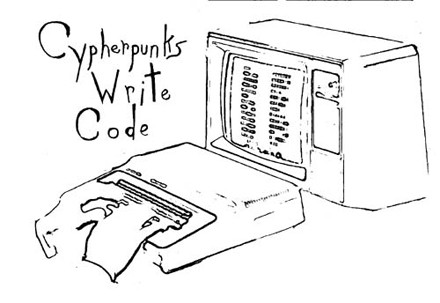
Cypherpunk
1. A person with an interest in encryption and privacy, especially one who uses encrypted email.
2. Cypherpunk, a term that appeared in Eric Hughes’ “A Cypherpunk’s Manifesto” in 1993, combines the ideas of cyberpunk, the spirit of individualism in cyberspace, with the use of strong encryption ( ciphertext is encrypted text) to preserve privacy.
Cypherpunk advocates believe that the use of strong encryption algorithms will enable individuals to have safely private transactions.
They oppose any kind of government regulation of cryptography.
They admit the likelihood that criminals and terrorists will exploit the use of strong encryption systems, but accept the risk as the price to be paid for the individual’s right to privacy.
Dark Web
The part of the World Wide Web that is only accessible by means of special software, allowing users and website operators to remain anonymous or untraceable.
The Dark Web poses new and formidable challenges for law enforcement agencies around the world.
Decentralized
Having a decentralized bitcoin network is a critical aspect.
The network is “decentralized”, meaning that it’s void of a centralized company or entity that governs the network.
Bitcoin is a peer-to-peer protocol, where all users within the network work and communicate directly with each other, instead of having their funds handled by a middleman, such as a bank or credit card company.
Difficulty
Difficulty is directly related to Bitcoin mining (see mining below), and how hard it is to verify blocks in the Bitcoin network.
Bitcoin adjusts the mining difficulty of verifying blocks every 2016 blocks.
Difficulty is automatically adjusted to keep block verification times at ten minutes.
Dogecoin
Dogecoin is an altcoin that first started as a joke in late 2013. Dogecoin, which features a Japanese fighting dog as its mascot, gained a broad international following and quickly grew to have a multi-million dollar market capitalization.
Double Spend
If someone tries to send a bitcoin transaction to two different recipients at the same time, this is double spending. Once a bitcoin transaction is confirmed, it makes it nearly impossible to double spend it. The more confirmations that a transaction has, the harder it is to double spend the bitcoins.
DYOR | #DYOR
“Do Your Own Research.” The trader’s caveat that advice shouldn’t be taken at face value.
“$BCY has an appealing risk/reward here. Could take a few months to play out, however, and will require patience. #DYOR”
Exit Scam
Traditionally a term for darknet markets and vendors that, after building up a good reputation, accumulate bitcoins and disappear; exit scams are also feared by ICO participants who worry that, once they’ve raised hundreds of millions in hard-to-trace money, the developers will take the money and run.
Fiat
Government-issued money.
Full Node
A full node is when you download the entire block chain using a bitcoin client, and you relay, validate, and secure the data within the block chain.
The data is bitcoin transactions and blocks, which is validated across the entire network of users.
FOMO | #FOMO
“Fear of Missing Out.” When a coin starts to moon, dumb money rushes in. “$LGD on a TEAR right now!!! It has major highs right now! Some major #FOMO going on!!! Sell while it’s high. It WILL drop before fight!!!”
FUD
“Fear, Uncertainty, and Doubt.”
Another non-crypto term that describes attempts to scare weak-handed coin-holders into selling their positions, often with rumors of exit scams or hacks; the cheap, dumped coins are then picked up by the FUD-ers.
Fungibility
Fungibility is a good or asset’s interchangeability with other individual goods or assets of the same type.
Assets possessing this fungibility property simplify the exchange and trade processes, as interchangeability assumes everyone values all goods of that class the same.
HODL
HOLD ON FOR DEAR LIFE!
The intentionally misspelled word hodl has its roots in a December 2013 post on the Bitcoin Talk forum, “I AM HODLING”; when the author, GameKyuubi, couldn’t be bothered to fix his typo, the community instantly turned it into a verb: to hodl.
Along with other terms, hodl is an effective litmus test for sussing out newcomers, carpetbaggers, and tourists.
Halving
Bitcoins have a finite supply, which makes them scarce.
The total amount that will ever be issued is 21 million.
The number of bitcoins generated per block is decreased 50% every 210,000 blocks,roughtly four years.
This is called “halving.”
The final halving will take place in the year 2140.
Hash
A cryptographic hash is a mathematical function that takes a file and produces a relative shortcode that can be used to identify that file.
A hash has a couple of key properties:
• It is unique.
Only a particular file can produce a particular hash, and two different files will never produce the same hash.
• It cannot be reversed.
You can’t work out what a file was by looking at its hash.
Hashing is used to prove that a set of data has not been tampered with.
It is what makes bitcoin mining possible.
Hash Rate
The hash rate is how the Bitcoin mining network processing power is measured.
In order for miners to confirm transactions and secure the block chain, the hardware they use must perform intensive computational operations which is output in hashes per second.
Then, try changing just a letter in the input text to see how the resulting hash varies significantly
Hard Fork
A hard fork is when a single cryptocurrency splits in two.
It occurs when a cryptocurrency’s existing code is changed, resulting in both an old and new version.
Meanwhile a soft fork is essentially the same thing, but the idea is that only one blockchain (and thus one coin) will remain valid as users adopt the update.
So both fork types create a split, but a hard fork is meant to create two blockchain/coins and a soft fork is meant to result in one.
Segwit was a soft fork, Bitcoin Cash, Bitcoin Gold, and Segwit2x are all hard forks.
Immutability
In object-oriented and functional programming, an immutable object (unchangeable object) is an object whose state cannot be modified after it is created.
This is in contrast to a mutable object (changeable object), which can be modified after it is created.
Lambo | #Lambo
A running joke among traders, you’re cryptorich when you can buy a Lamborghini; though absurd, it’s not unheard of — when Alexandre Cazes, the suspected founder of a major darknet marketplace, was found hanged in his Bangkok jail cell, Thai media reported that he owned four Lamborghinis.
Mining
Bitcoin mining is the process of using computer hardware to do mathematical calculations for the Bitcoin network in order to confirm transactions.
Miners collect transaction fees for the transactions they confirm and are awarded bitcoins for each block they verify.
Moon | #Moon
A rapid price increase.
Peer-to-Peer
Typically, online applications are provided by a central party that organizes all the transactions.
Your bank runs its own computers, and all the customers log into the bank’s computer to handle their transactions.
If Bob wants to send money to Alice, he asks the bank to do it, and the bank controls everything.
In a peer-to-peer arrangement, technology cuts out the middleman, meaning that people deal directly with each other.
Bob would send the money directly to Alice, and there wouldn’t be any bank involved at all.
Pool
As part of bitcoin mining, mining “pools” are a network of miners that work together to mine a block, then split the block reward among the pool miners.
Mining pools are a good way for miners to combine their resources to increase the probability of mining a block, and also contribute to the overall health and decentralization of the bitcoin network.
Private Key
A private key is a string of data that shows you have access to bitcoins in a specific wallet.
Think of a private key like a password; private keys must never be revealed to anyone but you, as they allow you to spend the bitcoins from your bitcoin wallet through a cryptographic signature.
Proof of Work
Proof of work refers to the hash of a block header (blocks of bitcoin transactions).
A block is considered valid only if its hash is lower than the current target.
Each block refers to a previous block adding to previous proofs of work, which forms a chain of blocks, known as a block chain.
Once a chain is formed, it confirms all previous Bitcoin transactions and secures the network.
Pump
A rapid price increase believed to be the result of market manipulation, a.k.a. pump and dump.
Public Address
A public bitcoin address is cryptographic hash of a public key.
A public address typically starts with the number “1.”
Think of a public address like an email address.
It can be published anywhere and bitcoins can be sent to it, just like an email can be sent to an email address.
Private Key
A private key is a string of data that shows you have access to bitcoins in a specific wallet.
Think of a private key like a password; private keys must never be revealed to anyone but you, as they allow you to spend the bitcoins from your bitcoin wallet through a cryptographic signature.
Rekt | #Rekt
Meaning “wrecked”.
“I never sell because of #FUD, and I never buy because of #FOMO.
That’s the easiest way to get #Rekt”
Sats
Satoshis, currently the smallest unit of a single bitcoin, useful for tracking coin prices. “At the rate $XRP’s moving, I wouldn’t be surprised if it hits 10K sats by the end of the day.”
Security Tokens
A security token (sometimes called an authentication token) is a small hardware device that the owner carries to authorize access to a network service.
The device may be in the form of a smart card or may be embedded in a commonly used object such as a key fob.
Shitcoins
Pejorative term for altcoins, especially low-cap coins, often affectionately used by shitcoin hodlers.
SEGWIT
SegWit is the process by which the block size limit on a blockchain is increased by removing signature data from Bitcoin transactions.
When certain parts of a transaction are removed, this frees up space or capacity to add more transactions to the chain.
Transaction
A transaction is when data is sent to and from one bitcoin address to another.
Just like financial transactions where you send money from one person to another, in bitcoin you do the same thing by sending data (bitcoins) to each other.
Bitcoins have value because it’s based on the properties of mathematics, rather than relying on physical properties (like gold and silver) or trust in central authorities, like fiat currencies.
Wallet
Just like with paper dollars you hold in your physical wallet, a bitcoin wallet is a digital wallet where you can store, send, and receive bitcoins securely.
There are many varieties of wallets available, whether you’re looking for a web or mobile solution.
Ideally, a bitcoin wallet will give you access to your public and private keys.
This means that only you have rightful access to spend these bitcoins, whenever you choose to.
Whale
Anyone who owns 5 percent of any given coin, often used as a boogeyman to explain unwanted price movements.
“Nice support $NEO. Clear whale manipulation.”
Blue Pill vs. Red PillChoose wiselyWhen You’re ready …
In a first, Bitcoin developers have done something amazing amid the criticism over the lightning network and issues associated with it. A team of developers has made an international payment using the radio … Continue reading International payment using the radio waves→
My inspiration for this page was given to me by my new aquired friend, a fellow Truth Seeker – Joris and to whom I dedicate this page… Wish you… as well as to … Continue reading Discipline Quotes→
Bitcoin white paper turns 15 and the Legacy of Satoshi Nakamoto lives on. “I’ve been working on a new electronic cash system that’s fully peer-to-peer, with no trusted third party,” Satoshi Oct. 31, … Continue reading Bitcoin White Paper turn 15→
In a first, Bitcoin developers have done something amazing amid the criticism over the lightning network and issues associated with it. A team of developers has made an international payment using the radio … Continue reading International payment using the radio waves→
My inspiration for this page was given to me by my new aquired friend, a fellow Truth Seeker – Joris and to whom I dedicate this page… Wish you… as well as to … Continue reading Discipline Quotes→
Bitcoin white paper turns 15 and the Legacy of Satoshi Nakamoto lives on. “I’ve been working on a new electronic cash system that’s fully peer-to-peer, with no trusted third party,” Satoshi Oct. 31, … Continue reading Bitcoin White Paper turn 15→
Timothy May on the cover of the second issue of Wired magazine with 2 fellow cypherpunks
Sadly, this past week we lost an icon that helped to spur the cypherpunk movement. Timothy May, who wrote The Crypto Anarchist Manifesto in 1988, lauched a movement that is still very prominent today.
For the uninitiated, a Crypto-Anarchist focuses on subverting the current laws and using new technologies to the benefit of the common man.
In the original manifesto, May says crypto-anarchy focuses on “encryption, digital money, anonymous networks, digital pseudonyms, zero-knowledge, reputations, information markets, black markets, collapse of governments”.
The manifesto was written just before the first crypto wars began during the early 1990’s.
The governments of the world fiercely opposed the general public using cryptographic encryption protocols.
The idea that a normal citizen could completely hide what they say in an electronic message was their biggest concern.
The governments cited national security as a concern (We’ve heard this excuse used many times before).
RSA Security, a leading computer securty company founded by world-renowned cryptologists, created this poster against a hardware chip that used a US-government supplied encryption standard
The legislation of the anti-encryption laws would also affect payment processing technology. There was a large push back from tech companies that would have to deal with these issues first-hand.
The crypto wars of the 1990’s ended with the concession from the government that encryption was readily available around the world.
The public had won their first bout against the government surveillance state. Alongside the public, you had the cypherpunks and large tech companies that were all fighting a common threat.
There was not much of an issue in terms of encryption for quite a few more years.
Every few years afterward, the idea of backdoors into encryption schemes were brought up but nothing ever came about these new ideations.
The Crypto Wars Redux
The expansion of computational power and development of more efficient processing equipment closed the gap as to who can gain access to encryption software.
The widespread availabilty of software/hardware that can perform these cryptographic calculations involved in encryption and the ease of use has made it possible for the layman to encrypt their own personal messages, video calls,emails, and notes.
Encrypting an email with someone who has never imported a key to their keyring, or generated their own PGP public/private key pair is a thing of the past.
Many of the services that exist today offer these solutions out of the box. The process has become much easier for all parties involved.
Anyone that is now using this technology benefits from this on a privacy and security level.
With all parties benefitting, the leviathan rears its head once more. Australia has passed an anti-encryption bill that will force large tech companies to allow the Australian government to obtain hardware access(citing national security as a major reason).
Outrage has spilled out of the larger tech companies. The end-to-end zero knowledge messaging/calling app, Signal, has taken a stand against this bill.
This sounds very similar to the issues Tim May was battling with during the early days of the First Crypto War.
The cypherpunks came out on top and I’m sure this legislation will face a similar fate.
May’s Impact on the World
The imprint that Timothy May left on the world is profound. The mass adoption of encryption as well as cryptocurrencies shows just how far ahead of the times he was.
May urged the importance of privacy.
He insisted on the use of encryption to keep your communications private.
Currently on a majority of mobile phones there are applications that provide encrypted communications. Whatsapp uses the Signal protocol which was developed by cypherpunk Moxie Marlinspike.
The rise of cryptocurrencies is an ideal that May was very hopeful for.
May did come out against the anti-privacy issues of bitcoin.
There are projects that offer solutions for this privacy debate.
Much of the developer-base of these certain cryptocurrencies have their foundation based in the cypherpunk tradition.
The Cryptocurrencies that aim for a privacy by default mechanism are monero and the soon to launch GRIN which uses the Mimblewimble Protocol (To see an extremely entertaining introduction to the GRIN project via talk-to-text chat for privacy preservation, listen to the creator of Grin).
Zcash is moving in the direction of private by default and the superior cryptography of the ZK range proofs will help to create a very private cryptocurrency.
Cody WIlson and Amir Taaki who worked on projects focused on the crypto-anarchic tradition including Dark Wallet and Defense Distributed
The impact Tim May made on the world by helping to create a social movement shows the importance and strength of his ideals.
He has impacted a generation of people that are growing up in the digital age.
He influenced builders in the 21st century.
You have people creating new currencies, exposing government surveillance on a national scale, circumventing the broken bueracratic system by creating their own markets, anonymous internet protocols, as well as making encryption applicable to the common man (You can find a list of prominent cypherpunks here and also here).
There isn’t enough that can be said about the applications in which he believed could positively affect us.
May was cognizant of the encroaching all-seeing eye of the state but I believe we are in much better shape now than we’ve ever been.
There may be negative news about what we currently face as individuals, from the unprecedented surveillance of the Snowden leaks to the aforementioned Australian anti-encryption bill, but looking at the grand scheme of our daily lives, these tools and their functions have helped to create a much better day than May could have imagined in 1988.
He was a proponent for the industriousness of human nature to outpace the slow moving regulation that would try to bog down any progress.
You can listen here to what he thought people/creators should do when they develop ground breaking technology.
Arise, you have nothing to lose but your barbed wire fences!
Happy New Year!May the coming year be full of grand adventures , peace, prosperity and opportunities.Dream big and make the most of … Continue reading Happy New Year !!!!→
In a first, Bitcoin developers have done something amazing amid the criticism over the lightning network and issues associated with it. A team of developers has made an international payment using the radio … Continue reading International payment using the radio waves→
My inspiration for this page was given to me by my new aquired friend, a fellow Truth Seeker – Joris and to whom I dedicate this page… Wish you… as well as to … Continue reading Discipline Quotes→
Bitcoin white paper turns 15 and the Legacy of Satoshi Nakamoto lives on. “I’ve been working on a new electronic cash system that’s fully peer-to-peer, with no trusted third party,” Satoshi Oct. 31, … Continue reading Bitcoin White Paper turn 15→





 BitHouse