“The journey of a thousand miles begins with a single step.”
Lao Tzu
The First step …🤔🙄🤔 Brings me back on the memory lane… In the ancient times of 2011, when I read for the first time about this BitCorn thing…
Then, I read the WhitePaper… As much or little as I understood at the time, I had a strange Sehnsucht about it and went down the proverbial rabbit hole…
Only to discover with amazement and dismay… It’s the Moria’s Mines down here…
In a first, Bitcoin developers have done something amazing amid the criticism over the lightning network and issues associated with it. A team of developers has made an international payment using the radio … Continue reading International payment using the radio waves→
My inspiration for this page was given to me by my new aquired friend, a fellow Truth Seeker – Joris and to whom I dedicate this page… Wish you… as well as to … Continue reading Discipline Quotes→
Bitcoin white paper turns 15 and the Legacy of Satoshi Nakamoto lives on. “I’ve been working on a new electronic cash system that’s fully peer-to-peer, with no trusted third party,” Satoshi Oct. 31, … Continue reading Bitcoin White Paper turn 15→
P2P crypto exchanges simply remove the middlemen, the core strength of Bitcoin’s design. Allowing users to buy/sell directly with each other without any trusted third-party to help carrying out transactions.
It is this 🤓 miners strong believe and best practice that privacy and security matter, then P2P exchanges will likely be a better option than the regular exchanges for handling your cryptocurrency!
Peer-to-peer bitcoin exchanges offer anonymous ways to buy and sell Bitcoin with a wide range of payment methods.
It’s no surprise that the P2P marketplaces have grown considerably in recent years.
In a first, Bitcoin developers have done something amazing amid the criticism over the lightning network and issues associated with it. A team of developers has made an international payment using the radio … Continue reading International payment using the radio waves→
My inspiration for this page was given to me by my new aquired friend, a fellow Truth Seeker – Joris and to whom I dedicate this page… Wish you… as well as to … Continue reading Discipline Quotes→
Bitcoin white paper turns 15 and the Legacy of Satoshi Nakamoto lives on. “I’ve been working on a new electronic cash system that’s fully peer-to-peer, with no trusted third party,” Satoshi Oct. 31, … Continue reading Bitcoin White Paper turn 15→
Hy there my fellow citizens of this amazingly beautiful Mother Earth of… Not Ours !!! We tend to forget that and treat it as if we would have another habitable sphere on wich to live, in the back of our pocket…. but that’s a topic for another discussion…
A few day ago… I think it was days… maybe weeks… Time is an illusion Einstein was right! Anyway somewhere in the past I decided to make a little bit more wider my mark on this digital world we all drown into :))) and I started to build up a Library !
As I do believe and live by the motto…
“Sharing is caring!”
Here with delight and joy I present to You, Free Spirit’s Library named how else than…
*Note: It's a Never Ending work in progress, as I am one little • that is bound to the same illusion of Time, as every other • is 😉 :))

So I would suggest you make frequent visits on the Discord server, as I add books and much interesting food for the mind all the time !

Thank you for your time !!!
May knowledge enlighten your path and make you evolve and thrive, if not for us then for the generations to come, so they can walk and look behind them, and say...

"Hey look, we are walking on shoulders of giants..."
In a first, Bitcoin developers have done something amazing amid the criticism over the lightning network and issues associated with it. A team of developers has made an international payment using the radio … Continue reading International payment using the radio waves→
My inspiration for this page was given to me by my new aquired friend, a fellow Truth Seeker – Joris and to whom I dedicate this page… Wish you… as well as to … Continue reading Discipline Quotes→
Bitcoin white paper turns 15 and the Legacy of Satoshi Nakamoto lives on. “I’ve been working on a new electronic cash system that’s fully peer-to-peer, with no trusted third party,” Satoshi Oct. 31, … Continue reading Bitcoin White Paper turn 15→
In a first, Bitcoin developers have done something amazing amid the criticism over the lightning network and issues associated with it. A team of developers has made an international payment using the radio … Continue reading International payment using the radio waves→
My inspiration for this page was given to me by my new aquired friend, a fellow Truth Seeker – Joris and to whom I dedicate this page… Wish you… as well as to … Continue reading Discipline Quotes→
Bitcoin white paper turns 15 and the Legacy of Satoshi Nakamoto lives on. “I’ve been working on a new electronic cash system that’s fully peer-to-peer, with no trusted third party,” Satoshi Oct. 31, … Continue reading Bitcoin White Paper turn 15→
If you are new to cryptocurrencies, you might find the topic a bit confusing due to the terminology involved. Just refer to this page when you see an unfamiliar word or phrase.
A
ADDRESS – a cryptocurrency address is a string, containing numbers and letters, from which you can send and receive crypto payments.
ALGORITHM – kit of rules, which are solving a problem via calculations, using a computer. It’s encrypting and transferring data, which makes it mining’s base when it comes to extracting cryptocurrencies.
ASIC – (Application Specific Integrated Circuit) a dedicated mining device, which is able to extract coins, working with on one particular algorithm.
ASIC-RESISTANCE – memory hard algorithms that are hardly cooperating with ASICs, because they are built to be resistance to this kind of devices.
ATTACK 51% – a miner possess 51% of the pool’s hash rate, so he’s able to manipulate the network.
B
BANDWIDTH – the maximum capacity of the network to transmit data.
BLOCK – a piece of the blockchain, containing transactions.
BLOCKCHAIN – a public ledger, which contains lots of data, encrypted in separate block in the form of hashes (messages). Considered immutable and unable to manipulate.
BLOCK HEADER – a string long 80 bytes, which miners hash with the nonce to find the solution of the block.
BLOCK REWARD – this is what a miner gets for successfully calculating a valid hash in the block when performing a mining process.
BLOCK SIZE – this is a limit of bytes that the block might contain (also limits of transactions in one piece).
BLOCK TIME – the average time needed to find a block’s solutions. It’s different for each coin.
BLOCK SYNCHRONIZATION – the time requested for the blockchain to sync with your device (for full nodes usually).
C
CENTRALIZATION – an organization or system, which is controlled by a central authority.
CLOUD MINING – performing a mining process via rented hashing power from a third-party provider.
COIN – a term used to describe units of blockchain value.
CONFIRMATION – the process of validating if a transaction is including on the blockchain.
CONSENSUS – a rule all participant agrees on when operating on the same network.
CONTRIBUTION SHARE – the hash rate a miner puts into the pool to contribute.
CPU – (Central Processing Unit) a processor, which coordinates the work of all the other part of a computer.
D
DAO (Decentralized Anonymous Organization) – organization running smart contracts.
DIFFICULTY – a measure of how difficult might be to mine a new block.
DIFFICULTY BOMB – malicious attack, increasing difficulty that much, that the reward doesn’t cover the expenses to mine.
DISTRIBUTION – percentage of each pool from all the ones available in the network for this coin.
DOUBLE SPENDING – general issue of the decentralized conception or spending a same amount twice.
DOWNTIME – a period when a machine isn’t working.
E
EXCHANGE – a platform to buy, trade and sell cryptocurrencies.
F
FIAT MONEY – national currency of a central government.
FORK – changing in the rules of the consensus, which might be able to exist with the old established rules (soft fork) or not (hard fork).
FPGA – a modern mining device, improving the ASIC, which can mine coins from one particular algorithm. The interesting here is that you can modify it to mine a different algorithm if you decide to change the coin you mine.
FULL NODE – storing the blockchain data locally on your PC.
G
GAINS – increasing profits (reward).
GENESIS BLOCK – the first block, computationally created in the blockchain. It contains the initial transaction.
GPU (Graphic Processing Unit) – a graphic card, also known as a video card (part of a computer), which is successfully used for mining purposes.
H
HASH FUNCTION – encrypted message with fixes size and unique value.
HASH RATE – a unit to measure the computational power by which a miner contributes in the mining process.
HASH RENTAL – a rented computing power for mining purposes by a cloud mining provider.
HARD FORK – this is a protocol change, which results in splitting into two different chains and the longer one continuous existing. If both of them do – we have a chain split. These changes cannot cooperate with the old rules and require an update.
HARD DISK SPACE – the storage a user needs to locally store the blockchain data on a desktop PC.
Halving – decreasing the reward of gained coins per block using a particular formula.
I
ICO (Initial Coin Offering) – crowdfunding via crypto coins for the purpose of gaining capital for a particular project.
IMMUTABLE – unable to change in time.
K
KYC (Know Your Customer) – an identification process for the users in the network.
L
LEDGER – a piece of record of data, which is immutable.
LIGHT CLIENT – not storing the entire blockchain data but using just parts of it (a block’s header). To have some more information, they trust a full node.
LIGHTNING NETWORK – an additional layer of the blockchain to perform faster transactions between the nodes participating in the network.
LIQUIDITY – the ease to buying and selling, without bothering the market’s price.
M
MARKET CAPITALIZATION – a cryptocurrency’s price, according the total supply.
MARKET SHARE – the hash share of the market with which the pool operates.
MINEABLE – a coin which can be mined in return of reward.
MINER – either the device or the person who’s performing the mining process.
MINER’s FEE – this is the reward a miner receives for its contribution to the network by validating transactions. Normally, miners choose transactions with higher fees to add in the next block to profit more and faster.
MINING – a process of extracting a cryptocurrency by adding and verifying transactions to the blockchain, respectively gaining a reward for it.
MINING POOL – group of miners, combining their power to find a block faster and sharing the reward from it too.
MINING RIG – this is a set of multiple mining hardware, combined to mine with higher hash rate and find a block faster.
N
NODE – a computer that keeps a copy of the blockchain.
NONCE – an arbitrary number in a cryptographic communication. It is generated during the hashing process and can be used only once.
O
ORPHAN BLOCK – a valid block, which isn’t part of the blockchain and occurs when two miners find the same block in the same time. The one which is late becomes orphan.
P
PAYOUT LIMIT – the minimum amount of coins which you can withdraw from your account.
POOL DISTRIBUTION – a percentage of each pool, possessed for this particular coin.
POOL FEES – the fees requested from the pool for maintenance.
POW (Proof-of-Work) – when it comes to mining this is a consensus mechanism where miners are using a nonce to search the block’s solutions and get rewarded proportionally of their contribution (work). There’s no need of trust, since everybody’s “work” (share) is visible in the network.
PPS – (Pay Per Share) a type of rewarding system, based on contribution.
PPLNS – (Pay Per Last N Shares) a type of rewarding system, based on time a contribution.
PRIVATE KEY – this is the “password” which helps you to access your public address. It’s the one and only, which let you read the hashes (messages) sent to your public key.
PROP – (Proportional) a type of rewarding system, based on a proportional relation between contribution and luck.
PUBLIC KEY – this is a recipient’s address to receive any crypto assets in the form of a hash, which might be read with only one specific private key.
Q
QR-CODE – a graphic sign, which can be scanned via smartphone camera to read a wallet’s public address and send some coins within it.
R
REWARDING SYSTEM – a method of rewarding the miners, depending on their contribution to the network.
REPOSITORY – a software where you keep all your information, which might be retrieved at some point.
S
STALE SHARE – when two miners send a share to the network to affirm, they found a block, the one which is late is a stale one.
SPV (Simple Payment Verification) – a client which checks on transactions, using only the headers of the blocks, which is considered a proof of inclusion.
T
TRAFFIC (incoming & outcoming) – the traffic from one point to another (movement of data and actions). It’s important when it’s up to cryptocurrencies because it can define your speed when broadcasting a transaction.
TRANSACTION FEE – a payment to broadcast your transaction on the network.
U
UPTIME – the time during which a mining machine is properly working.
UTXO (Unspent Transaction Output) – a value, calculating the balance of unspent coins, based on all the previously spent outputs and inputs, based on the public ledger’s history of transactions.
V
VALID BLOCK – there’s a signal that the block is mined and the user’s waiting for confirmation from other nodes to gain the reward.
VARDIFF (Variable Difficulty) – the share’s difficulty might rise or fall, depending on the hash rate.
VPS (Virtual Private Server) – a PC with static IP, supporting the network.
W
WALLET – a digital wallet to store, send and receive crypto assets.
WORKER – either a mining device, either an account in the mining pool configuration.
In a first, Bitcoin developers have done something amazing amid the criticism over the lightning network and issues associated with it. A team of developers has made an international payment using the radio … Continue reading International payment using the radio waves→
My inspiration for this page was given to me by my new aquired friend, a fellow Truth Seeker – Joris and to whom I dedicate this page… Wish you… as well as to … Continue reading Discipline Quotes→
Bitcoin white paper turns 15 and the Legacy of Satoshi Nakamoto lives on. “I’ve been working on a new electronic cash system that’s fully peer-to-peer, with no trusted third party,” Satoshi Oct. 31, … Continue reading Bitcoin White Paper turn 15→
The supply of Bitcoin is fixed at 21 million BTC, and as a hard coded monetary policy of the protocol, the fixed supply of the dominant cryptocurrency cannot be altered.
Former Google Product Director Steve Lee stated that only 1 percent of the world’s population can own more than 0.28 BTC, due to the fixed supply of Bitcoin.
If you own 0.28 BTC and HODL, you can be certain no more than 1% of the current world's population can EVER own more BTC than you. A modest investment of $1,830 today can ensure you are a 1%er in a future Bitcoin world. https://t.co/9k3XZa09Yo
In late 2017, Chainalysis, a blockchain forensics company that monitors and investigates cryptocurrency transactions, revealed in a research paper that up to four million BTC are permanently lost on the blockchain as a result of theft, loss of wallets and private keys, and the dormant wallet of Bitcoin creator Satoshi Nakamoto, which experts have said is no longer accessible.
Kim Grauer, Senior Economist at Chainalysis, said at the time, that the lost supply of BTC is not taken into consideration by the market cap.That means, the real price of BTC could be substantially higher, as 4 to 6 million BTC are estimated to be lost.
Based on the estimate that the supply of Bitcoin is around 17 million, only 0.8 percent of the world population can own more than 0.28 BTC and less than 0.2 of the world population can own more than 1 BTC.
The 0.28 BTC figure introduced by Lee assumes the supply of Bitcoin to be 21 million, as it divides 21 million by 0.28 and divides the outcome of that by the world population that is 7.442 billion. If the research of Chainalysis is accurate and that 4 to 6 million BTC are lost on the blockchain, the supply of Bitcoin should be closer to around 16 to 17 million
The fact that any investor in the global market can be within the 1 percent of the world population with a $1,830 investment demonstrates that the cryptocurrency market is still at its early phase, and in terms of adoption, market development, infrastructure, and regulation, the sector can still grow significantly in the mid to long-term.
In a first, Bitcoin developers have done something amazing amid the criticism over the lightning network and issues associated with it. A team of developers has made an international payment using the radio … Continue reading International payment using the radio waves→
My inspiration for this page was given to me by my new aquired friend, a fellow Truth Seeker – Joris and to whom I dedicate this page… Wish you… as well as to … Continue reading Discipline Quotes→
Bitcoin white paper turns 15 and the Legacy of Satoshi Nakamoto lives on. “I’ve been working on a new electronic cash system that’s fully peer-to-peer, with no trusted third party,” Satoshi Oct. 31, … Continue reading Bitcoin White Paper turn 15→
“You never change things by fighting the existing reality.
To change something, build a new model that makes the existing model obsolete.”
Buckminster Fuller
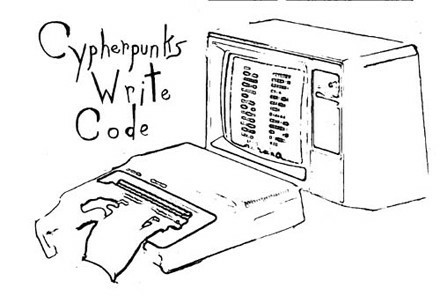
Strenght in NumbersDare to knowBitcoin / bitcoin / blockchainDYOR – Do Your Own Research LandArise…Bitcoin – People’s MoneyCypherPunks Write CodeBitcoin Genesis BlockCode Is LawA new day…Bitcoin – The Peaceful RevolutionVeritas Non Auctoritas Facit Legem🔵 or 🟠 The Choice is Yours…
In a first, Bitcoin developers have done something amazing amid the criticism over the lightning network and issues associated with it. A team of developers has made an international payment using the radio … Continue reading International payment using the radio waves→
My inspiration for this page was given to me by my new aquired friend, a fellow Truth Seeker – Joris and to whom I dedicate this page… Wish you… as well as to … Continue reading Discipline Quotes→
Bitcoin white paper turns 15 and the Legacy of Satoshi Nakamoto lives on. “I’ve been working on a new electronic cash system that’s fully peer-to-peer, with no trusted third party,” Satoshi Oct. 31, … Continue reading Bitcoin White Paper turn 15→
So you are not a coder but as a non-technical person, you’re always open for simplified technical knowledge about Bitcoin. So, you would like to ask people of very deep knowledge of Bitcoin’s code what you would tell some non-technical people.
What are the most important technical points of Bitcoin, where you would say “it’s really important for Bitcoin and people should know it”. Important would also mean for Bitcoin from a hacking-resistant point and what is making Bitcoin superior against competing Altcoins?
The most important features of Bitcoin are that it’s maintained by the largest community of developers out of all the coins, and consequentially it has the largest test suite and debugging infrastructure.
It makes it really easy to pin-point bugs. I can’t stress enough how important having test cases is for your project, whatever it may be, whether it’s related to crypto or not. It saves you from a lot of future bug-hunting
Its simplicity. Not in the sense of being trivial, but in the sense of having a very focused feature set.
Also the importance if permissionlessness seems to be either ignored or forgotten by a lot of alts out there, whereas it remains a top priority for Bitcoin.
One more thing that sets Bitcoin apart is the immense decentralization – in hashpower, full nodes, development and community. For security, the first two are the most critical.
Most altcoins either don’t have node decentralization or / and they have a flawed consensus mechanism (proof of stake) that simply gives the developers total power over the project.
This allows them to change rules at will, but also allows authorities to press them to do such things. In Bitcoin, that’s simply impossible.
A PoW coin without enough hashpower can be attacked similarly, and as a matter of fact most energy is pumped into Bitcoin PoW, which makes it most secure.
Bitcoin works, it has been working fine for the past 13 years (all its life) and safely too.
* You don’t need any third party (middle man like banks) to send, receive or store your money when you use bitcoin.
* Nobody can restrict who sends you money or to whom you send your money
* You can reach anybody, anywhere at any time in the world.
* The payments can not be reversed like other payment networks which provides a lot of security for merchants
In a first, Bitcoin developers have done something amazing amid the criticism over the lightning network and issues associated with it. A team of developers has made an international payment using the radio … Continue reading International payment using the radio waves→
My inspiration for this page was given to me by my new aquired friend, a fellow Truth Seeker – Joris and to whom I dedicate this page… Wish you… as well as to … Continue reading Discipline Quotes→
Bitcoin white paper turns 15 and the Legacy of Satoshi Nakamoto lives on. “I’ve been working on a new electronic cash system that’s fully peer-to-peer, with no trusted third party,” Satoshi Oct. 31, … Continue reading Bitcoin White Paper turn 15→
Calculating your share of the bitcoins mined can be complex. In an ongoing effort to come up with the fairest method and prevent gaming of the system, many calculation schemes have been invented.
PPS
The Pay-per-Share (PPS) approach offers an instant, guaranteed payout for each share that is solved by a miner. Miners are paid out from the pools existing balance and can withdraw their payout immediately. This model allows for the least possible variance in payment for miners while also transferring much of the risk to the pool’s operator.
PPS, or ‘pay per share’ shifts the risk to the mining pool while they guarantee payment for every share you contribute.
PPS payment schemes require a very large reserve of 10,000 BTC in order to ensure they have the means of enduring a streak of bad luck. For this reason, most Bitcoin mining pools no longer support it.
PROP
The Proportional approach offers a proportional distribution of the reward when a block is found amongst all workers, based off of the number of shares they have each found.
PPLNS
The Pay Per Last N Shares (PPLN) approach is similar to the proportional method, but instead of counting the number of shares in the round, it instead looks at the last N shares, no matter the boundaries of the round.
DGM
The Double Geometric Method (DGM) is a hybrid approach that enables the operator to absorb some of the risk. The operator receives a portion of payouts during short rounds and returns it during longer rounds to normalize payments.
DGM is a popular payment scheme because it offers a nice balance between short round and long round blocks. However, end users must wait for full round confirmations long after the blocks are processed.
SMPPS
The Shared Maximum Pay Per Share (SMPPS) uses a similar approach to PPS but never pays more than the Bitcoin mining pool has earned.
ESMPPS
The Equalized Shared Maximum Pay Per Share (ESMPPS) is similar to SMPPS, but distributes payments equally among all miners in the Bitcoin mining pool.
RSMPPS
The Recent Shared Maximum Pay Per Share (RSMPPS) is also similar to SMPPS, but the system prioritizes the most recent Bitcoin miners first.
CPPSRB
The Capped Pay Per Share with Recent Backpay uses a Maximum Pay Per Share (MPPS) reward system that will pay Bitcoin miners as much as possible using the income from finding blocks, but will never go bankrupt.
BPM
Bitcoin Pooled mining (BPM), also known as “Slush’s pool”, uses a system where older shares from the beginning of a block round are given less weight than more recent shares. This reduces the ability to cheat the mining pool system by switching pools during a round.
POT
The Pay on Target (POT) approach is a high variance PPS that pays out in accordance with the difficulty of work returned to the pool by a miner, rather than the difficulty of work done by the pool itself.
SCORE
The SCORE based approach uses a system whereby a proportional reward is distributed and weighed by the time the work was submitted. This process makes later shares worth more than earlier shares and scored by time, thus rewards are calculated in proportion to the scores and not shares submitted.
ELIGIUS
Eligius was designed by Luke Jr., creator of BFGMiner, to incorporate the strengths of PPS and BPM pools, as miners submit proofs-of-work to earn shares and the pool pays out immediately. When the block rewards are distributed, they are divided equally among all shares since the last valid block and the shares contributed to stale blocks are cycled into the next block’s shares. Rewards are only paid out if a miner earns at least. 67108864 and if the amount owed is less than that it will be rolled over to the next block until the limit is achieved. However, if a Bitcoin miner does not submit a share for over a period of a week, then the pool will send any remaining balance, regardless of its size.
Triplemining
Triplemining brings together medium-sized pools with no fees and redistributes 1% of every block found, which allows your share to grow faster than any other Bitcoin mining pool approach. The administrators of these Bitcoin mining pools use some of the Bitcoins generated when a block is found to add to a jackpot that is triggered and paid out to the member of the pool who found the block. In this way, everyone in the pool has a better chance to make additional Bitcoins, regardless of their processing power.
In a first, Bitcoin developers have done something amazing amid the criticism over the lightning network and issues associated with it. A team of developers has made an international payment using the radio … Continue reading International payment using the radio waves→
My inspiration for this page was given to me by my new aquired friend, a fellow Truth Seeker – Joris and to whom I dedicate this page… Wish you… as well as to … Continue reading Discipline Quotes→
Bitcoin white paper turns 15 and the Legacy of Satoshi Nakamoto lives on. “I’ve been working on a new electronic cash system that’s fully peer-to-peer, with no trusted third party,” Satoshi Oct. 31, … Continue reading Bitcoin White Paper turn 15→
This is a glossary of all cryptocurrency terms and lingo you might come across when reading about mining and mining pools. Just refer to this page when you see an unfamiliar word or phrase.
A
ADDRESS – a cryptocurrency address is a string, containing numbers and letters, from which you can send and receive crypto payments.
ALGORITHM – kit of rules, which are solving a problem via calculations, using a computer. It’s encrypting and transferring data, which makes it mining’s base when it comes to extracting cryptocurrencies.
ASIC – (Application Specific Integrated Circuit) a dedicated mining device, which is able to extract coins, working with on one particular algorithm.
ASIC-RESISTANCE – memory hard algorithms that are hardly cooperating with ASICs, because they are built to be resistance to this kind of devices.
ATTACK 51% – a miner possess 51% of the pool’s hash rate, so he’s able to manipulate the network.
B
BANDWIDTH – the maximum capacity of the network to transmit data.
BLOCK – a piece of the blockchain, containing transactions.
BLOCKCHAIN – a public ledger, which contains lots of data, encrypted in separate block in the form of hashes (messages). Considered immutable and unable to manipulate.
BLOCK HEADER – a string long 80 bytes, which miners hash with the nonce to find the solution of the block.
BLOCK REWARD – this is what a miner gets for successfully calculating a valid hash in the block when performing a mining process.
BLOCK SIZE – this is a limit of bytes that the block might contain (also limits of transactions in one piece).
BLOCK TIME – the average time needed to find a block’s solutions. It’s different for each coin.
BLOCK SYNCHRONIZATION – the time requested for the blockchain to sync with your device (for full nodes usually).
C
CENTRALIZATION – an organization or system, which is controlled by a central authority.
CLOUD MINING – performing a mining process via rented hashing power from a third-party provider.
COIN – a term used to describe units of blockchain value.
CONFIRMATION – the process of validating if a transaction is including on the blockchain.
CONSENSUS – a rule all participant agrees on when operating on the same network.
CONTRIBUTION SHARE – the hash rate a miner puts into the pool to contribute.
CPU – (Central Processing Unit) a processor, which coordinates the work of all the other part of a computer.
D
DAO (Decentralized Anonymous Organization) – organization running smart contracts.
DIFFICULTY – a measure of how difficult might be to mine a new block.
DIFFICULTY BOMB – malicious attack, increasing difficulty that much, that the reward doesn’t cover the expenses to mine.
DISTRIBUTION – percentage of each pool from all the ones available in the network for this coin.
DOUBLE SPENDING – general issue of the decentralized conception or spending a same amount twice.
DOWNTIME – a period when a machine isn’t working.
E
EXCHANGE – a platform to buy, trade and sell cryptocurrencies.
F
FIAT MONEY – national currency of a central government.
FORK – changing in the rules of the consensus, which might be able to exist with the old established rules (soft fork) or not (hard fork).
FPGA – a modern mining device, improving the ASIC, which can mine coins from one particular algorithm. The interesting here is that you can modify it to mine a different algorithm if you decide to change the coin you mine.
FULL NODE – storing the blockchain data locally on your PC.
G
GAINS – increasing profits (reward).
GENESIS BLOCK – the first block, computationally created in the blockchain. It contains the initial transaction.
GPU (Graphic Processing Unit) – a graphic card, also known as a video card (part of a computer), which is successfully used for mining purposes.
H
HASH FUNCTION – encrypted message with fixes size and unique value.
HASH RATE – a unit to measure the computational power by which a miner contributes in the mining process.
HASH RENTAL – a rented computing power for mining purposes by a cloud mining provider.
HARD FORK – this is a protocol change, which results in splitting into two different chains and the longer one continuous existing. If both of them do – we have a chain split. These changes cannot cooperate with the old rules and require an update.
HARD DISK SPACE – the storage a user needs to locally store the blockchain data on a desktop PC.
Halving – decreasing the reward of gained coins per block using a particular formula.
I
ICO (Initial Coin Offering) – crowdfunding via crypto coins for the purpose of gaining capital for a particular project.
IMMUTABLE – unable to change in time.
K
KYC (Know Your Customer) – an identification process for the users in the network.
L
LEDGER – a piece of record of data, which is immutable.
LIGHT CLIENT – not storing the entire blockchain data but using just parts of it (a block’s header). To have some more information, they trust a full node.
LIGHTNING NETWORK – an additional layer of the blockchain to perform faster transactions between the nodes participating in the network.
LIQUIDITY – the ease to buying and selling, without bothering the market’s price.
M
MARKET CAPITALIZATION – a cryptocurrency’s price, according the total supply.
MARKET SHARE – the hash share of the market with which the pool operates.
MINEABLE – a coin which can be mined in return of reward.
MINER – either the device or the person who’s performing the mining process.
MINER’s FEE – this is the reward a miner receives for its contribution to the network by validating transactions. Normally, miners choose transactions with higher fees to add in the next block to profit more and faster.
MINING – a process of extracting a cryptocurrency by adding and verifying transactions to the blockchain, respectively gaining a reward for it.
MINING POOL – group of miners, combining their power to find a block faster and sharing the reward from it too.
MINING RIG – this is a set of multiple mining hardware, combined to mine with higher hash rate and find a block faster.
N
NODE – a computer that keeps a copy of the blockchain.
NONCE – an arbitrary number in a cryptographic communication. It is generated during the hashing process and can be used only once.
O
ORPHAN BLOCK – a valid block, which isn’t part of the blockchain and occurs when two miners find the same block in the same time. The one which is late becomes orphan.
P
PAYOUT LIMIT – the minimum amount of coins which you can withdraw from your account.
POOL DISTRIBUTION – a percentage of each pool, possessed for this particular coin.
POOL FEES – the fees requested from the pool for maintenance.
POW (Proof-of-Work) – when it comes to mining this is a consensus mechanism where miners are using a nonce to search the block’s solutions and get rewarded proportionally of their contribution (work). There’s no need of trust, since everybody’s “work” (share) is visible in the network.
PPS – (Pay Per Share) a type of rewarding system, based on contribution.
PPLNS – (Pay Per Last N Shares) a type of rewarding system, based on time a contribution.
PRIVATE KEY – this is the “password” which helps you to access your public address. It’s the one and only, which let you read the hashes (messages) sent to your public key.
PROP – (Proportional) a type of rewarding system, based on a proportional relation between contribution and luck.
PUBLIC KEY – this is a recipient’s address to receive any crypto assets in the form of a hash, which might be read with only one specific private key.
Q
QR-CODE – a graphic sign, which can be scanned via smartphone camera to read a wallet’s public address and send some coins within it.
R
REWARDING SYSTEM – a method of rewarding the miners, depending on their contribution to the network.
REPOSITORY – a software where you keep all your information, which might be retrieved at some point.
S
STALE SHARE – when two miners send a share to the network to affirm, they found a block, the one which is late is a stale one.
SPV (Simple Payment Verification) – a client which checks on transactions, using only the headers of the blocks, which is considered a proof of inclusion.
T
TRAFFIC (incoming & outcoming) – the traffic from one point to another (movement of data and actions). It’s important when it’s up to cryptocurrencies because it can define your speed when broadcasting a transaction.
TRANSACTION FEE – a payment to broadcast your transaction on the network.
U
UPTIME – the time during which a mining machine is properly working.
UTXO (Unspent Transaction Output) – a value, calculating the balance of unspent coins, based on all the previously spent outputs and inputs, based on the public ledger’s history of transactions.
V
VALID BLOCK – there’s a signal that the block is mined and the user’s waiting for confirmation from other nodes to gain the reward.
VARDIFF (Variable Difficulty) – the share’s difficulty might rise or fall, depending on the hash rate.
VPS (Virtual Private Server) – a PC with static IP, supporting the network.
W
WALLET – a digital wallet to store, send and receive crypto assets.
WORKER – either a mining device, either an account in the mining pool configuration.
This is a glossary of all cryptocurrency terms and lingo you might come across when reading about mining and mining pools. Just refer to this page when you see an unfamiliar word or phrase.
A
ADDRESS – a cryptocurrency address is a string, containing numbers and letters, from which you can send and receive crypto payments.
ALGORITHM – kit of rules, which are solving a problem via calculations, using a computer. It’s encrypting and transferring data, which makes it mining’s base when it comes to extracting cryptocurrencies.
ASIC – (Application Specific Integrated Circuit) a dedicated mining device, which is able to extract coins, working with on one particular algorithm.
ASIC-RESISTANCE – memory hard algorithms that are hardly cooperating with ASICs, because they are built to be resistance to this kind of devices.
ATTACK 51% – a miner possess 51% of the pool’s hash rate, so he’s able to manipulate the network.
B
BANDWIDTH – the maximum capacity of the network to transmit data.
BLOCK – a piece of the blockchain, containing transactions.
BLOCKCHAIN – a public ledger, which contains lots of data, encrypted in separate block in the form of hashes (messages). Considered immutable and unable to manipulate.
BLOCK HEADER – a string long 80 bytes, which miners hash with the nonce to find the solution of the block.
BLOCK REWARD – this is what a miner gets for successfully calculating a valid hash in the block when performing a mining process.
BLOCK SIZE – this is a limit of bytes that the block might contain (also limits of transactions in one piece).
BLOCK TIME – the average time needed to find a block’s solutions. It’s different for each coin.
BLOCK SYNCHRONIZATION – the time requested for the blockchain to sync with your device (for full nodes usually).
C
CENTRALIZATION – an organization or system, which is controlled by a central authority.
CLOUD MINING – performing a mining process via rented hashing power from a third-party provider.
COIN – a term used to describe units of blockchain value.
CONFIRMATION – the process of validating if a transaction is including on the blockchain.
CONSENSUS – a rule all participant agrees on when operating on the same network.
CONTRIBUTION SHARE – the hash rate a miner puts into the pool to contribute.
CPU – (Central Processing Unit) a processor, which coordinates the work of all the other part of a computer.
D
DAO (Decentralized Anonymous Organization) – organization running smart contracts.
DIFFICULTY – a measure of how difficult might be to mine a new block.
DIFFICULTY BOMB – malicious attack, increasing difficulty that much, that the reward doesn’t cover the expenses to mine.
DISTRIBUTION – percentage of each pool from all the ones available in the network for this coin.
DOUBLE SPENDING – general issue of the decentralized conception or spending a same amount twice.
DOWNTIME – a period when a machine isn’t working.
E
EXCHANGE – a platform to buy, trade and sell cryptocurrencies.
F
FIAT MONEY – national currency of a central government.
FORK – changing in the rules of the consensus, which might be able to exist with the old established rules (soft fork) or not (hard fork).
FPGA – a modern mining device, improving the ASIC, which can mine coins from one particular algorithm. The interesting here is that you can modify it to mine a different algorithm if you decide to change the coin you mine.
FULL NODE – storing the blockchain data locally on your PC.
G
GAINS – increasing profits (reward).
GENESIS BLOCK – the first block, computationally created in the blockchain. It contains the initial transaction.
GPU (Graphic Processing Unit) – a graphic card, also known as a video card (part of a computer), which is successfully used for mining purposes.
H
HASH FUNCTION – encrypted message with fixes size and unique value.
HASH RATE – a unit to measure the computational power by which a miner contributes in the mining process.
HASH RENTAL – a rented computing power for mining purposes by a cloud mining provider.
HARD FORK – this is a protocol change, which results in splitting into two different chains and the longer one continuous existing. If both of them do – we have a chain split. These changes cannot cooperate with the old rules and require an update.
HARD DISK SPACE – the storage a user needs to locally store the blockchain data on a desktop PC.
Halving – decreasing the reward of gained coins per block using a particular formula.
I
ICO (Initial Coin Offering) – crowdfunding via crypto coins for the purpose of gaining capital for a particular project.
IMMUTABLE – unable to change in time.
K
KYC (Know Your Customer) – an identification process for the users in the network.
L
LEDGER – a piece of record of data, which is immutable.
LIGHT CLIENT – not storing the entire blockchain data but using just parts of it (a block’s header). To have some more information, they trust a full node.
LIGHTNING NETWORK – an additional layer of the blockchain to perform faster transactions between the nodes participating in the network.
LIQUIDITY – the ease to buying and selling, without bothering the market’s price.
M
MARKET CAPITALIZATION – a cryptocurrency’s price, according the total supply.
MARKET SHARE – the hash share of the market with which the pool operates.
MINEABLE – a coin which can be mined in return of reward.
MINER – either the device or the person who’s performing the mining process.
MINER’s FEE – this is the reward a miner receives for its contribution to the network by validating transactions. Normally, miners choose transactions with higher fees to add in the next block to profit more and faster.
MINING – a process of extracting a cryptocurrency by adding and verifying transactions to the blockchain, respectively gaining a reward for it.
MINING POOL – group of miners, combining their power to find a block faster and sharing the reward from it too.
MINING RIG – this is a set of multiple mining hardware, combined to mine with higher hash rate and find a block faster.
N
NODE – a computer that keeps a copy of the blockchain.
NONCE – an arbitrary number in a cryptographic communication. It is generated during the hashing process and can be used only once.
O
ORPHAN BLOCK – a valid block, which isn’t part of the blockchain and occurs when two miners find the same block in the same time. The one which is late becomes orphan.
P
PAYOUT LIMIT – the minimum amount of coins which you can withdraw from your account.
POOL DISTRIBUTION – a percentage of each pool, possessed for this particular coin.
POOL FEES – the fees requested from the pool for maintenance.
POW (Proof-of-Work) – when it comes to mining this is a consensus mechanism where miners are using a nonce to search the block’s solutions and get rewarded proportionally of their contribution (work). There’s no need of trust, since everybody’s “work” (share) is visible in the network.
PPS – (Pay Per Share) a type of rewarding system, based on contribution.
PPLNS – (Pay Per Last N Shares) a type of rewarding system, based on time a contribution.
PRIVATE KEY – this is the “password” which helps you to access your public address. It’s the one and only, which let you read the hashes (messages) sent to your public key.
PROP – (Proportional) a type of rewarding system, based on a proportional relation between contribution and luck.
PUBLIC KEY – this is a recipient’s address to receive any crypto assets in the form of a hash, which might be read with only one specific private key.
Q
QR-CODE – a graphic sign, which can be scanned via smartphone camera to read a wallet’s public address and send some coins within it.
R
REWARDING SYSTEM – a method of rewarding the miners, depending on their contribution to the network.
REPOSITORY – a software where you keep all your information, which might be retrieved at some point.
S
STALE SHARE – when two miners send a share to the network to affirm, they found a block, the one which is late is a stale one.
SPV (Simple Payment Verification) – a client which checks on transactions, using only the headers of the blocks, which is considered a proof of inclusion.
T
TRAFFIC (incoming & outcoming) – the traffic from one point to another (movement of data and actions). It’s important when it’s up to cryptocurrencies because it can define your speed when broadcasting a transaction.
TRANSACTION FEE – a payment to broadcast your transaction on the network.
U
UPTIME – the time during which a mining machine is properly working.
UTXO (Unspent Transaction Output) – a value, calculating the balance of unspent coins, based on all the previously spent outputs and inputs, based on the public ledger’s history of transactions.
V
VALID BLOCK – there’s a signal that the block is mined and the user’s waiting for confirmation from other nodes to gain the reward.
VARDIFF (Variable Difficulty) – the share’s difficulty might rise or fall, depending on the hash rate.
VPS (Virtual Private Server) – a PC with static IP, supporting the network.
W
WALLET – a digital wallet to store, send and receive crypto assets.
WORKER – either a mining device, either an account in the mining pool configuration.
As we’ve seen over the many years that this rag has been written (and beyond) companies who are able to fund whole teams dedicated to data security have been wholly ineffective at storing that data safely.
With the passage of this new law EU officials are actively putting citizens in harm’s way by irresponsibly trying to force bitcoin users to collect and store each other’s data. This is if you believe that is the actual intention behind this move.
In reality, this move likely serves as a pure intimidation tactic to coerce people to use trusted third parties when transacting with bitcoin.
A heavy handed shove into easily controlled vectors. If too many users are in control of their own private keys, run their own nodes, and are up to date on best privacy practices when transacting it is much harder to stop bitcoin.
And make no mistake, these people want to stop bitcoin at all costs.
They do not want you to be free.
They are quickly losing their grasp of control on the populace and they are moving as quickly as possible to clamp down in an attempt to retain control.
You are not meant to have privacy in their eyes. You are inherently a criminal in their eyes. These people think you are disgusting cattle who needs to be led at every turn.
It does not have to be this way. You do not have to succumb to the madness of these people. All it takes are a few decisions.
Speak up!
Act!
Disobey!
There is a silent majority out there who knows this type of attempted control is inherently wrong.
It is anti-human!
It is evil!
This silent majority needs to begin developing the courage to speak up.
Call out the abject insanity of allowing unelected institutions like the Financial Action Task Force write freedom restricting guidelines that get adopted by governments like the EU.
Learn how to run your own node, how to produce your own private/public key pairs, and how to destroy chain analysis heuristics with privacy best practices.
Make the tyrant’s job as hard as possible!
Disobey!
Stand up and defend freedom in the Digital Age by actively defying their unjust laws.
“If a law is unjust, a man is not only right to disobey it, he obligated to do so.”
It is your duty as an individual to disobey these incredibly invasive and tyrannical “laws”.
If you don’t disobey your progeny may not have the opportunity to. The time to counter punch is right now. Get on it.
In a first, Bitcoin developers have done something amazing amid the criticism over the lightning network and issues associated with it. A team of developers has made an international payment using the radio … Continue reading International payment using the radio waves→
My inspiration for this page was given to me by my new aquired friend, a fellow Truth Seeker – Joris and to whom I dedicate this page… Wish you… as well as to … Continue reading Discipline Quotes→
Bitcoin white paper turns 15 and the Legacy of Satoshi Nakamoto lives on. “I’ve been working on a new electronic cash system that’s fully peer-to-peer, with no trusted third party,” Satoshi Oct. 31, … Continue reading Bitcoin White Paper turn 15→
Apollo BTC – A Bitcoin ASIC Miner and Desktop Class Computer running a Full Node
Introducing the FutureBit Apollo BTC
Six CPU Cores. 44 ASIC Cores. 1TB NVMe Based SSD Drive. Quiet. Less than 200 Watts of Power. Made in the USA. This is what the Future of Bitcoin looks like.
FutureBit Apollo BTC is the world’s first vertically integrated platform bringing the full power of Bitcoin and it’s mining infrastructure in a small, quiet, easy to use desktop device designed for everyday people.
We have iterated and learned much from our first Apollo product. We realized early on that we focused too much on the mining aspect, and not enough on the software, applications, and services that run Bitcoin. Too many of these services have moved to online centralized websites, and many users have given up on running the core software that powers Bitcoin.
This must change, as Bitcoin will not continue to be the free, un-censorable, decentralized system it is today if only a few control the mining that powers it, and the nodes that control it.
At the heart of the new Apollo BTC product is a revamped SBC (Single Board Computer), that is as powerful as any consumer grade desktop system and can run almost any Bitcoin Application natively on the device 24/7. Take it out of the Box, plug it in, power it on, and you are already running a full Bitcoin node without needing to do anything.
Install a wallet of your choice, use any hardware wallet, run BTCPayServer, run a block explorer, run a Lightning Node. All of this is possible with our six core ARM based CPU with 4GB of RAM, and a 1TB NVMe drive that can easily store a FULL non pruned Bitcoin Node. It can power through a Full Node Sync in under 48 hours, which is a record for a device of its class! This is almost an order of magnitude faster than any Raspberry Pi 4 based Node.
On top of this we have taken our 6 years of experience building ASIC mining devices, and engineered the only American Made TeraHash range Bitcoin mining device that can be silent on your desk, mine Bitcoin in the background 24/7, and only use the power of one light bulb to do it.
We did this with our optimized PCB design that has carefully placed all 44 hash cores underneath our custom cold-forged aluminum induction heatsink, which draws up to 200 Watts of heat away from the device with our new nearly silent 25mm fan. This results in the Apollo BTC in Turbo Mode being just as quiet as the Apollo LTC in Eco Mode!
Like our previous products, we are super proud that we can continue manufacturing the Apollo BTC in the USA, and are now the only USA based company that delivers Bitcoin ASIC products with a supply chain whole owned in the western hemisphere (no more reliance on Chinese based ASICS, and their willingness to only sell to large farms and the highest bidder).
OPTIONS
Full Apollo Package: This is our Full Package option that comes with everything you need in the box. The Apollo BTC Unit with our latest controller built in, and our 200W Power supply with power cable.
Full Apollo Package NO Power Supply: We are also offering the Full Package with no power supply for people that want the plug-n-play experience but have spare 12v ATX power supply.
Standard: This option is ONLY the Apollo ASIC Miner, with no controller or power supply. Our new hashboard has a micro USB port, and can be used as a USB device. The Full Apollo Node can control multiple standard units through its USB ports. We wanted to give our customers an option to expand their hash power in a cost effective way. If you already have a Raspberry Pi, or Linux/Windows Desktop Computer and a power supply with two PCIE power ports you can also control our Standard unit in this way with our stand alone miner software (please note this setup will be for more advanced users, and the software will be command line based on launch).
Standard + Power Supply: Same as our Standard unit above, but comes with our 200W Power supply. This is a plug and play solution if you already have a Full Apollo Package. Take it out of the box, plug in the power supply, plug in the micro USB cable to the back of your Full Apollo BTC and it will automatically recognize the second hashboard and start mining!
Compact All-In-One Desktop Bitcoin System (4x6x4in) that mines Bitcoin and any SHA256 based crypto (Bitcoin Cash etc).
Powerful 6 ARM Core CPU with 4GB of LPDDR4 RAM and 1TB NVMe SSD (NOT included in the Standard or Standard + package).
Comes Pre-Installed with a Bitcoin node, and you can install almost any Bitcoin Application
Very wide range of operation modes with preset ECO (quiet) mode, BALANCED, and TURBO mode.
2-3.8 TH/s of SHA256 performance per miner (+/- 5%)
125 Watts in ECO mode, and 200 Watts in TURBO * +/- 10%
Can be used as a full Desktop computer with a monitor keyboard and mouse (not included), or through our Web UI
Connect almost any peripheral with our USB 3.0 ports, USB C port, HDMI, AC Wifi, and Bluetooth
Clocks and Power is fully customizable by user with easy to use interface
Hashboard now monitors both voltage and power draw for accurate measurements*
Custom designed cold forged hexagonal pin heatsink with leading thermal performance for the quietest ASIC miner in operation!
1k-5k RPM Quiet Dual Ball Bearing Fan with automatic thermal management with onboard temperature sensor
Controlled via local connection on a web browser similar to antminers. You can simply set it up via smartphone browser. No crazy driver installs, hard to use miner software or scripts needed.
Two Six Pin PCIE power connectors for wide-range of power draw
Custom Designed all Aluminum case
Ships with our own custom built 200W 94% efficient PSU and is ready to run out of the box! (Does NOT come with Standard package).
Requirements:
Router with an Ethernet cable for initial setup OR Monitor with keyboard and mouse
At least a 250 watt 12v power supply with two 6 Pin PCIE connector is required (unless you order our packages that come with our power supply). This is the same connector used by all modern GPUs. Please note even standard units NEED a power supply, they cant be powered through the USB port on the full package unit.
As I am the owner of two of these beauties, that I have on my office as you saw in the photo above, I took the liberty to make Free-Publicity for the FutureBit Apollo Btc Miner.
In a first, Bitcoin developers have done something amazing amid the criticism over the lightning network and issues associated with it. A team of developers has made an international payment using the radio … Continue reading International payment using the radio waves→
My inspiration for this page was given to me by my new aquired friend, a fellow Truth Seeker – Joris and to whom I dedicate this page… Wish you… as well as to … Continue reading Discipline Quotes→
Bitcoin white paper turns 15 and the Legacy of Satoshi Nakamoto lives on. “I’ve been working on a new electronic cash system that’s fully peer-to-peer, with no trusted third party,” Satoshi Oct. 31, … Continue reading Bitcoin White Paper turn 15→



 In a first, Bitcoin developers have done something amazing amid the criticism over the lightning network and issues associated with it. A team of developers has made an international payment using the radio … Continue reading International payment using the radio waves
 My inspiration for this page was given to me by my new aquired friend, a fellow Truth Seeker – Joris and to whom I dedicate this page… Wish you… as well as to … Continue reading Discipline Quotes
 To all my readers from the bottom of my heart I wish you Happy Holiday among family and friends, a jolly Merry Christmas and a Happy New Year and may 2024 bring you … Continue reading Merry Christmass and A Happpy New Year to all
 Bitcoin white paper turns 15 and the Legacy of Satoshi Nakamoto lives on. “I’ve been working on a new electronic cash system that’s fully peer-to-peer, with no trusted third party,” Satoshi Oct. 31, … Continue reading Bitcoin White Paper turn 15




 BitHouse