It is from the epithet of a parable, explaining that a fool waits for the stream to stop before crossing, while a wise man forgoes comfort and crosses anyway.
It is a frequently used motto for academic institutions.
Kant answers the question in the first sentence of the essay: “Enlightenment is man’s emergence from his self-incurred immaturity (Unmündigkeit).”
He argues that the immaturity is self-inflicted not from a lack of understanding, but from the lack of courage to use one’s reason, intellect, and wisdom without the guidance of another.
Kant argued that using one’s reason is considered dangerous by most men and all women.
He exclaims that the motto of the Enlightenment is “Sapere aude“! – Dare to be wise!
“Enlightenment is man’s release from his self-incurred tutelage.
Tutelage is man’s inability to make use of his understanding without direction from another.
Self-incurred is this tutelage when its cause lies not in lack of reason but in lack of resolution and courage to use it without direction from another.
Sapere Aude!
‘Have courage to use your own reason!’- that is the motto of enlightenment.”
In a first, Bitcoin developers have done something amazing amid the criticism over the lightning network and issues associated with it. A team of developers has made an international payment using the radio … Continue reading International payment using the radio waves→
My inspiration for this page was given to me by my new aquired friend, a fellow Truth Seeker – Joris and to whom I dedicate this page… Wish you… as well as to … Continue reading Discipline Quotes→
Bitcoin white paper turns 15 and the Legacy of Satoshi Nakamoto lives on. “I’ve been working on a new electronic cash system that’s fully peer-to-peer, with no trusted third party,” Satoshi Oct. 31, … Continue reading Bitcoin White Paper turn 15→
Apollo BTC – A Bitcoin ASIC Miner and Desktop Class Computer running a Full Node
Introducing the FutureBit Apollo BTC
Six CPU Cores. 44 ASIC Cores. 1TB NVMe Based SSD Drive. Quiet. Less than 200 Watts of Power. Made in the USA. This is what the Future of Bitcoin looks like.
FutureBit Apollo BTC is the world’s first vertically integrated platform bringing the full power of Bitcoin and it’s mining infrastructure in a small, quiet, easy to use desktop device designed for everyday people.
We have iterated and learned much from our first Apollo product. We realized early on that we focused too much on the mining aspect, and not enough on the software, applications, and services that run Bitcoin. Too many of these services have moved to online centralized websites, and many users have given up on running the core software that powers Bitcoin.
This must change, as Bitcoin will not continue to be the free, un-censorable, decentralized system it is today if only a few control the mining that powers it, and the nodes that control it.
At the heart of the new Apollo BTC product is a revamped SBC (Single Board Computer), that is as powerful as any consumer grade desktop system and can run almost any Bitcoin Application natively on the device 24/7. Take it out of the Box, plug it in, power it on, and you are already running a full Bitcoin node without needing to do anything.
Install a wallet of your choice, use any hardware wallet, run BTCPayServer, run a block explorer, run a Lightning Node. All of this is possible with our six core ARM based CPU with 4GB of RAM, and a 1TB NVMe drive that can easily store a FULL non pruned Bitcoin Node. It can power through a Full Node Sync in under 48 hours, which is a record for a device of its class! This is almost an order of magnitude faster than any Raspberry Pi 4 based Node.
On top of this we have taken our 6 years of experience building ASIC mining devices, and engineered the only American Made TeraHash range Bitcoin mining device that can be silent on your desk, mine Bitcoin in the background 24/7, and only use the power of one light bulb to do it.
We did this with our optimized PCB design that has carefully placed all 44 hash cores underneath our custom cold-forged aluminum induction heatsink, which draws up to 200 Watts of heat away from the device with our new nearly silent 25mm fan. This results in the Apollo BTC in Turbo Mode being just as quiet as the Apollo LTC in Eco Mode!
Like our previous products, we are super proud that we can continue manufacturing the Apollo BTC in the USA, and are now the only USA based company that delivers Bitcoin ASIC products with a supply chain whole owned in the western hemisphere (no more reliance on Chinese based ASICS, and their willingness to only sell to large farms and the highest bidder).
OPTIONS
Full Apollo Package: This is our Full Package option that comes with everything you need in the box. The Apollo BTC Unit with our latest controller built in, and our 200W Power supply with power cable.
Full Apollo Package NO Power Supply: We are also offering the Full Package with no power supply for people that want the plug-n-play experience but have spare 12v ATX power supply.
Standard: This option is ONLY the Apollo ASIC Miner, with no controller or power supply. Our new hashboard has a micro USB port, and can be used as a USB device. The Full Apollo Node can control multiple standard units through its USB ports. We wanted to give our customers an option to expand their hash power in a cost effective way. If you already have a Raspberry Pi, or Linux/Windows Desktop Computer and a power supply with two PCIE power ports you can also control our Standard unit in this way with our stand alone miner software (please note this setup will be for more advanced users, and the software will be command line based on launch).
Standard + Power Supply: Same as our Standard unit above, but comes with our 200W Power supply. This is a plug and play solution if you already have a Full Apollo Package. Take it out of the box, plug in the power supply, plug in the micro USB cable to the back of your Full Apollo BTC and it will automatically recognize the second hashboard and start mining!
Compact All-In-One Desktop Bitcoin System (4x6x4in) that mines Bitcoin and any SHA256 based crypto (Bitcoin Cash etc).
Powerful 6 ARM Core CPU with 4GB of LPDDR4 RAM and 1TB NVMe SSD (NOT included in the Standard or Standard + package).
Comes Pre-Installed with a Bitcoin node, and you can install almost any Bitcoin Application
Very wide range of operation modes with preset ECO (quiet) mode, BALANCED, and TURBO mode.
2-3.8 TH/s of SHA256 performance per miner (+/- 5%)
125 Watts in ECO mode, and 200 Watts in TURBO * +/- 10%
Can be used as a full Desktop computer with a monitor keyboard and mouse (not included), or through our Web UI
Connect almost any peripheral with our USB 3.0 ports, USB C port, HDMI, AC Wifi, and Bluetooth
Clocks and Power is fully customizable by user with easy to use interface
Hashboard now monitors both voltage and power draw for accurate measurements*
Custom designed cold forged hexagonal pin heatsink with leading thermal performance for the quietest ASIC miner in operation!
1k-5k RPM Quiet Dual Ball Bearing Fan with automatic thermal management with onboard temperature sensor
Controlled via local connection on a web browser similar to antminers. You can simply set it up via smartphone browser. No crazy driver installs, hard to use miner software or scripts needed.
Two Six Pin PCIE power connectors for wide-range of power draw
Custom Designed all Aluminum case
Ships with our own custom built 200W 94% efficient PSU and is ready to run out of the box! (Does NOT come with Standard package).
Requirements:
Router with an Ethernet cable for initial setup OR Monitor with keyboard and mouse
At least a 250 watt 12v power supply with two 6 Pin PCIE connector is required (unless you order our packages that come with our power supply). This is the same connector used by all modern GPUs. Please note even standard units NEED a power supply, they cant be powered through the USB port on the full package unit.
As I am the owner of two of these beauties, that I have on my office as you saw in the photo above, I took the liberty to make Free-Publicity for the FutureBit Apollo Btc Miner.
In a first, Bitcoin developers have done something amazing amid the criticism over the lightning network and issues associated with it. A team of developers has made an international payment using the radio … Continue reading International payment using the radio waves→
My inspiration for this page was given to me by my new aquired friend, a fellow Truth Seeker – Joris and to whom I dedicate this page… Wish you… as well as to … Continue reading Discipline Quotes→
Bitcoin white paper turns 15 and the Legacy of Satoshi Nakamoto lives on. “I’ve been working on a new electronic cash system that’s fully peer-to-peer, with no trusted third party,” Satoshi Oct. 31, … Continue reading Bitcoin White Paper turn 15→
The relative value of any two curren- cies—the exchange rate—is determined through their sale and purchase on the global foreign exchange market. If government policy interferes with this market by changing the relative supply or demand of currencies, the exchange rate is managed.
The trilemma of international finance, is a restriction on government policy that follows immediately from the interaction of exchange rates, monetary policy and international capital flows.
Trilemma of International Finance
The trilemma states that any country can have only two of the following:
(1) Unrestricted international capital markets.
(2) A managed exchange rate.
(3) An independent monetary policy.
If the government wants a managed exchange rate but does not want to interfere with international capital flows, it must use monetary policy to accommodate changes in the demand for its currency in order to stabilize the exchange rate.
In the extreme, this would take the form of a currency board arrangement, where the domestic currency is fully backed by a foreign currency (as in the case of Hong Kong).
In such a situation, monetary policy can no longer be used for domestic purposes (it is no longer independent).
If a country wishes to maintain control over monetary policy to reduce domestic unemployment or inflation, for example, it must limit trades of its currency in the international capital market (it no longer has free international capital markets).
A country that chooses to have both unrestricted inter-national capital flows and an independent monetary policy can no longer influence its exchange rate and, therefore, cannot have a managed exchange rate.
Pieters and Vivanco (2016), government attempts to regulate the globally accessible bitcoin markets are generally unsuccessful, and, as shown in Pieters (2016), bitcoin exchange rates tend to reflect the market, not official exchange rates.
Should the flows allowed by bitcoin become big enough, all countries will have, by default, unrestricted international capital markets.
Thus, with bitcoin, (1)unrestricted international capital markets is chosen by default.
Therefore, the only remaining policy choice is between (2)managed exchange rates or (3)independent monetary policy.
If the country chooses (1) and (2), it must use reactive monetary policy to achieve the managed exchange rate.
If the country chooses (1) and (3), it must have a floating exchange rate because it has no remaining tools with which to maintain a managed exchange rate.
Ali et al. (2014), the European Central Bank (2015) and the Bank for International Settlements (2015) all concur that cryptocur- rencies may eventually undermine monetary policy.
In a first, Bitcoin developers have done something amazing amid the criticism over the lightning network and issues associated with it. A team of developers has made an international payment using the radio … Continue reading International payment using the radio waves→
My inspiration for this page was given to me by my new aquired friend, a fellow Truth Seeker – Joris and to whom I dedicate this page… Wish you… as well as to … Continue reading Discipline Quotes→
Bitcoin white paper turns 15 and the Legacy of Satoshi Nakamoto lives on. “I’ve been working on a new electronic cash system that’s fully peer-to-peer, with no trusted third party,” Satoshi Oct. 31, … Continue reading Bitcoin White Paper turn 15→
Gold is a chemical element with the symbol Au (from Latin: aurum) and atomic number 79, making it one of the higher atomic number elements that occur naturally.
It is a bright, slightly orange-yellow, dense, soft, malleable, and ductile metal in a pure form.
Chemically, gold is a transition metal and a group 11 element. It is one of the least reactive chemical elements and is solid under standard conditions.
Gold often occurs in free elemental (native) form, as nuggets or grains, in rocks, veins, and alluvial deposits. It occurs in a solid solution series with the native element silver (as electrum), naturally alloyed with other metals like copper and palladium, and mineral inclusions such as within pyrite.
Less commonly, it occurs in minerals as gold compounds, often with tellurium (gold tellurides).
A relatively rare element, gold is a precious metal that has been used for coinage, jewelry, and other arts throughout recorded history.
Still, gold coins ceased to be minted as a circulating currency in the 1930s, and the world gold standard was abandoned for a fiat currency system after 1971.
As of 2017, the world’s largest gold producer by far was China, with 440 tonnes per year.
A total of around 201,296 tonnes of gold exists above ground, as of 2020. This is equal to a cube with each side measuring roughly 21.7 meters (71 ft).
Gold’s high malleability, ductility, resistance to corrosion and most other chemical reactions, and conductivity of electricity have led to its continued use in corrosion-resistant electrical connectors in all types of computerized devices (its chief industrial use).
The world consumption of new gold produced is about 50% in jewelry, 40% in investments and 10% in industry.
Gold is also used in infrared shielding, colored-glass production, gold leafing, and tooth restoration. Certain gold salts are still used as anti-inflammatories in medicine.
F I A T
Fiat money (from Latin: fiat, “let it be done”) is a type of money that is not backed by any commodity such as gold or silver, and typically declared by a decree from the government to be legal tender.
Throughout history, fiat money was sometimes issued by local banks and other institutions. In modern times, fiat money is generally established by government regulation.
Yuan dynasty banknotes are a medieval form of fiat money
Fiat money does not have intrinsic value and does not have use value. It has value only because the people who use it as a medium of exchange agree on its value. They trust that it will be accepted by merchants and other people.
Fiat money is an alternative to commodity money, which is a currency that has intrinsic value because it contains a precious metal such as gold or silver which is embedded in the coin.
Fiat also differs from representative money, which is money that has intrinsic value because it is backed by and can be converted into a precious metal or another commodity.
Fiat money can look similar to representative money (such as paper bills), but the former has no backing, while the latter represents a claim on a commodity (which can be redeemed to a greater or lesser extent).
Government-issued fiat money banknotes were used first during the 11th century in China.
Fiat money started to predominate during the 20th century.
Money declared by a person, institution or government to be legal tender, meaning that it must be accepted in payment of a debt in specific circumstances.
State-issued money which is neither convertible through a central bank to anything else nor fixed in value in terms of any objective standard.
Money used because of government decree.
An otherwise non-valuable object that serves as a medium of exchange (also known as fiduciary money.)
The term fiat derives from the Latin word fiat, meaning “let it be done” used in the sense of an order, decree or resolution.
Bitcoin – Digital Gold
The most common, and best, ways to think about bitcoin is as “digital gold”.
Like gold, bitcoin doesn’t rely on a central issuer, can’t have its supply manipulated by any authority, and has fundamental properties long considered important for a monetary good and store of value.
Unlike gold, bitcoin is extremely easy and cheap to “transport”, and trivial to verify its authenticity.
Bitcoin is also “programmable”. This means custody of bitcoin can be extremely flexible. It can be split amongst a set of people (“key holders”), backed up and encrypted, or even frozen-in-place until a certain date in the future. This is all done without a central authority managing the process.
You can walk across a national border with bitcoin “stored” in your head by memorizing a key.
The similarities to gold, plus the unique features possible because bitcoin is purely digital, give it the “digital gold” moniker.
Sharing fundamental properties with gold means it shares use-cases with gold, such as hedging inflation and political uncertainty.
But being digital, bitcoin adds capabilities that are especially relevant in our modern electronic times.
The world does indeed need a digital version of gold.
In a first, Bitcoin developers have done something amazing amid the criticism over the lightning network and issues associated with it. A team of developers has made an international payment using the radio … Continue reading International payment using the radio waves→
My inspiration for this page was given to me by my new aquired friend, a fellow Truth Seeker – Joris and to whom I dedicate this page… Wish you… as well as to … Continue reading Discipline Quotes→
Bitcoin white paper turns 15 and the Legacy of Satoshi Nakamoto lives on. “I’ve been working on a new electronic cash system that’s fully peer-to-peer, with no trusted third party,” Satoshi Oct. 31, … Continue reading Bitcoin White Paper turn 15→
Bitcoin surges after accidentally released Treasury statement
Prices of Bitcoin and other cryptocurrencies have soared following the apparent accidental release of a U.S. Treasury statement on Biden’s expected executive order on digital assets.
The premature statement by Treasury Secretary Yellen, which was dated March 9, has since been removed.
“President Biden’s historic executive order calls for a coordinated and comprehensive approach to digital asset policy. This approach will support responsible innovation that could result in substantial benefits for the nation, consumers, and businesses.
It will also address risks related to illicit finance, protecting consumers and investors, and preventing threats to the financial system and broader economy.”
Quote from the now deleted statement
At the time of writing, Bitcoin is up nearly 8% in the last 24 hours.
Biden’s executive order aims to regulate the crypto market while also reaping the benefits of digital currencies.
So far, like most countries in the world, the US has tended to react to developments and has limited itself to pointing to a political-economic approach that is yet to be developed.
Statement by Secretary of the Treasury Janet L. Yellen on President Biden’s Executive Order on Digital Assets
March 9, 2022
WASHINGTON – U.S. Secretary of the Treasury Janet L. Yellen released the following statement on President Biden’s executive order on digital assets.
“President Biden’s historic executive order calls for a coordinated and comprehensive approach to digital asset policy. This approach will support responsible innovation that could result in substantial benefits for the nation, consumers, and businesses. It will also address risks related to illicit finance, protecting consumers and investors, and preventing threats to the financial system and broader economy.
Under the executive order, Treasury will partner with interagency colleagues to produce a report on the future of money and payment systems. We’ll also convene the Financial Stability Oversight Council to evaluate the potential financial stability risks of digital assets and assess whether appropriate safeguards are in place. And, because the questions raised by digital assets often have important cross-border dimensions, we’ll work with our international partners to promote robust standards and a level playing field.
This work will complement ongoing efforts by Treasury. Already, the Department has worked with the President’s Working Group on Financial Markets, the FDIC, and OCC to study one particular kind of digital asset – stablecoins– and to make recommendations. Under the executive order, Treasury and interagency partners will build upon the recently published National Risk Assessments, which identify key illicit financing risks associated with digital assets.
As we take on this important work, we’ll be guided by consumer and investor protection groups, market participants, and other leading experts. Treasury will work to promote a fairer, more inclusive, and more efficient financial system, while building on our ongoing work to counter illicit finance, and prevent risks to financial stability and national security.”
In a first, Bitcoin developers have done something amazing amid the criticism over the lightning network and issues associated with it. A team of developers has made an international payment using the radio … Continue reading International payment using the radio waves→
My inspiration for this page was given to me by my new aquired friend, a fellow Truth Seeker – Joris and to whom I dedicate this page… Wish you… as well as to … Continue reading Discipline Quotes→
Bitcoin white paper turns 15 and the Legacy of Satoshi Nakamoto lives on. “I’ve been working on a new electronic cash system that’s fully peer-to-peer, with no trusted third party,” Satoshi Oct. 31, … Continue reading Bitcoin White Paper turn 15→
Assigning the most powerful supercomputer to mine bitcoin would be comparable to hiring a grandmaster chess player to move a pile of bricks by hand.
The job would get done eventually but the chess player is much better at thinking and playing chess than exerting energy to repetitively move bricks.
Likewise, combining the computing power of the most powerful supercomputers in the world and using them to mine bitcoin would essentially be pointless when compared to the ASIC machines used today.
ASICs are designed to do one thing as quickly and efficiently as possible, whereas a supercomputer is designed to do complicated tasks or math problems.
Since Bitcoin mining is a lottery based on random trial and error rather than complex math, specialization (ASICs)beatsgeneral excellence (supercomputers) everytime.
In a first, Bitcoin developers have done something amazing amid the criticism over the lightning network and issues associated with it. A team of developers has made an international payment using the radio … Continue reading International payment using the radio waves→
My inspiration for this page was given to me by my new aquired friend, a fellow Truth Seeker – Joris and to whom I dedicate this page… Wish you… as well as to … Continue reading Discipline Quotes→
Bitcoin white paper turns 15 and the Legacy of Satoshi Nakamoto lives on. “I’ve been working on a new electronic cash system that’s fully peer-to-peer, with no trusted third party,” Satoshi Oct. 31, … Continue reading Bitcoin White Paper turn 15→
Why this crazyness with rabbits ?!? And their holes, you would ask ?!? Why is the rabbit hole so deep ?¿
And what does the rabbit hole has to do with that BitCorn thing I keep hearing about all over the place ?¿
I like to start from the begining, as I think so I am 😋😂
Rabbit Hole is a play written by David Lindsay-Abaire. It was the recipient of the 2007 Pulitzer Prize for Drama. The play premiered on Broadway in 2006, and it has also been produced by regional theatres in cities such as Los Angeles, Philadelphia and Pittsburgh. The play had its Spanish language premiere in San Juan, Puerto Rico in Autumn of 2010.
The play deals with the ways family members survive a major loss, and includes comedy as well as tragedy. Cynthia Nixon won the 2006 Tony Award for Best Performance by a Leading Actress in a Play for her performance as Becca in the New York production, and the play was nominated for several other Tony awards.
Rabbit Hole
A situation, journey, or process that is particularly strange, problematic, difficult, complex, or chaotic, especially one that becomes increasingly so as it develops or unfolds.
An allusion to “Alice’s Adventures in Wonderland” by Lewis Carroll, it is used especially in the phrase “(go) down the rabbit hole.”
Overhauling the current tax legislation is a rabbit hole I don’t think this administration should go down at this point.I’ve stayed away from drugs and alcohol since coming to college. I have an addictive personality, so I decided to just avoid that rabbit hole altogether.
What does rabbit hole mean?
Used especially in the phrase going down the rabbit hole or fallingdown the rabbit hole, a rabbit hole is a metaphor for something that transports someone into a wonderfully (or troublingly) surreal state or situation.
On the internet, a rabbit holefrequently refers to an extremely engrossing and time-consuming topic.
Where does rabbit hole come from?
Alice’s Adventures in WonderLand
Literally, a rabbit hole is what the animal digs for its home. The earliest written record of the phrase dates back to the 17th century. But the figurative rabbit hole begins with Lewis Carroll’s 1865 classic, Alice’s Adventures in Wonderland.
In its opening chapter, “Down the Rabbit-Hole,” Alice follows the White Rabbit into his burrow, which transports her to the strange, surreal, and nonsensical world of Wonderland.
Since then, Carroll’s rabbit hole has proved a popular and useful reference. The Oxford English Dictionary finds the first allusive rabbit hole in a 1938 edition of TheYale Law Journal: “It is the Rabbit-Hole down which we fell into the Law, and to him who has gone down it, no queer performance is strange.”
Over much of the 20th century, rabbit hole has been used to characterize bizarre and irrational experiences. It’s especially used to reference magical, challenging, and even dangerous places or positions, similar to Carroll’s topsy-turvy Wonderland.
Rabbit holehas many metaphorical applications—from frustrating red tape to the mind-bending complexity of science to hallucinations during altered states—all united by a common sense of passing into some labyrinthine, logic-defying realm that, once entered, is hard to get out of.
One can fall down the rabbit hole of government bureaucracy, healthcare, obtaining a green card, tax law, the political economy of modern Japan, puberty, college admissions, or quantum mechanics.
If you’re Neo in the hit film The Matrix, you can take the red pill—a pill that shows you the truth, as opposed to the blue pill, which keeps you in ignorance—and “see how deep the rabbit hole goes.”
In a related note, some people literally take pills and go down the rabbit hole of a psychedelic drug trip.
But as Kathryn Schulz observed for The New Yorker in 2015, rabbit hole has further evolved in the information age: “These days…when we say that we fell down the rabbit hole, we seldom mean that we wound up somewhere psychedelically strange. We mean that we got interested in something to the point of distraction—usually by accident, and usually to a degree that the subject in question might not seem to merit.”
Thanks to the abundance, variety, and instant access of content online, many fall down internet rabbit holes which are often spectacularly, and addictively, niche: scary stories, obscure conspiracy theories, or famous last meals, for instance.
Other rabbit holes tend to be opened up by specific services or social media, which serve users item after item, link after link: Wikipedia, Netflix, Amazon, Facebook, YouTube, and so forth.
These rabbit holes have become so common that people sometimes swap out rabbit for the name of the particular site, e.g. “I’ve fallen down an Instragram hole” or “I’m falling down a wikihole.”
Who uses rabbit hole?
From formal documents to internet status updates, rabbit hole is a very popular and widespread expression. Unlike earlier iterations of the metaphor, internet rabbit holes convey less a sense of weirdness, disorientation, or difficulty than they do of an intensely captivating diversion.
Rabbit hole is also showing increasing use as a modifier, e.g. a rabbit-hole question or phenomenon.
Now… that we have a basic and broader understanding about this Hole and it’s rabbit that digged it 😋😂
Let me show you a journey that I took to get to know, understand, admire, be amazed and support the BitCorn everybody is so crazy about …
Bitcoin Glossary
Block
Blocks are found in the Bitcoin blockchain. Blocks connect all transactions together. Transactions are combined into single blocks and are verified every ten minutes through mining. Each subsequent block strengthens the verification of the previous blocks, making it impossible to double spend bitcoin transactions (see double spend below).
BIP
Bitcoin Improvement Proposal or BIP, is a technical design document providing information to the bitcoin community, or describing a new feature for bitcoin or its processes or environment which affect the Bitcoin protocol. New features, suggestions, and design changes to the protocol should be submitted as a BIP. The BIP author is responsible for building consensus within the community and documenting dissenting opinions.
Blockchain
The Bitcoin blockchain is a public record of all Bitcoin transactions. You might also hear the term used as a “public ledger.” The blockchain shows every single record of bitcoin transactions in order, dating back to the very first one. The entire blockchain can be downloaded and openly reviewed by anyone, or you can use a block explorer to review the blockchain online.
Block Height
The block height is just the number of blocks connected together in the block chain. Height 0 for example refers to the very first block, called the “genesis block.”
Block Reward
When a block is successfully mined on the bitcoin network, there is a block reward that helps incentivize miners to secure the network. The block reward is part of a “coinbase” transaction which may also include transaction fees. The block rewards halves roughly every four years; see also “halving.”
Change
Let’s say you are spending $1.90 in your local supermarket, and you give the cashier $2.00. You will get back .10 cents in change. The same logic applies to bitcoin transactions. Bitcoin transactions are made up of inputs and outputs. When you send bitcoins, you can only send them in a whole “output.” The change is then sent back to the sender.
Cold Storage
The term cold storage is a general term for different ways of securing your bitcoins offline (disconnected from the internet). This would be the opposite of a hot wallet or hosted wallet, which is connected to the web for day-to-day transactions. The purpose of using cold storage is to minimize the chances of your bitcoins being stolen from a malicious hacker and is commonly used for larger sums of bitcoins.
Confirmation
A confirmation means that the bitcoin transaction has been verified by the network, through the process known as mining. Once a transaction is confirmed, it cannot be reversed or double spent. Transactions are included in blocks.
Cryptography
Cryptography is used in multiple places to provide security for the Bitcoin network. Cryptography, which is essentially mathematical and computer science algorithms used to encrypt and decrypt information, is used in bitcoin addresses, hash functions, and the blockchain.
Decentralized
Having a decentralized bitcoin network is a critical aspect. The network is “decentralized,” meaning that it’s void of a centralized company or entity that governs the network. Bitcoin is a peer-to-peer protocol, where all users within the network work and communicate directly with each other, instead of having their funds handled by a middleman, such as a bank or credit card company.
Difficulty
Difficulty is directly related to Bitcoin mining (see mining below), and how hard it is to verify blocks in the Bitcoin network. Bitcoin adjusts the mining difficulty of verifying blocks every 2016 blocks. Difficulty is automatically adjusted to keep block verification times at ten minutes.
Double Spend
If someone tries to send a bitcoin transaction to two different recipients at the same time, this is double spending. Once a bitcoin transaction is confirmed, it makes it nearly impossible to double spend it. The more confirmations that a transaction has, the harder it is to double spend the bitcoins.
Full Node
A full node is when you download the entire blockchain using a bitcoin client, and you relay, validate, and secure the data within the blockchain. The data is bitcoin transactions and blocks, which is validated across the entire network of users.
Halving
Bitcoins have a finite supply, which makes them scarce. The total amount that will ever be issued is 21 million. The number of bitcoins generated per block is decreased 50% every four years. This is called “halving.” The final halving will take place in the year 2140.
Hash Rate
The hash rate is how the Bitcoin mining network processing power is measured. In order for miners to confirm transactions and secure the blockchain, the hardware they use must perform intensive computational operations which is output in hashes per second.
Hash (txid)
A transaction hash (sometimes referred to as a transaction ID or txid) is a unique identifier that can be used on any block explorer to look up all of the public details of a particular transaction. Every on-chain transaction has a unique hash made up of a long string of alphanumeric characters.
Mining
Bitcoin mining is the process of using computer hardware to do mathematical calculations for the Bitcoin network in order to confirm transactions. Miners collect transaction fees for the transactions they confirm and are awarded bitcoins for each block they verify.
Pool
As part of bitcoin mining, mining “pools” are a network of miners that work together to mine a block, then split the block reward among the pool miners. Mining pools are a good way for miners to combine their resources to increase the probability of mining a block, and also contribute to the overall health and decentralization of the bitcoin network.
Private Key
A private key is a string of data that shows you have access to bitcoins in a specific wallet. Think of a private key like a password; private keys must never be revealed to anyone but you, as they allow you to spend the bitcoins from your bitcoin wallet through a cryptographic signature.
Proof of Work
Proof of work refers to the hash of a block header (blocks of bitcoin transactions). A block is considered valid only if its hash is lower than the current target. Each block refers to a previous block adding to previous proofs of work, which forms a chain of blocks, known as a blockchain. Once a chain is formed, it confirms all previous Bitcoin transactions and secures the network.
Public Address
A public bitcoin address is cryptographic hash of a public key. A public address typically starts with the number “1.” Think of a public address like an email address. It can be published anywhere and bitcoins can be sent to it, just like an email can be sent to an email address.
RBF
RBF stands for Replace By Fee, and refers to a method that allows a sender to replace a “stuck” or unconfirmed transaction with a new one that uses a higher fee. This is done to make sure a transaction confirms as quickly as possible. The “replacement” transaction uses the same inputs as the original one. This is not considered a double spend, as the receiving address(es) typically remain the same.
Satoshi Nakamoto
Bitcoin’s existence began with an academic paper written in 2008 by a developer under the name of Satoshi Nakamoto. Satoshi is the name used as the original inventor of Bitcoin.
Transaction
A transaction is when data is sent to and from one bitcoin address to another. Just like financial transactions where you send money from one person to another, in bitcoin you do the same thing by sending data (bitcoins) to each other. Bitcoins have value because it’s based on the properties of mathematics, rather than relying on physical properties (like gold and silver) or trust in central authorities, like fiat currencies.
Wallet
Just like with paper dollars you hold in your physical wallet, a bitcoin wallet is a digital wallet where you can store, send, and receive bitcoins securely. There are many varieties of wallets available, whether you’re looking for a web or mobile solution. Ideally, a bitcoin wallet will give you access to your public and private keys. This means that only you have rightful access to spend these bitcoins, whenever you choose to.
In a first, Bitcoin developers have done something amazing amid the criticism over the lightning network and issues associated with it. A team of developers has made an international payment using the radio … Continue reading International payment using the radio waves→
My inspiration for this page was given to me by my new aquired friend, a fellow Truth Seeker – Joris and to whom I dedicate this page… Wish you… as well as to … Continue reading Discipline Quotes→
Bitcoin white paper turns 15 and the Legacy of Satoshi Nakamoto lives on. “I’ve been working on a new electronic cash system that’s fully peer-to-peer, with no trusted third party,” Satoshi Oct. 31, … Continue reading Bitcoin White Paper turn 15→
The Great Pyramid of Giza (also known as the Pyramid of Khufu or the Pyramid of Cheops) is the oldest and largest of the pyramids in the Giza pyramid complex bordering present-day Giza in Greater Cairo, Egypt.
Egyptologists conclude that the pyramid was built as a tomb for the Fourth Dynasty Egyptian pharaoh Khufu and estimate that it was built in the 26th century BC during a period of around 27 years.
Initially standing at 146.5 metres (481 feet), the Great Pyramid was the tallest man-made structure in the world for more than 3,800 years.
Over time, most of the smooth white limestone casing was removed, which lowered the pyramid’s height to the present 138.5 metres (454.4 ft).
What is seen today is the underlying core structure. The base was measured to be about 230.3 metres (755.6 ft) square, giving a volume of roughly 2.6 million cubic metres (92 million cubic feet), which includes an internal hillock.
The dimensions of the pyramid were 280 royal cubits (146.7 m; 481.4 ft) high, a base length of 440 cubits (230.6 m; 756.4 ft), with a seked of 5+1/2 palms (a slope of 51°50’40”).
The Great Pyramid was built by quarrying an estimated 2.3 million large blocks weighing 6 million tonnes total.
The majority of stones are not uniform in size or shape and are only roughly dressed.The outside layers were bound together by mortar.
Primarily local limestone from the Giza Plateau was used. Other blocks were imported by boat down the Nile: White limestone from Tura for the casing, and granite blocks from Aswan, weighing up to 80 tonnes, for the King’s Chamber structure.
There are three known chambers inside the Great Pyramid. The lowest was cut into the bedrock, upon which the pyramid was built, but remained unfinished. The so-called Queen’s Chamber and King’s Chamber, that contains a granite sarcophagus, are higher up, within the pyramid structure. Khufu’s vizier, Hemiunu (also called Hemon), is believed by some to be the architect of the Great Pyramid.
Many varying scientific and alternative hypotheses attempt to explain the exact construction techniques.
The funerary complex around the pyramid consisted of two mortuary temples connected by a causeway (one close to the pyramid and one near the Nile), tombs for the immediate family and court of Khufu, including three smaller pyramids for Khufu’s wives, an even smaller “satellite pyramid” and five buried solar barges.
Flavian Amphitheatre a.k.a Colloseum Rome – Italy
The Colosseum (Colosseo[kolosˈsɛːo]) is an oval amphitheatre in the centre of the city of Rome, Italy, just east of the Roman Forum.
It is the largest ancient amphitheatre ever built, and is still the largest standing amphitheatre in the world today, despite its age.
Construction began under the emperor Vespasian (r. 69–79 AD) in 72 and was completed in 80 AD under his successor and heir, Titus (r. 79–81).
Further modifications were made during the reign of Domitian (r. 81–96).
The three emperors that were patrons of the work are known as the Flavian dynasty, and the amphitheatre was named the Flavian Amphitheatre (Latin: Amphitheatrum Flavium; Italian: Anfiteatro Flavio[aɱfiteˈaːtro ˈflaːvjo]) by later classicists and archaeologists for its association with their family name (Flavius).
The Colosseum is built of travertine limestone, tuff (volcanic rock), and brick-faced concrete.
The Colosseum could hold an estimated 50,000 to 80,000 spectators at various points in its history having an average audience of some 65,000; it was used for gladiatorial contests and public spectacles including animal hunts, executions, re-enactments of famous battles, and dramas based on Roman mythology, and briefly mock sea battles.
The building ceased to be used for entertainment in the early medieval era.
It was later reused for such purposes as housing, workshops, quarters for a religious order, a fortress, a quarry, and a Christian shrine.
Although substantially ruined because of earthquakes and stone-robbers (for spolia), the Colosseum is still an iconic symbol of Imperial Rome and was listed as one of the New 7 Wonders of the World.
It is one of Rome’s most popular tourist attractions and also has links to the Roman Catholic Church, as each Good Friday the Pope leads a torchlit “Way of the Cross” procession that starts in the area around the Colosseum.
The Colosseum is also depicted on the Italian version of the five-cent euro coin.
Several walls were built from as early as the 7th century BC,with selective stretches later joined together by Qin Shi Huang (220–206 BC), the first emperor of China.
Little of the Qin wall remains. Later on, many successive dynasties built and maintained multiple stretches of border walls. The best-known sections of the wall were built by the Ming dynasty (1368–1644).
Apart from defense, other purposes of the Great Wall have included border controls, allowing the imposition of duties on goods transported along the Silk Road, regulation or encouragement of trade and the control of immigration and emigration.
Furthermore, the defensive characteristics of the Great Wall were enhanced by the construction of watchtowers, troop barracks, garrison stations, signaling capabilities through the means of smoke or fire, and the fact that the path of the Great Wall also served as a transportation corridor.
The frontier walls built by different dynasties have multiple courses. Collectively, they stretch from Liaodong in the east to Lop Lake in the west, from the present-day Sino–Russian border in the north to Tao River (Taohe) in the south; along an arc that roughly delineates the edge of the Mongolian steppe; spanning 21,196.18 km (13,170.70 mi) in total.
Today, the defensive system of the Great Wall is generally recognized as one of the most impressive architectural feats in history.
As history has left behind, monumental architectural constructions that we can admire and reamain in awe as we look at them, after thousands of years since the first stone was put, in today’s world our digital PoW can be seen and admired the same as the Great Wall of China or the Piramid of Giza !!!
Wich brings us to the question, what is Free talking about ?!?
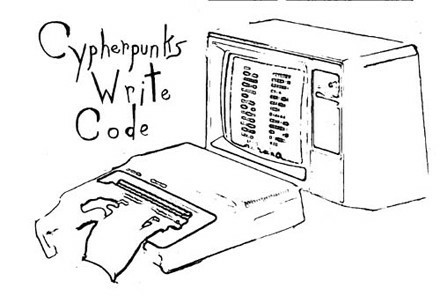
Long Live the CypherPunksCypherPunks Write CodeGenesisBitcoin Genesis Block Mined 03 January 2009The Times January 3, 2009Bitcoin – Proof Of Work
Bitcoin-type Proof Of Work
In 2009, the Bitcoin network went online. Bitcoin is a proof-of-work digital currency that, like Finney’s RPoW, is also based on the Hashcash PoW.
But in Bitcoin, double-spend protection is provided by a decentralized P2P protocol for tracking transfers of coins, rather than the hardware trusted computing function used by RPoW.
Bitcoin has better trustworthiness because it is protected by computation. Bitcoins are “mined” using the Hashcash proof-of-work function by individual miners and verified by the decentralized nodes in the P2P bitcoin network.
The difficulty is periodically adjusted to keep the block time around a target time.
Since the creation of Bitcoin, proof-of-work has been the predominant design of peer-to-peer cryptocurrency. Studies have estimated the total energy consumption of cryptocurrency mining.
The PoW mechanism requires a vast amount of computing resources, which consume a significant amount of electricity. Recent estimates from the University of Cambridge put Bitcoin’s energy consumption as equal to that of Switzerland.
History modification
Each block that is added to the blockchain, starting with the block containing a given transaction, is called a confirmation of that transaction.
Ideally, merchants and services that receive payment in the cryptocurrency should wait for at least one confirmation to be distributed over the network, before assuming that the payment was done.
The more confirmations that the merchant waits for, the more difficult it is for an attacker to successfully reverse the transaction in a blockchain—unless the attacker controls more than half the total network power, in which case it is called a 51% attack.
2ASICs and mining pools
Within the Bitcoin community there are groups working together in mining pools.
Some miners use application-specific integrated circuits (ASICs) for PoW. This trend toward mining pools and specialized ASICs has made mining some cryptocurrencies economically infeasible for most players without access to the latest ASICs, nearby sources of inexpensive energy, or other special advantages.
Some PoWs claim to be ASIC-resistant, i.e. to limit the efficiency gain that an ASIC can have over commodity hardware, like a GPU, to be well under an order of magnitude.
ASIC resistance has the advantage of keeping mining economically feasible on commodity hardware, but also contributes to the corresponding risk that an attacker can briefly rent access to a large amount of unspecialized commodity processing power to launch a 51% attack against a cryptocurrency.
Plant the Seed The choice is YoursChoose Wisely The Choice is Yours
In a first, Bitcoin developers have done something amazing amid the criticism over the lightning network and issues associated with it. A team of developers has made an international payment using the radio … Continue reading International payment using the radio waves→
My inspiration for this page was given to me by my new aquired friend, a fellow Truth Seeker – Joris and to whom I dedicate this page… Wish you… as well as to … Continue reading Discipline Quotes→
Bitcoin white paper turns 15 and the Legacy of Satoshi Nakamoto lives on. “I’ve been working on a new electronic cash system that’s fully peer-to-peer, with no trusted third party,” Satoshi Oct. 31, … Continue reading Bitcoin White Paper turn 15→
Fear is SicknessGold is Money…Uni-VerseSuccessGenes that erase memoriesResearches can erase painful memories from the brainScientists deletes “Fearful” memories of RatsPokemon Go users give away all privacy rights“Broken People” = Raw MaterialRobert NoyceCompounding InterestSimple & Compound Interest FormulaSimple Interest & Compound InterestPBIS RewardsROI – Return On InvestmentPlay the role of a fool…Occult – Anatomy20 Fastest Growing + Declining JobsCauses and Effects of InflationThe History of LogisticsSSG 16.9 – Legal Identity for allScientists call for Protection from Non-Ionizing Electromagnetic Field ExposureProtest’s are Illegal and punished with Jail Time in a “Free” Society !!!?¿!!!Human Value ChainOpposition to the use of Blockchain Identity– Part 1Opposition to the use of Blockchain Identity– Part 2Human Capital Performance BondStrategies for Investing in Undervalued Human CapitalU.S Army TRADOC G-2Digitizing Government-to-Person (G2P) Payments
In a first, Bitcoin developers have done something amazing amid the criticism over the lightning network and issues associated with it. A team of developers has made an international payment using the radio … Continue reading International payment using the radio waves→
My inspiration for this page was given to me by my new aquired friend, a fellow Truth Seeker – Joris and to whom I dedicate this page… Wish you… as well as to … Continue reading Discipline Quotes→
Bitcoin white paper turns 15 and the Legacy of Satoshi Nakamoto lives on. “I’ve been working on a new electronic cash system that’s fully peer-to-peer, with no trusted third party,” Satoshi Oct. 31, … Continue reading Bitcoin White Paper turn 15→
The Times – January 3, 2009Bitcoin Genesis Block Mined 03 January 2009Cypherpunks Write CodeCODE IS LAW THE SOONER HUMANKIND ACCEPTS IT, THE SOONER IT CAN BUILD AROUND ITYeah.. I wonder Why 😂Bitcoin made easyHow a Bitcoin transaction worksA humble MinerHow Bitcoin Mining WorksMining DifficultyBitcoin HalvingBitcoin Previous HalvingsPoolsBitcoin WalletsBitcoin StakeholdersBitcoin FactsPower to the PeopleTotalitarian Governments can kiss my 256-bit keyBitcoin – People’s MoneyBitcoin cannot be Shut DownThe power of the long tail…Central Bank’s 3 StrategiesF**k them, Enough !!!Upcoming Smart Contracts NetworksBitcoin Yearly CandlesBitcoin Price History – Log ScaleBitcoin Mining Ecosystem MapDefi Ecosystem in EthereumDeFi Stack: Product& Application ViewSyscoin EcosystemSyscoinBSC EcosystemPopular CryptocurrencyCrpto EcosystemPublic Companies that own BitcoinTop Banks investing in CryptoBitcoin Inflation vs. TimeWhen you’re Ready…Choose WiselyMake bitcoin thrive, let fiat become humus…Veritas non Auctoritas Facit Legem
Most people misunderstand what bitcoin miners actually do, and as a result they don’t fully grasp the level of security provided by bitcoin’s hashrate.
In this article, we’ll explain proof of work in a non-technical way so that you’ll be able to counter the misinformation about supercomputers and quantum computers attacking the Bitcoin network in the future.
Simply put, mining is a lottery to create new blocks in the Bitcoin blockchain. There are two main purposes for mining:
To permanently add transactions to the blockchain without the permission of any entity.
To fairly distribute the 21 million bitcoin supply by rewarding new coins to miners who spend real world resources (i.e. electricity) to secure the network.
To understand what is actually happening in this lottery system, let’s look at a simple analogy where every Bitcoin hash is equivalent to a dice roll.
Luck, Gambling, and SHA-256
Imagine that miners in the Bitcoin Network are all individuals gambling at a casino. In this example, each of these gamblers have a 1000 sided dice. They roll their die as quickly as possible, trying to get a number less than 10. Statistically, this may take a very long time, but as more gamblers join the game, the time it takes to hit a number less than 10 gets reduced. In short, more gamblers equals quicker rounds.
Once somebody successfully rolls a number less than 10, all gamblers at the table can look down and verify the number. This lucky gambler takes the prize money and the next round begins.
Ultimately, the process of mining bitcoin is very similar. All miners on the network are using Application Specific Integrated Circuits (ASICs), which are specialized computers designed to compute hashes as quickly as possible.
To “compute a hash” simply means plugging any random input into a mathematical function and producing an output.
More hashes per second (i.e. higher hashrate) is equivalent to more dice rolls per second, and thus a greater probability of success.
Miners propose a potential Bitcoin block of transactions, and use this for an input. The block is plugged into the SHA256 hash function which yields a fixed-sized output, known as a hash. A single hash can be computed in less than a millisecond, as it involves no complex math.
If the hash value is lower than the Bitcoin Network difficulty, then the miner who proposed the block wins. If not, then the miner continues trying by computing more hashes.
The successful miner’s block is then added to the blockchain, the miner is rewarded with newly issued bitcoin for their work, and the “next round” begins.
Sources :

https://wikipedia.com/

https://braiins.com/

https://blockdata.com/

https://coin98analytics.com/

https://scoopwhoop.com/

https://stakingrewards.com/

https://syscoin.org/

https://galaxydigitalresearch.com/

https://surveycrest.com/

The Times

The Economist

"Internet of Money" - Andreas Antonopoulus

Hal Finney Quotes

Timothy C. May Quote

Free Spirit Digital Art

!°! If I forgot someone, sorry ! Do tell and I'll add you as a source of inspiration on the list !!! Thanks for understanding !!!
Questions, opinions, critics and requests always welcomed and as time allows will be accomodated !!! 🤓 🙂 😉
Did you find this article helpful?
If so, please consider a donation to help the evolution and development of more helpful articles in the future, and show your support for alternative articles.
In a first, Bitcoin developers have done something amazing amid the criticism over the lightning network and issues associated with it. A team of developers has made an international payment using the radio … Continue reading International payment using the radio waves→
My inspiration for this page was given to me by my new aquired friend, a fellow Truth Seeker – Joris and to whom I dedicate this page… Wish you… as well as to … Continue reading Discipline Quotes→
Bitcoin white paper turns 15 and the Legacy of Satoshi Nakamoto lives on. “I’ve been working on a new electronic cash system that’s fully peer-to-peer, with no trusted third party,” Satoshi Oct. 31, … Continue reading Bitcoin White Paper turn 15→
R&D, wisdom, knowledge, curiosities, answers and many more questions 🙂🤣🙃
You have a Choice !!!Power to the People !!! Wake the F… Up !!! No more excuses, you have a choice now !!!WHO as in WORLD HEALTH ORGANISATIONP F I Z E R InsiderPoem of the LegacyBeing Curious…Of course it doesn’t comply…The Problem with centralized Social-Media10 Principles of Strategic LeadershipGlobal Reserve CurrencyPsychology of a Market CycleSuccessSuccessTriangle of SuccessDon’t plan for travelling when old…😋😳😋Be like a Tree…If anyone understands this please enlighten me too 😊🤭🤗http://www.revelationtimelinedecoded.comESGFor those that think WE are the Center of the Universe 🤣😅😂Confident vs. Insecure PeopleDay by day…Managing Complex ChangeThe Cone of LearningThe Hero’s JourneyElectromagnetic Field of the HeartI-ChingLanguage creates RealitySex Organs of the Machine WorldPhilosopher’s StoneIsaac NewtonAbracadabraSingularityMulti-Mind Thought Control Process APPLE INC.RetrocausalityCERNEGOSYSCOIN ECOSYSTEMJagSteinSysCoinBitcoin might bury FIAT 🙂 🤭 🙃DEFI Ecosystem on EthereumDeFi StackBitcoin Mining Ecosystem Map…the other 6 BillionbitcoinThis is about the other 6 Billion…Top NFT ProjectsBusiness CyclesCentral’s Bank’s 3 StrategiesGlobal DebtDefender of the FlowerFlower of LifeSacred GeometrySeed & Flower of LifeKnowledge – An Antidote to FearJOIN THE REVOLUTION 😋 🤣 😋Emotion – Judgement – Action…violent recolution inevitable.E S B IEvery generation…LOVE YOUR RAGE NOT YOUR CAGERevolutionThe Times – January 3, 2009REVOLUTIONBitcoin Genesis Block – 03 January 2009Introduction to BitcoinIntroduction to Decentralized FinanceIntroduction to Digital CurrenciesAll Metals We MinedMap to Multiplication Nikola TeslaTop VC’s Investing in BlockChain CompaniesAthmospheres of the Solar SystemGlobal GDP 2021Map of CyberSecurity Domains21 QuestionsSix Innovation ModelsWhat May Happen in the next 100 YearsAbstract – “…to pull the body out of dimension so that the person can walk through solid objects such as wooden doors.” Okay 🤯 😳 🤯 ?¿?China’s Social Credit SystemBlockchain Platforms Comparison (BCP)ARISE
In a first, Bitcoin developers have done something amazing amid the criticism over the lightning network and issues associated with it. A team of developers has made an international payment using the radio … Continue reading International payment using the radio waves→
My inspiration for this page was given to me by my new aquired friend, a fellow Truth Seeker – Joris and to whom I dedicate this page… Wish you… as well as to … Continue reading Discipline Quotes→
Bitcoin white paper turns 15 and the Legacy of Satoshi Nakamoto lives on. “I’ve been working on a new electronic cash system that’s fully peer-to-peer, with no trusted third party,” Satoshi Oct. 31, … Continue reading Bitcoin White Paper turn 15→
“Books permit us to voyage through time, to tap the wisdom of our ancestors.
The library connects us with the insight and knowledge, painfully extracted from Nature, of the greatest minds that ever were, with the best teachers, drawn from the entire planet and from all our history, to instruct us without tiring, and to inspire us to make our own contribution to the collective knowledge of the human species.
I think the health of our civilization, the depth of our awareness about the underpinnings of our culture and our concern for the future can all be tested by how well we support our libraries.”
Carl Sagan, “Cosmos”
“The only true Wisdom is in knowing you know nothing.”
Socrates
“Any fool can know.
The point is to understand.”
Albert Einstein
“No thief, however skillful, can rob one of knowledge, and that is why knowledge is the best and safest treasure to acquire.”
L. Frank Baum, The Lost Princess of Oz
“The man of knowledge must be able not only to love his enemies but also to hate his friends.“
Friedrich Nietzsche
“The Seven Social Sins are:
Wealth without work. Pleasure without conscience. Knowledge without character. Commerce without morality. Science without humanity. Worship without sacrifice. Politics without principle.”
From a sermon given by Frederick Lewis Donaldson in Westminster Abbey, London, on March 20, 1925.
Frederick Lewis Donaldson
“Reading furnishes the mind only with materials of knowledge; it is thinking that makes what we read ours.”
John Locke
“Great minds are always feared by lesser minds.”
Dan Brown, “The Lost Symbol (Robert Langdon, #3)”
“I cannot teach anybody anything. I can only make them think.”
Socrates
“Confidence is ignorance.
If you’re feeling cocky, it’s because there’s something you don’t know.”
Eoin Colfer, “Artemis Fowl”
“The greatest enemy of knowledge is not ignorance, it is the illusion of knowledge.”
Daniel J. Boorstin
“For me, I am driven by two main philosophies: know more today about the world than I knew yesterday and lessen the suffering of others.
You’d be surprised how far that gets you.”
Neil deGrasse Tyson
“Your assumptions are your windows on the world.
Scrub them off every once in a while, or the light won’t come in.”
Isaac Asimov
“For me, it is far better to grasp the Universe as it really is than to persist in delusion, however satisfying and reassuring.”
Carl Sagan, “The Demon-Haunted World: Science as a Candle in the Dark”
“I mean, you could claim that anything’s real if the only basis for believing in it is that nobody’s proved it doesn’t exist!”
J.K. Rowling
“Knowledge, like air, is vital to life.
Like air, no one should be denied it.”
Alan Moore, “V for Vendetta”
“I have a friend who’s an artist and has sometimes taken a view which I don’t agree with very well.
He’ll hold up a flower and say “look how beautiful it is,” and I’ll agree.
Then he says “I as an artist can see how beautiful this is but you as a scientist take this all apart and it becomes a dull thing,” and I think that he’s kind of nutty.
First of all, the beauty that he sees is available to other people and to me too, I believe.
Although I may not be quite as refined aesthetically as he is …
I can appreciate the beauty of a flower.
At the same time, I see much more about the flower than he sees.
I could imagine the cells in there, the complicated actions inside, which also have a beauty.
I mean it’s not just beauty at this dimension, at one centimeter; there’s also beauty at smaller dimensions, the inner structure, also the processes.
The fact that the colors in the flower evolved in order to attract insects to pollinate it is interesting; it means that insects can see the color.
It adds a question: does this aesthetic sense also exist in the lower forms?
Why is it aesthetic?
All kinds of interesting questions which the science knowledge only adds to the excitement, the mystery and the awe of a flower.
It only adds.
I don’t understand how it subtracts.”
Richard P. Feynman, “The Pleasure of Finding Things Out: The Best Short Works of Richard P. Feynman”
“It takes a very long time to become young.”
Pablo Picasso
“The eye sees only what the mind is prepared to comprehend.”
“Beware of the man who works hard to learn something, learns it, and finds himself no wiser than before.”
Kurt Vonnegut, “Cat’s Cradle”
“I am an atheist, out and out. It took me a long time to say it.
I’ve been an atheist for years and years, but somehow I felt it was intellectually unrespectable to say one was an atheist, because it assumed knowledge that one didn’t have.
Somehow, it was better to say one was a humanist or an agnostic.
I finally decided that I’m a creature of emotion as well as of reason.
Emotionally, I am an atheist.
I don’t have the evidence to prove that God doesn’t exist, but I so strongly suspect he doesn’t that I don’t want to waste my time.”
Isaac Asimov
“An investment in knowledge always pays the best interest.”
Benjamin Franklin, “The Way to Wealth: Ben Franklin on Money and Success”
“What is now proved was once only imagined.”
William Blake
“Few people are capable of expressing with equanimity opinions which differ from the prejudices of their social enviroment.
Most people are incapable of forming such opinions.”
(Essay to Leo Baeck, 1953)
Albert Einstein
“Ignorance more frequently begets confidence than does knowledge: it is those who know little, not those who know much, who so positively assert that this or that problem will never be solved by science.”
Charles Darwin, “The Descent of Man”
“The hardest thing of all is to find a black cat in a dark room, especially if there is no cat.”
Confucius
“I can calculate the motion of heavenly bodies but not the madness of people.”
Isaac Newton
“Knowing is not enough; we must apply. Willing is not enough; we must do.”
Johann Wolfgang von Goethe
“The time will come when diligent research over long periods will bring to light things which now lie hidden.
A single lifetime, even though entirely devoted to the sky, would not be enough for the investigation of so vast a subject…
And so this knowledge will be unfolded only through long successive ages.
There will come a time when our descendants will be amazed that we did not know things that are so plain to them…
Many discoveries are reserved for ages still to come, when memory of us will have been effaced.”
Seneca, “Natural Questions”
“The knowledge of all things is possible.”
Leonardo da Vinci
“To know that you do not know is the best.
To think you know when you do not is a disease.
Recognizing this disease as a disease is to be free of it.”
Lao Tzu
“What transforms this world is — knowledge.
Do you see what I mean?
Nothing else can change anything in this world.
Knowledge alone is capable of transforming the world, while at the same time leaving it exactly as it is.
When you look at the world with knowledge, you realize that things are unchangeable and at the same time are constantly being transformed.”
Yukio Mishima, “The Temple of the Golden Pavilion”
“Doubt … is an illness that comes from knowledge and leads to madness.”
Gustave Flaubert, “Memoirs of a Madman”
“Information is not knowledge.”
Albert Einstein
“The happiness of the drop is to die in the river.”
Imam Al-Ghazali
“Knowledge is a treasure, but practice is the key to it.”
Lao Tzu
“Belief can be manipulated. Only knowledge is dangerous.”
Frank Herbert
“No, our science is no illusion.
But an illusion it would be to suppose that what science cannot give us we can get elsewhere.”
Sigmund Freud, “The Future of an Illusion”
“Nothing that is worth knowing can be taught.”
Oscar Wilde
“I had to deny knowledge in order to make room for faith.”
Immanuel Kant, “Critique of Pure Reason”
“The advancement of science and the diffusion of information [is] the best aliment to true liberty.”
James Madison
“There are in fact two things, science and opinion; the former begets knowledge, the latter ignorance.”
Hippocrates
“Let us tenderly and kindly cherish therefore, the means of knowledge.
Let us dare to read, think, speak, and write .”
John Adams, “The Works Of John Adams”, Second President Of The United States
“Those who know nothing of foreign languages know nothing of their own.”
Johann Wolfgang von Goethe, “Maxims and Reflections”
“How little we know of what there is to know.
I wish that I were going to live a long time instead of going to die today because I have learned much about life in these four days; more, I think than in all other time.
I’d like to be an old man to really know.
I wonder if you keep on learning or if there is only a certain amount each man can understand.
I thought I knew so many things that I know nothing of.
I wish there was more time.”
Ernest Hemingway, “For Whom The Bell Tolls“
“Timendi causa est nescire –
Ignorance is the cause of fear.”
Lucius Annaeus Seneca, “Natural Questions“
“The way of success is the way of continuous pursuit of knowledge.”
Napoleon Hill, “Think and Grow Rich”
“All knowledge that is about human society, and not about the natural world, is historical knowledge, and therefore rests upon judgment and interpretation.
This is not to say that facts or data are nonexistent, but that facts get their importance from what is made of them in interpretation… for interpretations depend very much on who the interpreter is, who he or she is addressing, what his or her purpose is, at what historical moment the interpretation takes place.”
Edward Said
“Scientia potentia est.
Knowledge is power.”
Thomas Hobbes, “Leviathan”
“Ipsa scientia potestas est.”
Knowledge itself is power.
Francis Bacon, “Meditations Sacrae and Human Philosophy Meditations Sacrae and Human Philosophy”
“The only defense against the world is a thorough knowledge of it.”
John Locke, “Some Thoughts Concerning Education”
“All sciences are vain and full of errors that are not born of Experience, the mother of all Knowledge.”
Leonardo da Vinci “Leonardo’s Notebooks”
“Share your knowledge.
It is a way to achieve immortality.”
Dalai Lama XIV
“Truth, like gold, is to be obtained not by its growth, but by washing away from it all that is not gold.”
Leo Tolstoy
“To know that we know what we know, and to know that we do not know what we do not know, that is true knowledge.”
In a first, Bitcoin developers have done something amazing amid the criticism over the lightning network and issues associated with it. A team of developers has made an international payment using the radio … Continue reading International payment using the radio waves→
My inspiration for this page was given to me by my new aquired friend, a fellow Truth Seeker – Joris and to whom I dedicate this page… Wish you… as well as to … Continue reading Discipline Quotes→
Bitcoin white paper turns 15 and the Legacy of Satoshi Nakamoto lives on. “I’ve been working on a new electronic cash system that’s fully peer-to-peer, with no trusted third party,” Satoshi Oct. 31, … Continue reading Bitcoin White Paper turn 15→
No, Governments Can’t do a Better Job Developing Crypto
Would a state-backed cryptocurrency be better than its decentralized counterpart?
International media has already rolled out their opinions on the matter. It’s a YES-IT-CAN.
The opinions find their inspirations in comments made by Christine Lagarde last week. The head of the International Monetary Fund (IMF) said that a government-backed cryptocurrency would eliminate the issues of trust that have clogged the decentralized cryptocurrencies like Bitcoin.
New York Times reacted to the IMF chief’s remarks, calling it “a hopeful sign for digital tokens,” while predicting it could “have a chilling effect on existing, nongovernmental tokens.”
The Guardian offered its editorial space to a long-time Bitcoin critic and economist Nouriel Roubini to further his plan. He outright called cryptocurrencies worthless when compared to central bank digital currencies (CBDC).“If a CBDC were to be issued, it would immediately displace cryptocurrencies, which are not scalable, cheap, secure, or [actually] decentralized,” Roubini claimed.
The comments mentioned above appear at a time when the cryptocurrency market cap has plunged by more than 70 percent since its all-time high.
It has allowed critics to jump to the conclusion that decentralized digital currencies, mainly Bitcoin and Ethereum, have no intrinsic value, that they are highly speculative unlike central-bank issued fiat money.
Yet, critics have ignored the whys and whats that prompted the launch of decentralized assets at the first place.
They have been unable to respond to how Federal Reserve stimulus programmes, secret bailouts, and money production have destroyed the value of the US Dollar.
Their focus has turned more towards proving Bitcoin as a sugar-coated false promise of a financial revolution while ignoring the very bads of the existing financial system.
Economy believes that an asset has value when it checks scarcity and utility.
The US Dollar lacks scarcity, for its supply is governed by a centralized body called Federal Reserve. There is no check on how many dollars would get printed, allowing insiders to manipulate a greenback-backed market on their whims.
Bitcoin, on the other hand, has a set cap of 21 million tokens. Its supply is governed by mathematical algorithms, meaning no corrupt human involvement would be able to topple it.
As far as the use-cases are concerned, Bitcoin has been constantly looked at for its potential of becoming a store-of-value asset like Gold, while being constantly considered for settling cross-border payments despite its price volatility.
The critics then say that bitcoin has no intrinsic value.
But even gold and paper money suffers from the same stigma.
According to the World Council, only 15 percent of the global Gold supply is used in industrial applications. The rest goes into making bars, bullions, and jewelry – mainly because people trust they have value.
Trust is the Only Factor
The launch of Bitcoin was a response to a global financial crisis in which – let’s accept it – banks had f***ed up the economy.
The digital currency – more or less – follows the philosophy of the Austrian Monetary Theory.
According to it, money can be sound only when its supply is limited. It believes that money should not be controlled by the state.
These facts are missing from the reports and opinion pieces of anti-Bitcoin economists.
The Federal Reserve and central bankers believe that only they have the right to print money.
Bitcoin is only a beginning towards breaking the myth.
As long as the central banks do not innovate and protect people against currency inflation – as evident in the case of Zimbabwe and Venezuela – there is no chance they would be able to outrun crypto.
People need to trust their banks, but mainstream media and economists are avoiding a broader discussion.
The next financial crisis should bring more evidence to the theory. No rush.
In a first, Bitcoin developers have done something amazing amid the criticism over the lightning network and issues associated with it. A team of developers has made an international payment using the radio … Continue reading International payment using the radio waves→
My inspiration for this page was given to me by my new aquired friend, a fellow Truth Seeker – Joris and to whom I dedicate this page… Wish you… as well as to … Continue reading Discipline Quotes→
Bitcoin white paper turns 15 and the Legacy of Satoshi Nakamoto lives on. “I’ve been working on a new electronic cash system that’s fully peer-to-peer, with no trusted third party,” Satoshi Oct. 31, … Continue reading Bitcoin White Paper turn 15→








 BitHouse